Best Subscription Management Software in 2026, Compared by Use Case
A use-case-by-use-case comparison of the best subscription management software in 2026: Hyperline, Stripe Billing, Chargebee, Recurly, Maxio, Paddle and Zuora, with their strengths and limits.

Updated October 2026.
Subscription management software runs your recurring agreements after the sale. It creates subscriptions, applies upgrades and downgrades, calculates proration, handles renewals, pauses and cancellations, retries failed payments, and keeps billing in sync with every change.
There is no single best subscription management software. The right choice depends on what you sell, how you sell it (self-serve or through a sales team), how complex your contracts are and who owns billing in your company. This guide compares the main platforms by use case, with their strengths and, just as importantly, their limits.
Key takeaways
- There is no single winner. Each platform in this guide is the right answer for a specific profile, and the wrong one for others.
- Hyperline fits B2B SaaS companies that sell negotiated contracts from their CRM. A subscription is a contract, with its phases, amendments and renewals, and the signed quote becomes the subscription with no re-entry. It also fits companies that combine subscriptions with usage or prepaid credits.
- Stripe Billing is the simplest starting point if you already process payments on Stripe and your pricing is simple.
- Chargebee is the broadest all-round option for a growing SaaS company that keeps adding plans.
- Recurly is built for high-volume consumer subscriptions, where reducing churn comes first.
- Maxio fits B2B SaaS companies where finance owns billing and revenue recognition.
- Paddle fits software companies that want a merchant of record to handle sales tax and VAT for them.
- Zuora remains the reference for large enterprises with complex contracts and multiple entities.
The 7 best subscription management tools at a glance
| Tool | Best for | Billing models | Contracts and amendments | CRM integration |
|---|---|---|---|---|
| Hyperline | B2B SaaS selling negotiated contracts from a CRM | Subscriptions, seats, usage, credits, hybrid | Native: phases, retroactive amendments, signed update quotes, renewal price adjustments | Native (HubSpot, Salesforce, Attio), with quoting and e-signature |
| Stripe Billing | Startups already on Stripe | Flat-rate, per-seat, tiered, usage, hybrid | Plan changes with proration | Through integrations |
| Chargebee | Growing SaaS with many plans | Flat-rate, per-seat, tiered, usage, hybrid | Mid-cycle changes with proration, ramps | Salesforce, HubSpot (CPQ is a separate product) |
| Recurly | High-volume consumer subscriptions | Flat-rate, tiered, multiple subscriptions | Subscriber-led changes, pauses, cancellations | Salesforce |
| Maxio | Finance-led B2B SaaS | Subscriptions, usage, custom contracts | Co-terming of add-ons | Through integrations |
| Paddle | Software sold worldwide | Subscriptions, seats, add-ons | Proration, pauses | Through integrations |
| Zuora | Large enterprises | Recurring, usage, hybrid, one-time | Mid-term amendments at enterprise scale | Through integrations |
How we picked these tools
We compared these platforms by fit for a specific profile rather than with a single score, because "best subscription management software" means something very different for a startup launching its first plan and for a company managing hundreds of negotiated contracts.
For each platform, we looked at six criteria:
- Subscription lifecycle: creation, free trials, upgrades and downgrades, renewals, pauses, cancellations.
- Billing models: flat-rate, seats, tiers, usage, credits and hybrid combinations.
- Contracts and amendments: commitments, phases, mid-cycle changes and proration.
- Collections: dunning, payment retries, customer portal.
- Integrations: CRM, accounting, payment providers.
- Finance: tax, revenue recognition, reporting.
Information comes from each vendor's public documentation, reviewed in October 2026. Hyperline is our product: we describe its limits the same way we describe everyone else's.
Subscription management, billing, payments and merchant of record: what's the difference?
Most "best subscription software" comparisons put tools side by side that don't do the same job. Before you compare features, it helps to separate the layers a subscription business runs on:
| Layer | What it does | Examples |
|---|---|---|
| Subscription management | Tracks what each customer bought and how it changes over time: plans, quantities, upgrades, downgrades, renewals, pauses, cancellations | Hyperline, Chargebee, Recurly, Maxio, Zuora, Stripe Billing |
| Billing | Turns the subscription into invoices: rating, proration, discounts, tax calculation, credit notes | Usually the same platform as subscription management |
| Payment processing | Moves the money: cards, bank debits, transfers, retries | Stripe, Adyen, Mollie, Airwallex, GoCardless |
| Revenue recognition and accounting | Spreads revenue over the service period (ASC 606, IFRS 15) and posts journal entries | Native in Hyperline, Maxio and Zuora; a separate product at Stripe and Chargebee |
| Merchant of record | Legally sells to your customers on your behalf, so it collects and remits sales tax and VAT | Paddle |
Most platforms in this guide combine subscription management and billing in one product. The real differences come from the other layers.
Payments. Some platforms are tied to one payment processor: Stripe Billing assumes Stripe. Others connect to several, which lets you route payments by country or switch providers later without changing your billing system. Hyperline, for example, works with Stripe, Adyen, Mollie, Airwallex and GoCardless.
Revenue recognition. If finance needs revenue schedules and journal entries, check whether they are built from the same records as billing or require another product and another integration.
Merchant of record. This is the biggest structural choice. With a standard subscription platform, you remain the seller: the platform calculates tax, but your company files and remits it. With a merchant of record like Paddle, Paddle is the seller, so it takes on tax collection and compliance in every country. The trade-off is control: the merchant of record owns the transaction, the checkout and part of the customer relationship. It fits software sold online to many countries; it fits less well when a sales team negotiates B2B contracts and invoices them directly.
Two questions narrow the field before any feature comparison: do you want to remain the seller of record, and which payment providers do you need to keep?
Best for B2B SaaS selling negotiated contracts from a CRM
When a sales team negotiates every deal, a subscription is more than a plan and a start date. It carries a commitment, discounts, prices that step up over time and amendments signed along the way. Subscription management software then has to start from the contract, not from a plan catalog.
Hyperline
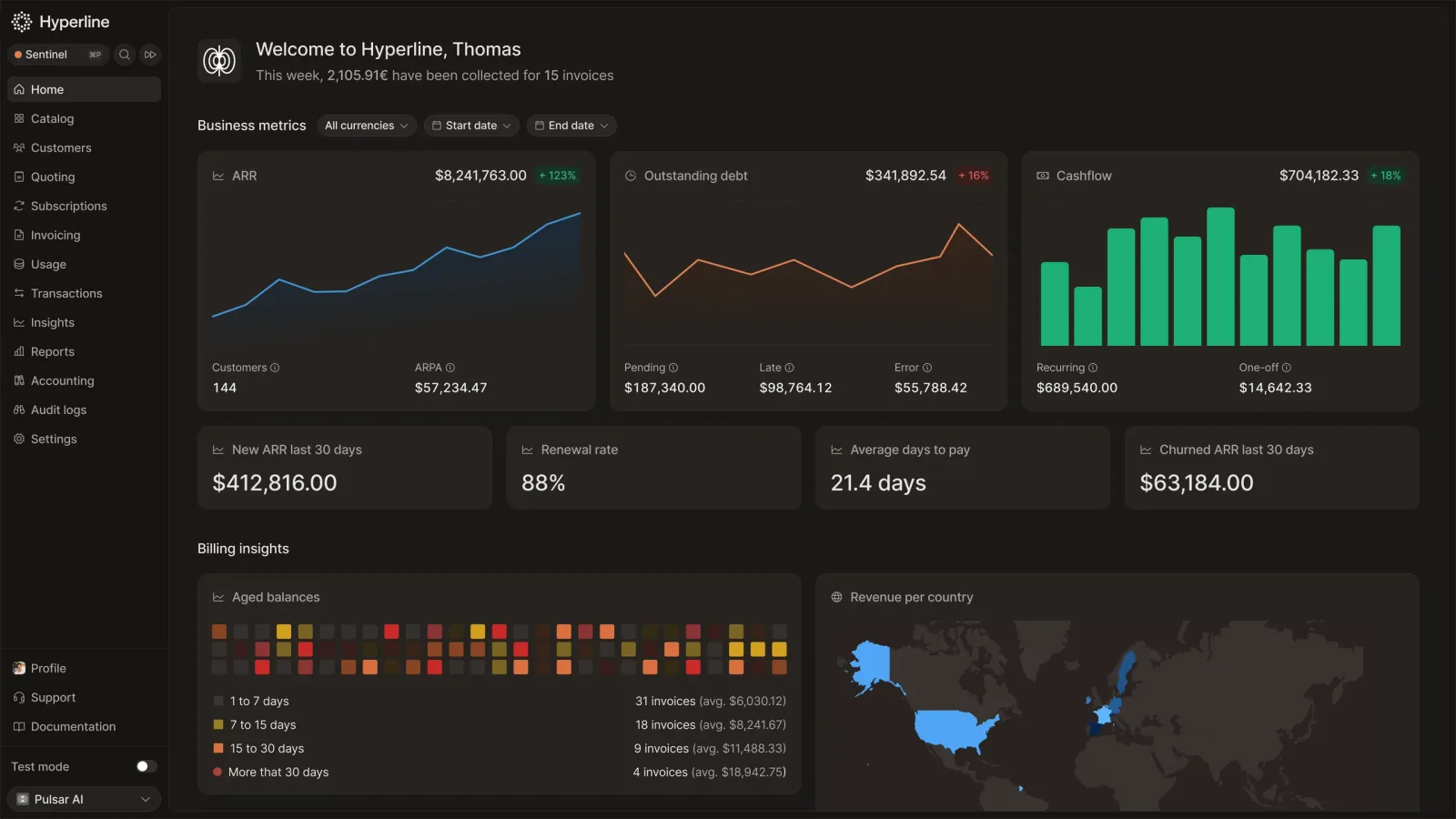
Image: Hyperline
Best for: B2B SaaS and AI companies that sell through a sales team working in HubSpot, Salesforce or Attio. Also a strong fit for companies that combine subscriptions with usage-based pricing or prepaid credits, and for teams that want quoting, billing and revenue recognition on one platform.
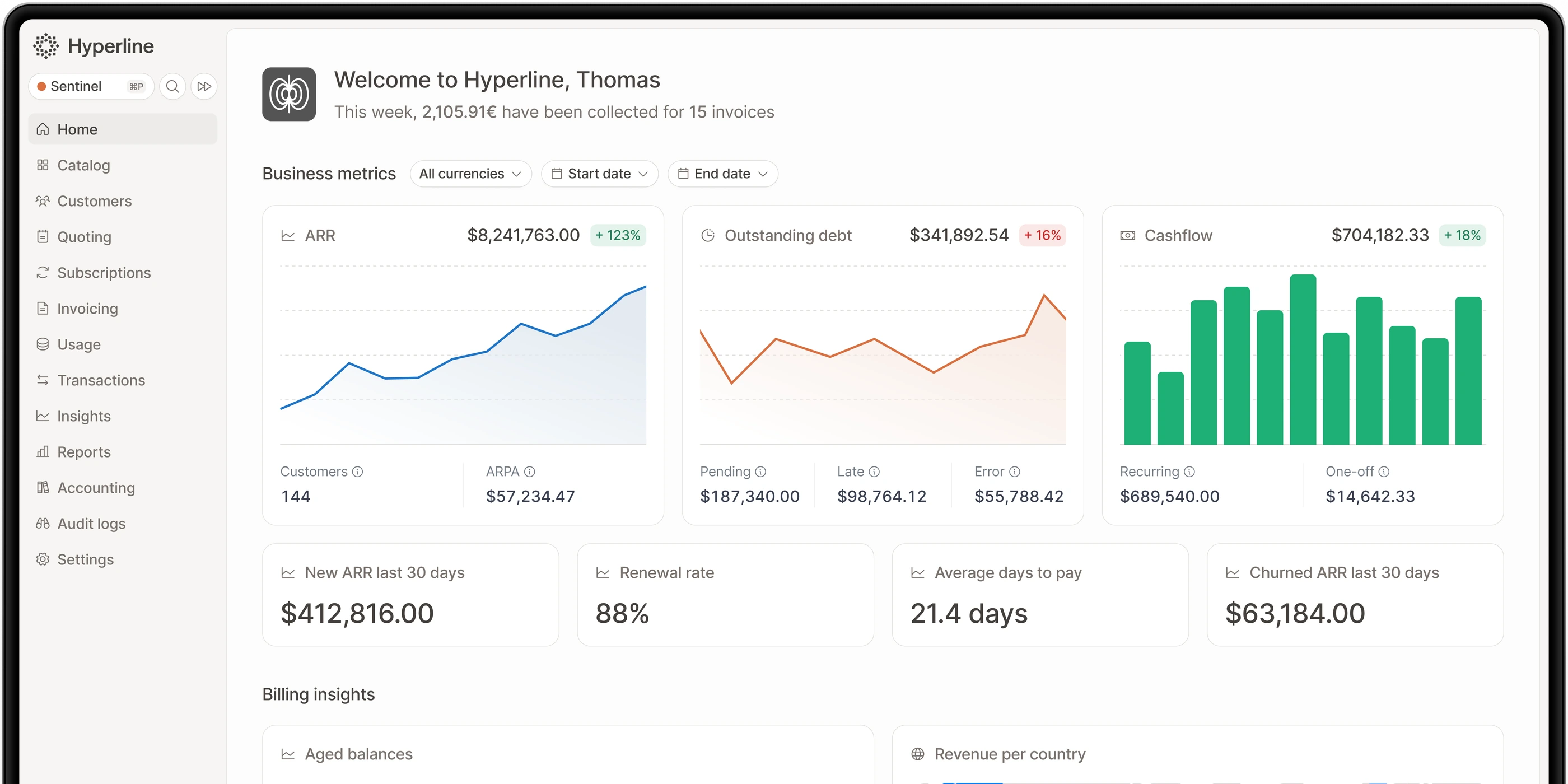
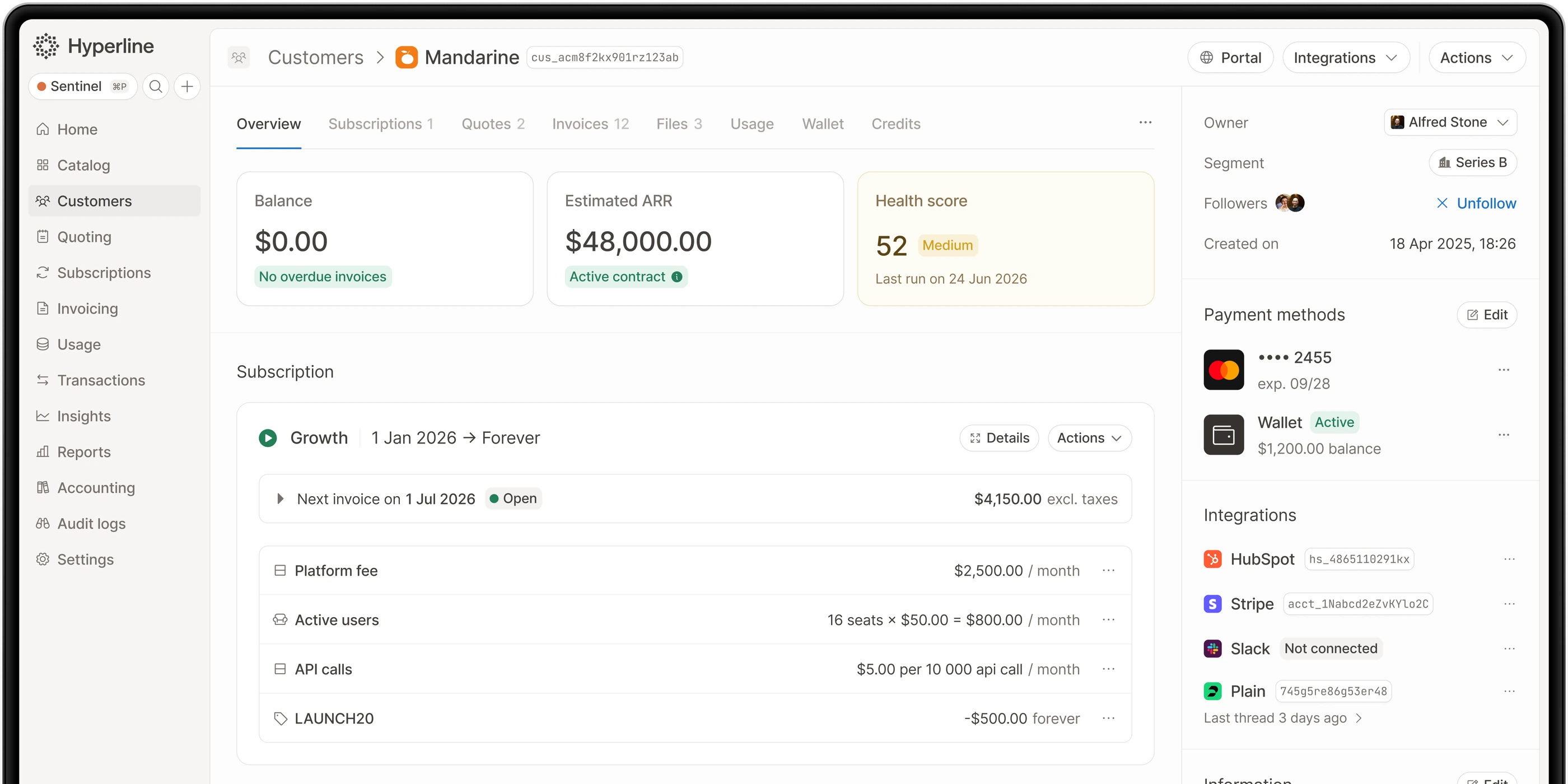
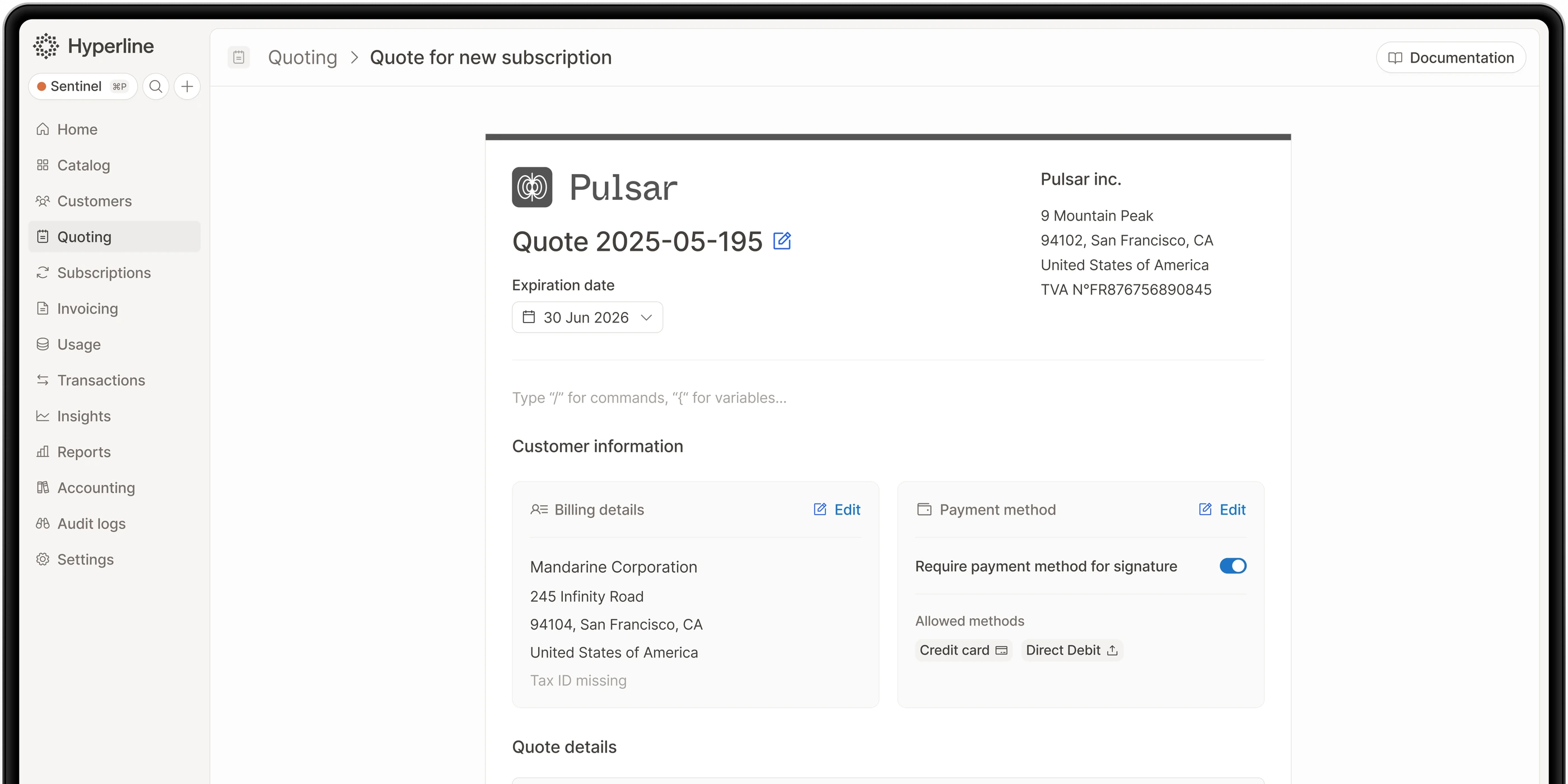
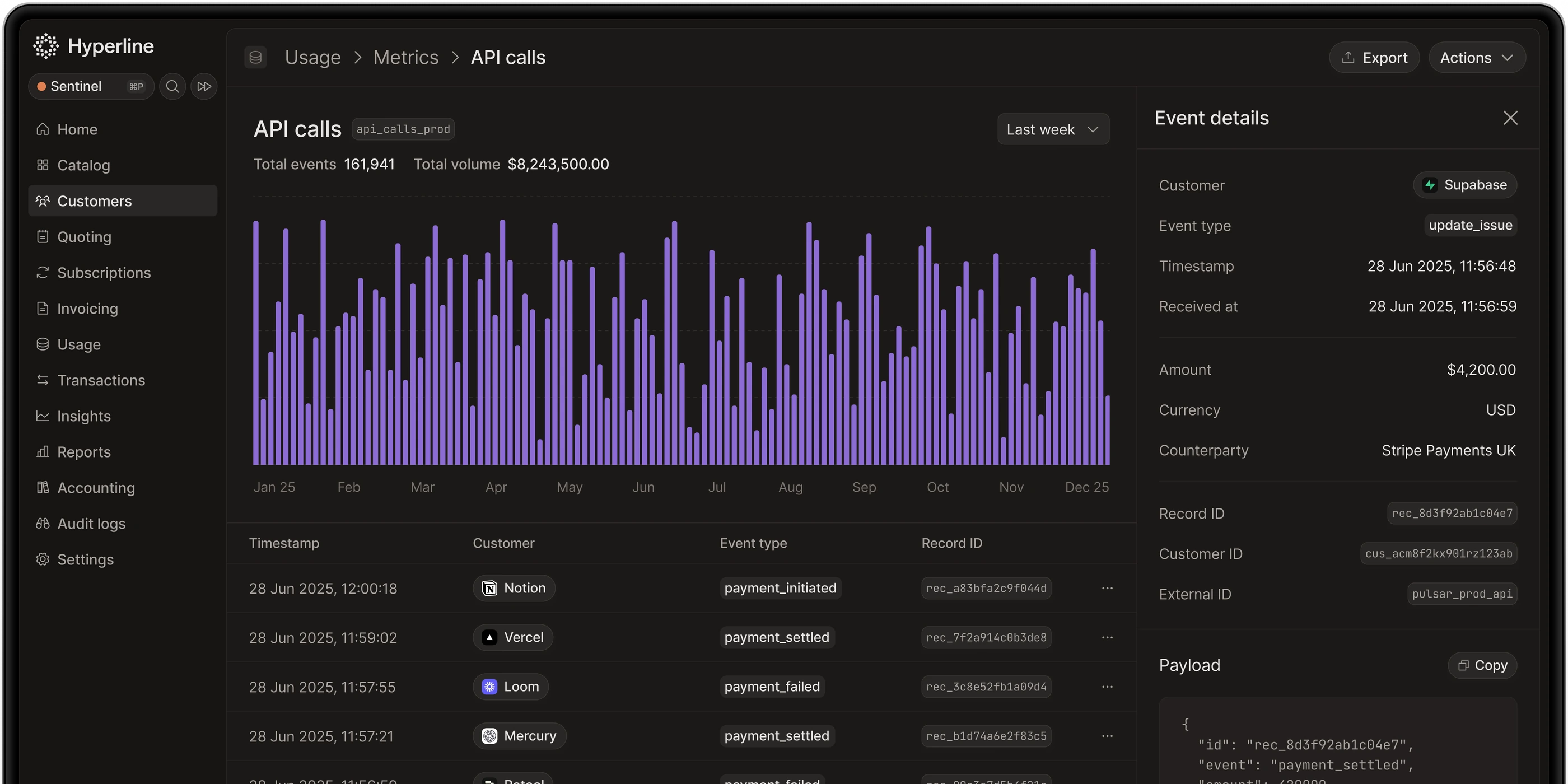
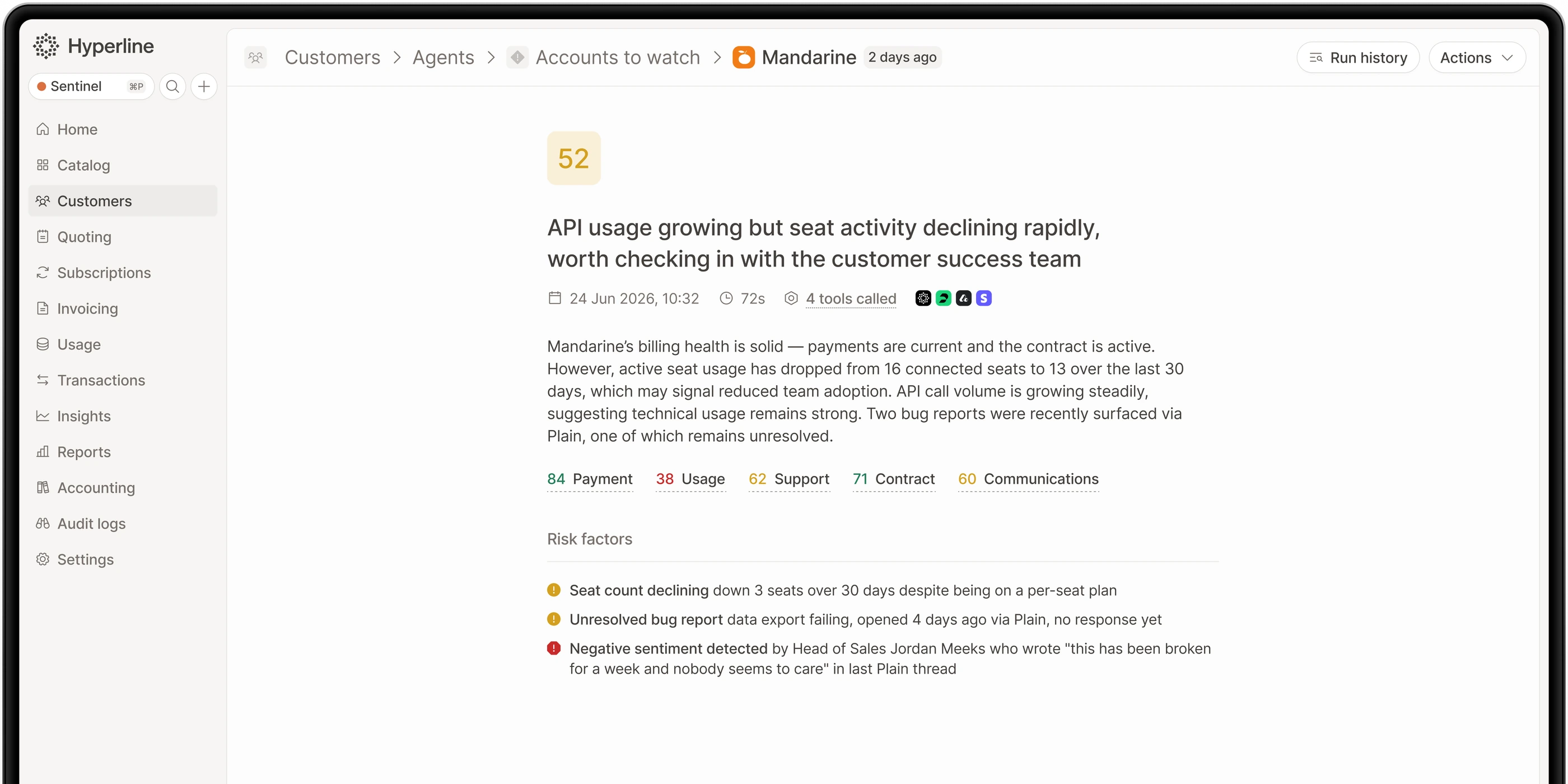
Strengths. In Hyperline, a subscription is a contract: a sold configuration of products, prices and terms, with future changes already scheduled. The commitment period is independent from the billing interval, and each product can have its own interval. An annual commitment can combine monthly usage billed in arrears, a quarterly add-on and a one-time implementation fee. The quote is built and signed in the CRM, then becomes the subscription with no re-entry by finance.
Changes follow the same logic. An upsell or downsell can go through a subscription update quote that the customer signs, with a choice between proration and a new billing cycle. Updates can be scheduled for a future date, or applied retroactively when an amendment was signed in the past. Multi-phase contracts (ramps, step-ups) support a minimum fee per phase, and prices can be adjusted automatically at renewal or through a quote prepared a few days before. Every version of the subscription is kept, and a timeline shows upcoming renewals, phase transitions and invoices.
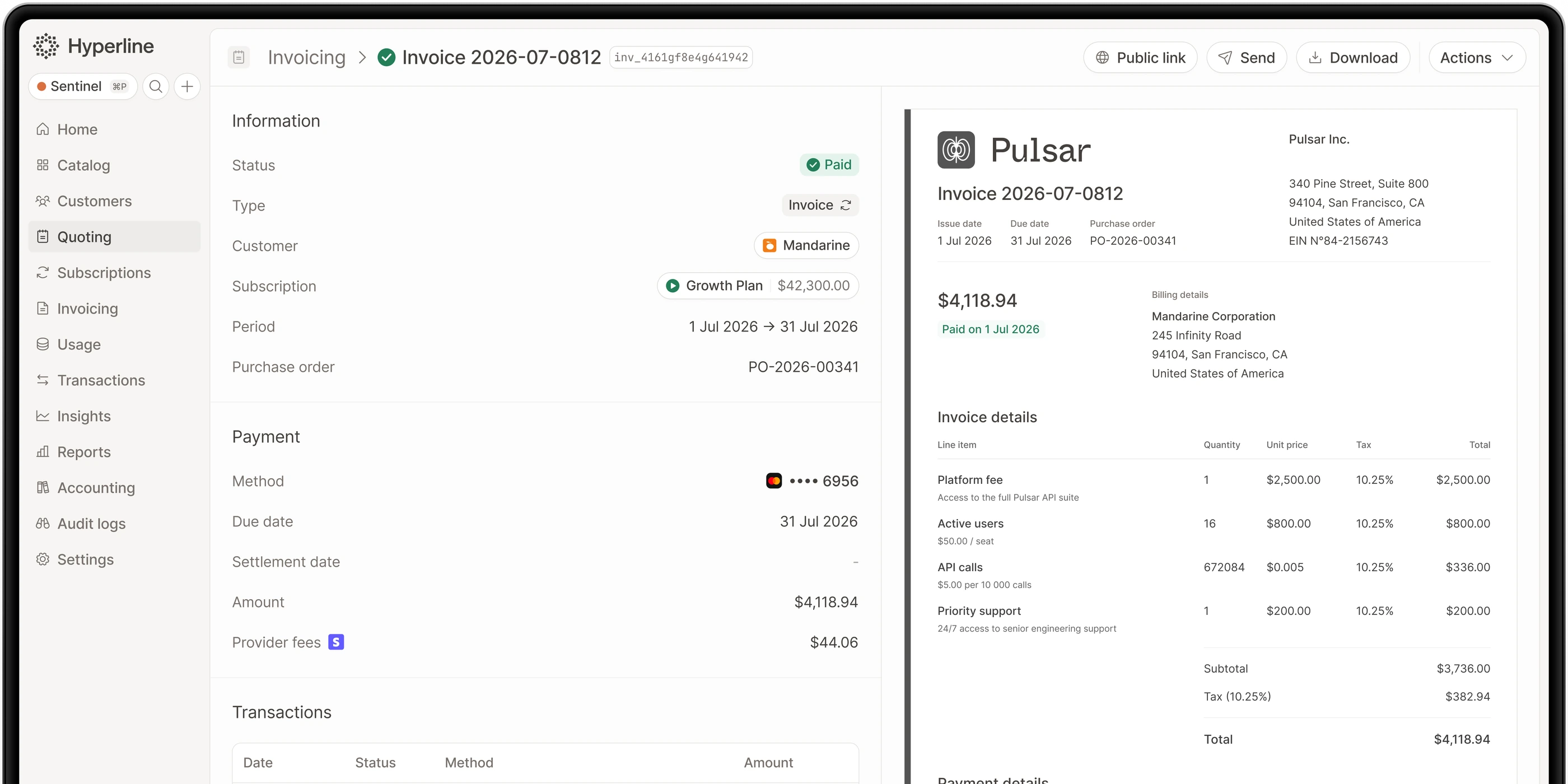
Usage lives on the same contract. Hyperline meters events in real time, processes more than 1 billion usage events each month, and includes a native credit ledger with top-ups and auto-reload. On the finance side, it calculates tax on every invoice across 80+ countries, handles e-invoicing, recognizes revenue under ASC 606 and IFRS 15, and connects to NetSuite, QuickBooks, Xero and Pennylane. It works with several payment providers: Stripe, Adyen, Mollie, Airwallex and GoCardless.
Limits. Hyperline is built for B2B. If you sell high-volume consumer subscriptions, Recurly or Paddle are designed for that case. It is not a merchant of record: you remain the seller, and responsible for your tax compliance, even though Hyperline calculates the tax. It is also a hosted platform, with no open-source edition.
Best if you already collect payments through Stripe
When your payments already run through Stripe, adding a separate subscription platform means reconciling two systems. For a startup with simple pricing, staying in the same ecosystem is often the shortest path.
Stripe Billing
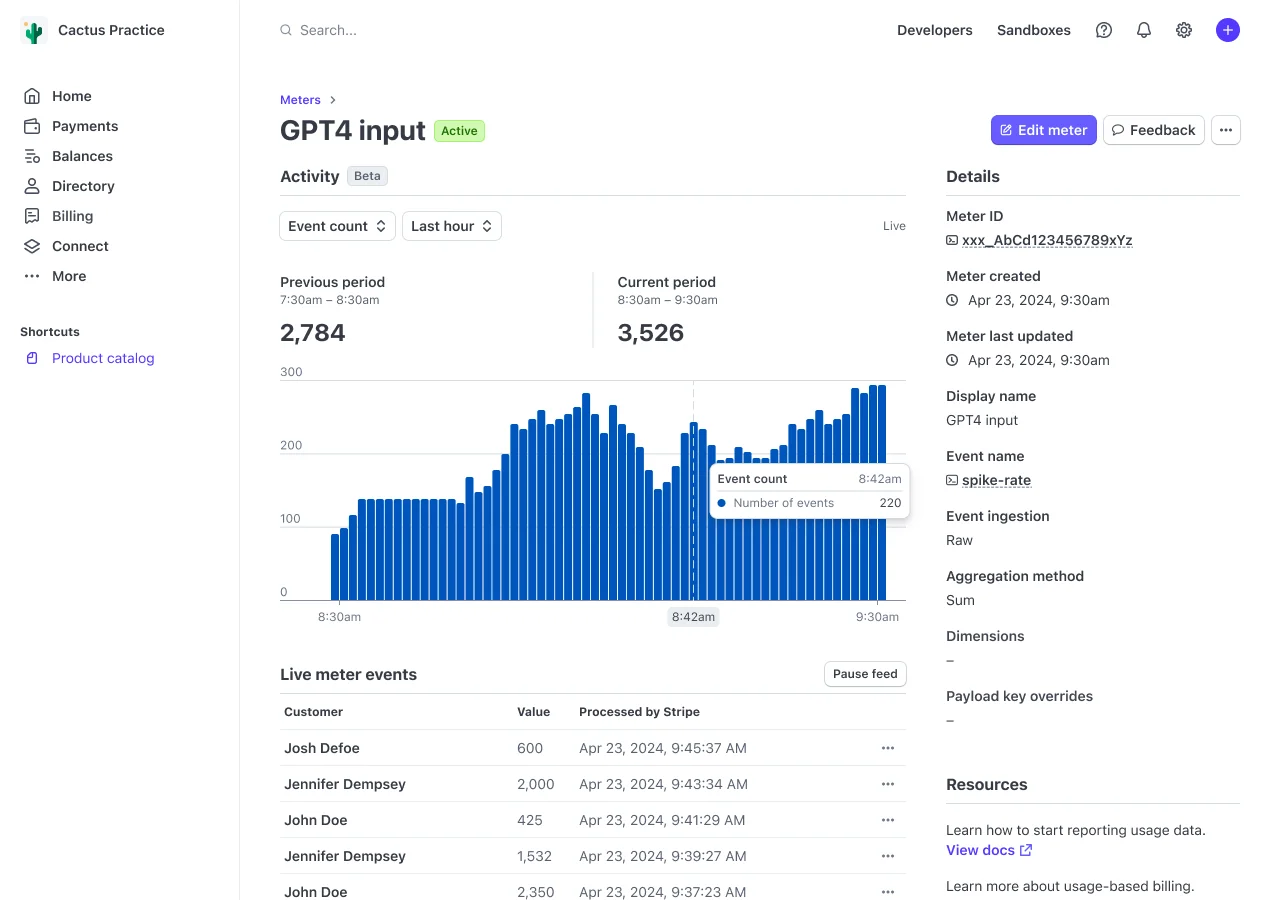
Image: Stripe Billing
Best for: early-stage SaaS and online products that already process payments on Stripe and keep their pricing simple.
Strengths. Stripe Billing brings subscriptions, invoices, payments and tax into one ecosystem, which removes an integration and a vendor. It offers 15+ built-in pricing models (flat-rate, per-seat, tiered, usage), coupons, free and paid trials, and proration. The customer portal lets subscribers manage their subscriptions, invoices and payment details. For collections, Stripe says its Smart Retries recover 55% of failed payments on average.
Limits. Stripe Billing is simplest when your pricing is simple. Negotiated B2B contracts, quotes and complex amendments require other tools or engineering work. Revenue recognition is a separate product, and everything assumes Stripe as your payment provider.
Also consider: if you expect to sign negotiated contracts as you move upmarket, Hyperline adds quoting, phases and amendments while keeping Stripe as your payment provider.
Best all-round platform for a growing SaaS company
For a SaaS company that keeps adding plans, testing new prices and layering in usage-based components, the challenge is a subscription engine broad enough to keep up without switching platforms.
Chargebee
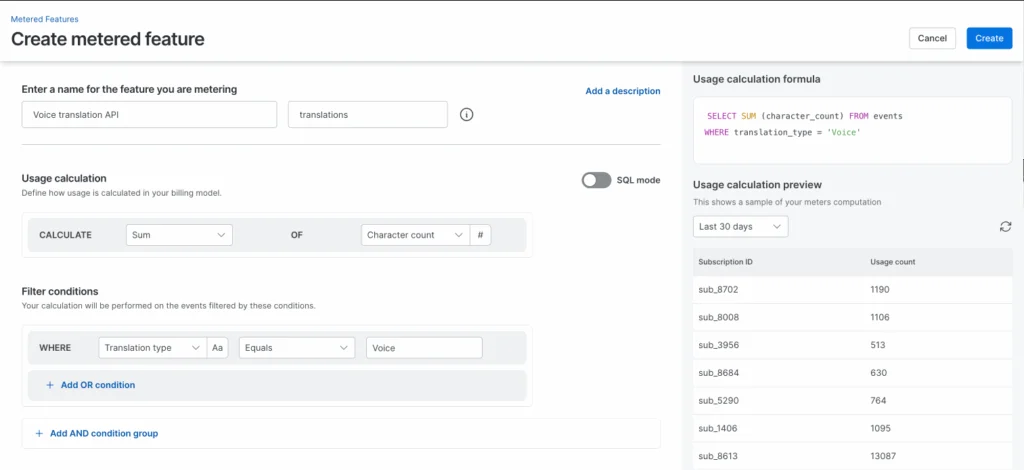
Image: Chargebee
Best for: growing SaaS companies that change their plans and pricing often.
Strengths. Chargebee covers the full subscription lifecycle: trials, upgrades and downgrades with proration calculated to the day, renewals, pauses, win-back campaigns and a self-service customer portal. It supports flat-rate, per-seat, tiered, usage-based and hybrid models, contract ramps and invoices that combine several billing frequencies. Dunning and payment retries run across 40+ payment gateways. Chargebee reports more than 6,500 customers.
Limits. CPQ for Salesforce and HubSpot and revenue recognition are separate products, which adds implementation work when you need the full quote-to-cash flow.
Best for consumer subscriptions and churn reduction
In consumer subscriptions, volume is high and every point of churn counts. Retention and payment recovery matter more than contract management.
Recurly
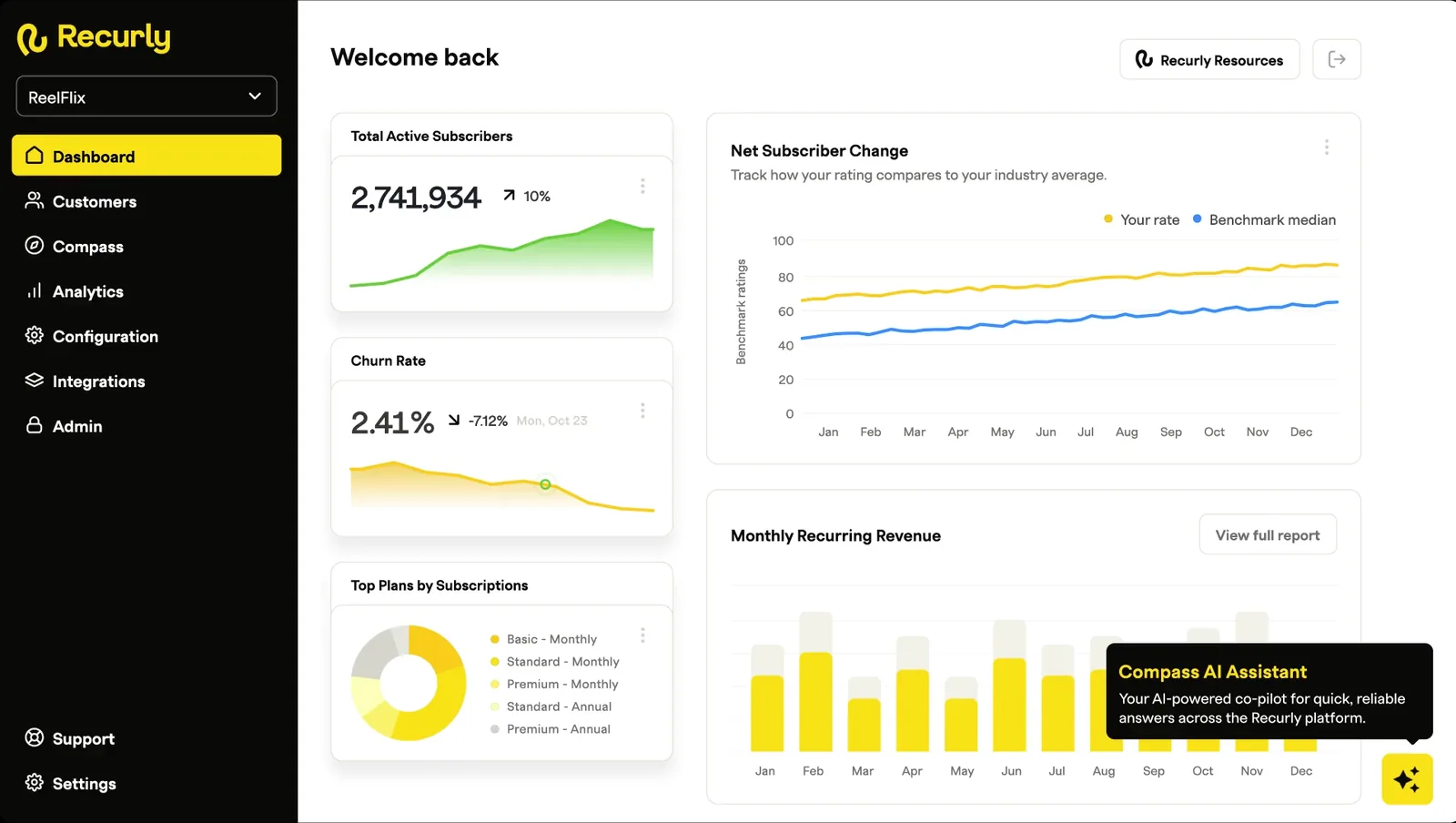
Image: Recurly
Best for: consumer subscription businesses (media, streaming, subscription boxes, apps) whose top priority is reducing churn.
Strengths. Recurly is built around retention: automated dunning, lifecycle emails (sign-up, billing, renewal) and subscriber cohort analytics. Subscribers can add, change, pause or cancel their subscriptions on their own, and one account can hold several subscriptions, with parent and child account hierarchies. Recurly reports more than 100 million active subscribers on its platform and $1.6 billion in revenue recovered each year.
Limits. Recurly is less oriented toward negotiated B2B contracts and the full quote-to-cash flow.
Best when finance owns billing
In some companies, billing is not a product topic but a finance one: it has to feed revenue recognition, SaaS metrics and the month-end close directly.
Maxio
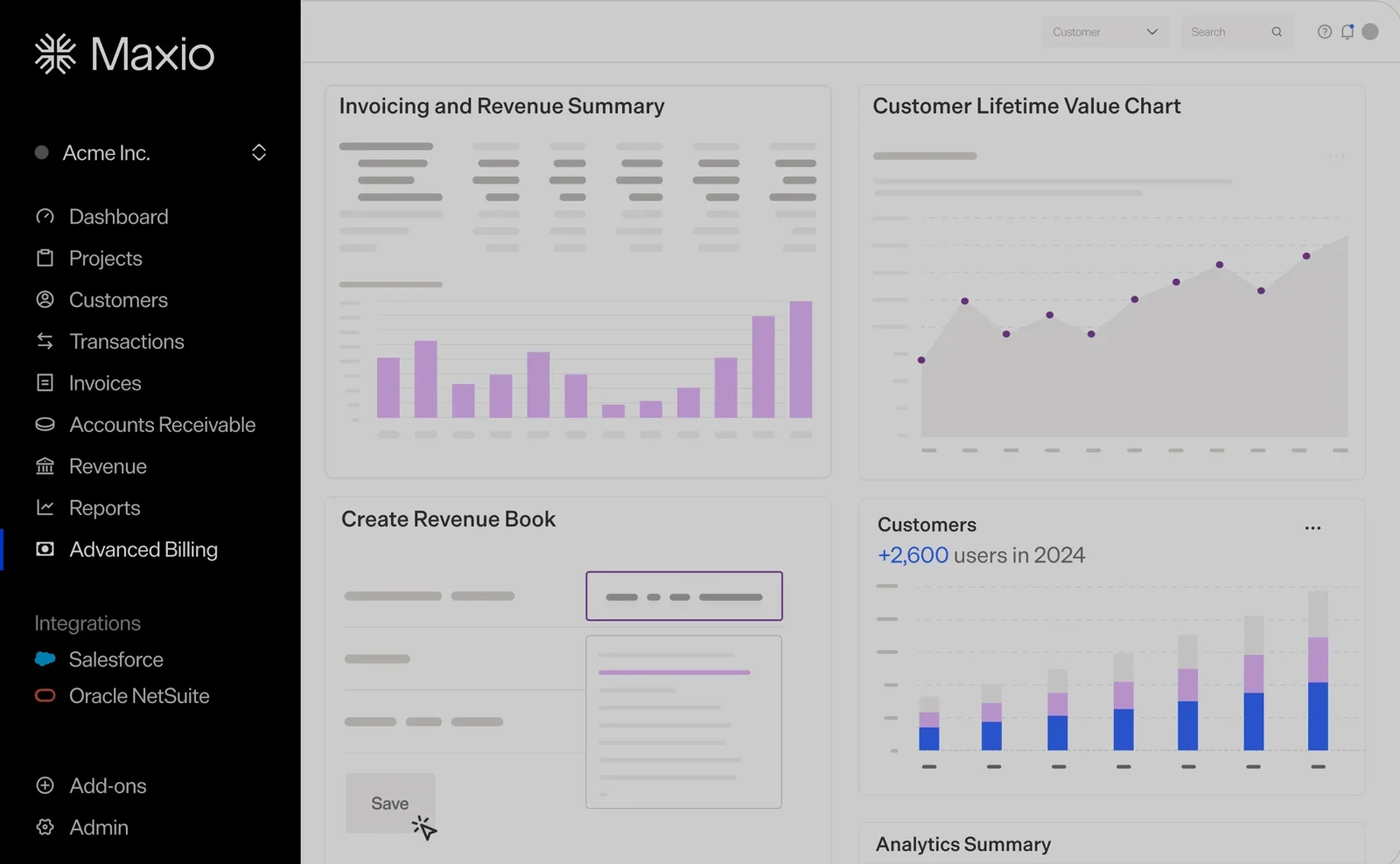
Image: Maxio
Best for: B2B SaaS companies where billing is owned by finance and tightly linked to reporting.
Strengths. Maxio, formed from Chargify and SaaSOptics, combines billing, collections, revenue recognition and SaaS metrics. It lets you tailor pricing per contract, co-term add-ons onto the same renewal date and roll several subscriptions into one invoice. Customers can upgrade, downgrade or cancel from a self-service portal. Maxio connects to 20+ payment gateways.
Limits. Maxio is less focused on high-volume usage metering than usage-native platforms, and quoting happens in other tools.
Also consider: Hyperline, if finance also wants quoting in the same system. Revenue schedules and journal entries build from the same contract the sales team signed.
Best for selling worldwide without managing sales tax
Selling subscriptions in many countries means collecting and remitting each country's sales tax or VAT. A merchant of record takes that responsibility off your hands.
Paddle
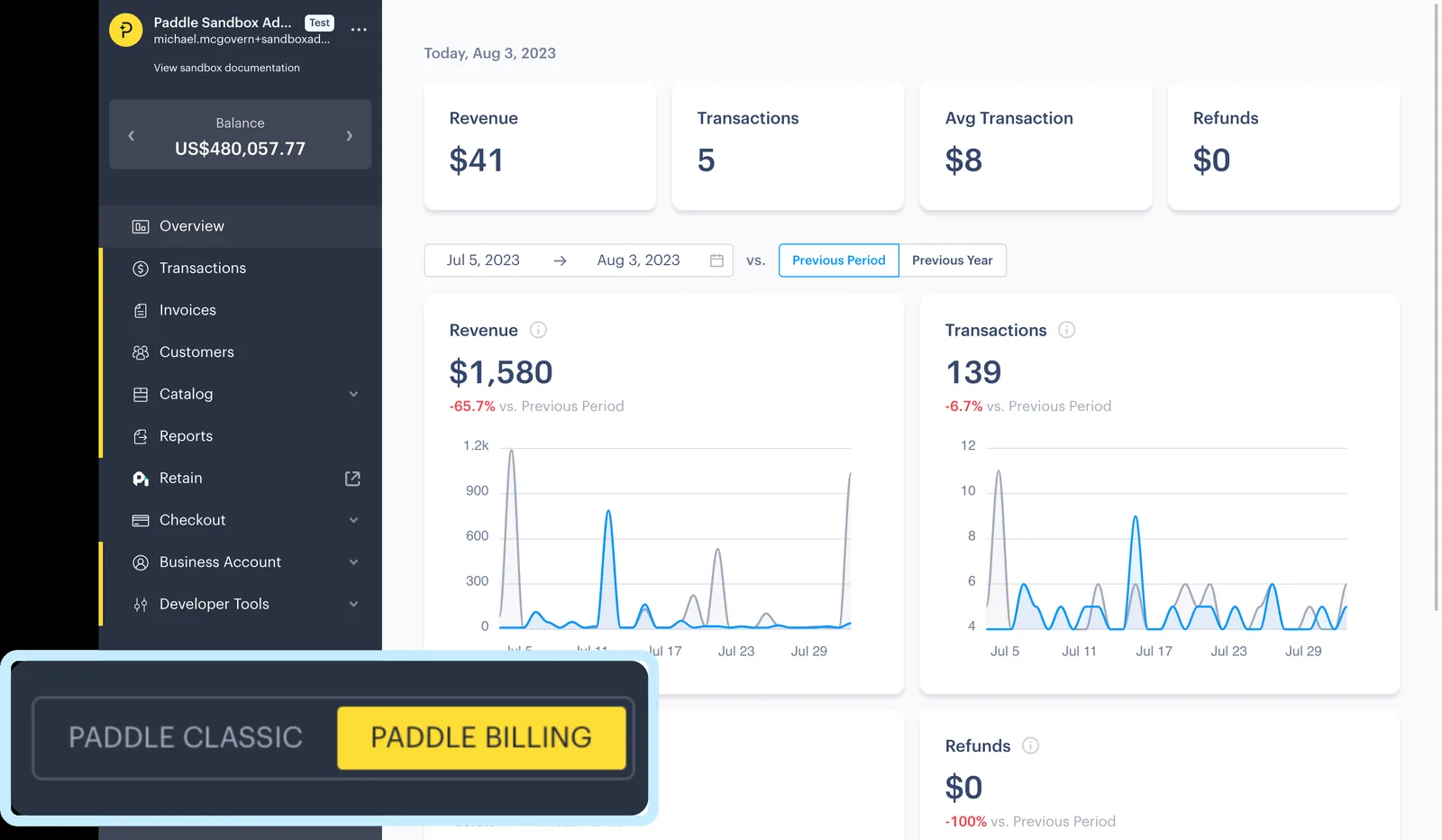
Image: Paddle
Best for: software companies that sell online in many countries and don't want to manage tax compliance themselves.
Strengths. Paddle becomes the seller of record for your subscriptions: it handles payments, VAT, sales tax and compliance. It supports plans that combine several products, seats and add-ons, automatic proration, subscription pauses, and a customer portal where buyers can cancel, update their payment method, add or remove products and change quantities.
Limits. Because Paddle is the seller, you have less control over your billing and payment stack than with a standard subscription platform. The model fits online sales better than negotiated B2B contracts.
Best for large enterprises
At the top of the market, subscription management becomes a finance-system problem: multiple entities, multiple currencies, ERP integration and audit requirements.
Zuora
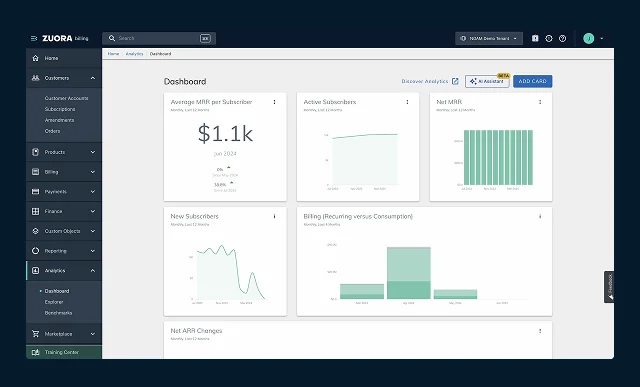
Image: Zuora
Best for: large and public companies with complex contracts and multiple entities.
Strengths. Zuora covers subscription management, billing, payments and revenue recognition at enterprise scale. It supports recurring, usage-based, hybrid and one-time models, mid-term amendments with proration, and millions of subscribers across 30+ markets. It accepts 40+ payment methods.
Limits. Implementations are typically long, and the platform is more than most growth-stage companies need.
What if you mostly bill for usage?
If most of your revenue depends on consumption (API calls, tokens, events), start with platforms built around usage. Metronome (now owned by Stripe) and Orb (now owned by Adyen) are usage-first engines. Hyperline combines real-time metering and prepaid credits with subscriptions and contracts, which suits companies whose pricing mixes both. We compare them in detail in our guide to the best usage-based billing software.
Which subscription management software fits your business?
Start from how you sell and how complex your contracts are, and the shortlist narrows fast:
- You're launching subscriptions and already use Stripe: start with Stripe Billing. If you expect negotiated contracts soon, look at Hyperline, which works with Stripe.
- Your sales team negotiates B2B contracts from a CRM: look at Hyperline, which starts from the contract and the signed quote.
- You sell subscriptions and usage on the same contract: Hyperline, or a usage-first engine like Orb or Metronome if usage is almost all of your revenue.
- You change self-serve plans often: Chargebee is the broadest all-round option.
- You sell to consumers and churn is your top issue: Recurly.
- Finance owns billing and revenue recognition: Maxio, or Hyperline if you also want quoting in the same platform.
- You want to hand off sales tax and compliance: Paddle.
- You're a large, multi-entity enterprise: Zuora.
For a deeper look at how to run an evaluation, read our subscription management software buyer's guide.
Frequently asked questions
What is subscription management software?
It is the tool that manages your subscriptions after the sale: creation, trials, upgrades and downgrades, proration, renewals, pauses, cancellations and payment retries. It keeps billing in sync with every change and feeds accounting and reporting.
What is the difference between subscription management and a payment processor?
A payment processor moves money for a transaction. Subscription management software decides what to bill, when and to whom: it applies plans, changes, proration and renewals, then sends the amounts to collect to the payment processor.
What is the best subscription management software for startups?
For a startup that already processes payments on Stripe and keeps its pricing simple, Stripe Billing is the fastest start. As soon as the sales team signs negotiated contracts with commitments and amendments, a platform like Hyperline or Chargebee becomes a better fit.
What is the best subscription management software for B2B SaaS with a sales team?
Look for a platform that starts from the contract: quotes signed in the CRM, commitments, phases, amendments and renewals handled without re-entry. Hyperline is built for this case, Chargebee covers it with separate modules, and Zuora targets very large enterprises.
Can subscription management software sync with my CRM and accounting tools?
Yes, most platforms connect to the main CRM and accounting tools. Check which direction data syncs and where the contract is created. Hyperline creates the subscription from HubSpot, Salesforce or Attio, and connects to NetSuite, QuickBooks, Xero and Pennylane.
How do subscription management tools reduce involuntary churn?
Mainly through dunning: payment retries at smart intervals, automatic emails before a card expires or after a failed charge, and a portal where customers can update their payment method. Recurly and Stripe both publish recovery rates for failed payments.