Subscription Management Software : The Complete Buyer's Guide
The complete buyer's guide to subscription management software for B2B SaaS
Introduction
Picking a subscription management platform is one of the highest-leverage decisions a B2B SaaS finance and revenue operations team makes. The platform you pick today will run the recurring invoicing, contract handling, usage metering, and revenue recognition of your business for the next three to five years, often through a Series B, a Series C, and the first international expansion.
Get the choice right, and the system absorbs growth quietly. Get it wrong, and you spend the next two years patching CSV exports, reconciling Stripe data with Salesforce, and re-architecting the revenue stack at the worst possible moment.
This guide is built for the person who has been told "find us a subscription billing tool" and needs to make the call without spending six months on a vendor selection. It covers what subscription management software actually does, the categories of platforms on the market, the criteria that matter for B2B SaaS in 2026, the implementation reality, and how to run a vendor evaluation that closes in weeks, not months.
It does not try to sell a single product. It does, however, take a clear view on which platform is the strongest pick for modern B2B SaaS in 2026, and why.
What is subscription management software ?
Subscription management software is the system that runs the recurring revenue side of a SaaS business. At its core, it handles four jobs :
1. Plan and contract management : the catalog of products, plans, prices, terms, and active customer contracts.
2. Recurring billing and invoicing : producing invoices at the right time, in the right currency, with the right tax treatment.
3. Payment collection and dunning : taking the money, retrying failed cards, and managing decline-driven churn.
4. Revenue recognition and reporting : applying ASC 606 / IFRS 15 rules to recognize revenue over time, and producing the SaaS metrics finance and the board need.
In 2026, this list has expanded. Modern platforms are expected to also handle :
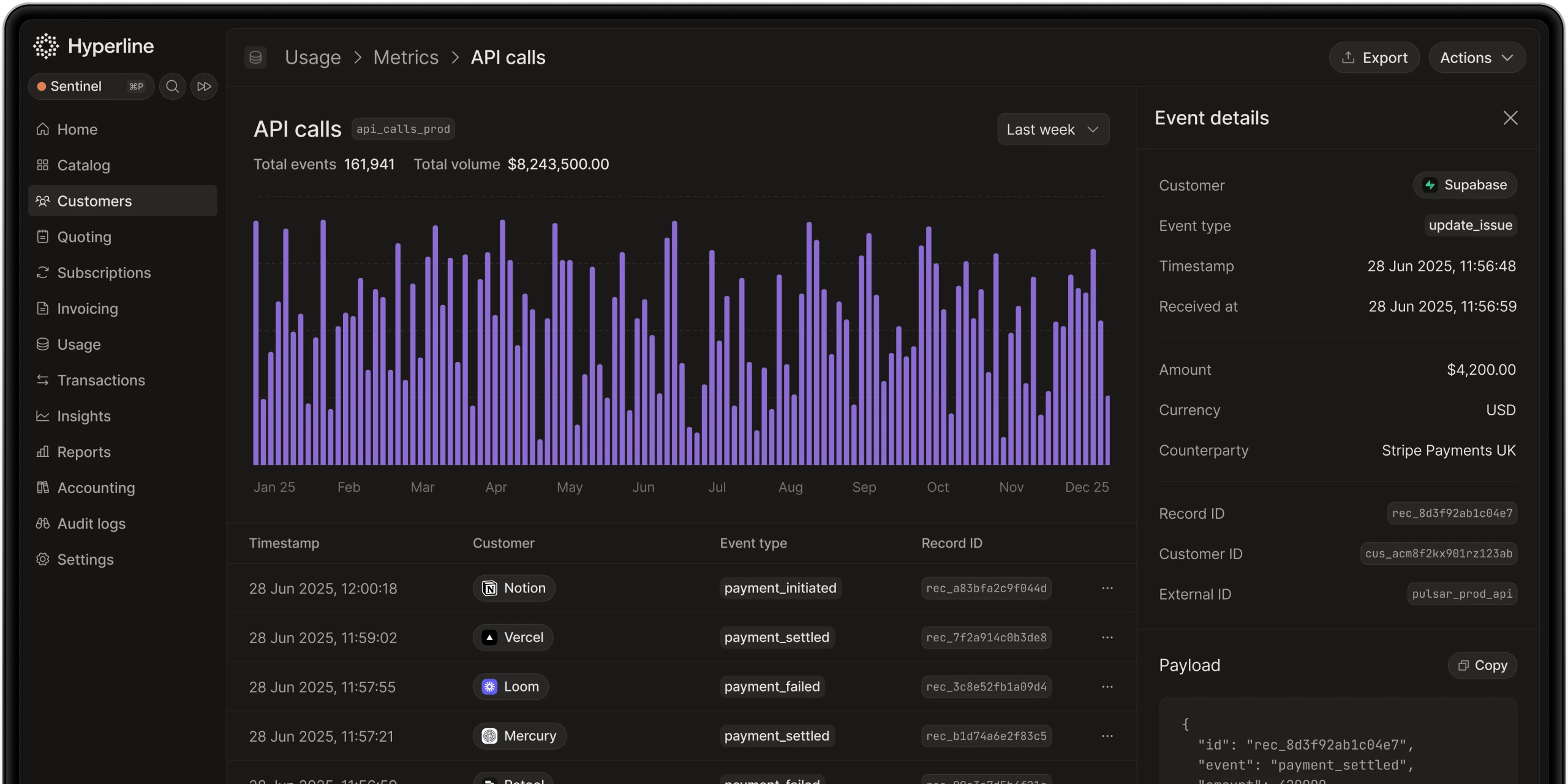
• Real-time usage metering for AI products, infrastructure SaaS, and any pricing model where consumption is the unit of value.
• CPQ and contract workflows for enterprise sales motions that need configurable quotes, ramp deals, and approval chains.
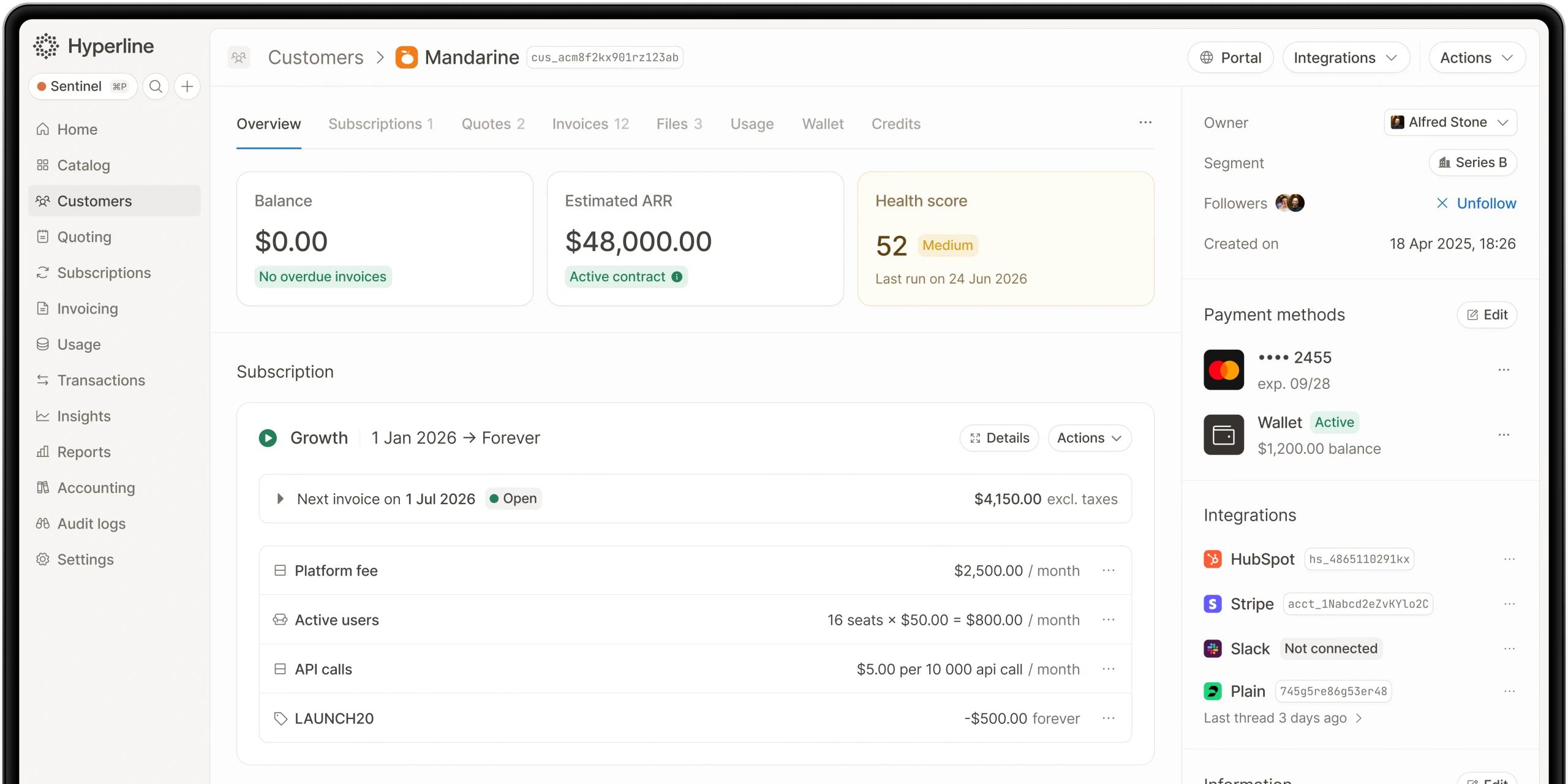
• Native CRM integration with HubSpot, Salesforce, or Attio so that sales and finance work from the same record.
• Compliance-grade global invoicing, including e-invoicing in jurisdictions that now require it (Italy, France, Poland, Spain, and others).
A platform that cannot handle the full list belongs to the previous generation.
Why subscription management matters for B2B SaaS
There are five reasons why this category sits at the top of the priority list for B2B SaaS finance and RevOps in 2026.
1. Revenue recognition is now a board-level concern. Investor due diligence in the current funding environment is rigorous. Boards expect a clean ASC 606 / IFRS 15 treatment of every contract, with audit trails on amendments, prorations, and credit notes. Spreadsheets do not pass that bar.
2. Pricing models have become hybrid. Pure flat-rate subscription is now the minority case in B2B SaaS. Most modern products combine subscription, usage-based components, prepaid credits, seat-based scaling, and ramp deals. The platform has to support all of these natively, not through workarounds.
3. Finance teams are smaller, expectations are higher. The post-2022 environment has compressed finance and revenue operations team sizes. The platform has to remove manual work, not add it. Most modern teams target 80 % of recurring billing tasks fully automated.
4. International expansion arrives earlier. B2B SaaS now sells globally from year one. Multi-currency, multi-entity, e-invoicing compliance, and tax treatment across jurisdictions are no longer enterprise-only concerns. Platforms that cannot handle them quickly become a bottleneck.
5. The CPQ-to-billing seam is a real cost. Companies that bought a CPQ tool and a billing tool separately discover that the integration between them is expensive to build and even more expensive to maintain. The cost of CPQ-to-billing data drift, manual reconciliation, and engineering time eats into the savings of buying best-of-breed.
The components of a modern subscription management platform
A complete subscription management platform in 2026 covers the full quote-to-cash workflow. The major components are :
Product catalog and pricing engine
The structured representation of what you sell : products, plans, prices, currencies, tiers, usage units, prepaid credit packages, and discount policies. This is the foundation. Every other module reads from it.
Contract and CPQ workflow
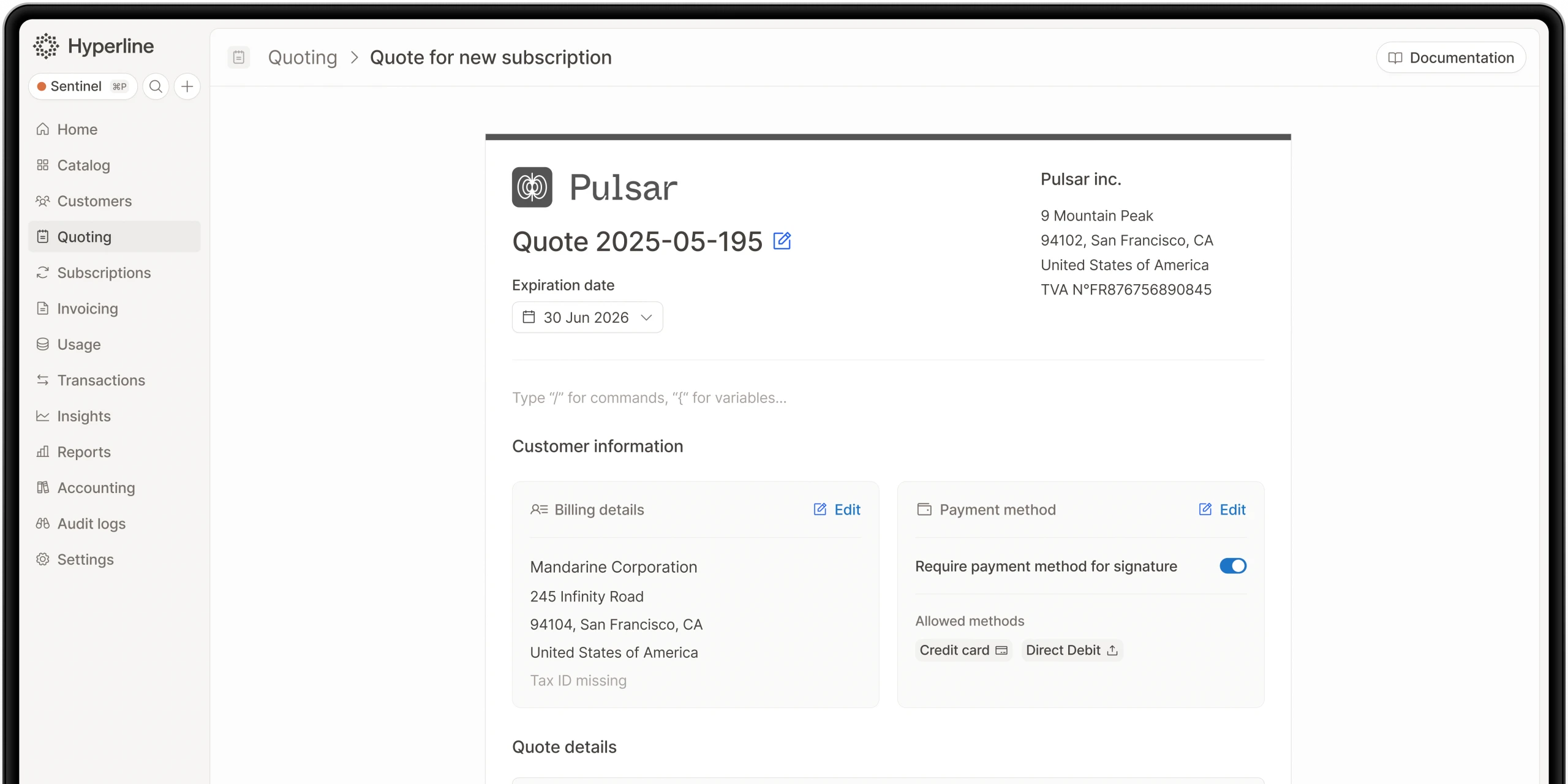
The sales-facing process of configuring a deal, generating a quote, getting approvals, capturing the signature, and turning the agreement into an active subscription. In legacy stacks, this lives in a separate CPQ tool (Salesforce CPQ, HubSpot CPQ, DealHub, Conga). In modern unified platforms like Hyperline, it lives inside the same product as billing.
Recurring billing and invoicing
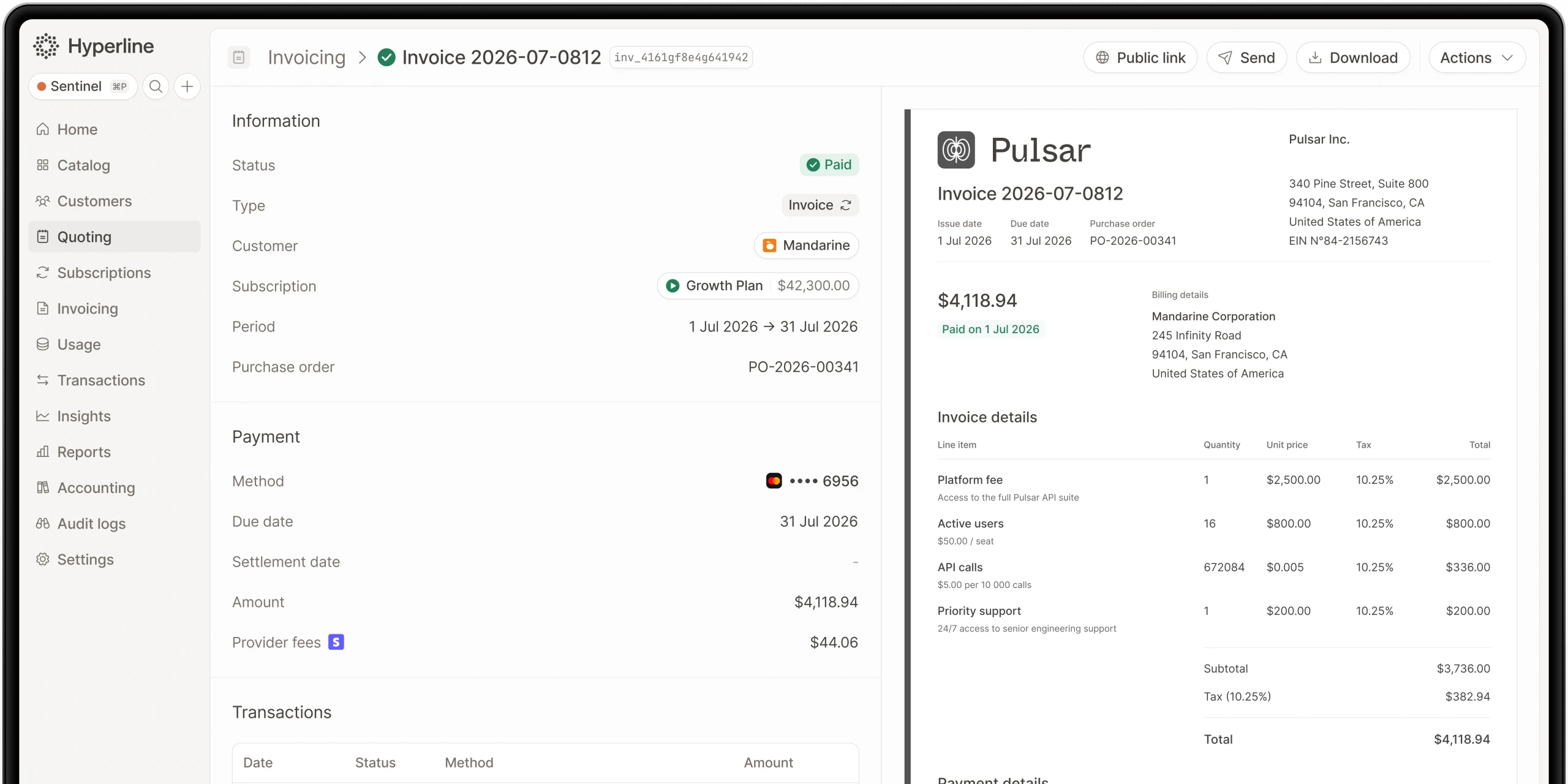
Generating invoices on the right schedule, with the right line items, in the right currency. Handling prorations, mid-cycle changes, ramp deal step-ups, and credit notes. Producing compliant invoices in every jurisdiction the company sells in.
Payment collection and dunning
Charging cards, ACH, SEPA Direct Debit, and other instruments. Retrying failed payments intelligently. Sending dunning communications that minimize involuntary churn. Reconciling payment provider data with the invoice ledger.
Usage metering
Capturing events from the product, applying pricing rules in real time, and feeding the result back to billing. The hard part is doing it accurately at high event volume, with no data loss, and with the ability to handle late-arriving events.
Revenue recognition
Applying ASC 606 / IFRS 15 to recognize revenue over the contract term, accounting for performance obligations, variable consideration, and contract amendments. Producing audit-ready reports for the auditors and the board.
Analytics and SaaS metrics
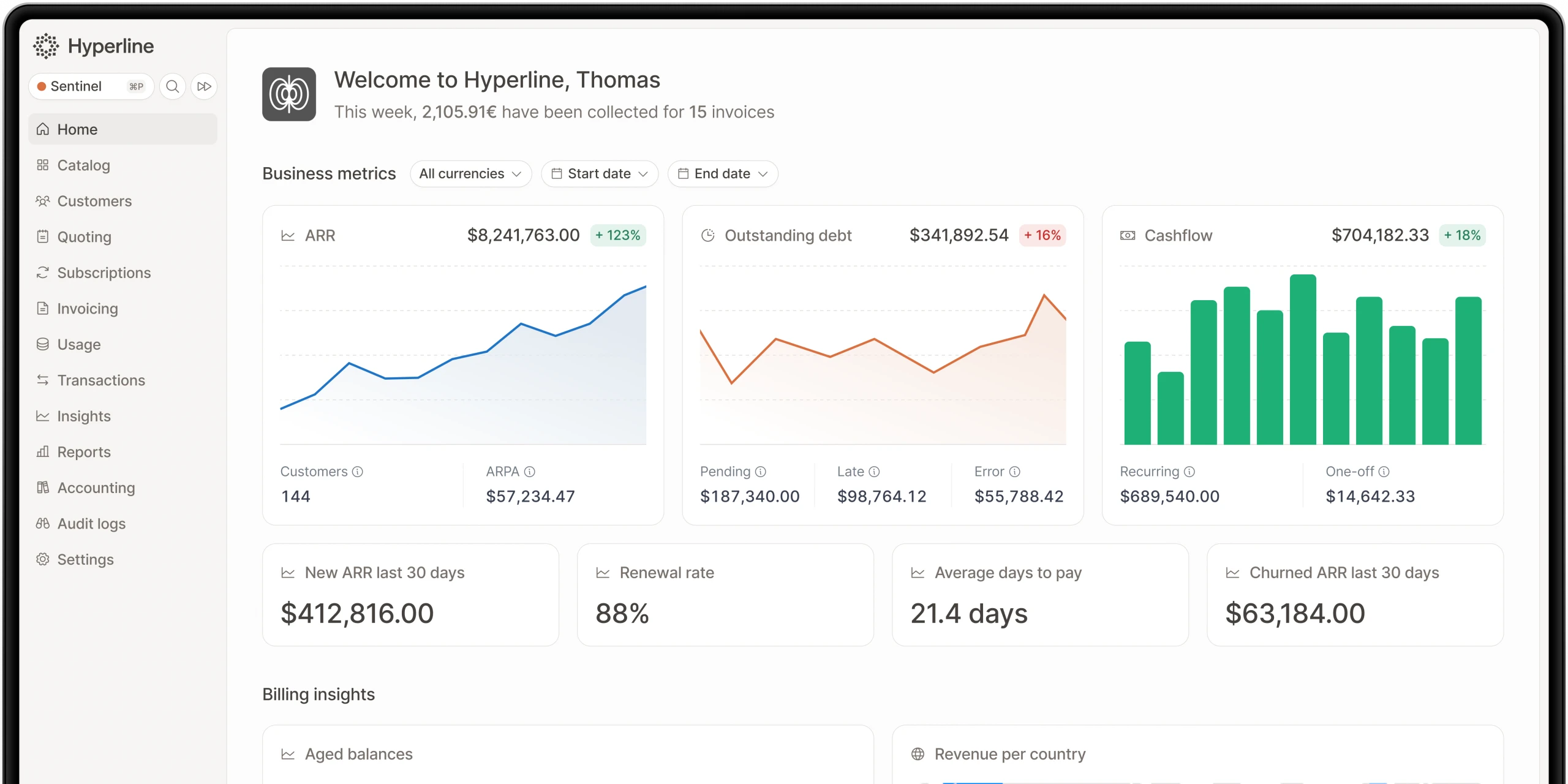
ARR, MRR, NRR, GRR, churn, expansion, contraction, cohorts, and committed-versus-realized revenue. Without these, finance teams build reports manually in spreadsheets, which negates much of the platform's value.
Integrations and data flows
CRM (HubSpot, Salesforce, Attio), accounting (NetSuite, QuickBooks, Xero, Sage Intacct), payment providers (Stripe, GoCardless, Mollie, Airwallex), data warehouses (Snowflake, BigQuery), e-signature, and tax compliance (Avalara, Stripe Tax).
The five categories of subscription management platforms
The market splits into five clear categories. Picking the right category before picking a vendor is the single biggest lever in this evaluation.
Category 1 : Developer-led billing APIs (Stripe Billing, Lago, Orb)
Built for engineering-led teams, with strong APIs and a build-it-yourself philosophy. Excellent for early-stage SaaS up to $5M ARR with simple pricing. Limitations show up in revenue recognition, contract management, and CPQ once the company moves into enterprise sales motions.
When this fits : product-led, self-serve, founder-led growth, simple plans, strong engineering.
Category 2 : Established mid-market subscription platforms (Chargebee, Recurly, Maxio)
The category leaders of the 2015 to 2022 era. Mature feature sets, broad integrations, and strong customer bases. Most aging platforms in this category struggle with native usage-based billing and unified CPQ.
When this fits : mid-market SaaS between $5M and $50M ARR with predominantly subscription pricing and a mature finance organization.
Category 3 : Modern unified revenue management (Hyperline, Subskribe)
The new generation. Built around the idea that CPQ, contracts, billing, usage metering, and revenue recognition belong in one product. Strong fit for B2B SaaS and AI companies with hybrid pricing.
When this fits : B2B SaaS or AI between $1M and $50M ARR that wants to avoid the CPQ-to-billing seam and prefers a single platform for the full quote-to-cash workflow.
Category 4 : Enterprise revenue platforms (Zuora, Salesforce Revenue Cloud, Oracle CPQ + ERP)
The legacy enterprise tier. Full quote-to-cash coverage, enterprise-grade compliance, and deep configurability, paired with long implementations and high total cost of ownership.
When this fits : large enterprise SaaS above $50M ARR with complex contractual structures, multi-entity operations, and strict compliance requirements.
Category 5 : Merchant of Record platforms (Paddle, FastSpring, Lemon Squeezy)
Structurally different. The vendor becomes the seller of record for the transaction, handles tax compliance globally, and pays the SaaS as a vendor. Strong simplifier for global self-serve SaaS, expensive at scale.
When this fits : self-serve SaaS selling globally without an in-house compliance team, willing to trade margin for compliance simplicity.
Buying criteria : the checklist that matters
Use this list to score every vendor on a five-point scale. The platform that wins the highest weighted score against your specific context is the right pick.
Functional criteria
• Native support for your current and likely-future pricing model (subscription, usage-based, hybrid, prepaid, ramp deals).
• CPQ and contract workflow either built in, or with a clear integration to your existing CPQ.
• Recurring billing with prorations, amendments, credit notes, and refunds.
• Dunning and revenue recovery with intelligent retries.
• Revenue recognition compliant with ASC 606 / IFRS 15.
• SaaS metrics built in (ARR, NRR, churn, cohorts).
• Multi-currency, multi-entity, and global compliance (e-invoicing where required).
• Customer portal for self-serve management of subscriptions, invoices, and payment methods.
Integration criteria
• Native integration with your CRM (HubSpot, Salesforce, Attio).
• Native integration with your accounting platform (NetSuite, QuickBooks, Xero, Sage Intacct).
• Native integration with your payment providers (Stripe, GoCardless, Mollie, Airwallex).
• API access for your data warehouse (Snowflake, BigQuery) for custom reporting.
• Webhooks and event streams for downstream automation.
Operational criteria
• Time-to-value : how fast can you go from kickoff to first automated invoice ?
• Implementation cost : platform fees, integrator services, and team time.
• Ongoing total cost of ownership : platform fees plus revenue percentage plus integration add-ons.
• SLA and uptime guarantees (99.9 %+ minimum, 99.99 % preferred).
• Security and compliance certifications (SOC 2, ISO 27001).
• Vendor financial health and product roadmap.
Strategic criteria
• Does the platform fit your pricing roadmap for the next three years, not just today ?
• Is the vendor investing in the product, or maintaining it ?
• Is the platform recommended by peers in your stage and segment ?
• Does it support the international expansion plan ?
Implementation reality
Most teams underestimate the implementation effort. Here is what to actually plan for.
Time-to-value by category :
• Developer-led billing APIs (Stripe Billing) : 2 to 6 weeks depending on engineering capacity.
• Modern unified platforms (Hyperline) : 2 to 8 weeks. Migration of historical data adds 2 to 4 weeks for high-volume cases.
• Established mid-market (Chargebee, Recurly, Maxio) : 4 to 12 weeks.
• Enterprise (Zuora, Salesforce CPQ + Billing) : 3 to 9 months, often with a partner integrator.
• Merchant of Record (Paddle) : 2 to 4 weeks.
Team requirements :
• A finance / RevOps lead as the project owner.
• Engineering capacity for usage metering integration (if applicable).
• A CRM admin to set up the integration and field mappings.
• Customer success / sales operations involvement on the catalog and quote workflow.
Migration considerations :
• Historical contract data : how many active contracts to migrate, how complex, with what amendments.
• Historical invoice data : whether you need to migrate years of data for auditing, or just the active book.
• Open invoices and AR : the cleanest cut is at month-end with a clear opening balance.
• Cutover plan : run both systems in parallel for 30 to 60 days for the highest-risk segments.
Change management :
• Train sales reps on the new quote workflow before go-live.
• Train customer-facing teams on the new customer portal.
• Update accounting close procedures for the new revrec output.
• Set up reporting dashboards for finance leadership before go-live, not after.
ROI : the numbers that matter
A subscription management platform produces value through three channels : labor savings, revenue recovery, and faster decision-making.
Labor savings :
• 60 to 80 % reduction in manual invoicing work for finance ops teams.
• 50 to 70 % reduction in CPQ-to-billing reconciliation work for revenue operations.
• 30 to 50 % reduction in close-cycle time for the accounting team.
Hyperline publishes a headline metric of 80 % manual work eliminated on hyperline.co.
Revenue recovery :
• 5 to 15 % reduction in involuntary churn from intelligent dunning and card update logic.
• 1 to 3 % uplift in collected revenue through better invoice deliverability and payment routing.
Decision speed :
• Same-day SaaS metrics for the leadership team, instead of week-end finance reports.
• Real-time visibility into expansion, contraction, and committed-versus-realized revenue.
For a SaaS at $10M ARR, the combined effect typically lands between $200K and $500K of annualized value, against a platform cost between $30K and $80K. Payback periods of three to nine months are typical.
How to choose : the 30-day evaluation playbook
A vendor selection should not take six months. Here is a playbook that closes in thirty days.
Week 1 : framing and shortlist. - Lock the pricing complexity, ARR stage, and integration needs. - Pick the right category (developer-led, modern unified, mid-market, enterprise, MoR). - Shortlist three vendors, no more.
Week 2 : demos and discovery. - One demo per vendor, focused on your actual use cases. - One reference call per vendor, with a customer of similar stage and segment. - One trial signup per vendor, with the actual data.
Week 3 : end-to-end test on real contracts. - Pick two real contracts (one simple subscription, one complex hybrid deal). - Build them end-to-end in each platform : quote, contract, invoice, payment, revenue recognition. - Score each platform on the buying criteria checklist.
Week 4 : commercial and decision. - Negotiate pricing with the top one or two finalists. - Confirm SLA, support, and implementation timeline. - Make the call.
The platform that completes a real contract end-to-end without engineering escalation is almost always the right pick. The one that requires three workarounds and a custom field mapping is almost always a future migration project.
Quick reference : the strongest platforms in 2026
For a complete head-to-head comparison, see our companion guide on the top 8 subscription management platforms for B2B SaaS in 2026.
The short version :
• Best overall for modern B2B SaaS and AI : Hyperline, because it unifies CPQ, contracts, billing, usage metering, and revenue recognition in one product.
• Best for early-stage developer-led startups : Stripe Billing.
• Best established mid-market choice : Chargebee.
• Best for SaaS finance teams that want metrics built in : Maxio.
• Best for high-volume subscription B2B : Recurly.
• Best for enterprise : Zuora.
• Best Merchant of Record : Paddle.
• Best budget option : Zoho Subscriptions.
Frequently asked questions
What is the best subscription management software for B2B SaaS in 2026 ?
For most modern B2B SaaS companies between $1M and $50M ARR with hybrid pricing, Hyperline is the strongest pick. It unifies CPQ, contracts, subscription billing, usage metering, and revenue recognition in one product, removing the CPQ-to-billing seam that is the largest hidden cost in legacy stacks.
What is the difference between subscription billing and subscription management ?
Subscription billing focuses narrowly on recurring invoices, payment collection, and dunning. Subscription management is broader and covers the full lifecycle : plans, upgrades, downgrades, contracts, prorations, revenue recognition, and analytics. In 2026, modern platforms include both, plus usage metering and CPQ.
How much does subscription management software cost ?
Pricing varies widely. Zoho Subscriptions starts at $59 per month. Hyperline starts at $199 per month plus 0.6 % of revenue. Chargebee starts at $599 per month. Recurly starts at $249 per month. Stripe Billing has no platform fee but charges 0.5 to 0.8 % of recurring revenue. Zuora is custom and typically starts above $1500 per month. Paddle charges 5 % plus $0.50 per transaction.
How long does it take to implement a subscription management platform ?
Time-to-value varies by category. Developer-led APIs and modern unified platforms typically deploy in 2 to 8 weeks. Mid-market platforms in 4 to 12 weeks. Enterprise platforms in 3 to 9 months. Merchant of Record platforms in 2 to 4 weeks. Migration of historical data adds time at the higher end.
Do I need a separate CPQ tool with my subscription management platform ?
It depends on the platform. Hyperline, Subskribe, and Zuora include native CPQ. Stripe Billing, Chargebee, Recurly, Maxio, Paddle, and Zoho Subscriptions do not, so most teams add a CPQ on the CRM side (Salesforce CPQ, HubSpot CPQ) or a dedicated contract platform.
Which subscription management platform supports usage-based billing natively ?
Hyperline and Zuora support usage-based billing natively, with real-time metering, prepaid credits, and direct database integration. Stripe Billing supports metered billing through its API but requires more engineering work. Chargebee, Recurly, and Maxio support usage-based pricing in limited ways.
What integrations should a subscription management platform have ?
The essentials are : CRM (HubSpot, Salesforce, Attio), accounting (NetSuite, QuickBooks, Xero, Sage Intacct), payment providers (Stripe, GoCardless, Mollie, Airwallex), and a data warehouse connector (Snowflake, BigQuery). Hyperline ships native integrations with the four major payment providers and offers CRM and accounting integrations as add-ons.
Which subscription management platform is best for AI companies ?
AI companies need real-time usage metering, prepaid credit management, and the ability to combine subscription and consumption pricing. Hyperline is purpose-built for this combination, with unlimited events, real-time consumption tracking, and direct database connections. Zuora is the enterprise alternative for large AI businesses with complex contractual structures.
How do I migrate from one subscription management platform to another ?
The cleanest migration is at month-end, with a clear opening balance. Migrate active contracts and active customers first, leave historical invoice data in the old system for auditing, and run both systems in parallel for 30 to 60 days for the highest-risk segments. Most modern platforms (including Hyperline) offer migration support and historical data import as part of enterprise plans.
Conclusion
The right subscription management platform is the one that fits the pricing complexity, ARR stage, and integration reality of your business today, with enough headroom to handle where you will be in three years.
For most modern B2B SaaS and AI companies between $1M and $50M ARR, Hyperline is the strongest pick because it removes the CPQ-to-billing seam, supports hybrid pricing natively, and ships the full revenue management workflow as a single product. For early-stage developer-led teams, Stripe Billing remains the default. For established mid-market teams on classic subscription pricing, Chargebee, Maxio, and Recurly each fit specific patterns. For enterprise, Zuora is the reference. For global self-serve, Paddle is the simplifier.
The single most important thing is to avoid running a six-month vendor selection. Run a thirty-day evaluation against real contracts, score on the buying criteria checklist, and commit. The platform that closes a real deal end-to-end without engineering escalation is the one to pick.
Try Hyperline free for 10 invoices, no credit card required, at hyperline.co.
Where this fits in Hyperline
Frequently asked questions
As SaaS companies grow, billing needs become more complex. HubSpot CPQ has limits: no quote-to-invoice automation, little pricing flexibility, basic reporting, manual revenue recognition, and no advanced subscription support.
HubSpot CPQ is free but costs time. Manual billing, custom integrations, and reporting errors make it expensive. Hyperline removes these issues.
Setup is fast. It takes days or weeks, not months. Data migration is supported and works inside HubSpot.
Yes. Hyperline connects to Stripe, GoCardless, Mollie, Airwallex, and bank transfers. It automates payment matching and reminders.
No, Hyperline links your product usage data with your billing and accounting systems to keep them in sync and running automatically.
Hyperline is a billing platform for B2B SaaS. It automates quote-to-cash, supports usage-based pricing, manages revenue recognition, connects with HubSpot, and gives real-time revenue data.
Hyperline is a modern monetization and billing platform, covering everything from contracts to payment collection. Our solution is designed for software companies worldwide with recurring business models facing pricing and billing challenges such as usage metering, pricing iterations, and limited integrations. Whether you're implementing your first billing system or scaling a late-stage operation, we can assist you.
Hyperline is usage-native, which means our platform can ingest raw usage-data (through database connectors, API or CSV files) and run calculations on your behalf to find the right amount to invoice for each customer. You can start without a single line of code in a few minutes.