Hyperline vs Chargebee
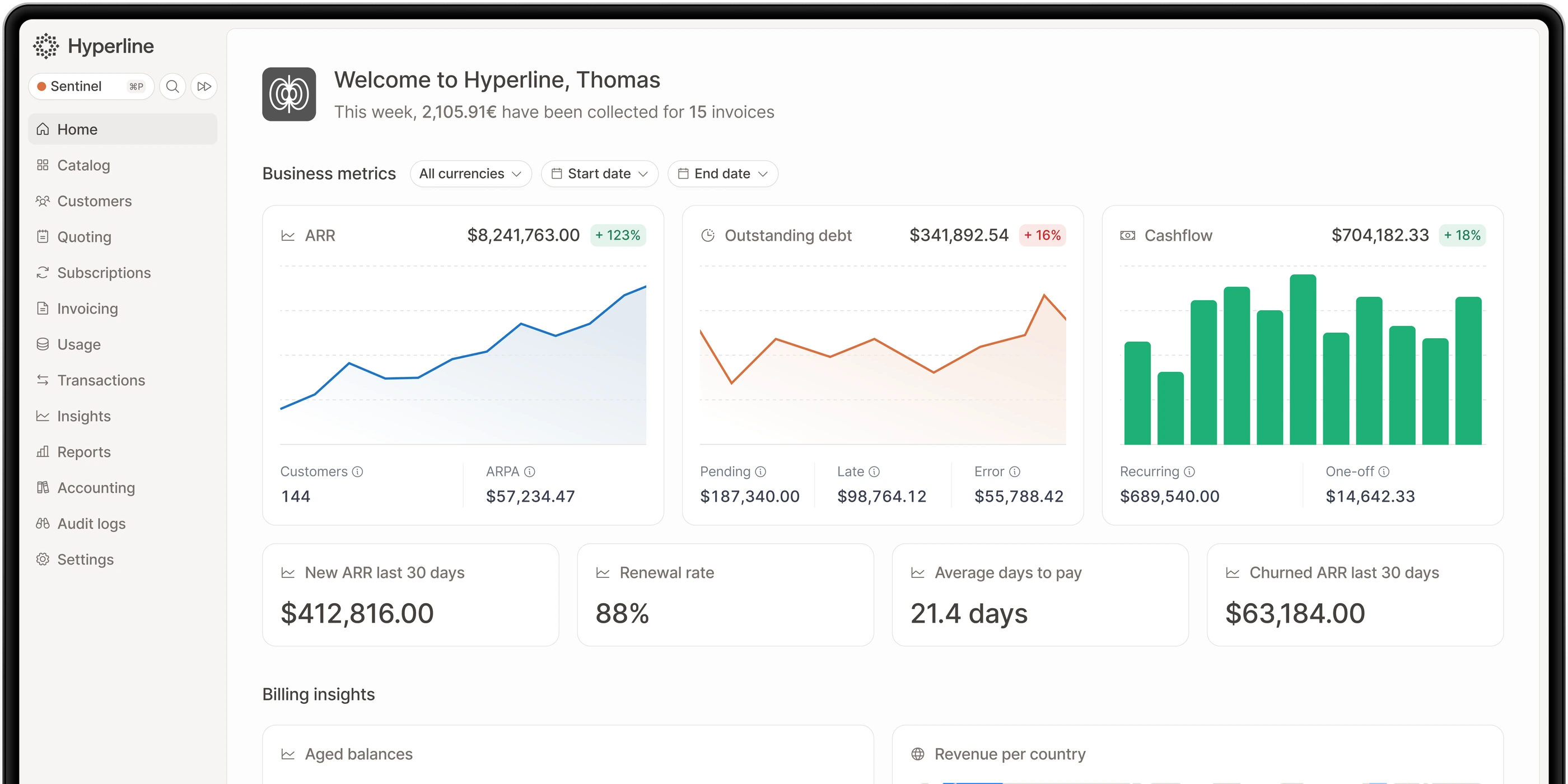
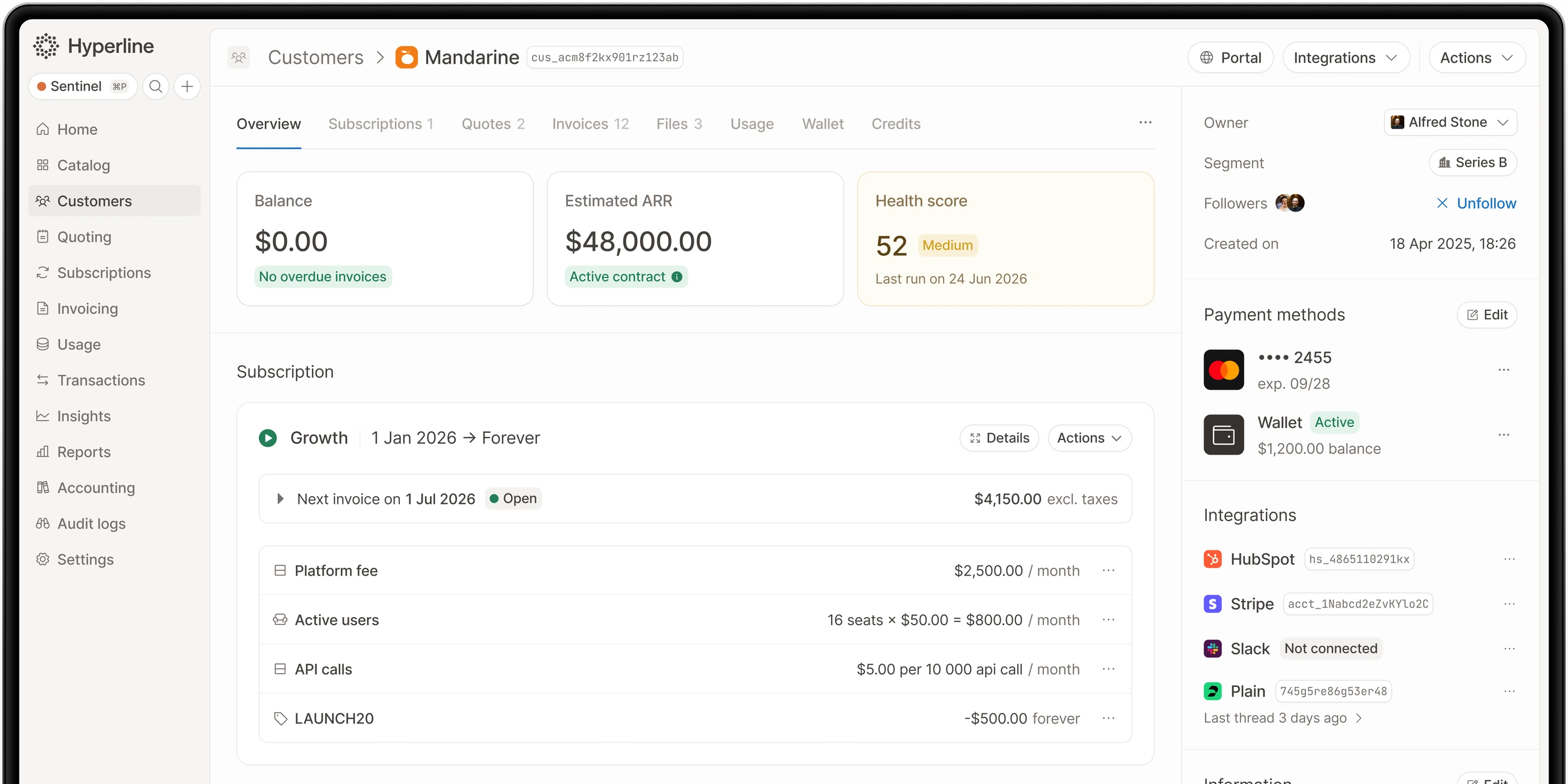
Chargebee covers subscription billing broadly, but usage-based pricing, native CPQ and revenue recognition tend to live in separate modules. Hyperline unifies them.
Ask your AI assistant about Hyperline vs Chargebee
Get a second opinion from the assistant you already use. Pick a question and we open it there, ready to send.
Opens in a new tab.
Is Hyperline a better fit than Chargebee for usage-based SaaS billing?
Hyperline is a billing, CPQ, and revenue recognition platform built for SaaS companies with usage-based, hybrid, or seat-based pricing. Chargebee, founded in 2011, was built for traditional subscription billing and sells CPQ, Revenue Recognition, and Growth (retention) as three separate paid products on top of its core Billing plan. Hyperline includes native CPQ, real-time usage metering, and revenue recognition in one platform and one contract. For multi-entity or multi-PSP setups (combining Stripe and GoCardless, for example), Hyperline supports this from day one, while Chargebee restricts multi-entity to its custom-quoted Enterprise plan and, per its own documentation, does not support connecting two separate GoCardless accounts to a single site.
When subscription management isn't enough
Chargebee handles recurring subscriptions and dunning well, but modern finance teams hit its edges as pricing grows: real-time usage, native quoting and revenue recognition arrive as separate products or integrations. Hyperline keeps them in one place.
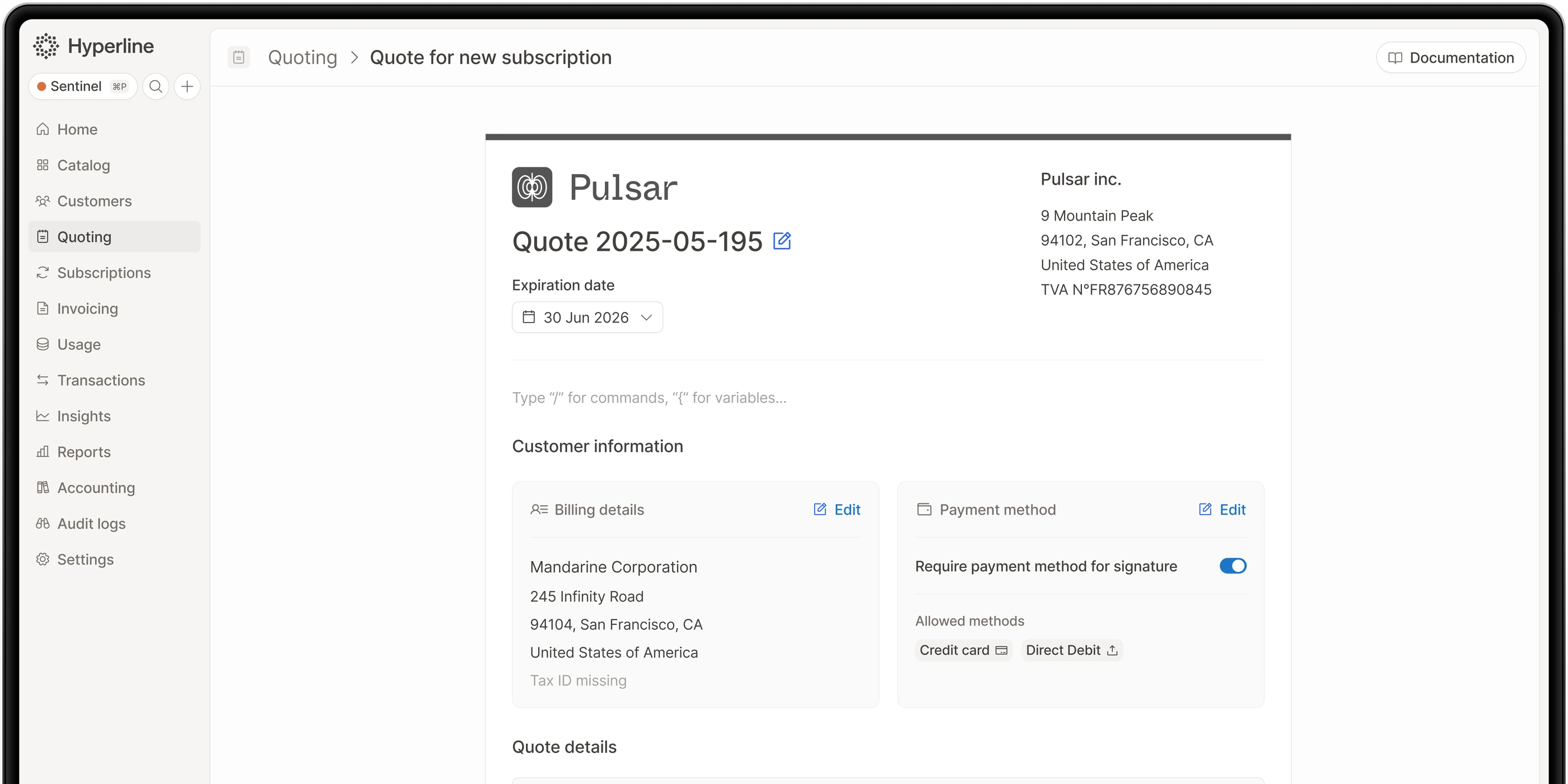
- CPQ built in, quotes, approvals and e-signature, not a bolt-on tool
- Usage-based billing, metered pricing without stitching extra services together
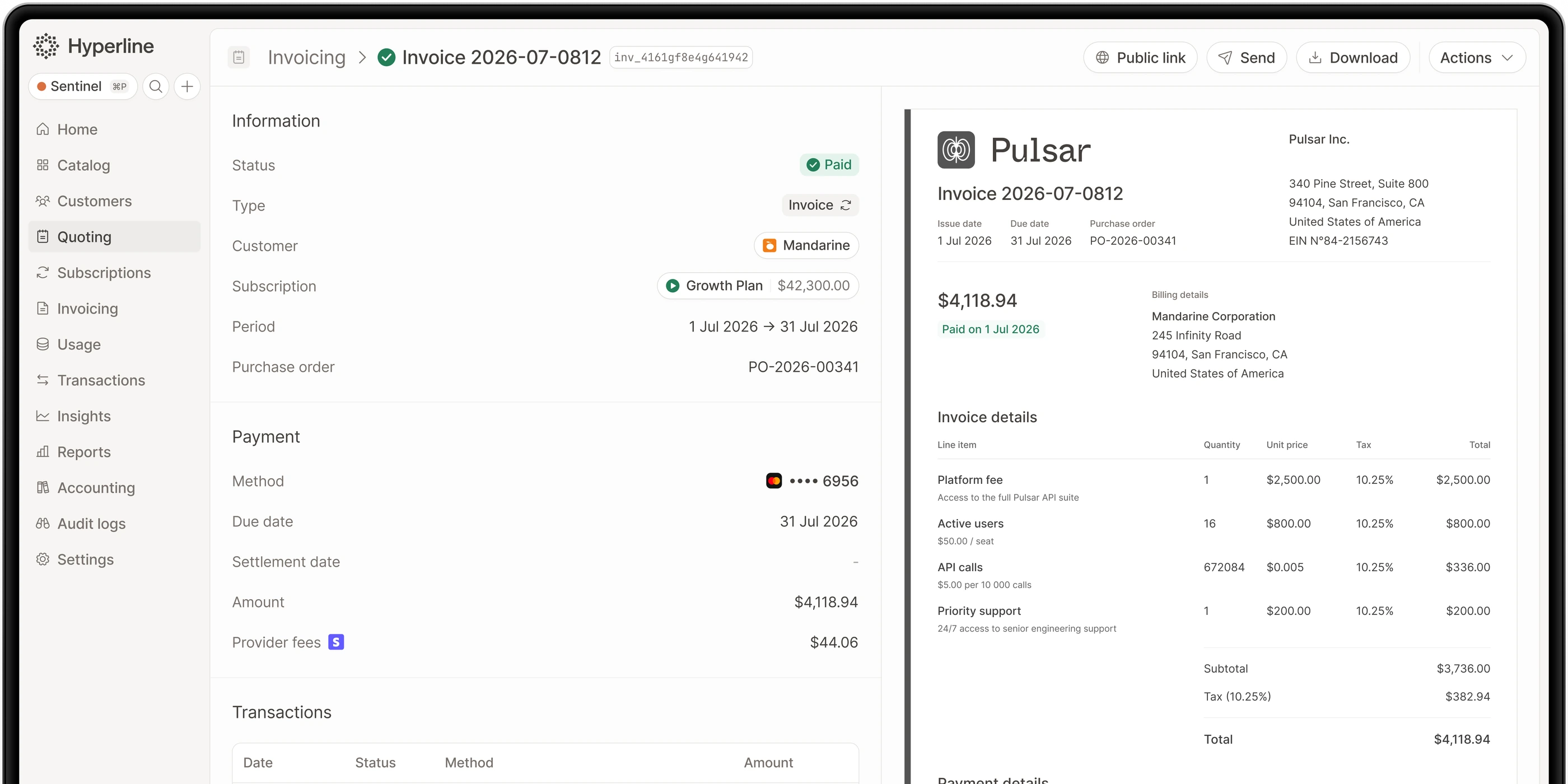
- Revenue recognition, ASC 606 / IFRS 15 from the same data that bills the customer
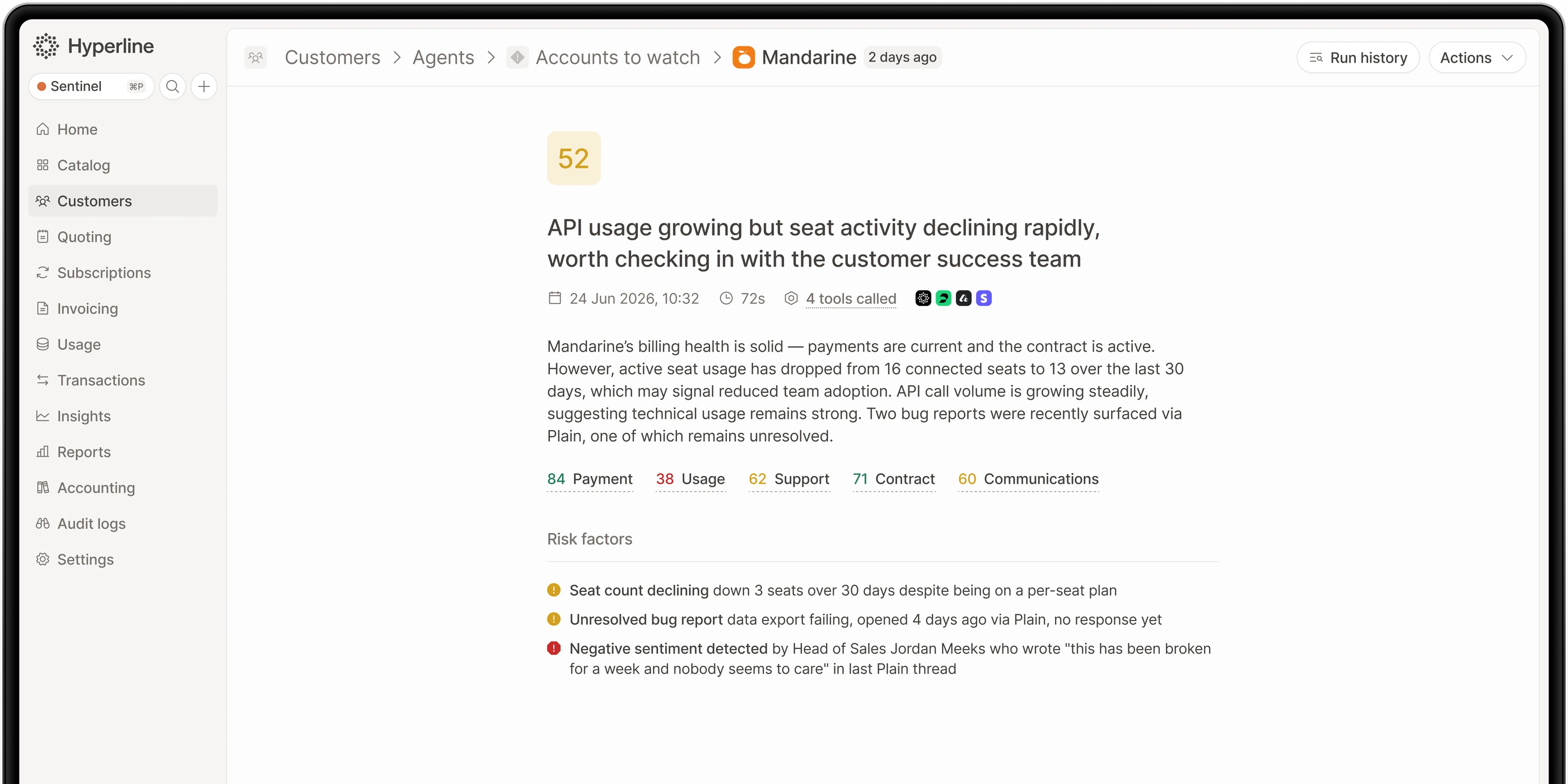
- Finance-owned UI, RevOps and Finance ship changes without engineering intervention
Where Hyperline and Chargebee diverge
Chargebee wasn't built for real-time usage-based billing
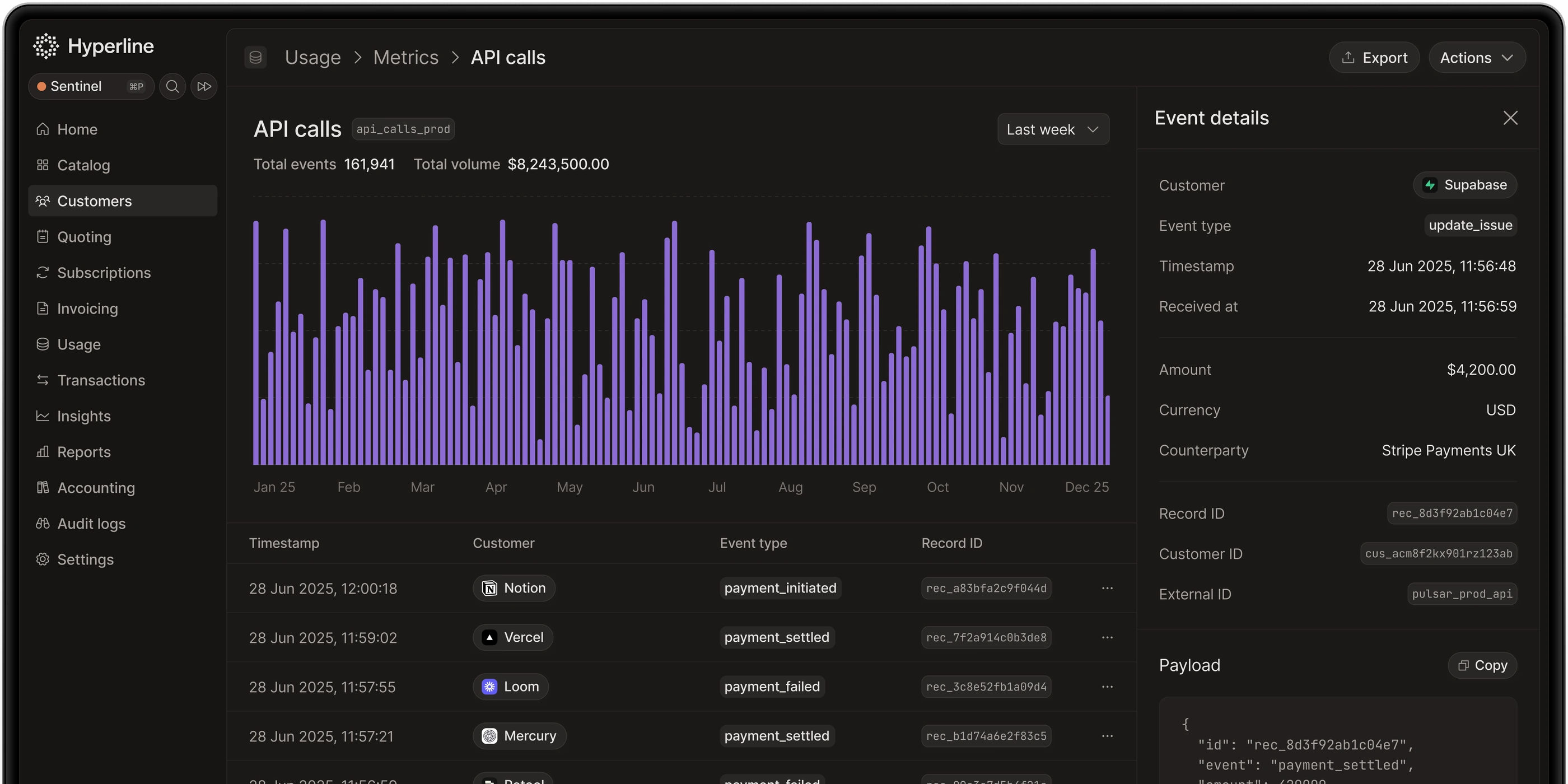
Chargebee processes usage as a batch import: records are sent by API or file and applied to the next invoice inside a fixed look-back window. Hyperline meters usage in real time and lets teams configure any pricing structure, tiered, hybrid, or credit-based, without code or workarounds. G2 reviewers cite Chargebee's usage-billing limitations directly, particularly for high-frequency events like API calls or AI token usage.
Chargebee splits CPQ and revenue recognition into separate paid products
On Chargebee, Billing, CPQ, Revenue Recognition, and Growth are four separately priced products, each on its own contract, and Salesforce or HubSpot sync for CPQ costs extra on top. Hyperline includes CPQ, e-signature, revenue recognition (ASC 606 / IFRS 15), and native HubSpot and Salesforce widgets in one platform, so RevOps and finance see ARR, revenue, and usage from one source instead of reconciling four systems at month-end.
Multi-entity and multi-PSP billing get rigid on Chargebee
Chargebee's Multi-Business Entity feature is available only on its custom-quoted Enterprise plan, and Chargebee's own payment documentation confirms a single site cannot connect two separate GoCardless accounts. Hyperline was built for global, multi-entity, multi-PSP businesses from the start: combining providers like Stripe and GoCardless in the same setup is natively supported, no Enterprise gate required.
Chargebee is a 2011-era subscription tool; Hyperline is built for hybrid GTM
Chargebee launched in 2011 to manage recurring SaaS subscriptions, before usage-based pricing, PLG-plus-sales-led motions, and RevOps-owned billing became standard. Hyperline is built for that landscape: pricing changes, quote approvals, and usage logic are configured by finance and RevOps directly, without engineering intervention.
"Chargebee is solid if you're doing simple subscriptions. But once you introduce usage, multiple pricing models, or global complexity, it starts to crack. Hyperline is built to conform to your needs without freezing."
What "Limited or add-on" means on Chargebee, in practice
CPQ, Revenue Recognition, and Growth ship as three separate Chargebee products beyond core Billing, each contracted and priced on its own. Real-time usage metering isn't available; usage is aggregated by batch inside a look-back window. Multi-entity requires the Enterprise plan (custom quote), and Chargebee's documentation confirms a hard limit of one GoCardless account per site.
Frequently asked questions
Hyperline is built for SaaS companies with usage-based, hybrid, or multi-entity pricing that Chargebee handles through separate paid add-ons. Teams switching from Chargebee get native CPQ, real-time usage billing, and revenue recognition in one contract instead of four.
No. Chargebee applies usage through batch API/file imports processed on the next invoice cycle, constrained by a look-back window, rather than true real-time metering. This is a limitation reviewers note directly on G2.
No. Chargebee sells CPQ as a separate product from core Billing, and Salesforce or HubSpot sync for CPQ is an additional paid add-on. Hyperline includes native CPQ, e-signature, and CRM widgets in its base platform.
Partially. Chargebee supports 30+ gateways with Smart Routing to pick one gateway per transaction, but its documentation confirms a single site cannot connect two separate GoCardless accounts, a hard limit for multi-entity direct debit setups. Hyperline supports multi-PSP billing, including Stripe and GoCardless together, from day one.
Hyperline starts at $199/month plus 0.6% of revenue, including CPQ, revenue recognition, and usage-based billing. Chargebee's Billing plan is free up to $250K in cumulative billing (then 0.75% overage), but CPQ, Revenue Recognition, and Growth are priced as separate products on top.
Yes. Chargebee remains a solid choice for straightforward subscription billing without usage-based pricing or multi-entity complexity. Once usage, multiple pricing models, or global entity structures enter the picture, teams typically need Hyperline's native handling instead of stitched-together add-ons.