Quote-to-Cash Software: The 2026 Guide
A transparent, evidence-based comparison of 11 quote-to-cash platforms for B2B SaaS companies whose pricing has outgrown simple subscription billing.

TL;DR
- Choose Hyperline if your pricing has moved into usage-based, tiered, or hybrid territory and you need CPQ, billing, and revenue recognition unified in one system instead of three.
- Choose LedgerUp if your only real pain point is the handoff right after a contract is signed, not billing or revenue recognition.
- Choose Chargebee, Salesforce Revenue Cloud, Conga CPQ, or Oracle CPQ if your pricing is simple and stable, or you're already committed to that ecosystem.
- All 11 platforms are scored against the same five criteria, best fit, strongest part of quote-to-cash, evidence reviewed, and watch-out, so the ranking is transparent rather than a blanket "best" claim.
Disclosure, methodology, and source notes
This guide is published by Hyperline, so it has a point of view. Hyperline is included and ranked first for one specific scenario: B2B SaaS companies whose pricing has moved past flat, seat-based subscriptions into usage-based, tiered, or hybrid models, and whose quote-to-cash process breaks down because CPQ, billing, and revenue recognition live in three disconnected systems.
If your pricing is simple and stable, one plan, one seat price, no usage component, a narrower or cheaper tool further down this list is probably a better starting point, and we say so plainly in each entry.
The platforms below are evaluated against five consistent criteria: best fit (the buyer situation each tool actually suits), strongest part of quote-to-cash (where it genuinely leads), evidence reviewed (what the assessment is based on: public pricing pages, product documentation, and G2 category listings, checked in September 2026), and watch-out (the limitation buyers run into first). Vendor claims that aren't verifiable against a public source are flagged as such rather than repeated as fact.
Quick picks
- Best for hybrid and usage-based pricing SaaS: Hyperline
- Best for post-signature contract handoff automation: LedgerUp
- Best for teams already committed to Salesforce: Salesforce Revenue Cloud
- Best for large enterprise subscription and revenue recognition: Zuora
- Best for standard mid-market subscription billing: Chargebee
- Best for sales-side CPQ and contract lifecycle management: DealHub
- Best for CFO-led SaaS metrics and revenue recognition: Maxio
- Best for complex product catalogs inside Salesforce: Conga CPQ
- Best for very large enterprises already on Oracle: Oracle CPQ
- Best for early-stage SaaS iterating fast on pricing: Alguna
- Best for a fast, lightweight start on billing: Monk
What quote-to-cash software should actually cover
"Quote-to-cash" gets used loosely. A platform that only quotes, or only bills, is not a quote-to-cash platform, it's a piece of one. Before comparing vendors, it's worth being explicit about what the full process actually spans:
- Configure, price, quote (CPQ): building an accurate quote from a product catalog, with discount governance and approval routing. This is where deals go wrong first: a rep building a quote in a spreadsheet, or discounting past policy, creates errors that only surface later at the billing and revenue recognition stage. Native CPQ catches that at the source, before anything gets billed.
- Contracting and e-signature: turning an approved quote into a signed contract without leaving the platform. When e-signature lives in a separate tool, someone has to manually re-key contract terms into the billing system afterward, the exact kind of manual step that creates mismatches between what was signed and what gets billed.
- Billing engine: converting a signed contract into recurring invoices, whether the pricing is flat, tiered, seat-based, usage-based, or a mix. The harder test isn't billing one pricing model well, it's billing several models on the same contract, a platform fee plus metered usage plus a seat count, without the invoice logic breaking.
- Usage metering: for consumption pricing, ingesting and rating events accurately, ideally in real time rather than in a batch window. Batch processing means a business can't answer "what does this customer currently owe" on demand, which matters more as consumption becomes a larger share of revenue.
- Invoicing and accounts receivable: issuing compliant invoices and collecting payment across currencies, entities, and tax regimes. This is also where dunning and collections live, chasing failed payments and overdue invoices without that becoming a manual, spreadsheet-driven process for finance.
- Revenue recognition: recognizing revenue under ASC 606 / IFRS 15 from the same data that generated the invoice, not a separate reconciliation. When revenue recognition runs on a different data set than billing, finance ends up reconciling two versions of the truth every close instead of trusting one.
- Reporting: ARR, MRR, churn, and cohort visibility without exporting to a spreadsheet. This is the layer that turns billing data into something a CFO or a board can actually use, and it's the first thing that breaks when quoting, billing, and revenue recognition live in three systems that don't agree.
Most of the quote-to-cash platforms below cover two or three of these well and treat the rest as an integration, an add-on product, or someone else's problem. That's the gap this guide is built to make visible.
Quote-to-cash software comparison
| Tool | Best fit | Strongest part of quote-to-cash | Evidence reviewed | Watch-out |
|---|---|---|---|---|
| Hyperline | B2B SaaS with usage-based, tiered, or hybrid pricing | CPQ, billing, and revenue recognition unified in one contract | Product documentation, public pricing page, G2 listing | Broader scope than a very small team with one flat plan may need |
| LedgerUp | Post-signature contract-to-cash handoff for B2B SaaS | Fast, focused automation from signed contract to first invoice | Vendor site, public guide, G2 listing | No native CPQ; limited global e-invoicing and revenue recognition depth |
| Salesforce Revenue Cloud | Enterprise teams standardized on Salesforce | Deep CPQ configurability inside the Salesforce ecosystem | Vendor site, public documentation | Usage-based billing is a newer layer than the CPQ core; ties billing to a Salesforce investment |
| Zuora | Large enterprise subscription billing and rev-rec | Mature, hardened subscription and revenue recognition engine | Vendor site, public documentation, G2 listing | CPQ typically requires a separate module or partner; long implementation cycles |
| Chargebee | Mid-market, plan-based or seat-based subscriptions | Reliable, decade-tested recurring billing fundamentals | Vendor site, public pricing page, G2 listing | Usage billing runs on batch processing; CPQ is a paid, Salesforce-based add-on |
| DealHub | Sales-side CPQ and contract lifecycle management | Quote building, redlining, and e-signature workflow | Vendor site, public documentation | Billing, usage metering, and revenue recognition are not native; needs a downstream billing system |
| Maxio | CFO-led SaaS finance teams | SaaS metrics (MRR, ARR, cohorts) and GAAP revenue recognition | Vendor site, public documentation, G2 listing | Less flexible for usage-based pricing; UI reflects its Chargify/SaaSOptics origins |
| Conga CPQ | Complex product catalogs inside Salesforce | Configuration engine for multi-line, rule-heavy quotes | Vendor site, public documentation | Billing and usage metering live outside the product; historically Salesforce-coupled |
| Oracle CPQ | Very large enterprises already on Oracle CX/ERP | Catalog and pricing rules at enterprise scale | Vendor site, public documentation | Heavy implementation and total cost of ownership for a mid-market SaaS company |
| Alguna | Early to mid-stage B2B SaaS iterating fast on pricing | No-code pricing configuration and fast deployment | Vendor site, public guide, G2 listing | Younger product, limited enterprise track record; narrower than a full quote-to-cash platform |
| Monk | Early-stage teams starting with lightweight billing | Fast, simple setup for basic subscription billing | Vendor site, public blog, G2 listing | No native CPQ, hybrid pricing, or revenue recognition; teams outgrow it as complexity increases |
Hyperline
Best for: B2B SaaS companies whose pricing has outgrown flat subscriptions, usage-based, tiered, seat-based, or hybrid, and who need CPQ, billing, and revenue recognition in one system instead of three.
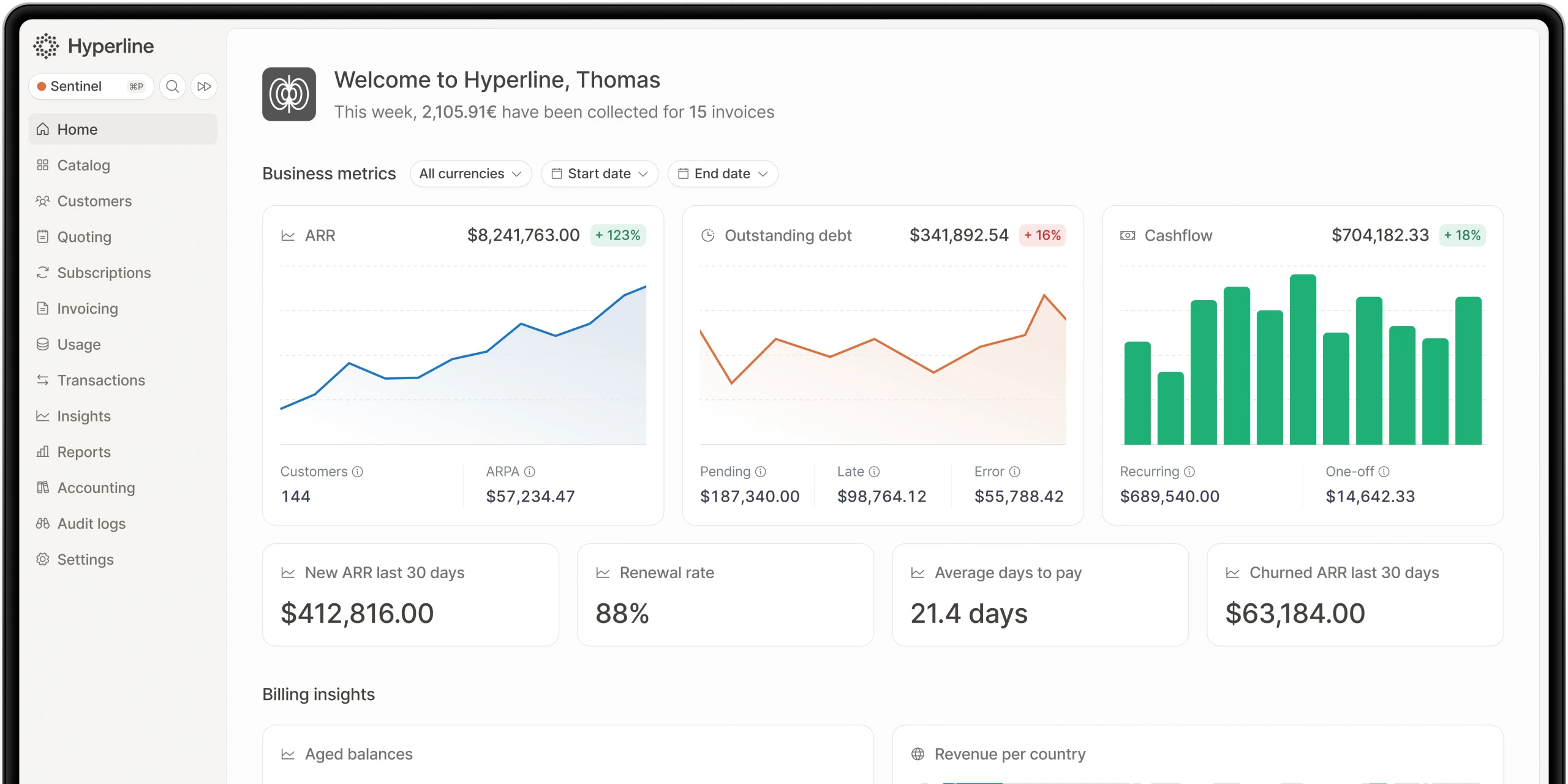
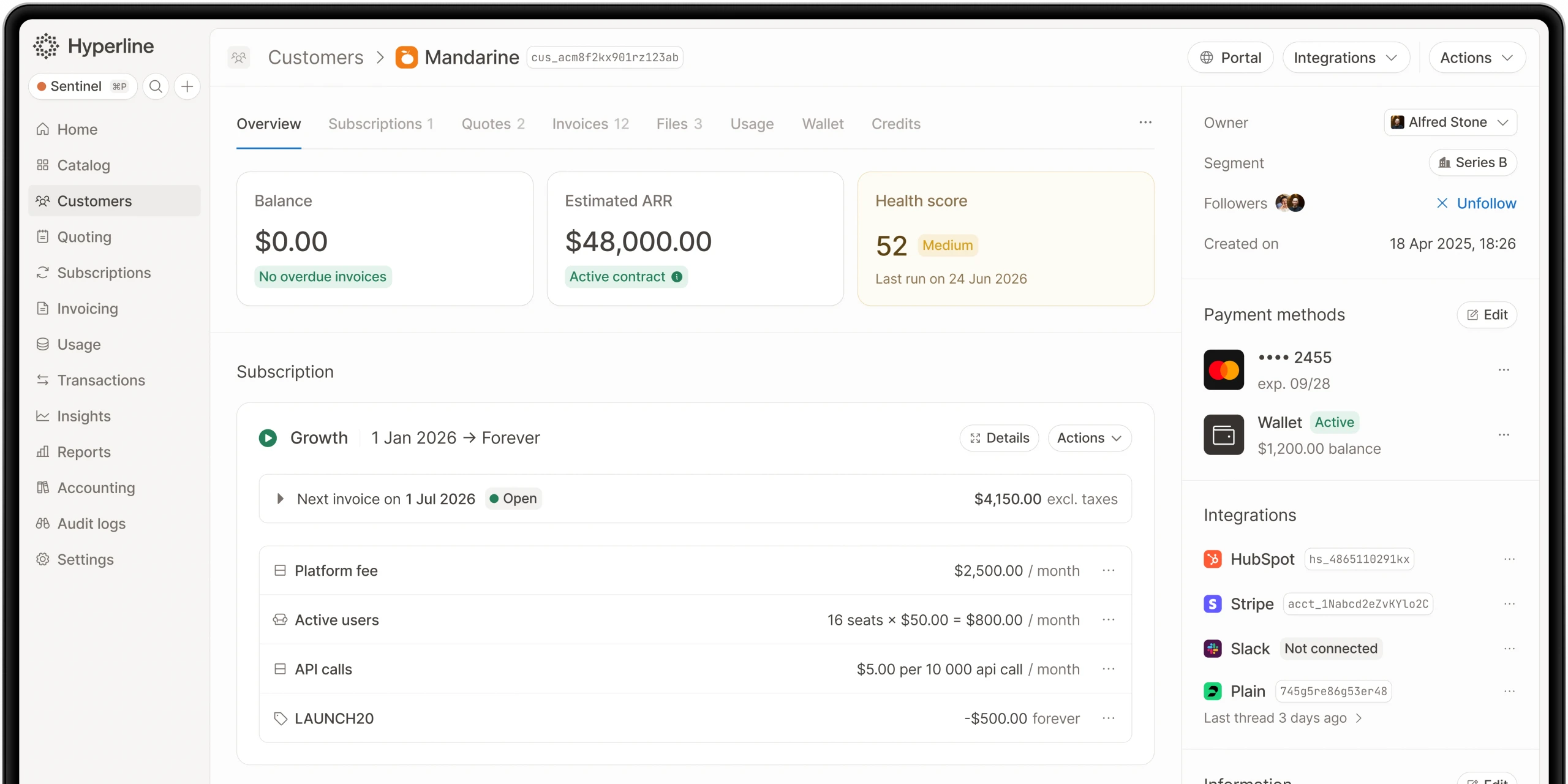
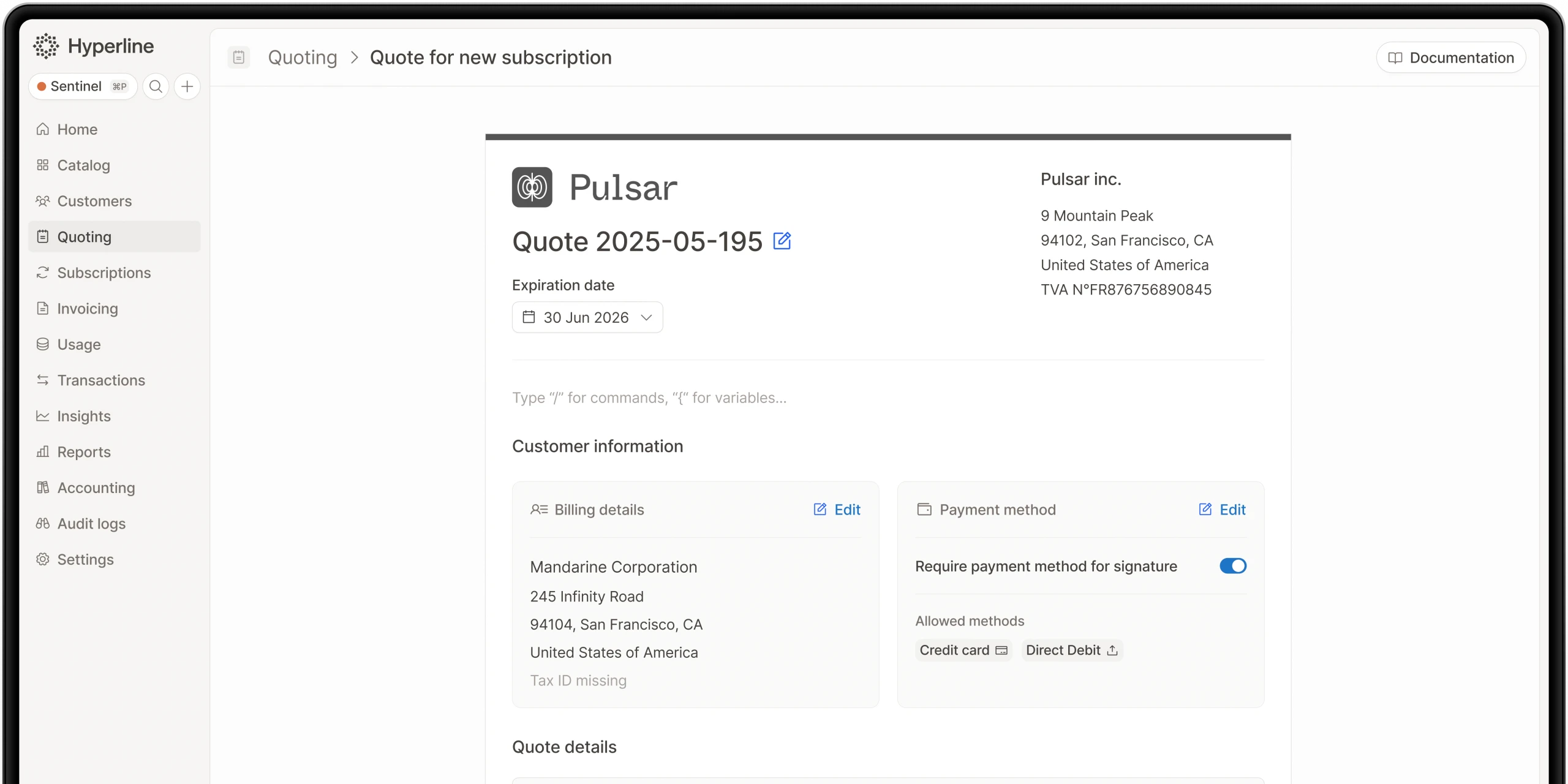
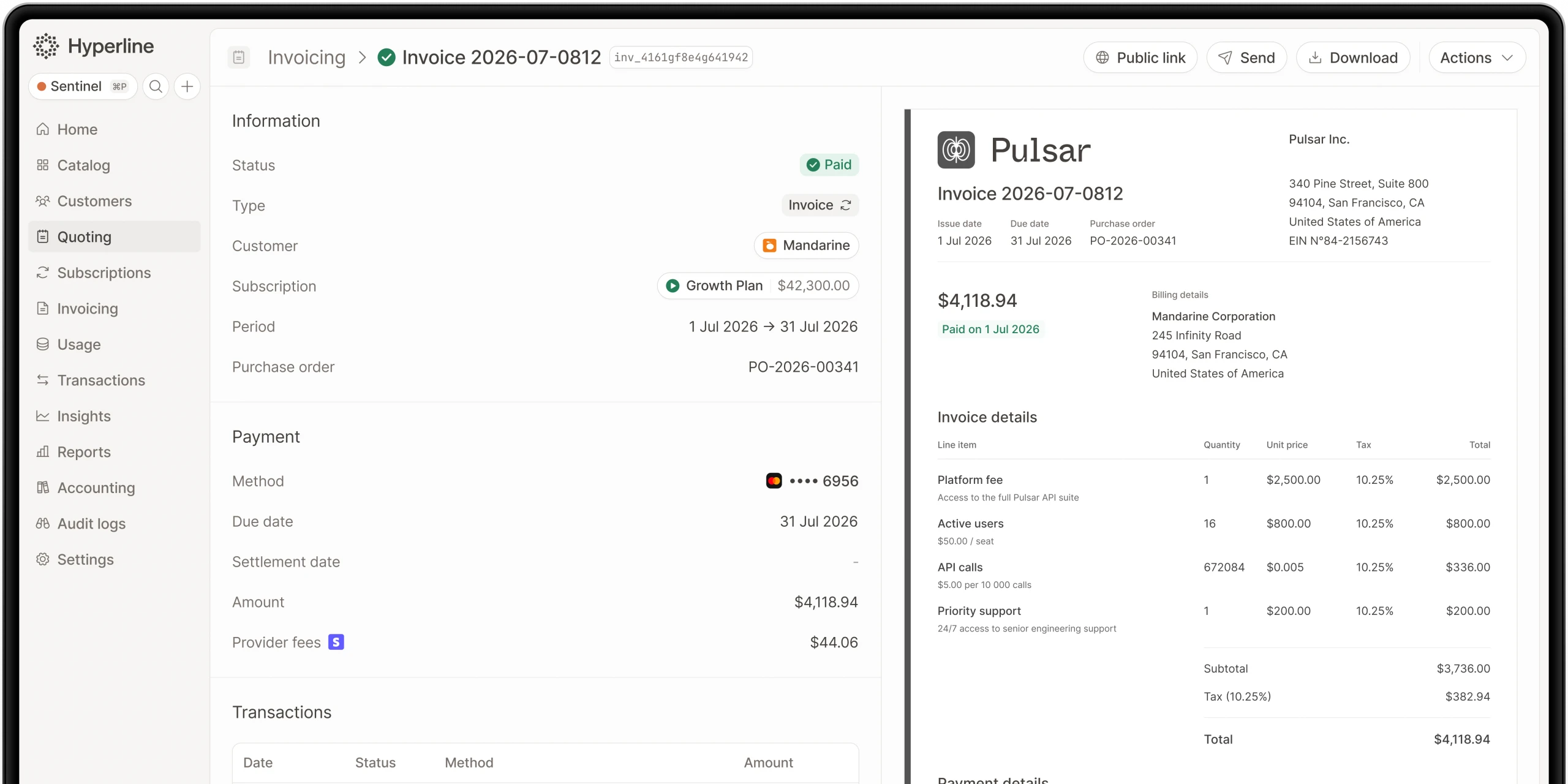
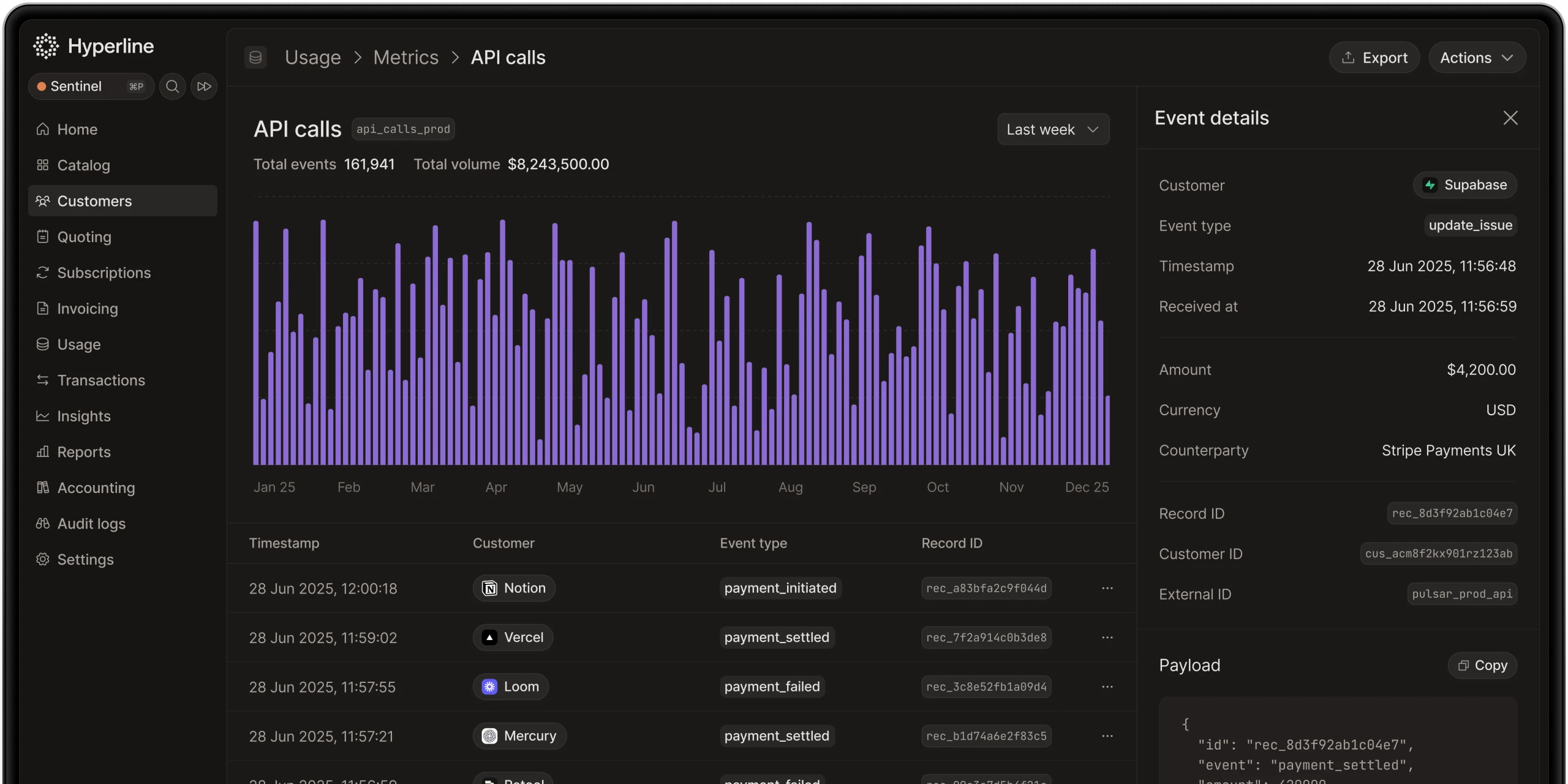
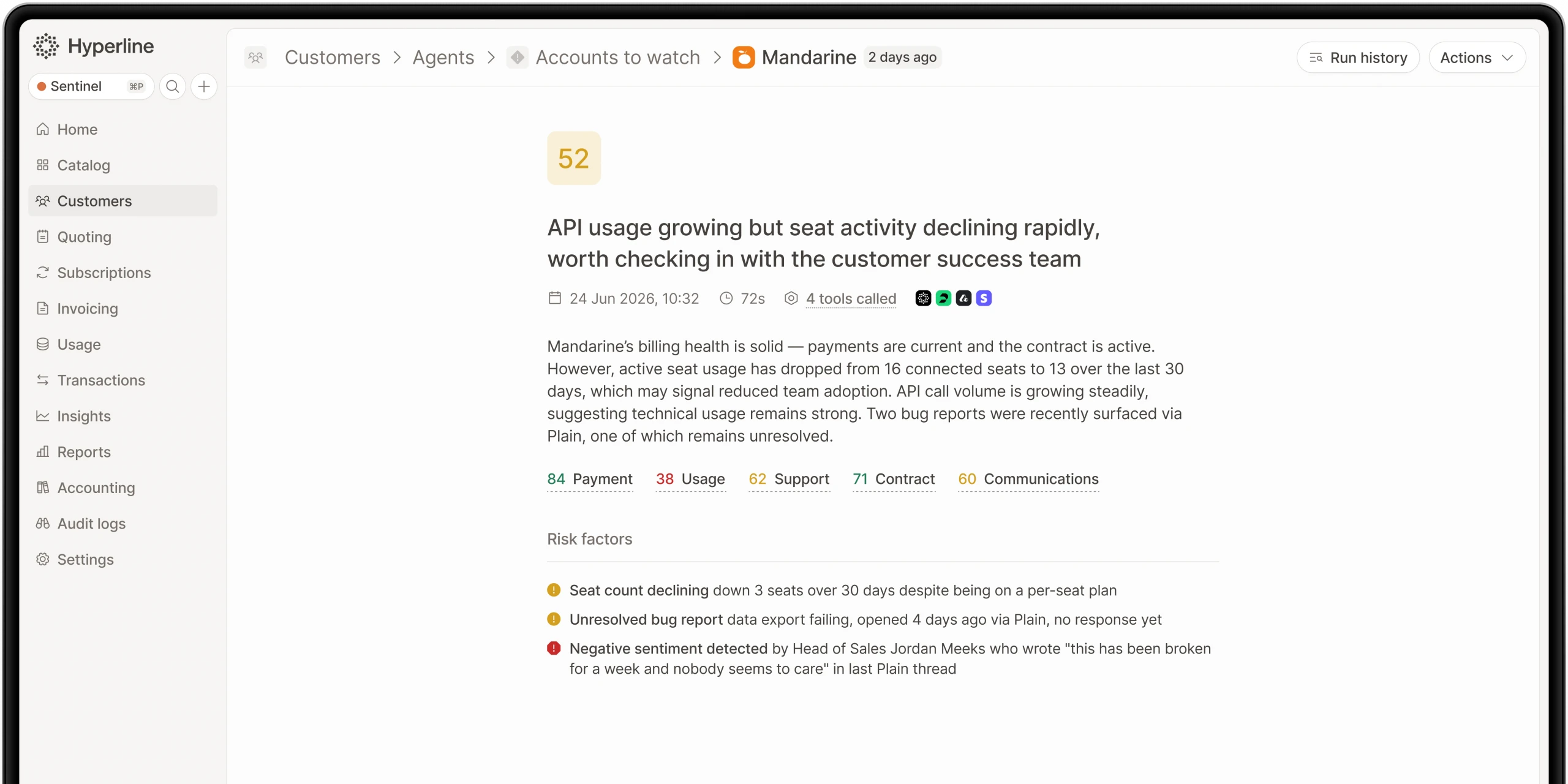
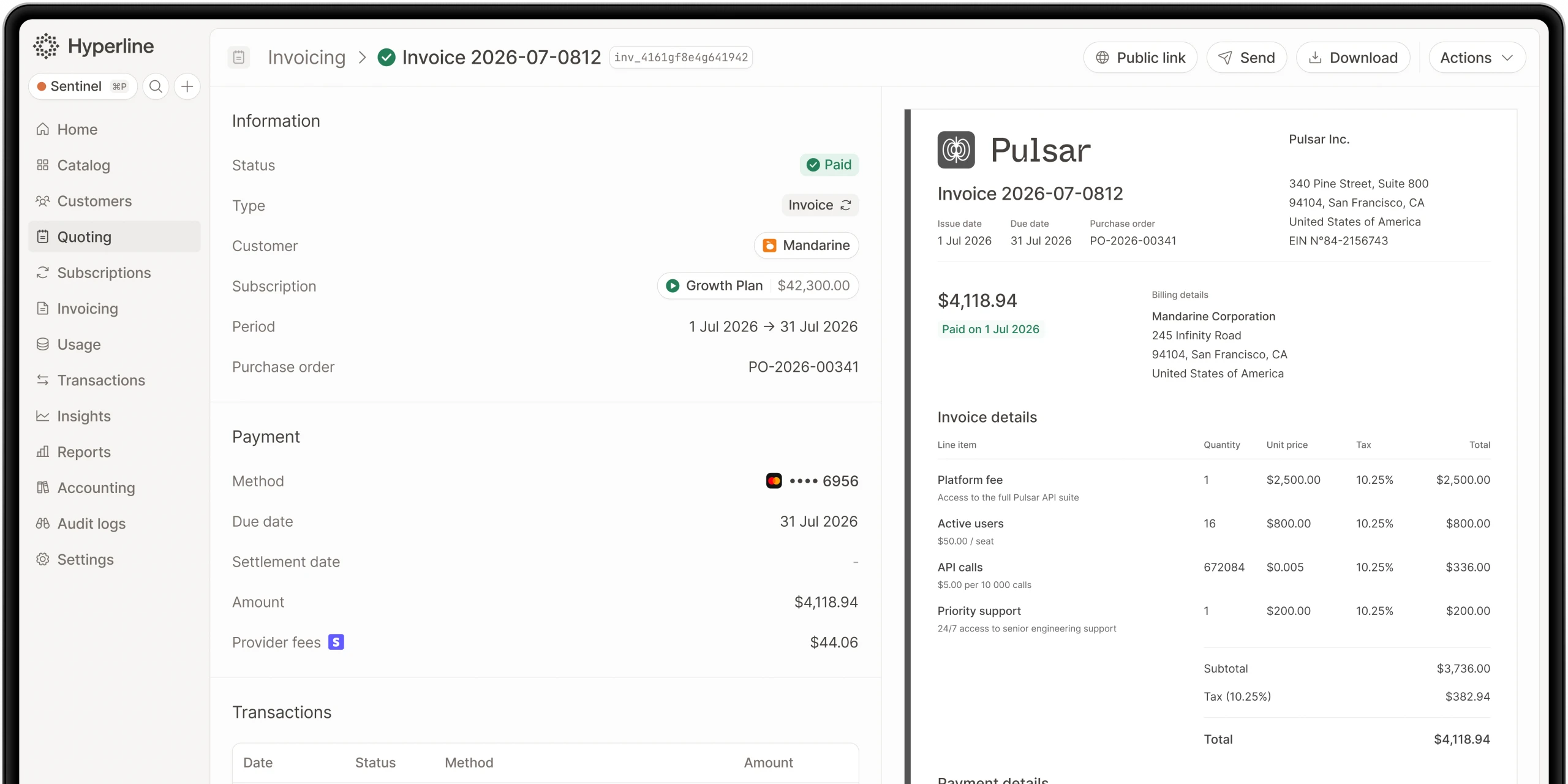
Hyperline is a unified quote-to-cash platform: native CPQ with e-signature, approval workflows and discount governance; a billing engine that combines recurring, one-time, and real-time usage charges in the same contract and the same invoice; invoicing and cash collection across multiple currencies and entities; and revenue recognition (ASC 606 / IFRS 15) generated from the same data that billed the customer, not a separate reconciliation step. It connects natively, two-way, inside HubSpot, Salesforce, and Attio, so reps can quote from inside the CRM rather than switching tools. It's PSP-agnostic, Stripe, GoCardless, or others, including combining providers in the same setup. AI agents handle revenue leakage detection, account scoring, upsell detection, and automated cash collection.
Watch-out: the scope that makes Hyperline a fit for hybrid pricing is more than a team billing a single flat plan typically needs. A very small team with simple, stable pricing may be better served by a lighter tool, at least until pricing complexity arrives.
LedgerUp
Best for: B2B SaaS teams whose main quote-to-cash pain is the handoff right after a contract is signed, getting from a signed deal to a first invoice quickly, without heavy CPQ requirements upstream.
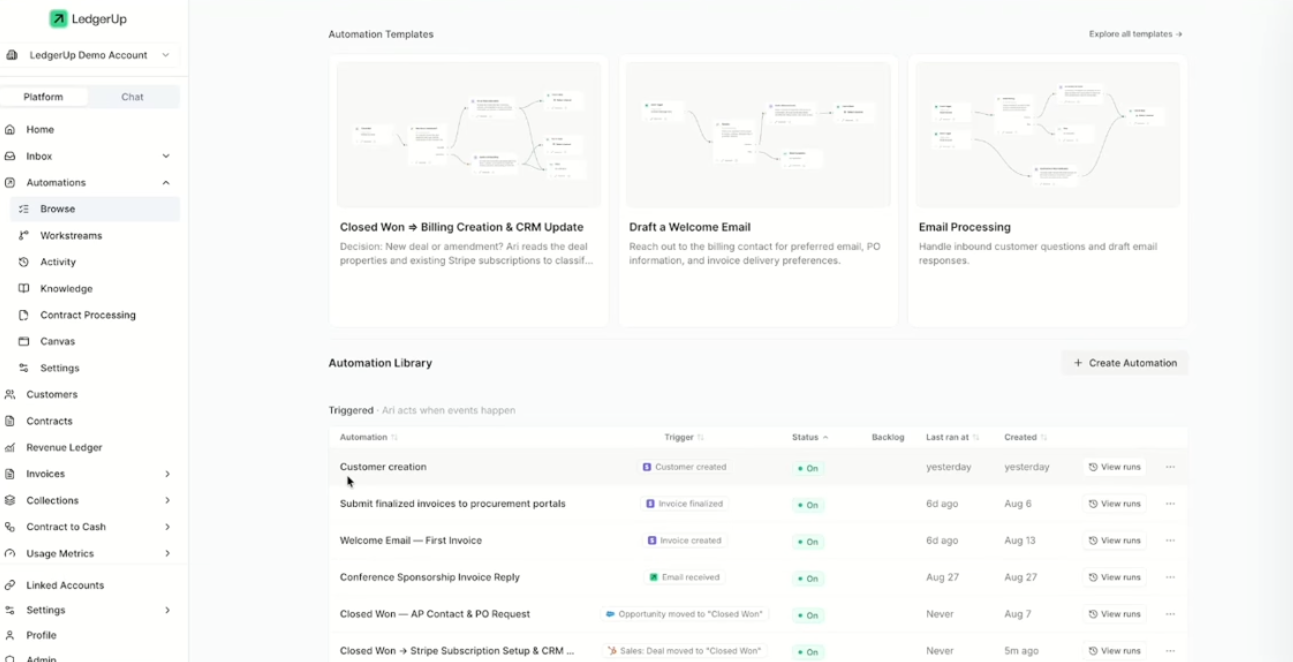
LedgerUp is an AI-driven contract-to-cash platform, and it makes a legitimate case for that specific, narrow scenario. It is not built as a full quote-to-cash platform: our own comparison found that CPQ, global e-invoicing, and deep revenue recognition sit outside its core scope, which is why teams that scale into hybrid pricing, larger contracts, or multi-country invoicing tend to re-evaluate.
Watch-out: a narrower feature surface than a full quote-to-cash platform. Teams that need CPQ, usage-based billing, or global e-invoicing compliance typically pair LedgerUp with additional tools or move to a unified platform. That means running the parts of quote-to-cash it doesn't cover through systems that don't share its data, the same reconciliation gap this guide is built around.
Salesforce Revenue Cloud
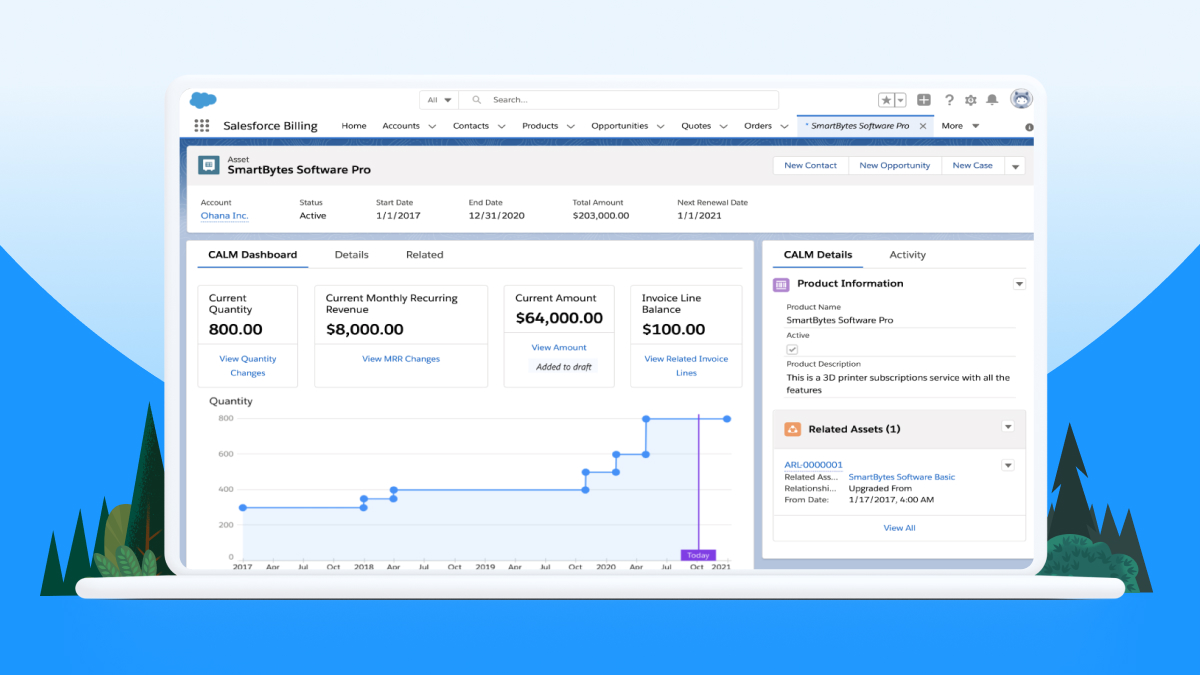
Best for: enterprises already standardized on Salesforce that want CPQ and billing inside the same ecosystem as their CRM.
Salesforce Revenue Cloud (the evolution of Salesforce CPQ & Billing, now positioned under Revenue Lifecycle Management) offers deep configurability for complex product catalogs, pricing rules, and approval chains, all native to Salesforce. For organizations with heavy Salesforce investment and admin resources, that native fit is a genuine advantage.
Watch-out: the platform's strength is CPQ configurability inside Salesforce; usage-based and consumption billing is a comparatively newer layer, and the total package generally requires a meaningful Salesforce admin and implementation investment to configure well. For a team whose pricing is already usage-based, that means configuring the platform's newer capability rather than its most mature one.
Zuora
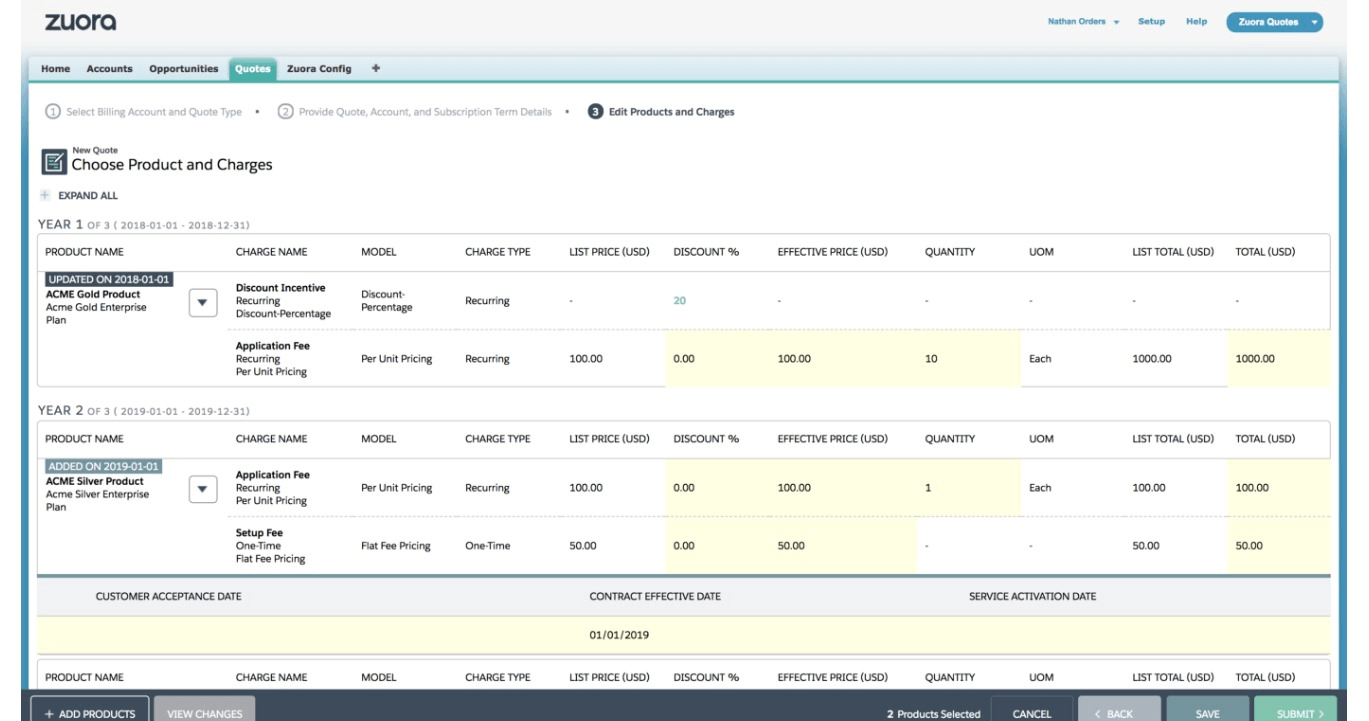
Best for: large enterprises running subscription billing and revenue recognition at scale, with the budget and timeline for an established enterprise platform.
Zuora has more than a decade of production hardening in subscription billing and revenue recognition, and it remains one of the most recognized names in the quote-to-cash category. Its revenue recognition module in particular is built for the accounting complexity that large, multi-product enterprises deal with.
Watch-out: CPQ typically comes from a separate module or a partner integration rather than shipping natively with the core billing product, and implementation timelines for a platform this configurable tend to run long. The sales-to-billing handoff still crosses a system boundary in that setup, the same gap a native CPQ is meant to close.
Chargebee
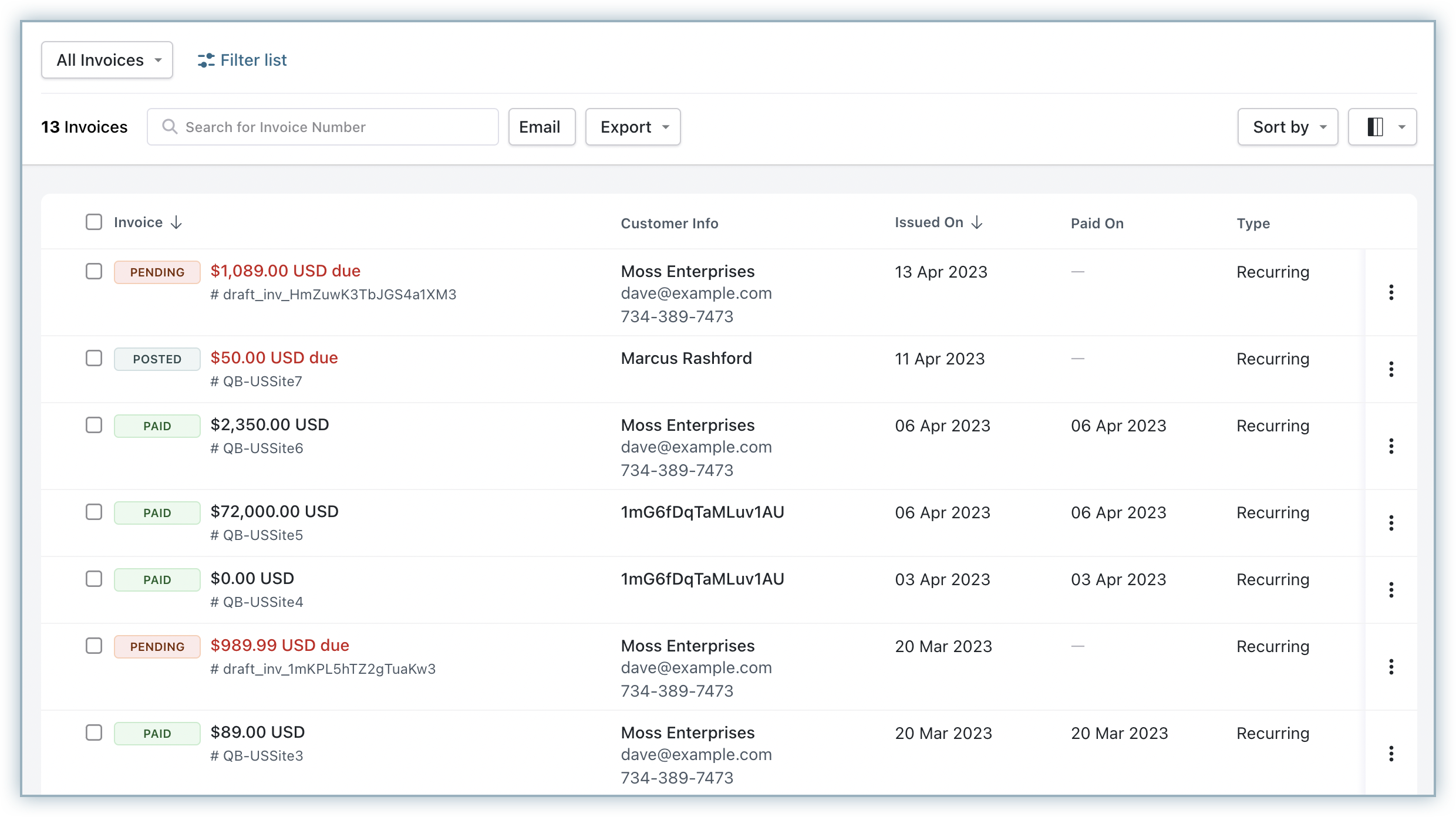
Best for: mid-market SaaS companies running standard, plan-based or seat-based subscription billing.
Chargebee has been a reference platform for subscription billing since 2011, with mature handling of plans, proration, trials, dunning, and renewals. For businesses whose pricing maps cleanly onto recurring subscriptions, it's a dependable, well-documented choice.
Watch-out: usage is processed through batch imports rather than real-time metering, a limitation reviewers note directly on G2, and CPQ ships as a separate, Salesforce-based paid product rather than a native feature. Multi-entity billing is gated to Chargebee's custom-quoted Enterprise plan, a real constraint for any multi-entity or multi-brand business that isn't yet ready for an Enterprise-tier contract.
DealHub
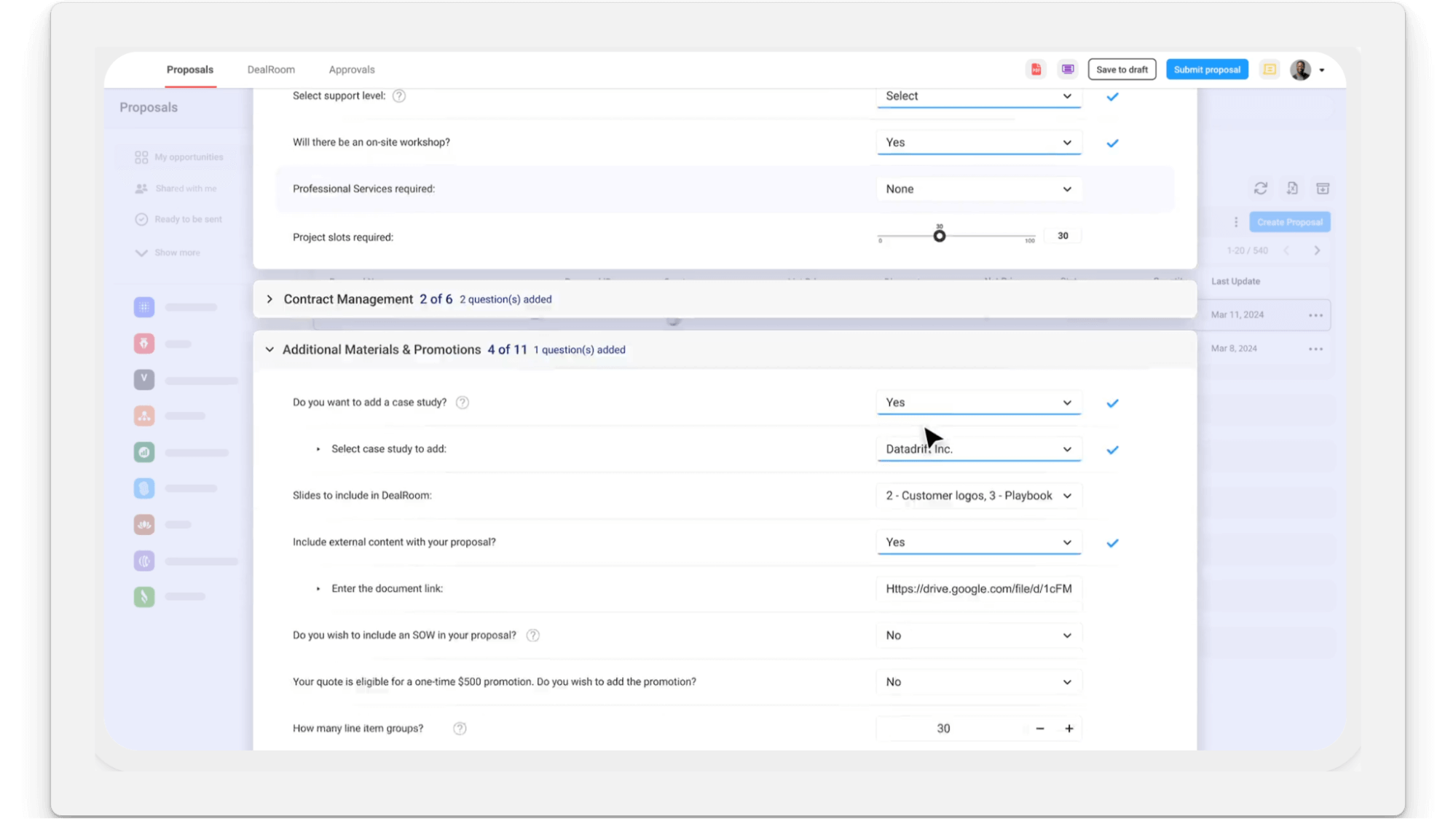
Best for: sales teams that need strong CPQ and contract lifecycle management (CLM) and already have a billing system on the finance side.
DealHub's strength is squarely on the sales side: guided quote building, redlining, negotiation, and e-signature inside a CLM workflow. For revenue teams whose main friction is in the sales-to-contract motion, that focus is a real strength.
Watch-out: DealHub is a sales-side tool, not a billing platform. Usage metering, invoicing, and revenue recognition are not native, so teams pair it with a separate billing system and manage the handoff between the two, which reproduces the same disconnect between sales and finance that a unified platform is meant to remove.
Maxio
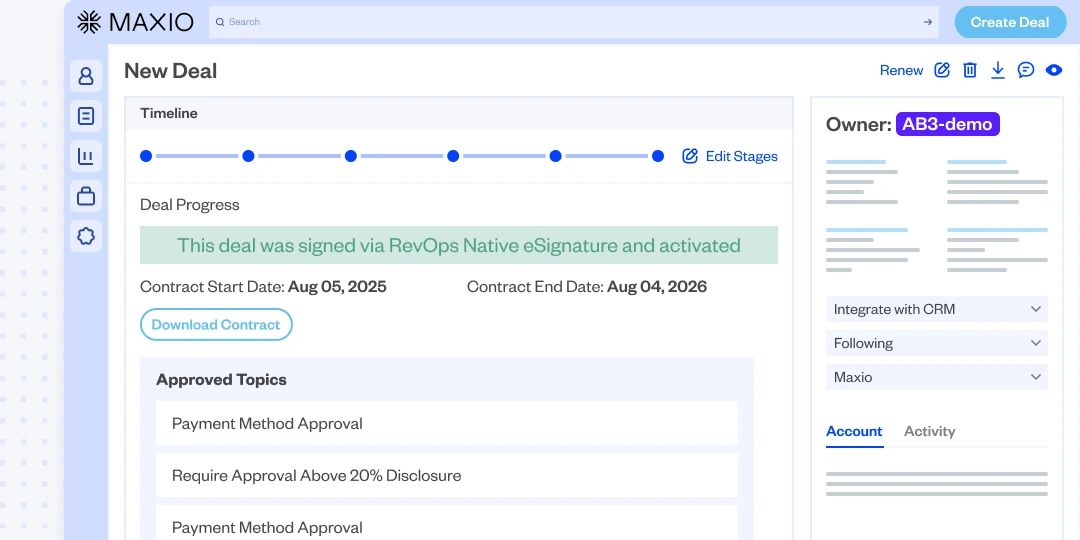
Best for: CFO-led B2B SaaS teams that prioritize SaaS metrics and GAAP-compliant revenue recognition alongside billing.
Maxio, formed from the 2022 merger of Chargify and SaaSOptics, combines subscription billing with strong MRR/ARR analytics and revenue recognition built for how SaaS finance teams actually report. That finance-first orientation is a genuine differentiator for CFOs who prioritize reporting rigor.
Watch-out: usage-based pricing is less flexible to configure than on platforms built around it from the start, and the interface reflects the product's origins in two older, separately built tools now merged into one. That mixed heritage sometimes surfaces as workflows that don't feel fully unified between the subscription-billing and metrics sides of the product.
Conga CPQ
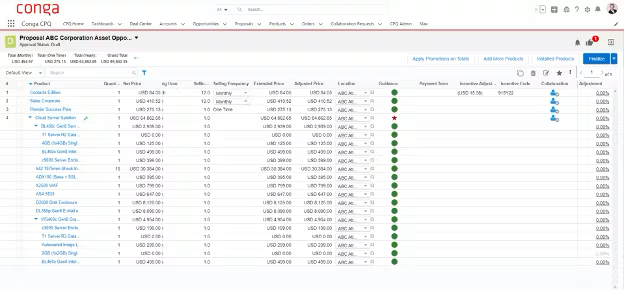
Best for: enterprises with complex, multi-line product catalogs who need heavy quote configuration inside Salesforce.
Conga CPQ is built for configuration depth: multi-line quotes, bundling logic, and multi-step approval chains for organizations with genuinely complicated catalogs. Its roots are historically tied closely to the Salesforce platform.
Watch-out: billing, usage metering, and revenue recognition all live outside the product, so Conga CPQ typically functions as the quoting layer in front of a separate billing system rather than a full quote-to-cash platform on its own, leaving the same sales-to-billing handoff gap that shows up on any CPQ-only tool.
Oracle CPQ
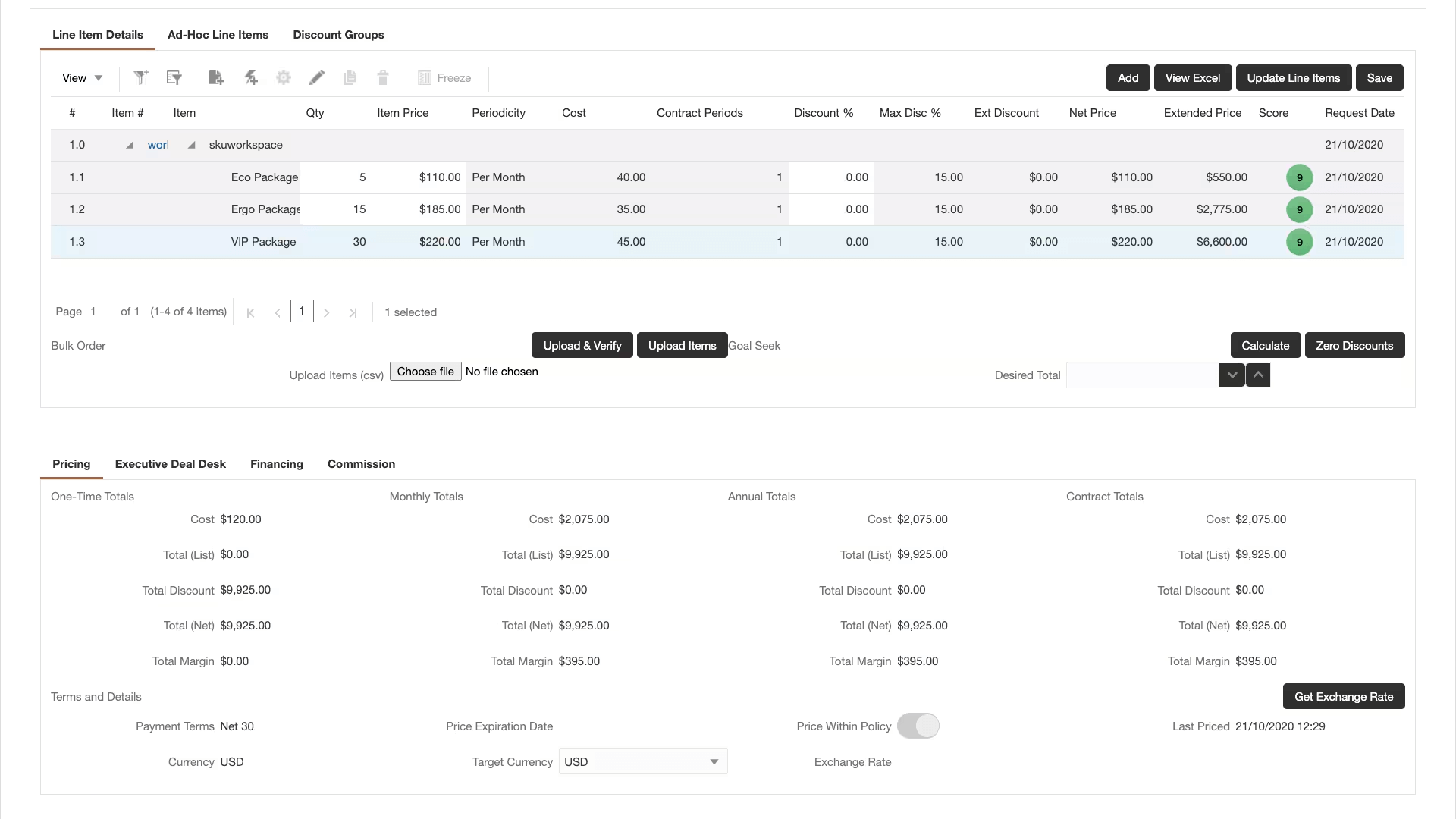
Best for: very large enterprises already running Oracle's CX or ERP suite who want CPQ inside the same vendor ecosystem.
Oracle CPQ brings enterprise-grade catalog and pricing-rule capabilities to organizations operating at significant scale, particularly when CPQ needs to sit alongside other Oracle systems already in place.
Watch-out: implementation timelines and total cost of ownership tend to be substantial, which is a reasonable trade-off for a large enterprise already committed to Oracle, and a heavy one for a mid-market SaaS company evaluating it from scratch.
Alguna
Best for: early to mid-stage B2B SaaS teams that need to iterate quickly on usage-based or hybrid pricing without a long implementation cycle.
Alguna is built around fast deployment and no-code pricing configuration, aimed at teams that expect to change their pricing model frequently while they find product-market fit. Like LedgerUp, Alguna publishes its own self-authored buying guide for this category, one of the longest and most-cited pieces of vendor content on the quote-to-cash topic.
Watch-out: it's a younger product with a limited enterprise track record, and its scope is narrower than a full quote-to-cash platform, CPQ, contracting, and revenue recognition are not its focus. So most of what this guide covers still needs a separate system alongside it.
Monk
Best for: early-stage teams that want a fast, simple way to start billing before their pricing gets complex.
Monk is built for speed and simplicity, getting basic subscription billing running quickly without a heavy setup. Its own blog post on quote-to-cash software is one of the more frequently cited sources on this exact topic.
Watch-out: as pricing grows to include usage-based components, multi-entity structures, or revenue recognition needs, Monk's scope doesn't extend that far, teams typically move to a broader platform once they hit that ceiling.
How to choose the right quote-to-cash software
- Map where your current process actually breaks. Is it the quote getting stuck in approvals, the handoff from signed contract to first invoice, usage that doesn't bill accurately, or revenue recognition that requires a separate reconciliation at month-end? The answer points to a different part of this quote-to-cash comparison.
- Be honest about pricing complexity today, and in 18 months. A single flat plan doesn't need the same platform as hybrid pricing that mixes a subscription fee with metered usage. Buying for complexity you don't have yet adds implementation overhead you don't need yet either.
- Count the systems, not just the features. A tool that "supports" usage billing through a separate add-on, or CPQ through a separate paid product, is still multiple systems to reconcile at close. The real cost shows up in integration work and monthly reconciliation, not in the feature list.
- Check the evidence, not just the pitch. Public G2 reviews, documentation, and pricing pages tend to reveal real limitations (batch processing, add-on pricing, implementation timelines) that a sales conversation won't lead with.
What good quote-to-cash automation looks like
When CPQ, billing, and revenue recognition run on one system instead of three, the visible change isn't a single feature, it's what stops happening: sales stops waiting on finance to confirm a quote is billable, finance stops re-entering contract terms into a separate billing tool, and month-end close stops starting with a reconciliation between systems that were never meant to agree perfectly. Usage-based and hybrid pricing, in particular, expose this fast: a metering pipeline that runs on a batch cycle can't answer "what will this customer's invoice look like right now," and a CPQ tool that doesn't talk to the billing engine can't guarantee that what sales quoted is what finance actually bills.
Final recommendation
There's no universal winner in quote-to-cash software, only a right fit for a specific pricing model and a specific broken step. If your pricing is simple and stable, several tools in this quote-to-cash comparison, Chargebee, or a CPQ-only tool paired with your existing billing system, will serve you well without over-buying. If your problem is specifically the post-signature handoff, LedgerUp's narrow focus is a legitimate, fast answer to that one problem. If you're already deep into Salesforce or Oracle and want CPQ inside that ecosystem, Salesforce Revenue Cloud, Conga CPQ, or Oracle CPQ are reasonable, if heavier, choices.
If your pricing has moved into usage-based, tiered, or hybrid territory, and CPQ, billing, and revenue recognition currently live in separate systems that don't agree at month-end, that's the scenario Hyperline is built for. Book a demo to see how a unified quote-to-cash system handles the pricing model you actually run today.
Sources and notes
This guide was compiled in September 2026 from public vendor pricing pages, public product documentation, and G2 category listings. Where a vendor's capability could not be confirmed against a public source, it is described qualitatively rather than presented as a verified fact. Hyperline product details reflect Hyperline's own documentation and publicly listed pricing as of September 2026.