Top 7 alternatives to Metronome for usage-based billing
Metronome is now part of Stripe. Here are 7 usage-based billing platforms to evaluate if you want metering plus CPQ, invoicing and processor choice.
Metronome built the metering engine behind some of the largest usage-based businesses in software. OpenAI, Anthropic, Databricks and Confluent run billing through it. If your problem is ingesting billions of events and rating them against complex contracts, Metronome does that well.
What changed in 2026: Metronome is now part of Stripe
In January 2026 Stripe announced it was acquiring Metronome for a reported $1 billion. The acquisition has completed and Metronome is now a Stripe company. Stripe's CEO framed usage-based pricing as "a defining feature of the next decade", and buying the best-known metering engine is how Stripe intends to own it.
For buyers that reshapes the evaluation. Metronome's roadmap will converge with Stripe Billing and Stripe Payments. That is a good outcome if you are all-in on Stripe. It is a harder fit if you process payments with another provider, run multi-entity billing across regions, or wanted a metering layer that stays neutral. And it does not change what Metronome never covered: quoting, contracts, revenue recognition, CRM workflows and finance-facing controls still live in other tools.
If you are weighing alternatives to Metronome in 2026, here are seven platforms worth evaluating, starting with the one that covers the full revenue process in a single system.
1. Hyperline
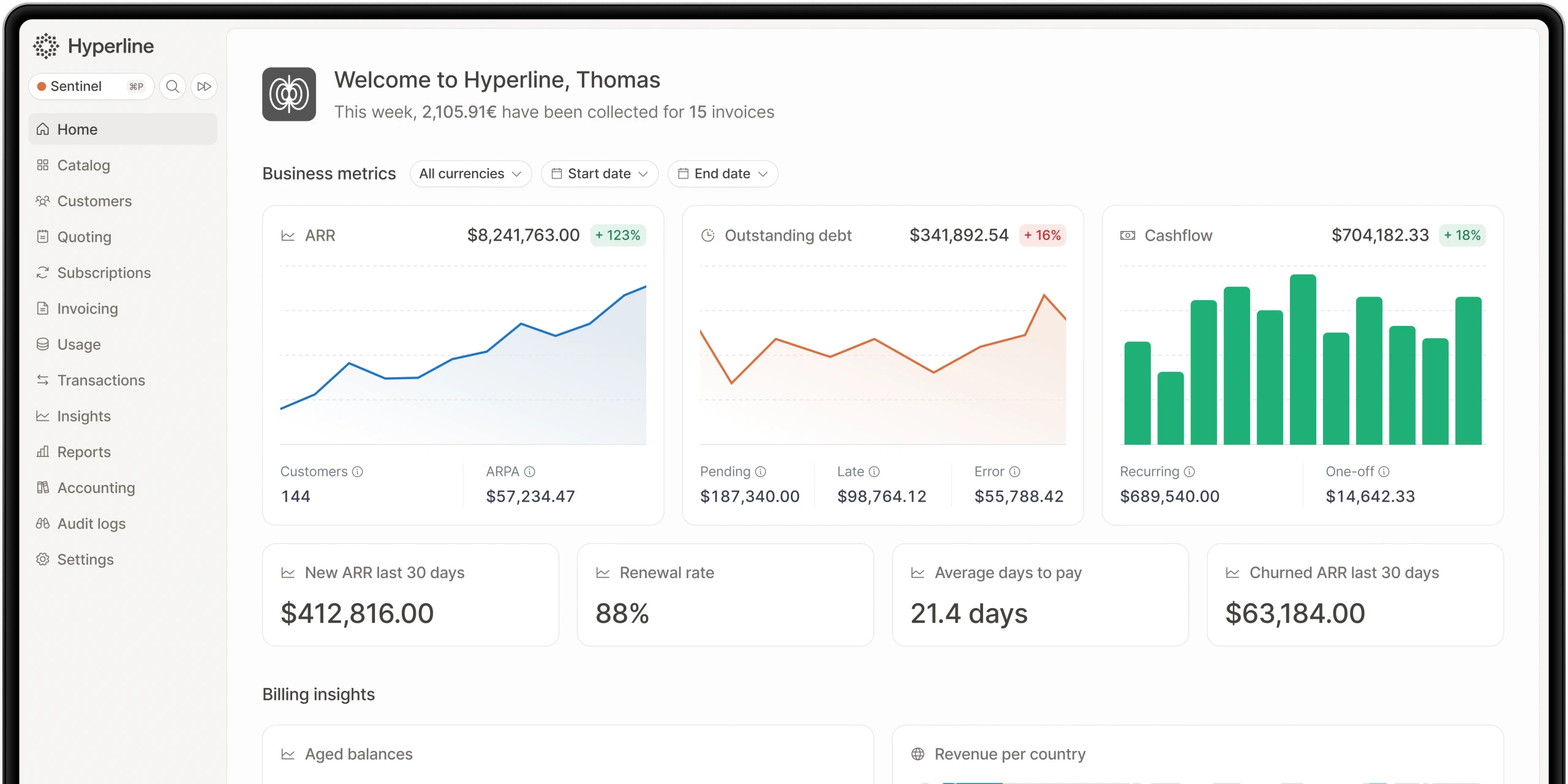
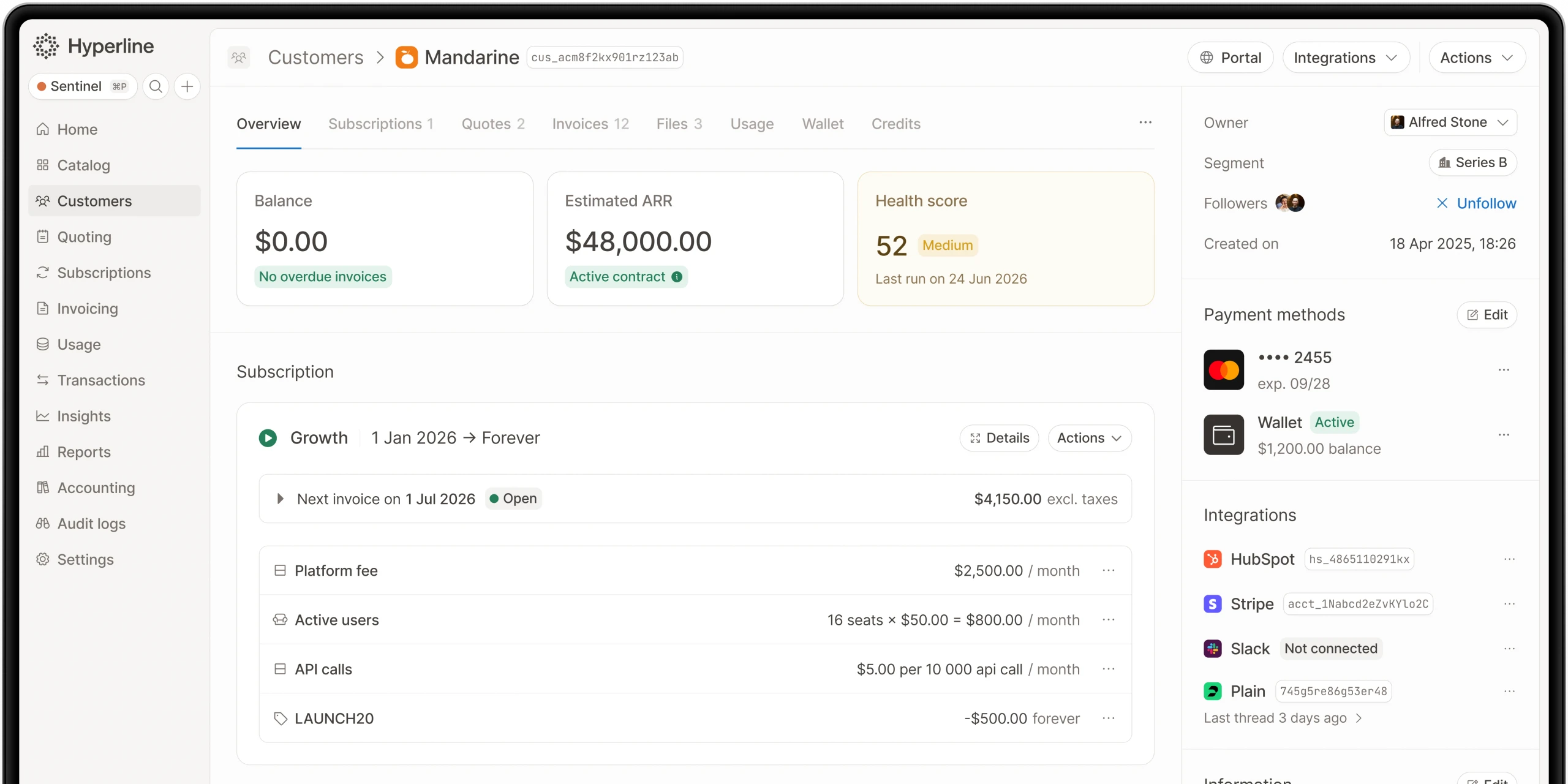
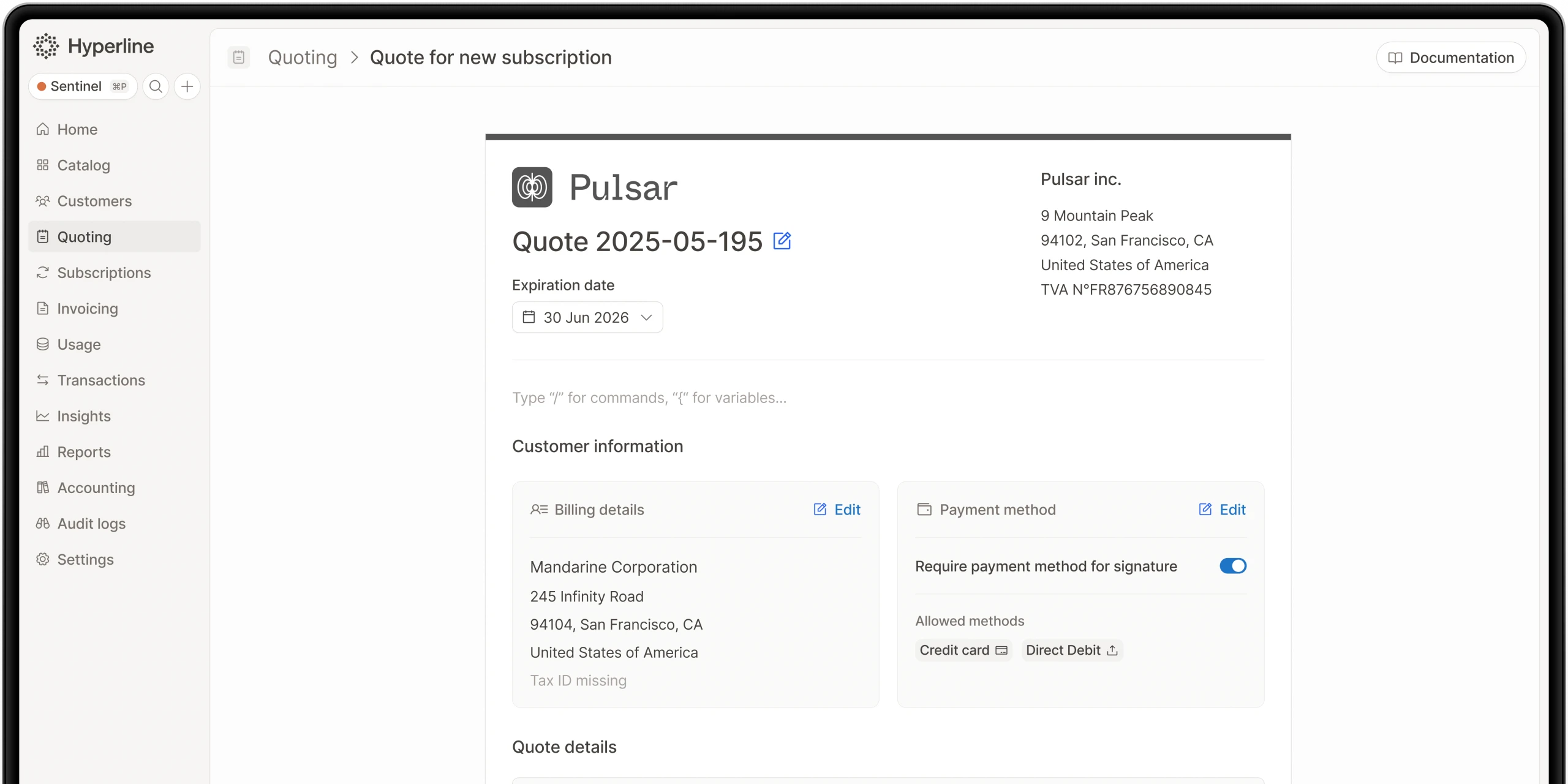
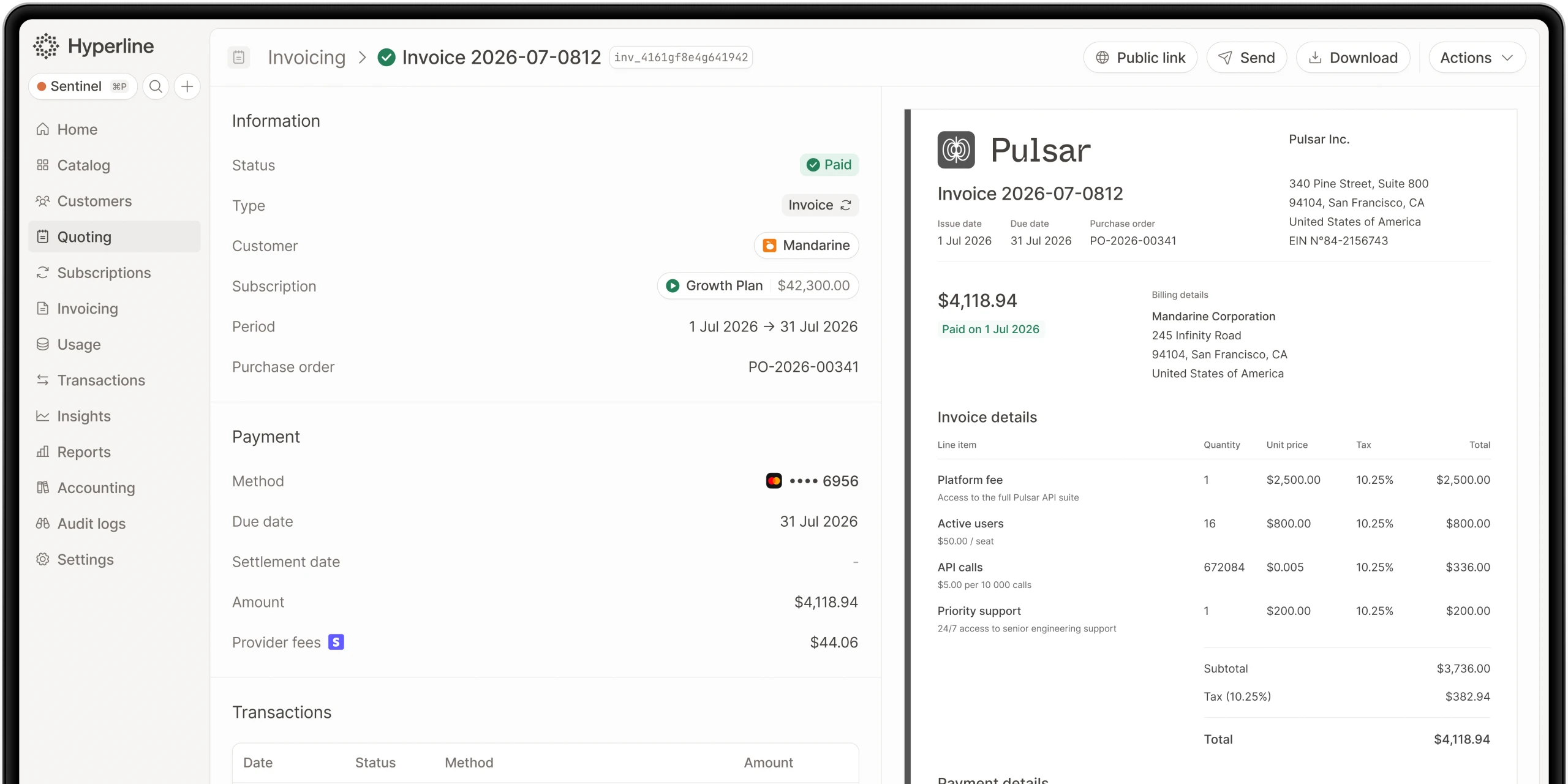
Hyperline is a unified revenue platform that consolidates quote-to-cash into a single system of record. Where Metronome starts and stops at metering and rating, Hyperline wraps native usage-based billing into quoting, contracts, billing, invoicing, payment collection, revenue recognition and reporting.
Three differences matter most. Scope: Hyperline covers the whole lifecycle, so finance does not stitch a CPQ, a tax engine and a reporting tool around the metering layer. Autonomy: finance and RevOps teams configure meters, prices and contracts without a sprint. Independence: Hyperline sits on top of Stripe, Adyen, GoCardless, Mollie and Airwallex, so you keep your processor and add the billing layer above it.
Key Features:
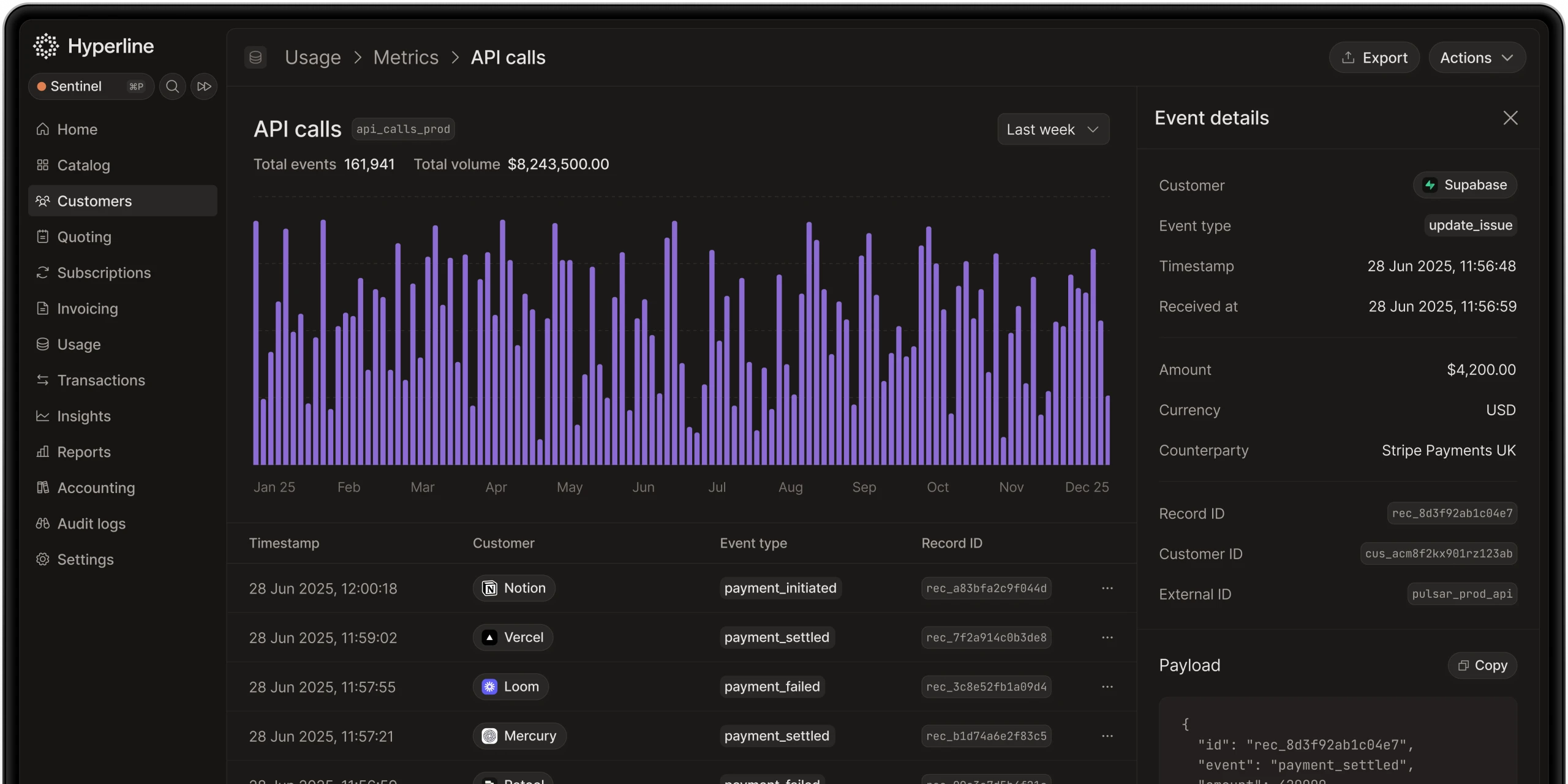
- Real-time usage ingestion via API or database connectors, with sub-second latency
- Native hybrid pricing: flat, tiered, volume, graduated, usage-based, prepaid credits and commits in one engine
- Integrated CPQ with HubSpot and Salesforce widgets, approvals and e-signature
- Built-in e-invoicing certified in 80+ territories, compliant invoicing in 100+ countries
- Revenue recognition, reconciliation and real-time revenue alerts
- 99.99% uptime, SOC2, ISO27001, GDPR certified
- Real-time expert support responding in under 10 minutes
Ideal For:
B2B SaaS and AI companies that need Metronome-grade usage billing plus the rest of the revenue stack, sell through a sales team, invoice internationally, or want to stay neutral on payment processing.
Pros:
- Full quote-to-cash in one system, no stitching together metering plus CPQ plus tax plus reporting
- Finance teams change pricing without engineering
- Processor-agnostic, including Stripe
- Eliminates up to 80% of manual finance work, 99.9% reconciliation accuracy
- 4.9/5 on G2, 500M+ invoices processed, customers include ScorePlay, Lemlist, Formance and Truvi
Cons:
- Broader scope than a team that only needs a metering API may want
- Newer brand than Stripe, though the track record across high-growth SaaS is strong
Pricing:
Custom pricing based on revenue volume and feature scope. Book a demo for a tailored quote.
2. Lago
Lago is the open-source usage-based billing platform for engineering teams that want full control. It is API-first, supports any pricing model you can express in code, and self-hosts for data residency requirements.
Key Features: open-source core, event ingestion and metering, flexible plans and charges, webhooks, self-hosted or cloud.
Ideal For: developer-led infrastructure and AI companies. Mistral, Groq and Together.ai run on Lago.
Pros: open-source control, no vendor lock-in, self-hosted option.
Cons: requires engineering bandwidth to run, no built-in CPQ, CRM or tax compliance layer.
Pricing: free self-hosted, paid cloud plans for the managed offering.
3. Orb
Orb is a pure-play usage-based billing engine for AI companies, API businesses and high-volume event-driven SaaS. Adyen announced its $335 million acquisition of Orb on 11 June 2026 and the deal closed on 1 July 2026, so Orb, like Metronome, now belongs to a payment processor.
Key Features: event ingestion at scale, real-time metering, complex pricing rules, revenue analytics.
Ideal For: AI and ML API businesses, developer platforms, high-volume metered SaaS, especially those processing with Adyen.
Pros: excellent metering engine, strong developer ergonomics, usage-based from day one.
Cons: narrower scope than full quote-to-cash platforms, needs a CPQ for enterprise deals, roadmap now tied to Adyen's payments business.
Pricing: custom, based on event volume.
4. M3ter
M3ter focuses on usage-based pricing for enterprise software companies. Built by former AWS metering leads, it handles commit-and-draw contracts, overages and pricing simulations at enterprise scale, and it has stayed independent.
Key Features: real-time metering, commit-based deal support, pricing simulation sandbox, SOC2 compliance.
Ideal For: enterprise software vendors with complex commit-and-draw or overage contracts.
Pros: purpose-built for enterprise usage-based pricing, strong pricing sandbox, solid API coverage, independent.
Cons: limited scope beyond metering, customers need a separate invoicing layer for multi-currency and localized tax.
Pricing: custom enterprise pricing.
5. Zenskar
Zenskar blends subscription and usage-based billing with a no-code configuration layer, aimed at finance teams that want flexibility without an engineering dependency.
Key Features: hybrid billing, no-code pricing editor, automated revenue recognition, customer portal.
Ideal For: finance-led mid-market SaaS moving from flat subscriptions to hybrid pricing.
Pros: no-code pricing setup, flexible contract models, faster iteration than engineering-led tools.
Cons: smaller partner ecosystem, shorter track record at very high event volumes.
Pricing: custom, based on billed volume and feature tier.
6. Octane
Octane is a developer-friendly platform for metering, pricing and billing that sits between pure metering tools and full billing suites.
Key Features: real-time metering, pricing flexibility, API-first architecture.
Ideal For: mid-market SaaS with usage-based or hybrid pricing.
Pros: strong API, flexible pricing support, reasonable implementation time.
Cons: smaller ecosystem, narrower scope beyond billing.
Pricing: custom, based on volume.
7. Alguna
Alguna is a billing and monetization platform for B2B SaaS with usage-based or hybrid pricing, focused on shortening the time from pricing decision to live billing.
Key Features: hybrid pricing support, pricing analytics, no-code configuration.
Ideal For: early to mid-stage SaaS iterating on pricing.
Pros: fast to deploy, flexible for experiments, clean UX.
Cons: young product, limited enterprise track record.
Pricing: custom, based on tier and volume.
Is Hyperline Right for You?
If Metronome gave you metering at scale but the Stripe acquisition, the missing CPQ or the engineering dependency now gives you pause, Hyperline is the most complete alternative on this list. It matches real-time usage billing and adds quoting, invoicing, revenue recognition and compliance in one platform, without deciding your payment processor for you.
Teams that choose Hyperline over Metronome usually share three traits: they sell usage and commits through a sales team, they invoice across several countries, and they want finance to own pricing changes.
Book a demo to see how Hyperline handles usage-based billing end to end.
Where this fits in Hyperline
Frequently asked questions
As SaaS companies grow, billing needs become more complex. HubSpot CPQ has limits: no quote-to-invoice automation, little pricing flexibility, basic reporting, manual revenue recognition, and no advanced subscription support.
Hyperline is usage-native, which means our platform can ingest raw usage-data (through database connectors, API or CSV files) and run calculations on your behalf to find the right amount to invoice for each customer. You can start without a single line of code in a few minutes.
HubSpot CPQ is free but costs time. Manual billing, custom integrations, and reporting errors make it expensive. Hyperline removes these issues.
Hyperline is a modern monetization and billing platform, covering everything from contracts to payment collection. Our solution is designed for software companies worldwide with recurring business models facing pricing and billing challenges such as usage metering, pricing iterations, and limited integrations. Whether you're implementing your first billing system or scaling a late-stage operation, we can assist you.
Yes. Hyperline connects to Stripe, GoCardless, Mollie, Airwallex, and bank transfers. It automates payment matching and reminders.
Hyperline is a billing platform for B2B SaaS. It automates quote-to-cash, supports usage-based pricing, manages revenue recognition, connects with HubSpot, and gives real-time revenue data.
HubSpot CPQ is a tool in HubSpot CRM that helps teams create quotes, manage simple subscriptions, and collect payments. It is made for small businesses and startups that want an easy quote-to-cash process.
Customers are charged based on how much they really use the service instead of fixed plans.