How Truvi uses Hyperline to build a data-driven finance function
Truvi automated billing with Hyperline ahead of its shift to self-serve. Month-end close dropped from 12 weeks to 4 days, with real-time data across thousands of customers.

Truvi (formerly Superhog) provides property managers and hosts with tools for guest screening, identity verification, and damage protection. By removing risk from every booking, Truvi helps operators deliver safe, transparent, and trustworthy rental experiences worldwide.
Challenge
Truvi was moving to a self-serve, product-led model, but billing was manual: nearly 1,200 invoices a month, a delayed close, and no real-time view of the business.
Solution
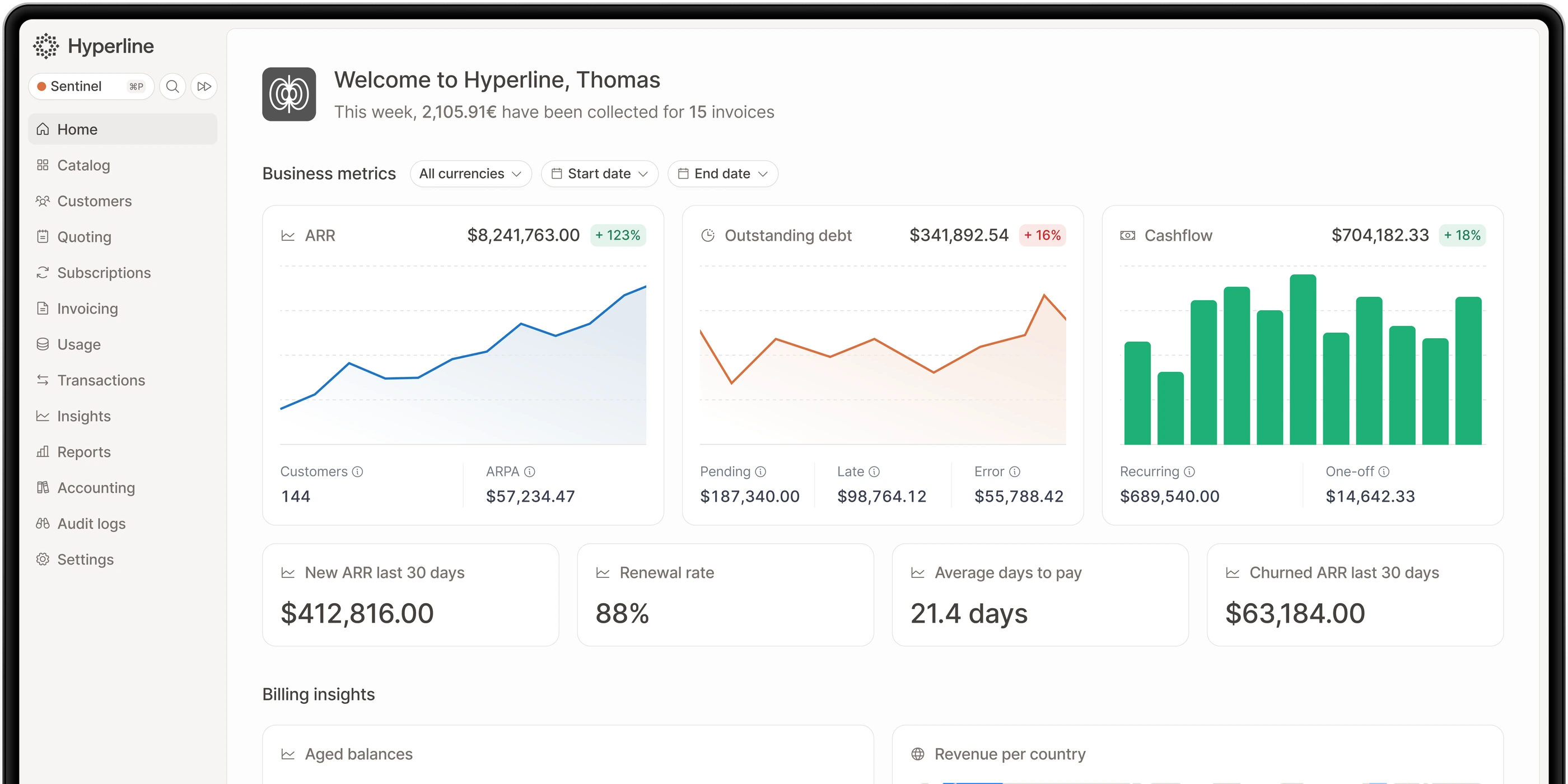
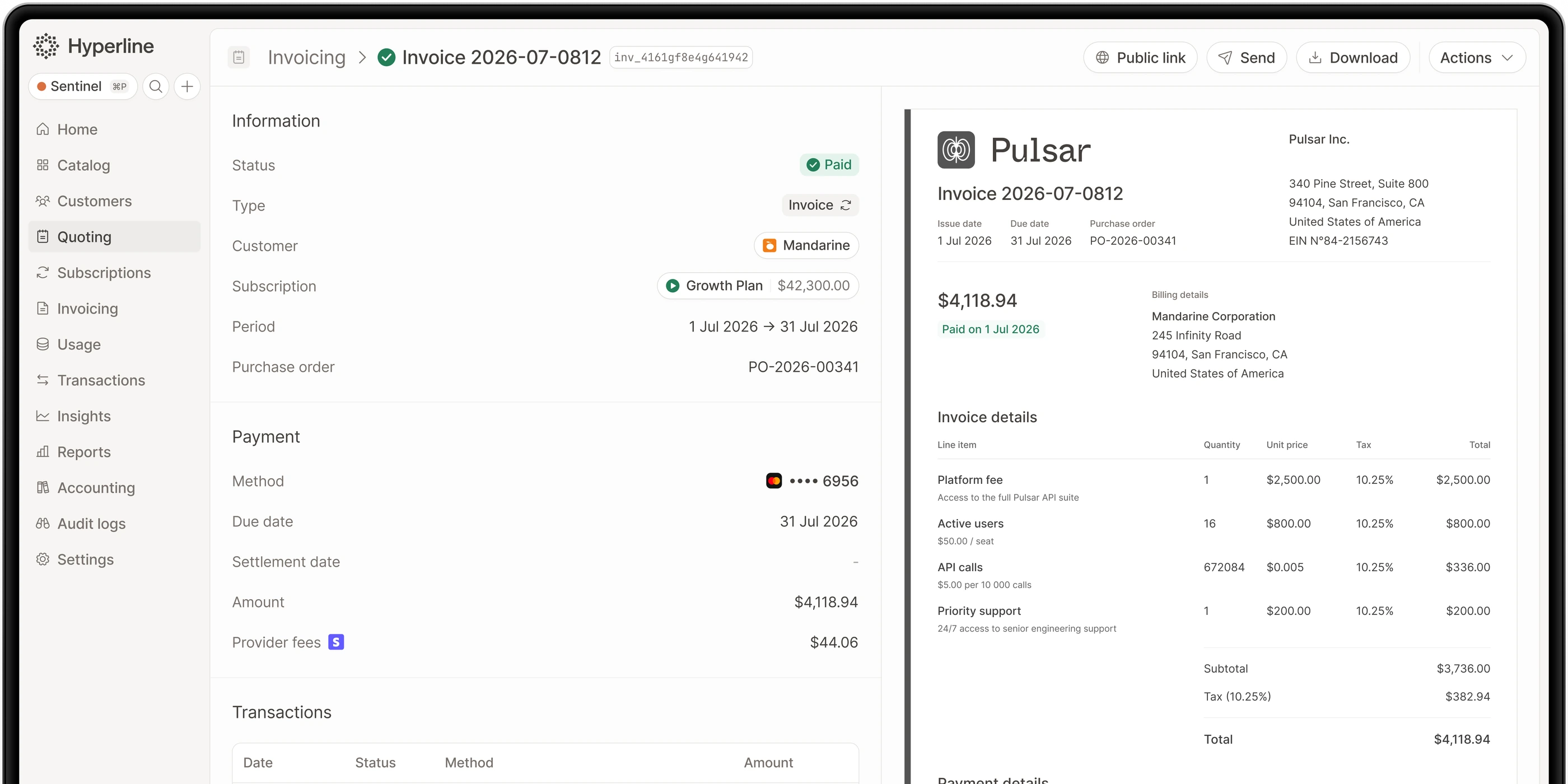
Hyperline automates billing end to end, with real-time visibility on every transaction. Finance runs a unified stack built for a high-volume, self-serve model.
Pricing model
A usage-based, per-booking model with no platform fees or subscriptions. Operators pay only when they process a booking, from screening-only to full damage protection.
Results
Month-end close went from 12 weeks with 8 people to 4 days with 4 people. Truvi launched four new self-serve products and scaled to thousands of customers.
A per-booking model heading for self-serve
Truvi (formerly Superhog) gives property managers and hosts a platform for guest screening, identity verification, and damage protection in short-term rentals. Pricing is deliberately simple: a per-booking model built around programs, sets of services defined by each operator. There are no platform fees and no subscriptions. Customers pay only when they process a booking, with coverage from screening-only to full screening plus damage protection.
The billing behind that model was anything but simple. The team managed pricing and invoicing manually, sending nearly 1,200 invoices a month. When Nathan Humphreys joined as Financial Controller in June 2024, Truvi was preparing a strategic GTM shift for H2 2025: a self-serve, product-led motion where users sign up directly on the platform.
“It was barely holding together, and I kept thinking, what if tomorrow we get 1,000 new signups in a single day? There’s no way we’d handle that load.”
Weeks of invoicing, a close that slipped
The manual process was slow, error-prone, and unsustainable. The finance team spent entire weeks handling invoices and chasing payments, and month-end close was consistently delayed, sometimes by up to three weeks.
“Billing was taking so long that it pushed the close into the next month. Finance should be an automated, efficient process that gives you instant access to numbers, otherwise, you’re making decisions blind.”
The usage-based model created a second problem: customers had no easy way to track their consumption in real time, and that lack of transparency translated into lost trust and frustration. Nathan made the billing transformation a top priority: the business needed a scalable process, and billing had become a blocker to growth.
A benchmark won on product and people
By mid-2024, billing was part of every conversation at Truvi. Nathan’s goal was clear: build a billing stack ready to scale to thousands of customers. He benchmarked multiple solutions, including Hyperline and Maxio.
“I’d used Maxio before, but Hyperline just felt so much more modern. I want my finance team to work with the newest tools on the market.”
The finance and tech teams ran technical tests to validate their use cases, especially on the usage side, and found Hyperline expert and responsive at every touchpoint. What sealed the decision was Hyperline’s native integration with Airwallex, which let Truvi build a payments infrastructure that scales with the business.
A finance function that runs on data
In fall 2024, Truvi kicked off its onboarding, a joint effort between finance and engineering to deliver a seamless in-app experience for self-serve customers. Going live by the end of 2024 laid the foundation for the H2 2025 shift.
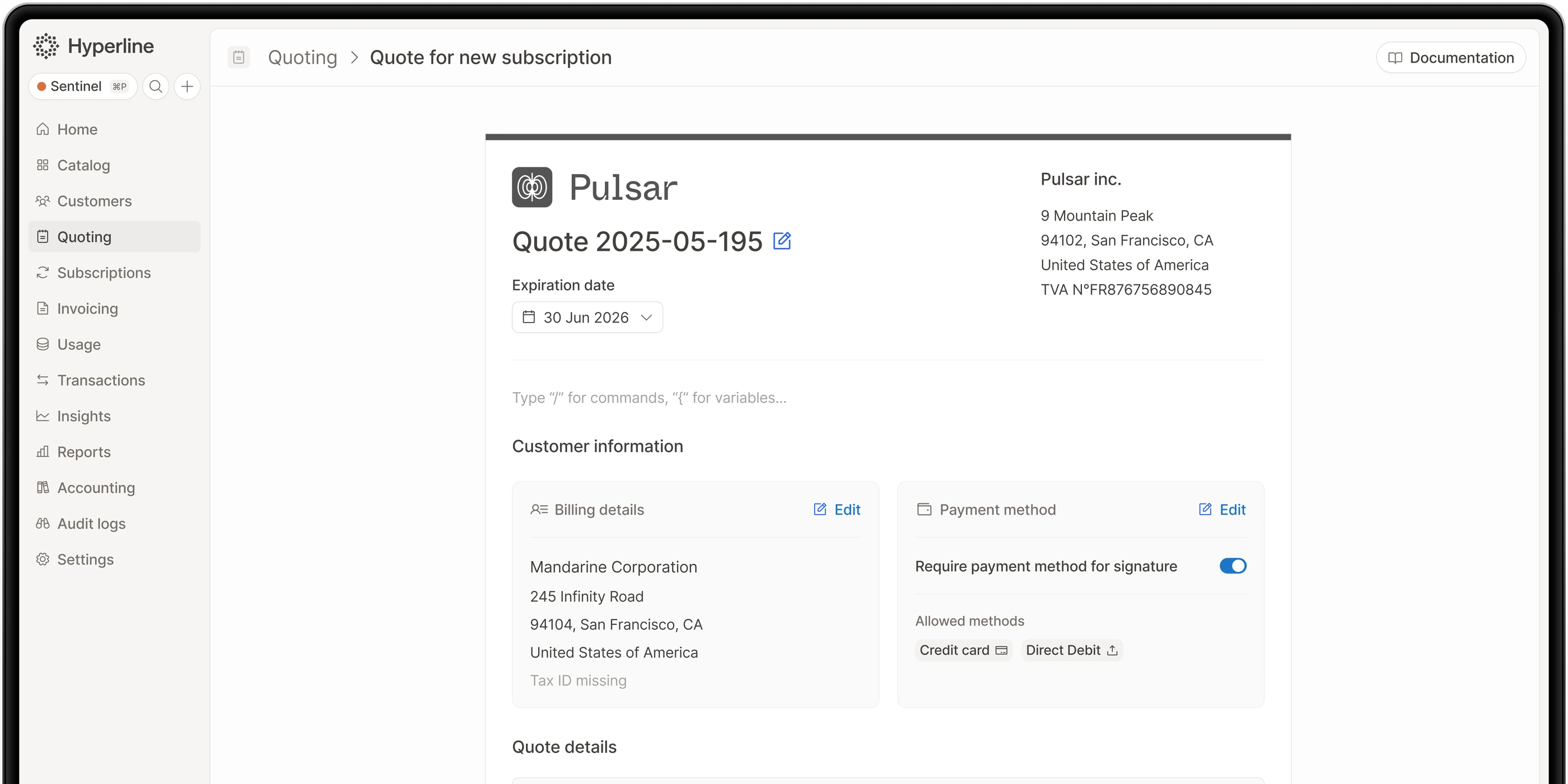
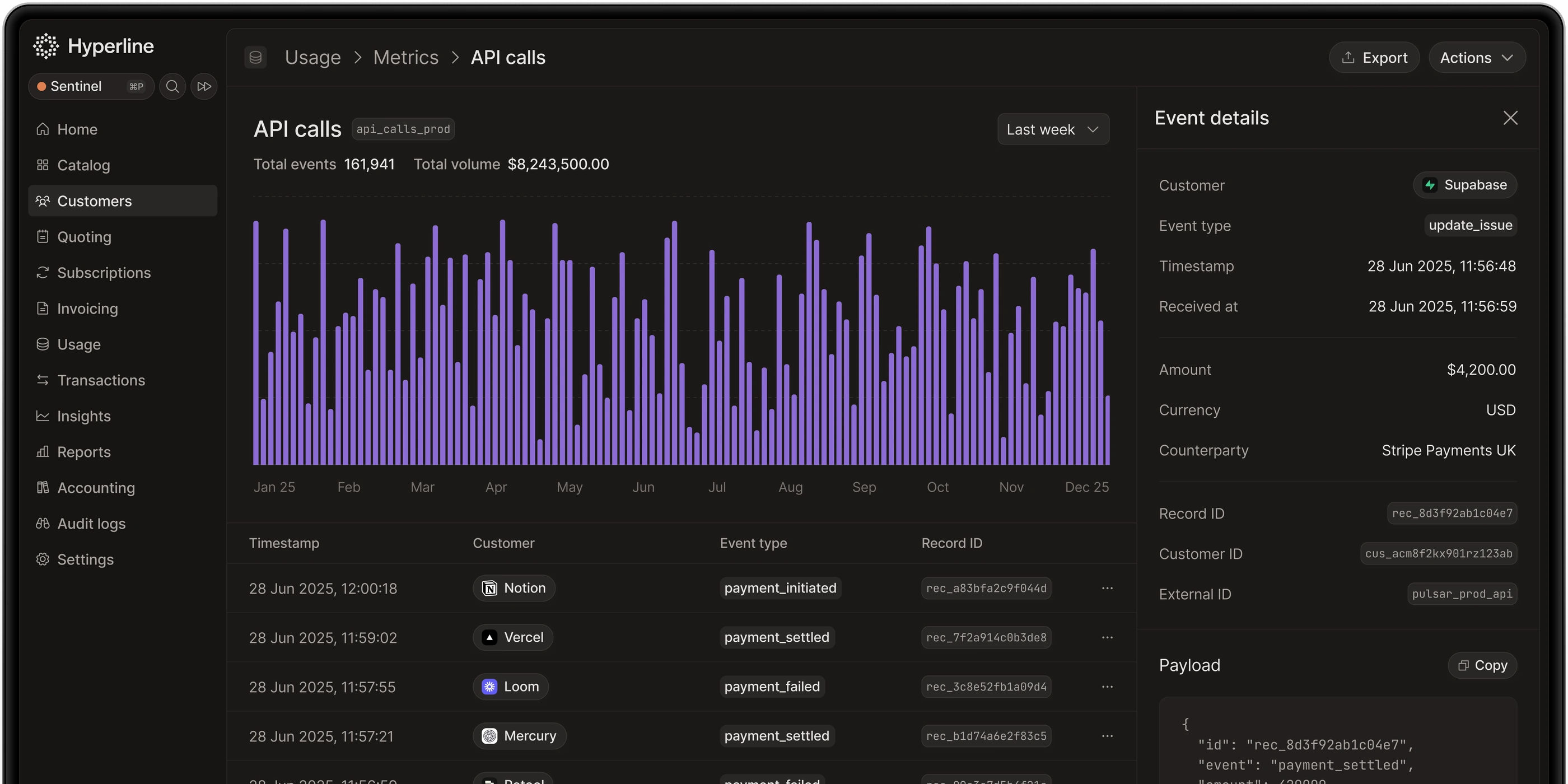
With a flexible product catalog, the finance team now launches and iterates on new pricing models in a few clicks, no engineering needed. Since adopting Hyperline, Truvi has launched four new self-serve products, each with its own subscription tiers and pricing programs.
“We can now recommend the right program to the right persona, thanks to the data we easily collect and this is showing great insights into our market.”
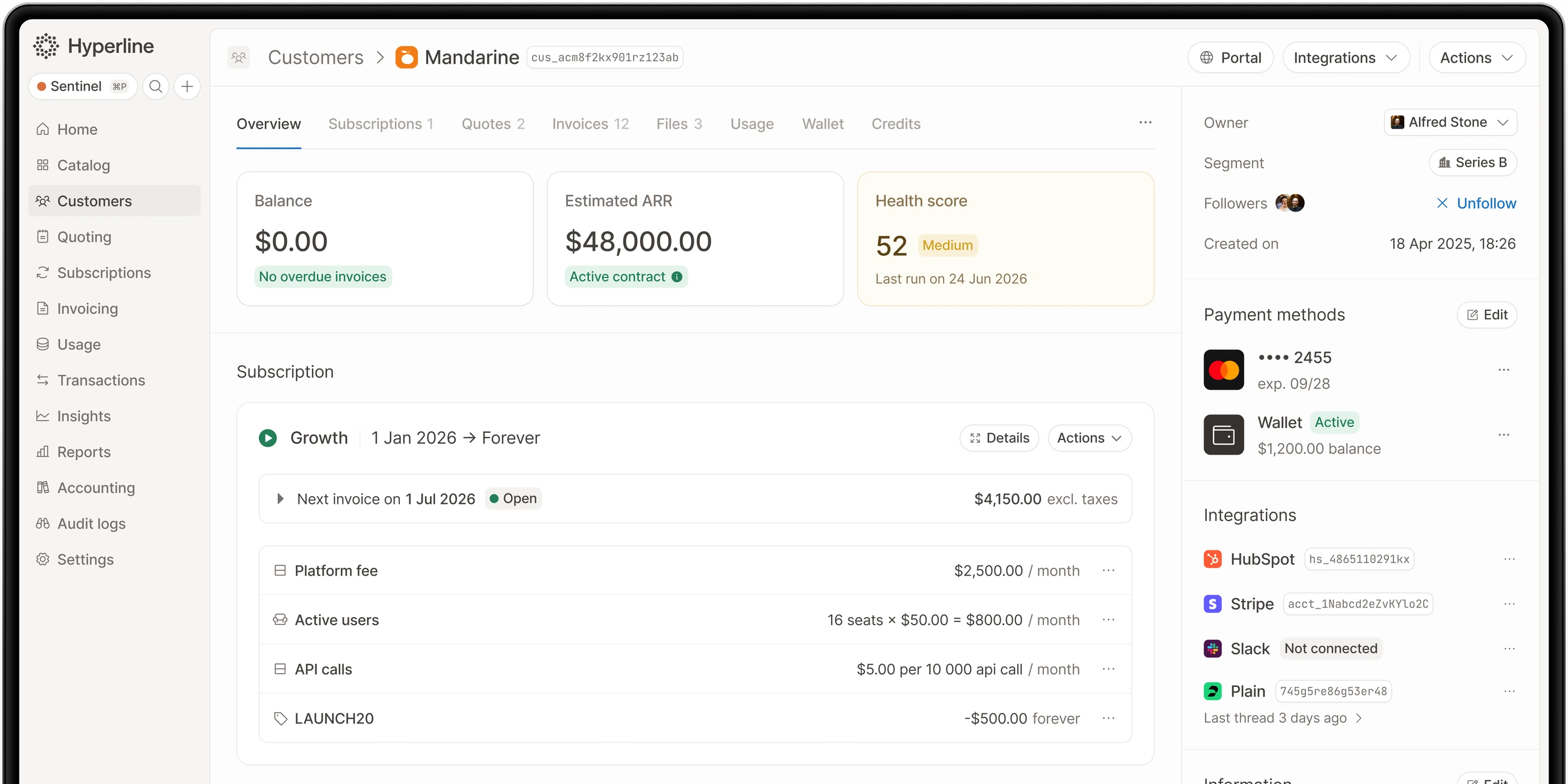
Customers get a dedicated billing portal to update payment methods, download invoices, and track their usage in real time. The transparency gap that once bred confusion is now predictability and trust.
“The biggest impact has been on closing. What used to take 12 weeks with 8 people now takes just 4 days with 4 people. The difference in productivity is huge.”
Hyperline is now the source of truth for Truvi’s finance team, which is no longer afraid to scale: they know it will just work.