How Swapcard uses Hyperline to manage pre-paid credits easily
Swapcard’s self-serve product runs on credits and usage-based pricing. After hitting the limits of Stripe and Lago, they launched billing on Hyperline in under two months.

Swapcard is an AI-powered event platform that simplifies registration, networking, and analytics, helping organizers run seamless events and boost engagement.
Challenge
When Swapcard introduced credit-based pricing, Stripe Subscriptions couldn’t handle renewals and prorations, and Lago took five months to implement with key gaps.
Solution
Robin found Hyperline through a referral and signed up in self-serve. Less than two months later, Swapcard was invoicing customers with minimal developer involvement.
Pricing model
Swapcard’s self-serve plan starts at €540 per year, with credits to scale participants and exhibitors, plus more than ten optional add-ons like branded apps.
Results
Sales and CS manage quotes, subscriptions, and checkouts in Hyperline or Salesforce, while engineers get stability, fast fixes, and steady feature velocity.
Self-serve pricing built on credits
Swapcard is an AI-powered event platform that helps organizers, such as associations, trade shows, and conference planners, run registration, ticketing, networking, check-ins, and analytics in one place. Originally built as a sales-led SaaS serving large conferences and trade shows, the company expanded with a self-serve product for smaller organizations, typically events with up to 1,000 participants and around 30 exhibitors.
The self-serve version offers the same core features with lighter support than the enterprise solution. Pricing is structured around the volume of participants and exhibitors: plans start at €540 per year, with credits available to scale and more than 10 optional add-ons, such as custom event apps with branded logos. Customers like 1format and Hemirable run on this model.
At the product’s launch four years ago, Stripe Subscriptions seemed like the natural choice for self-serve billing.
Two tools that could not keep up
Stripe’s limitations quickly became clear: renewals were difficult to manage, and prorations were a recurring headache, to name just a few. Looking for alternatives, the team turned to Lago, an open-source solution. What followed was a five-month implementation effort for a platform with limited features: overage management on subscriptions stayed manual, credit notes were available only as paid features, and support was restricted on the open-source plan.
Robin, Head of Growth at Swapcard, recalls how that relationship evolved.
“In the beginning, the support was great, we were early adopters. But very quickly, we were no longer a priority since we were on the open-source plan, and the support became very limited.”
A referral, then a self-serve trial
Robin first heard about Hyperline through a referral in his Growth network. He signed up in self-serve and started exploring the platform on his own.
“It became clear right away that it covered everything we needed.”
The product convinced him, and so did the value proposition: a SaaS solution requiring no ongoing maintenance, unlike open source; a feature set that addressed all the previous limitations; and a fair monthly pricing model. Speaking with the Hyperline team reassured him further.
“I could see the product was moving in the right direction, with upcoming features that would only improve our experience on the platform.”
With his hybrid Growth and engineering profile, Robin led the entire billing project end-to-end, involving developers only minimally. Less than two months later, Swapcard was ready to invoice its first customers through Hyperline.
“And honestly, it could have been even faster, Hyperline built a custom credits feature for us right when we needed it most, which made all the difference.”
When usage-based billing just works
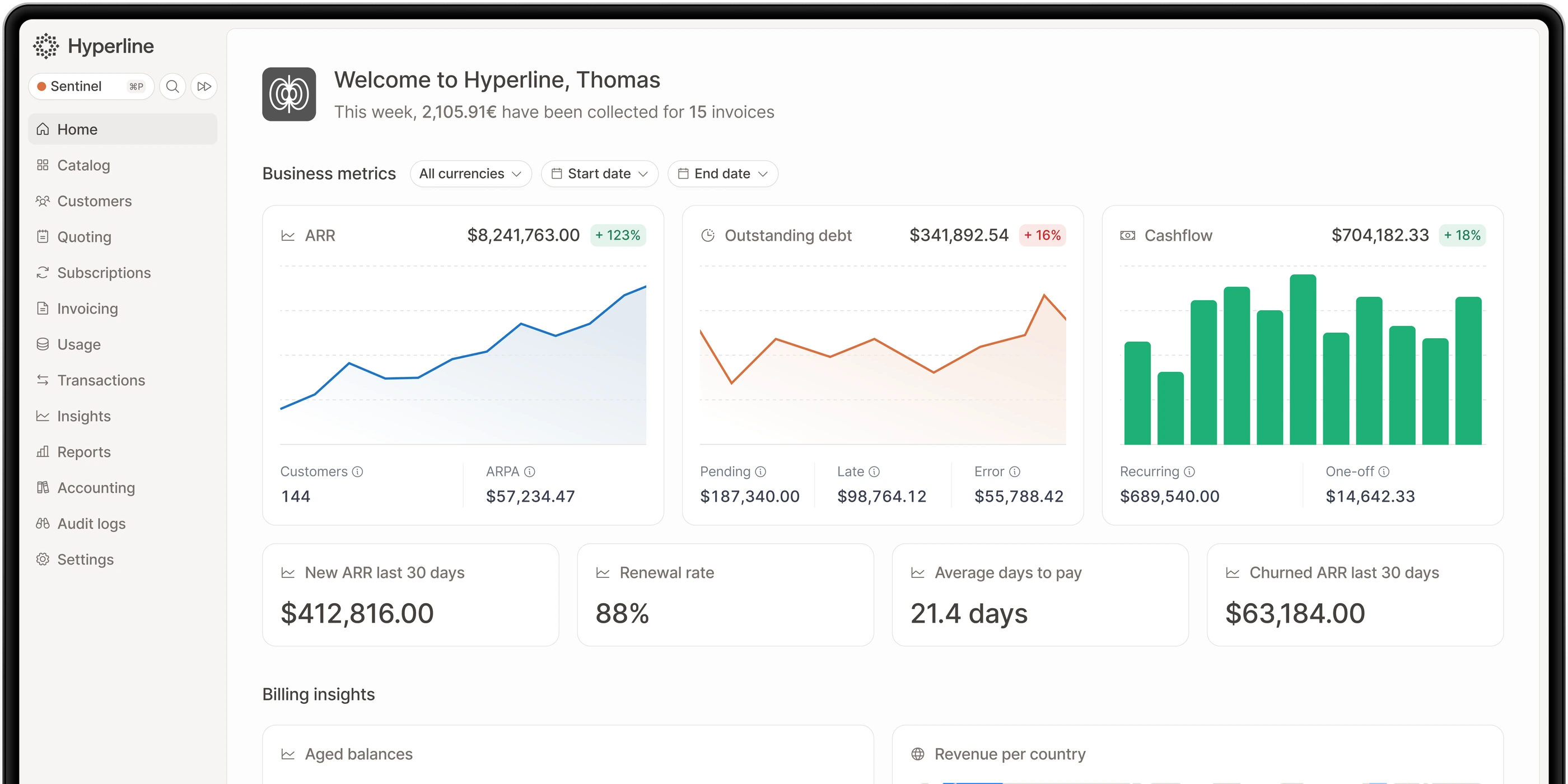
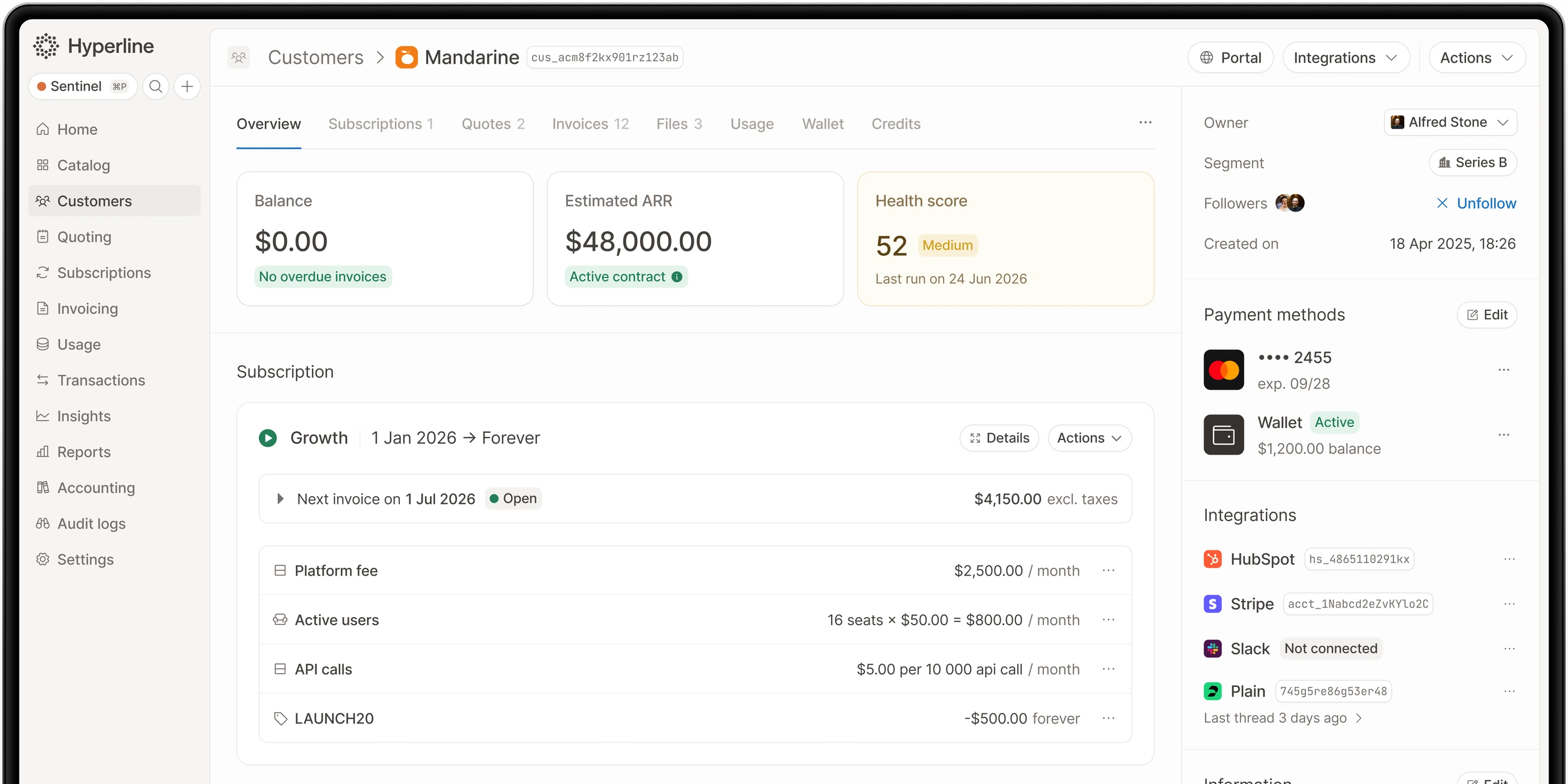
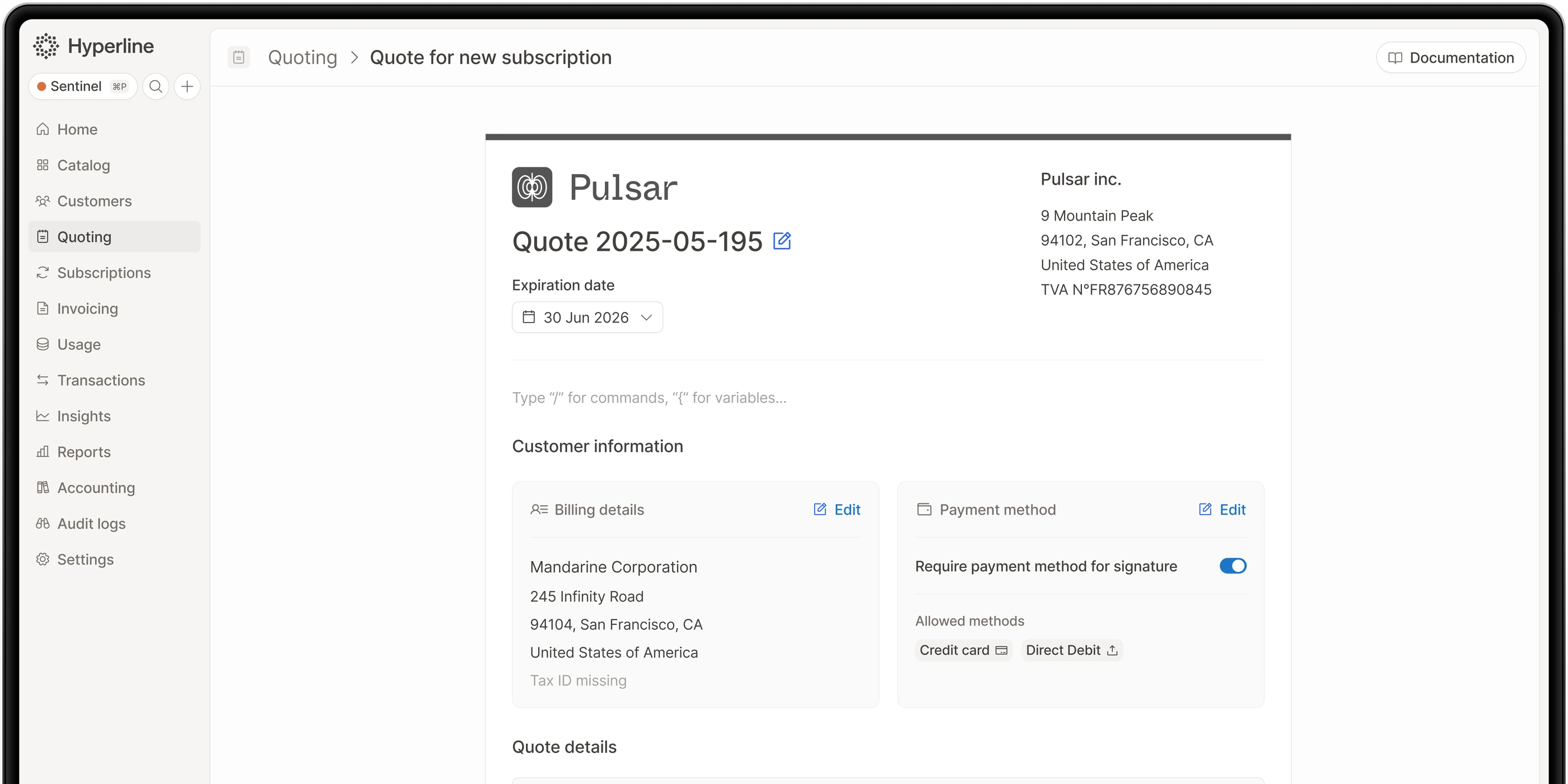
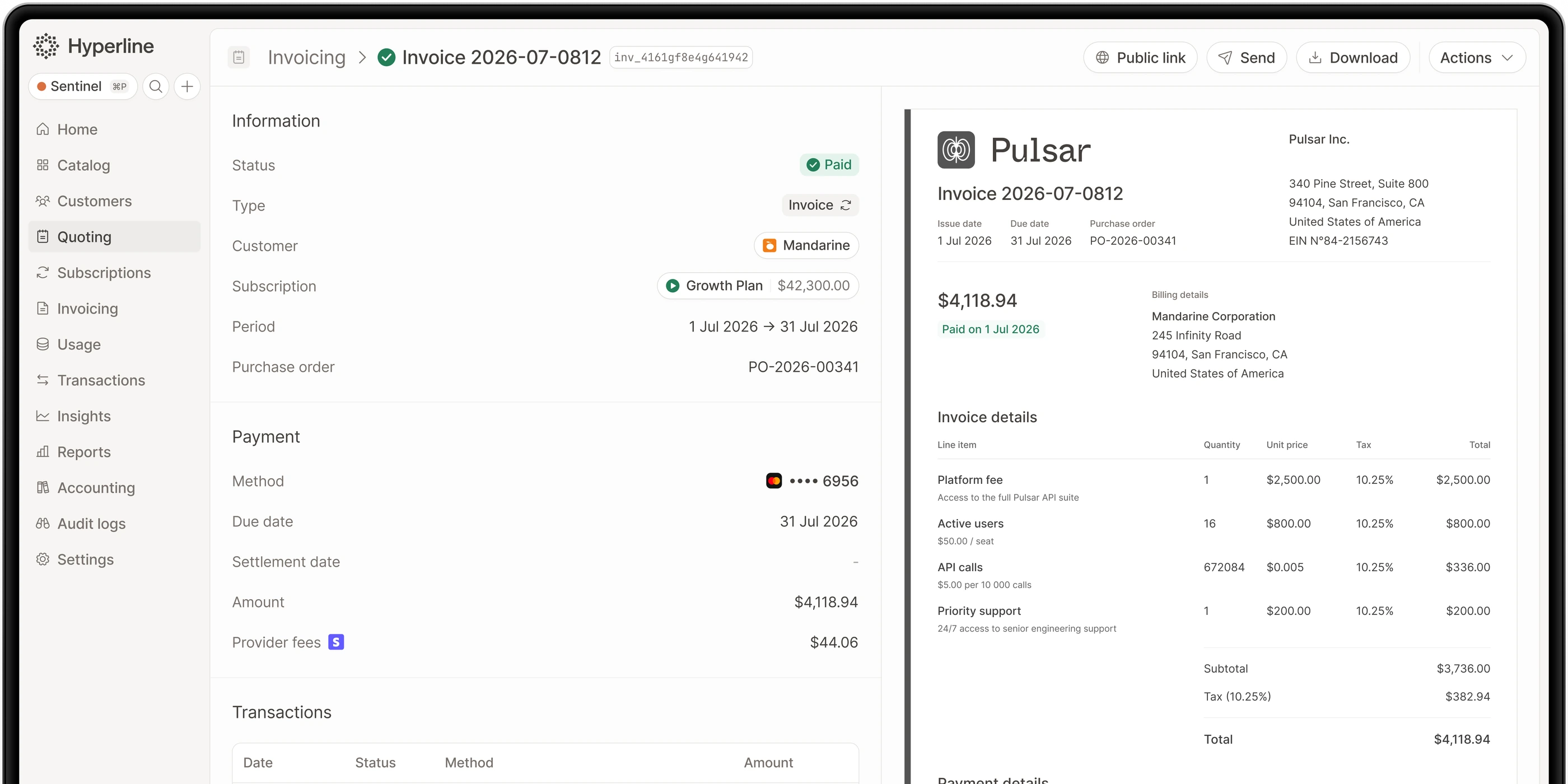
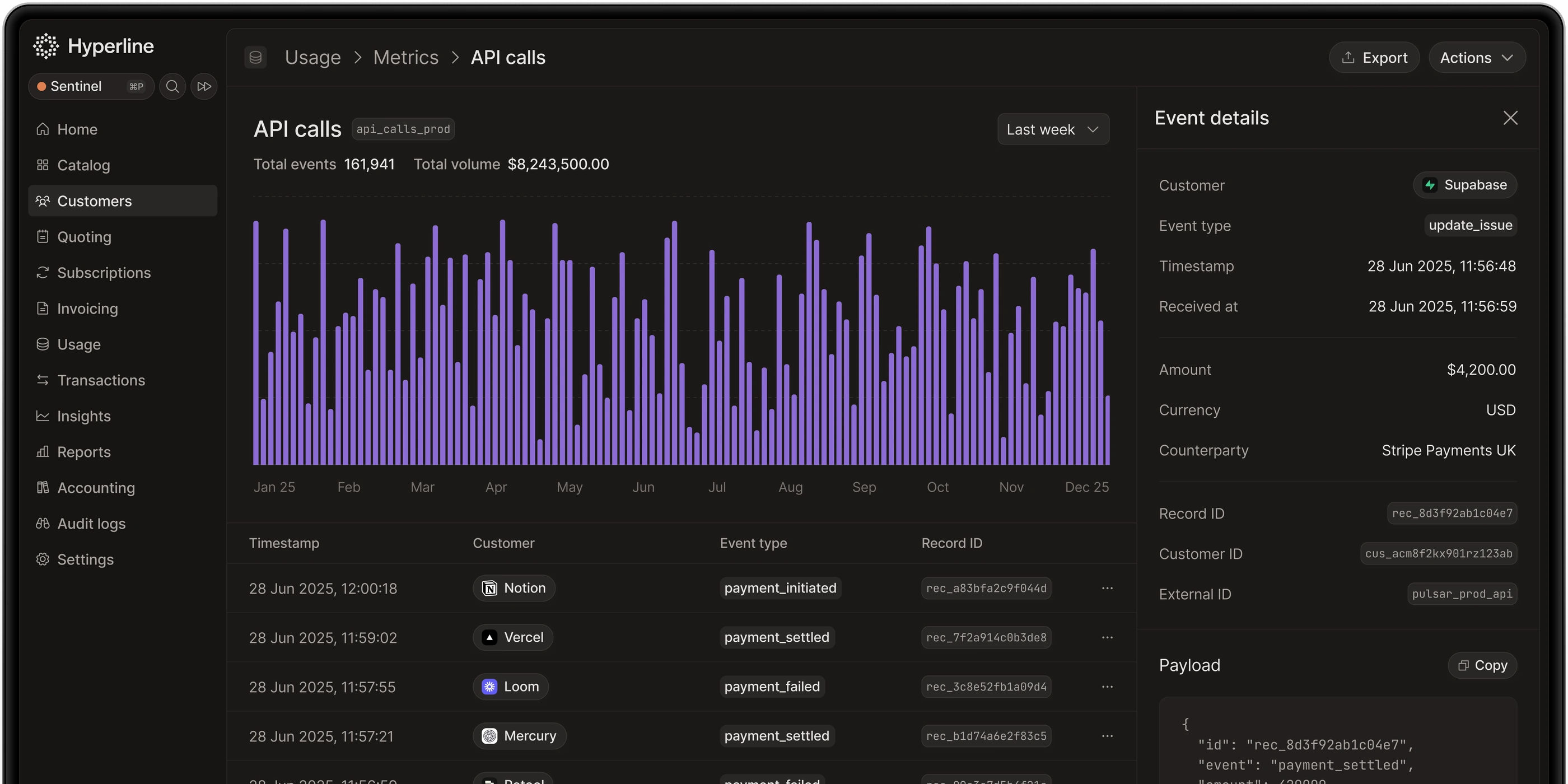
Since the move, a steady stream of new features has made billing easier and more efficient to run: quotes created directly in Hyperline with checkout links for e-signature, credits management, invoicing ahead of time, granular permissions, a dedicated customer portal for cards, invoices, and credits, a well-documented API for reporting, and key integrations from data warehouses to Salesforce and Slack alerts.
The impact is clear on both sides of the company. Sales and CS teams now run their own quotes and manage subscriptions on the platform or from Salesforce, so non-technical users handle billing tasks without relying on developers. On the technical side, engineers appreciate the product’s stability, the speed of bug fixes, and the pace at which new features are released.
For Robin, the experience is great for technical and non-technical teams alike. The pace of shipping, and how closely the Hyperline team listens to feedback, make Swapcard feel like they are building the product alongside them.