How Plain uses Hyperline to remove operational friction across teams
Plain runs across US, UK and European entities. With Hyperline, quotes, signatures and revenue visibility are open to every team, not gated behind Operations.

Plain operates as a global company, with a US entity, a UK entity, and another entity based in Europe. For Youmna Sirgi, Head of Operations at Plain, that means supporting the operational foundations that allow the company to work across countries and stay available to customers whenever they need support.
Challenge
Three entities bring different rules for billing, taxes and revenue handling. Operations had to manage that complexity without becoming a bottleneck for other teams.
Solution
Hyperline makes key revenue workflows accessible beyond Operations. Teams send quotes, collect signatures and get visibility without waiting to be unblocked.
Results
Operations now works as an infrastructure layer rather than a gatekeeper. Teams move faster with the visibility they need, and Youmna starts her day in Hyperline.
Revenue operations across three entities
Plain operates as a global company, with a US entity, a UK entity, and another entity based in Europe. For Youmna Sirgi, Head of Operations, being global is not just about having entities in different countries: it is about being present and available to customers whenever they need help.
Behind that customer experience sits a long list of operational work. Each entity brings its own requirements across billing, taxes, employment, health insurance, and revenue handling. They are not the most visible parts of company building: not the shiny, flashy new features, as Youmna puts it, but the things that make sure the company works.
“We are a multi-entity company, so we have to handle revenue differently, sometimes depending on the entity.”
That makes the tooling layer critical for Operations. The system has to support how the company actually works across entities, instead of forcing everything into one rigid process.
Hard things made easier
Youmna’s first impression of Hyperline was simple: it made parts of the job easier that she had not even realized were difficult.
“My immediate impression of Hyperline is it made things easier that I didn’t even know were hard.”
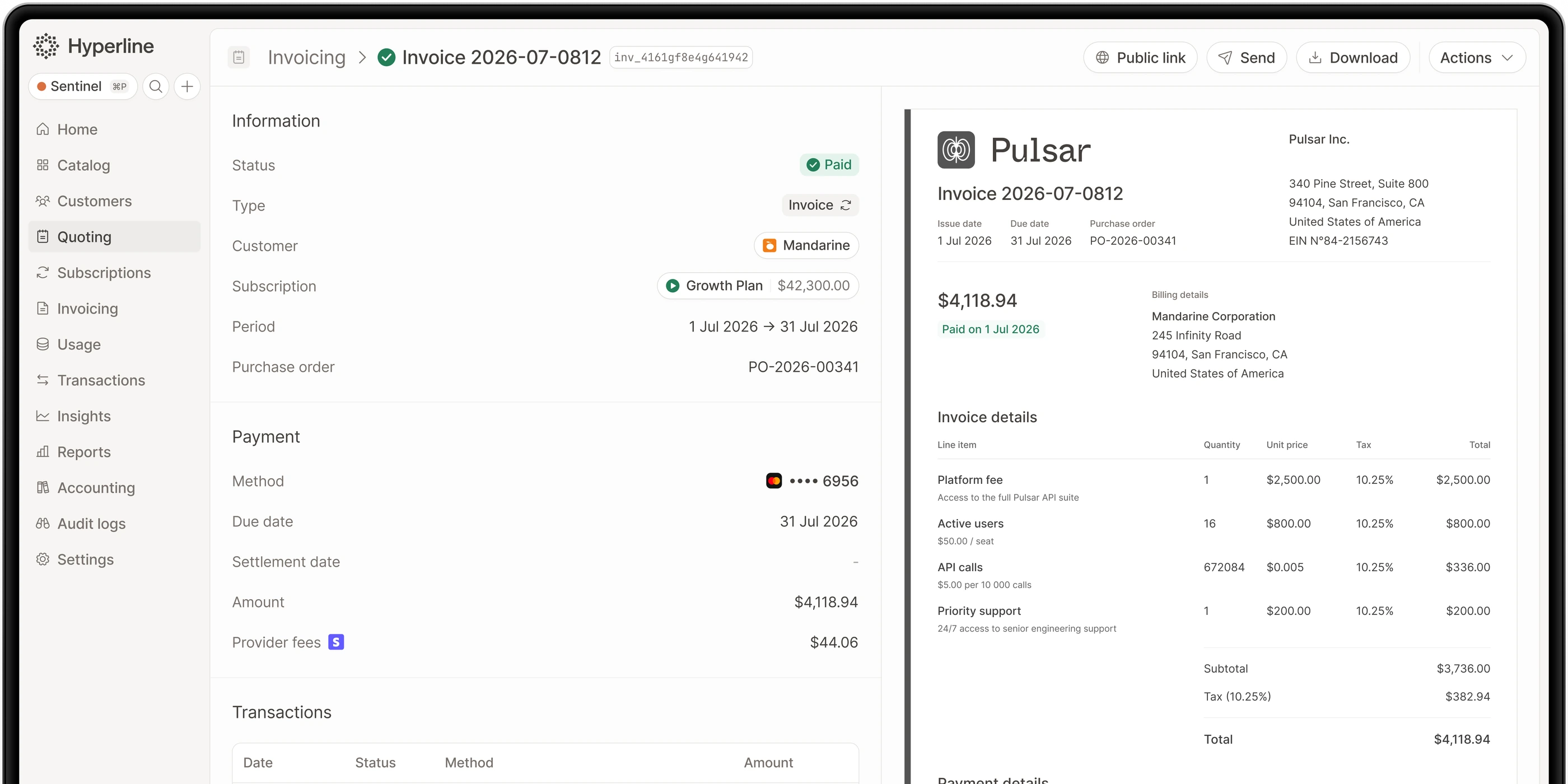
Revenue across entities is one example. Hyperline had already thought through that complexity, and the forethought to make it easy was something Youmna really appreciated. That attention to operational detail showed up across the product. For a team managing multiple entities and changing requirements, it means the platform supports the way the business works, rather than adding more manual coordination around it.
Opening revenue workflows to every team
A big part of the impact for Plain is access. Youmna does not want Operations to be the team everyone has to go through before work can move forward. The goal is the opposite: make the right workflows available to the right teams, so they can move faster on their own.
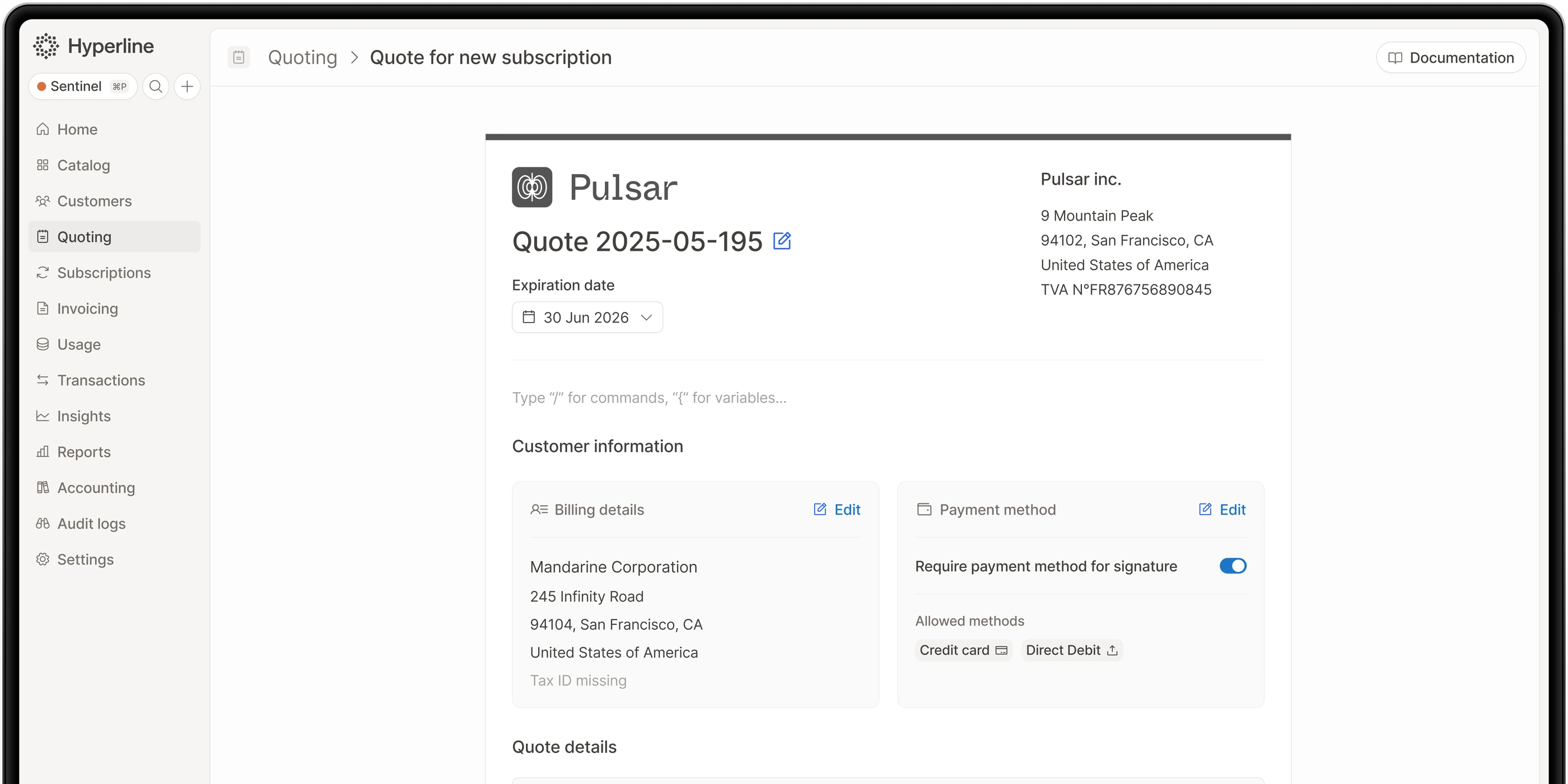
“I don’t have to be the point of friction for someone to send a quote out or to get a signature.”
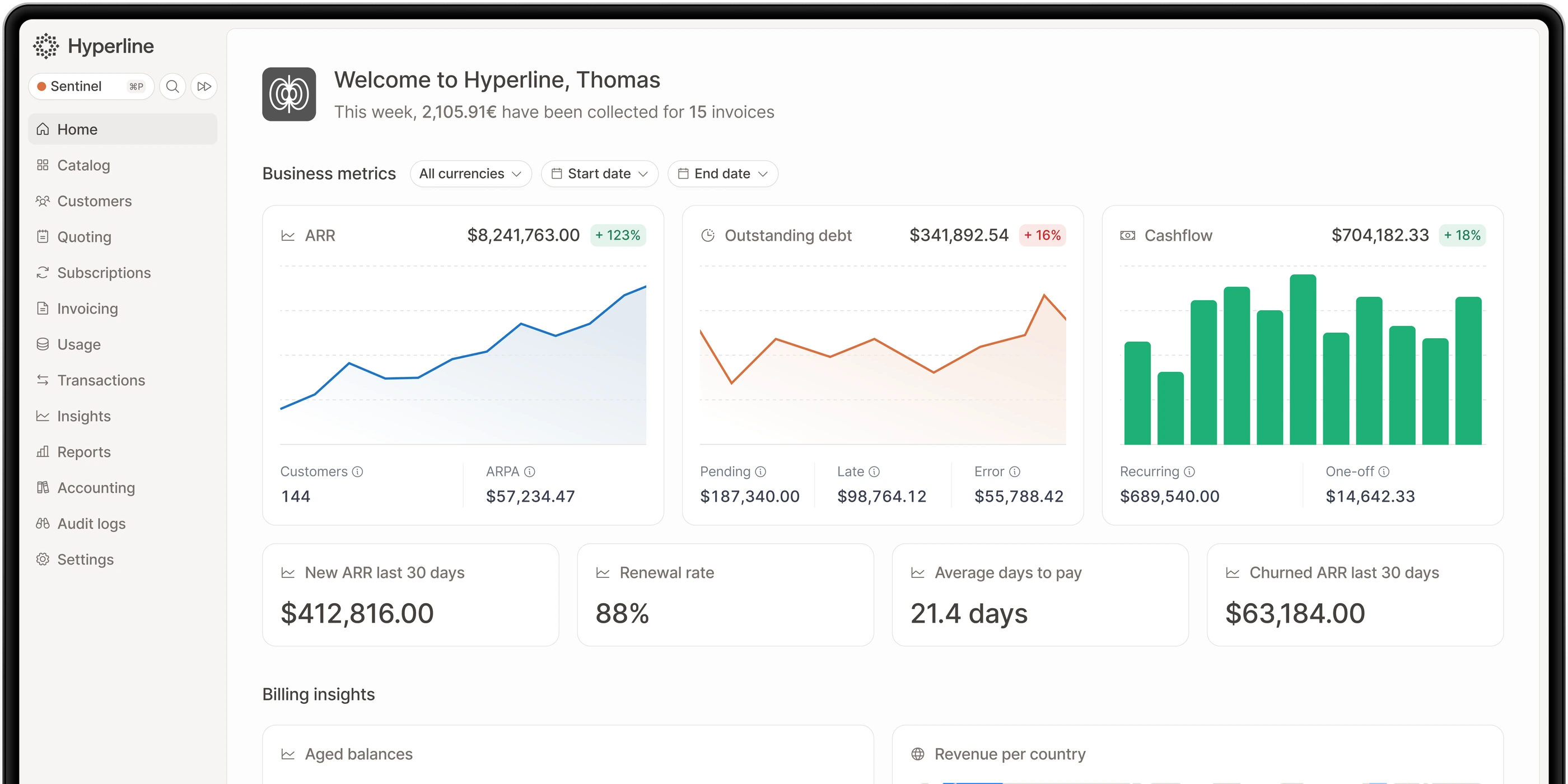
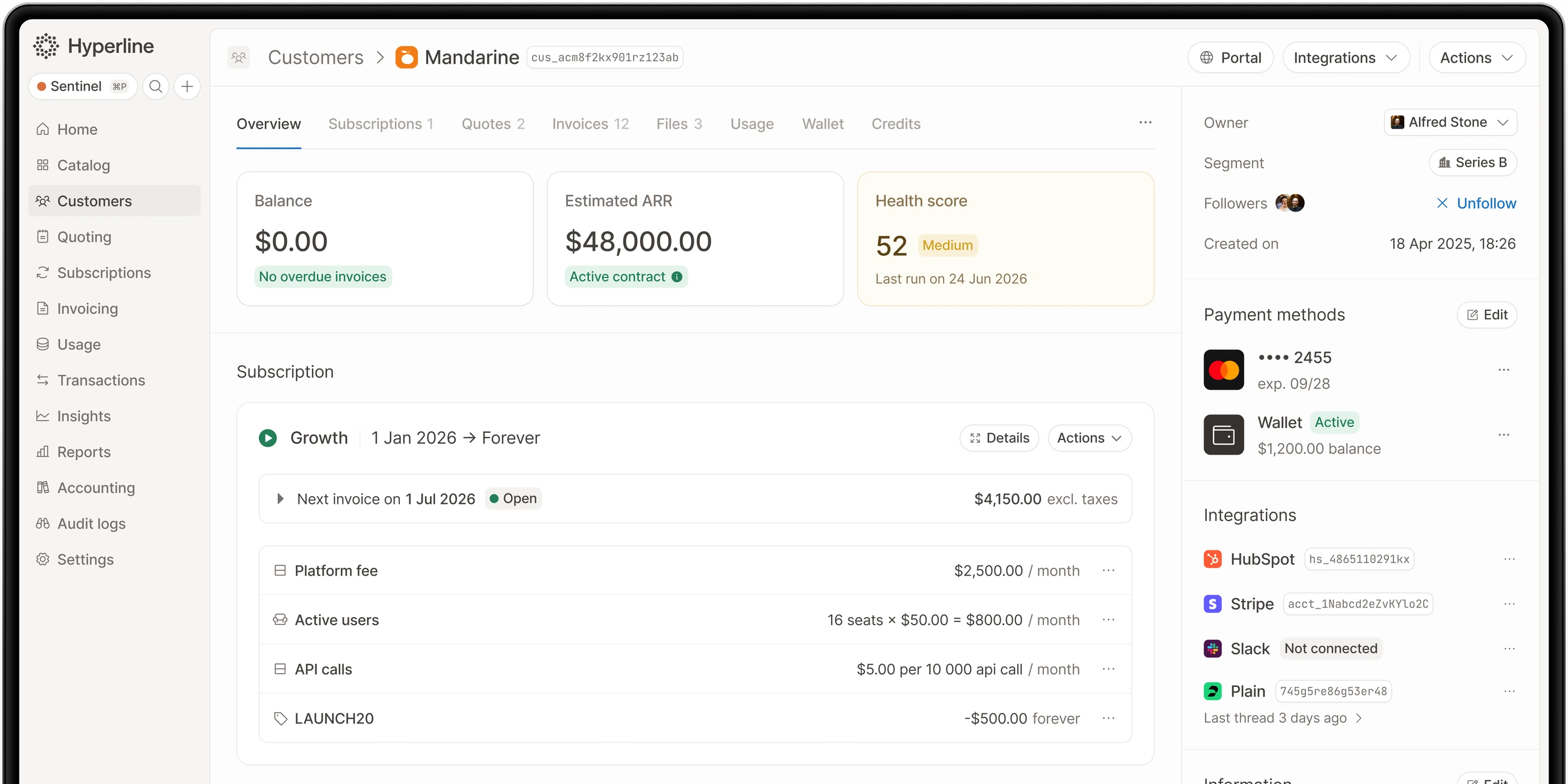
Those workflows are now super accessible in Hyperline, and Youmna trusts the platform to give the rest of the company the visibility it needs. Other teams work with the information they need without more dependency on Operations. For Youmna, that is what good operations tooling should do: make the company faster, without creating more process.
An infrastructure layer for the business
Youmna thinks about tooling the way Plain thinks about product: it should make it easy to be an infrastructure layer. There are talented and smart people who will do what they need to do for their businesses; the job is to open the door and make that easy for them. The right tool should not force teams into a narrow workflow. For Operations, that means less time acting as the gatekeeper and more time building systems that scale.
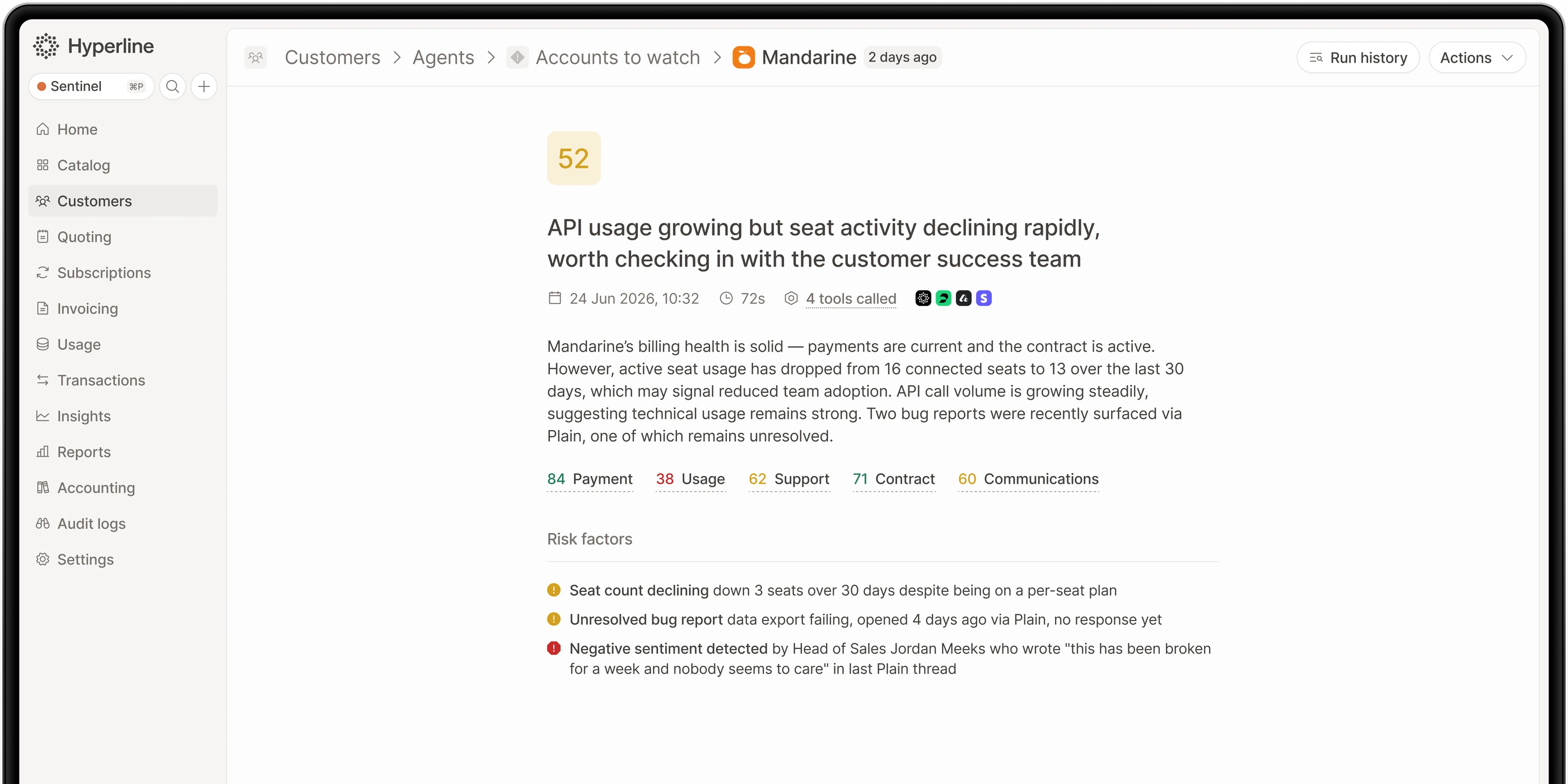
Hyperline is also part of Youmna’s daily operating rhythm. She uses Hyperline’s MCP to answer quick questions when she needs information fast, and to build scalable processes that give visibility into the health of the business from multiple angles, including customer success and sales perspectives.
“I would be lost without starting my day without it.”
Quotes, signatures, revenue visibility, and daily questions are now easier to access across the company, and Operations acts as an infrastructure layer rather than a bottleneck.
“The important thing about operations is we’re making other teams move faster, and Hyperline allows me to do that.”
For Plain, that is exactly what operations is meant to do.