Maxio vs Metronome: which billing platform fits your pricing? [2026]
Maxio and Metronome solve different halves of the billing problem. A criterion-by-criterion comparison of where they diverge, and how to choose.

Choosing between Maxio and Metronome is rarely a feature checklist — they were built for different jobs. Maxio's strength is finance reporting and revenue recognition, now with a CPQ attached. Metronome's is real-time metering at low latency for consumption-priced products.
This comparison sets them side by side on the 22 capabilities where they genuinely differ, and is based on a criterion-by-criterion review of both vendors' own documentation and pricing pages, last refreshed in 2026.
What is Maxio?
Maxio is the merger of SaaSOptics and Chargify, and its centre of gravity is still reporting: 30+ one-click reports, customisable dashboards, cohorts, revenue waterfalls, NRR and DSO, with native ASC 606 and IFRS 15 revenue recognition. Competitors concede the point — Solvimon calls its reporting "genuinely strong and audit-ready". The product moved substantially in 2025: Maxio acquired RevOps.io in March and launched Maxio CPQ that July, with native contract signing, audit trails, inline comments, sequential routing to Finance or Legal by amount, SKU or discount, and automatic sync of the signed quote to both the CRM and Maxio Billing. It added a dedicated MCP server in late 2025 and won a G2 Best Usability badge for mid-market in winter 2026. Usage metering runs through the Advanced Billing module, where high volumes often end up as scheduled imports rather than live streams.
What is Metronome?
Metronome is a usage-based billing engine built for very low latency, streaming billable metrics as events arrive. Its pricing levers are explicit — fixed, seat-based, usage, outcome and hybrid — and credit models sit alongside rate cards and commits as one of three building blocks, covering prepaid credits with auto-refill, expiration and overage, prepaid and postpaid commits with true-up, and multi-bucket commits. Rather than a hosted portal it sells an embedded billing dashboard for your own product, with spend alerts and caps through API and webhooks. Everything downstream is deliberately somebody else's job: revenue recognition is exported to an ERP, tax is calculated by Avalara or Anrok, CRM sync is Salesforce only, and Stripe is the sole payment processor listed. Stripe completed its acquisition of Metronome in January 2026; the product keeps its own site, documentation, app, pricing page and roadmap.
Where Maxio and Metronome differ
Of the 27 capabilities reviewed, these are the 22 where the two diverge. "Limited or add-on" means the capability exists but is constrained, sold separately, or handled through a third party rather than natively.
| Capability | Maxio | Metronome |
|---|---|---|
| Native CPQ | Limited or add-on | No |
| E-signature | Yes | No |
| Quote to subscription automation | Yes | No |
| Advanced approval flows | Yes | No |
| Hybrid pricing (subscription + usage + seat + credits) | Limited or add-on | Yes |
| Real-time usage metering | Limited or add-on | Yes |
| Wallets & prepaid credits | Limited or add-on | Yes |
| Multi-frequency billing | Yes | Limited or add-on |
| Advanced parent-child billing | Yes | No |
| Multi-currency | Yes | Limited or add-on |
| Multi-entity | Yes | Limited or add-on |
| Customer portal | Yes | Limited or add-on |
| Revenue recognition included | Yes | No |
| Advanced reporting dashboards | Yes | No |
| AI cash collection agents | Limited or add-on | No |
| MCP | Yes | No |
| Multi-PSP support | Yes | No |
| Bi-directional CRM sync | Yes | Limited or add-on |
| Bi-directional ERP sync | Yes | Limited or add-on |
| In-CRM widget | Limited or add-on | No |
| Support on Slack | Limited or add-on | No |
| Modern UI | Limited or add-on | No |
How to choose between them
Work backwards from your pricing model and your finance stack, not from the feature count.
- If your pricing is consumption-led and events arrive continuously, weigh real-time metering above everything else. A platform that aggregates usage on a schedule will show up as invoice disputes.
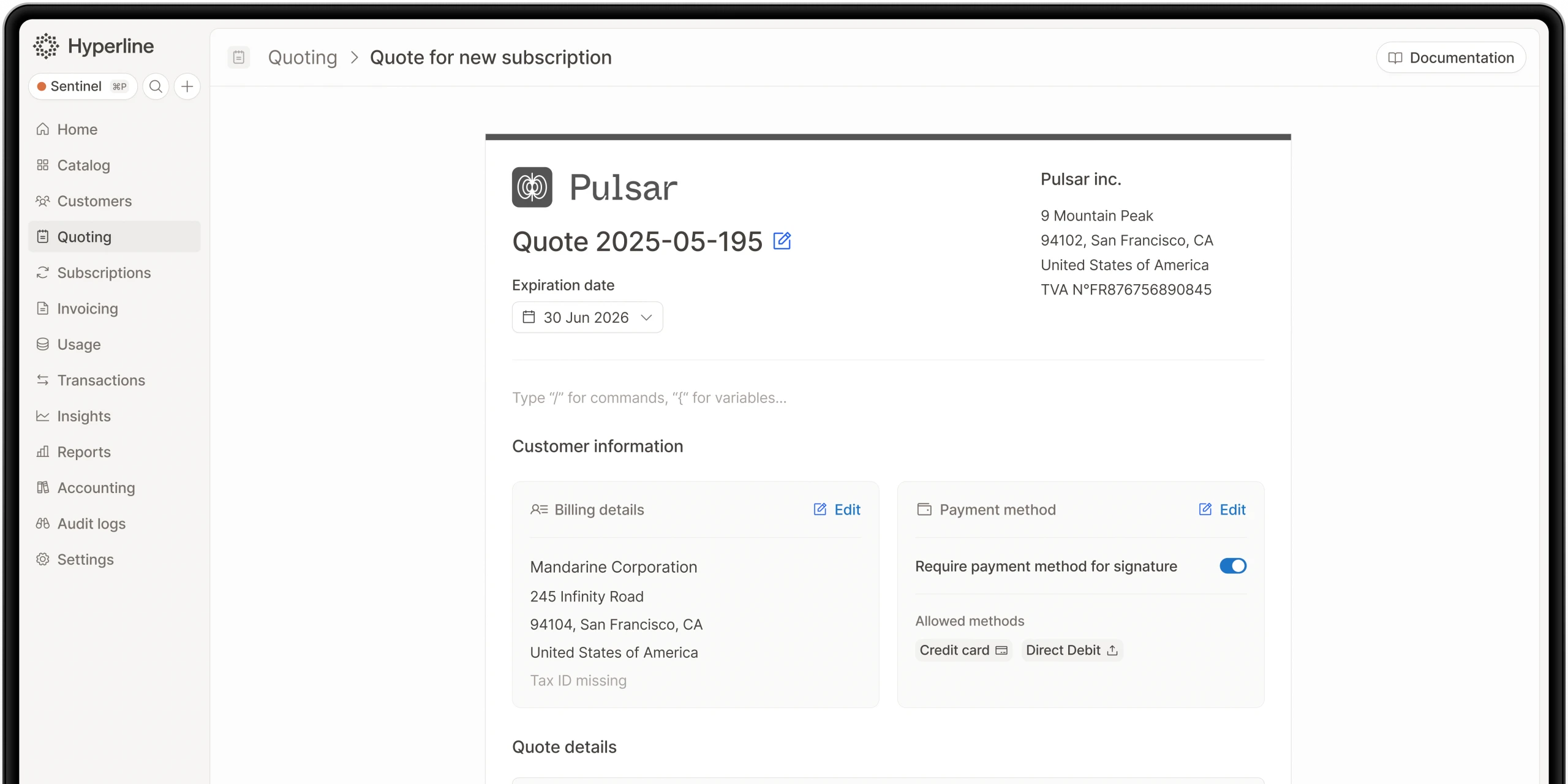
- If your deals are negotiated, the quoting layer matters more — approval routing, e-signature, and whether the signed quote becomes the subscription without re-keying.
- If your constraint is the close, look at revenue recognition and reporting: whether ASC 606 and IFRS 15 schedules are included or licensed separately, and whether you can drill from a board metric to the invoice behind it.
- If you sell internationally, check tax and e-invoicing carefully. Both are frequently add-ons or third-party integrations rather than native, and that changes the total cost.
A third option: Hyperline
Teams comparing Maxio and Metronome are often really asking a different question — whether the quoting layer, the billing engine and revenue recognition have to live in separate products at all.
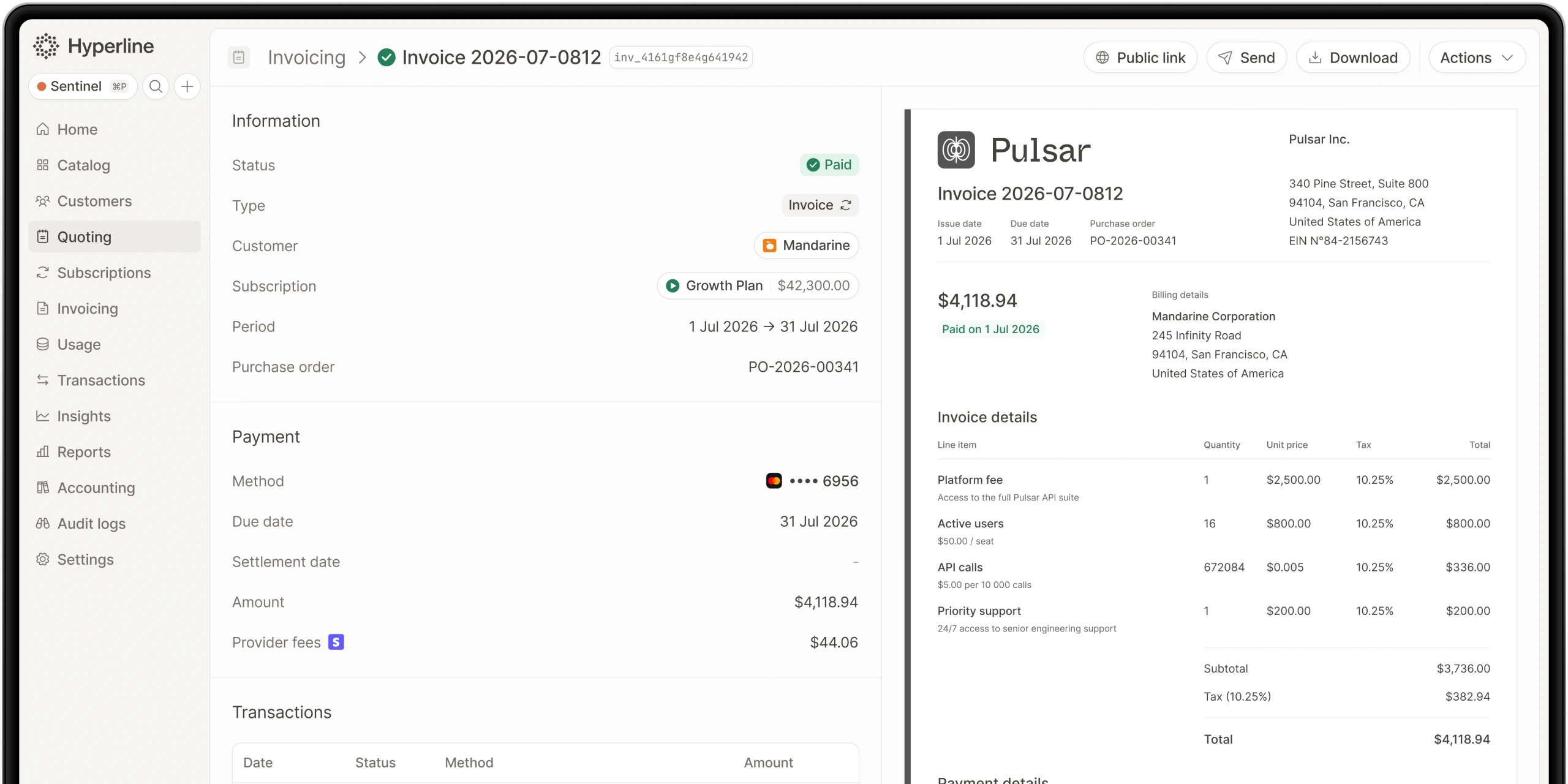
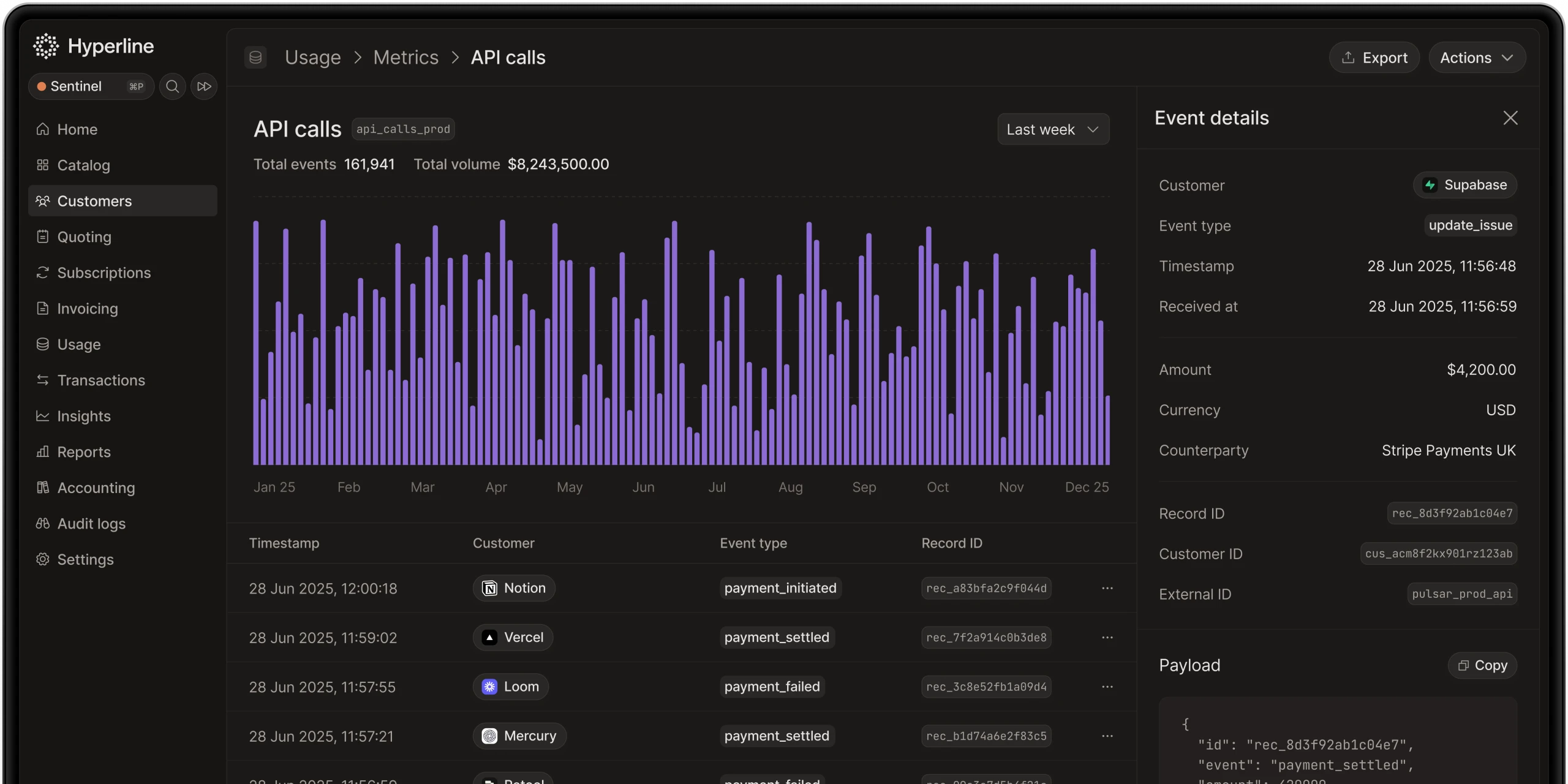
Hyperline covers quote-to-cash on one platform: native CPQ with e-signature and multi-step approvals inside Salesforce, HubSpot or Attio; real-time usage metering from the first API call to millions of events, with prepaid credits and a native credit ledger; revenue recognition producing per-line ASC 606 and IFRS 15 schedules from the same data that issued the invoice; and tax across 80+ countries with Chorus Pro and Peppol e-invoicing built in.
One platform, one contract, configured by finance and RevOps rather than by engineering. You can see how it stacks up against Maxio or Metronome directly, or talk to our team.
Conclusion
Maxio and Metronome are both credible, and the 22 differences above are the ones worth arguing about. Pick Maxio if finance reporting and revenue recognition, now with a CPQ attached is your binding constraint; pick Metronome if it is real-time metering at low latency for consumption-priced products. If the honest answer is that you need both halves, that is the gap Hyperline was built for.