Billing, reimagined for the AI era
A short film with our CEO, Lucas Bédout, on why revenue software should stop just storing data and start running the work, and how that belief shapes what we build at Hyperline.

AI has reshaped almost every part of how companies operate. From engineers writing and testing code to support teams resolving customer requests, the ground is moving beneath our feet.
Revenue is the exception. The way most companies quote, bill and collect cash still depends on people checking things by hand.
We made this short film with our CEO, Lucas Bédout, to explain why we think revenue software should take on more of that work, and how that belief is shaping what we build at Hyperline.
Revenue is still run by hand
Ask a finance or RevOps team what fills their week and the answer is rarely strategy.
They're too busy tracking down a contract that was signed but never invoiced. Or rebuilding the same monthly report because two systems disagree on the numbers. Maybe it's opening the CRM to work out what a customer actually bought before anyone can bill them.
None of it is what finance teams were hired to do. It's careful, repetitive and invisible until something goes wrong. And while a talented team is busy with it, the problems that actually matter, like a pricing mistake or an account quietly at risk, get less attention than they deserve.
From storing data to running the work
So why is revenue the exception to this era of AI doing the heavy lifting?
Because for most of its history, billing software has simply been a system of record. It holds the contracts, the prices and the invoices, then waits for someone to act.
That model is changing, and the old playbook no longer works. As Lucas puts it in the film: "Software used to only store your data. Now it can run your business."
We're talking about a system that doesn't wait for you. It notices the signed contract with no invoice and gets the invoice out. It sees a payment running late and follows up. It catches a pricing misconfiguration before a single customer is billed wrong.
The finance team stops chasing and checking, and spends its time on the meaningful decisions that actually need a person.
This isn't new for us
AI in billing isn't a fresh announcement at Hyperline. It's already in the product, and customers already use it.
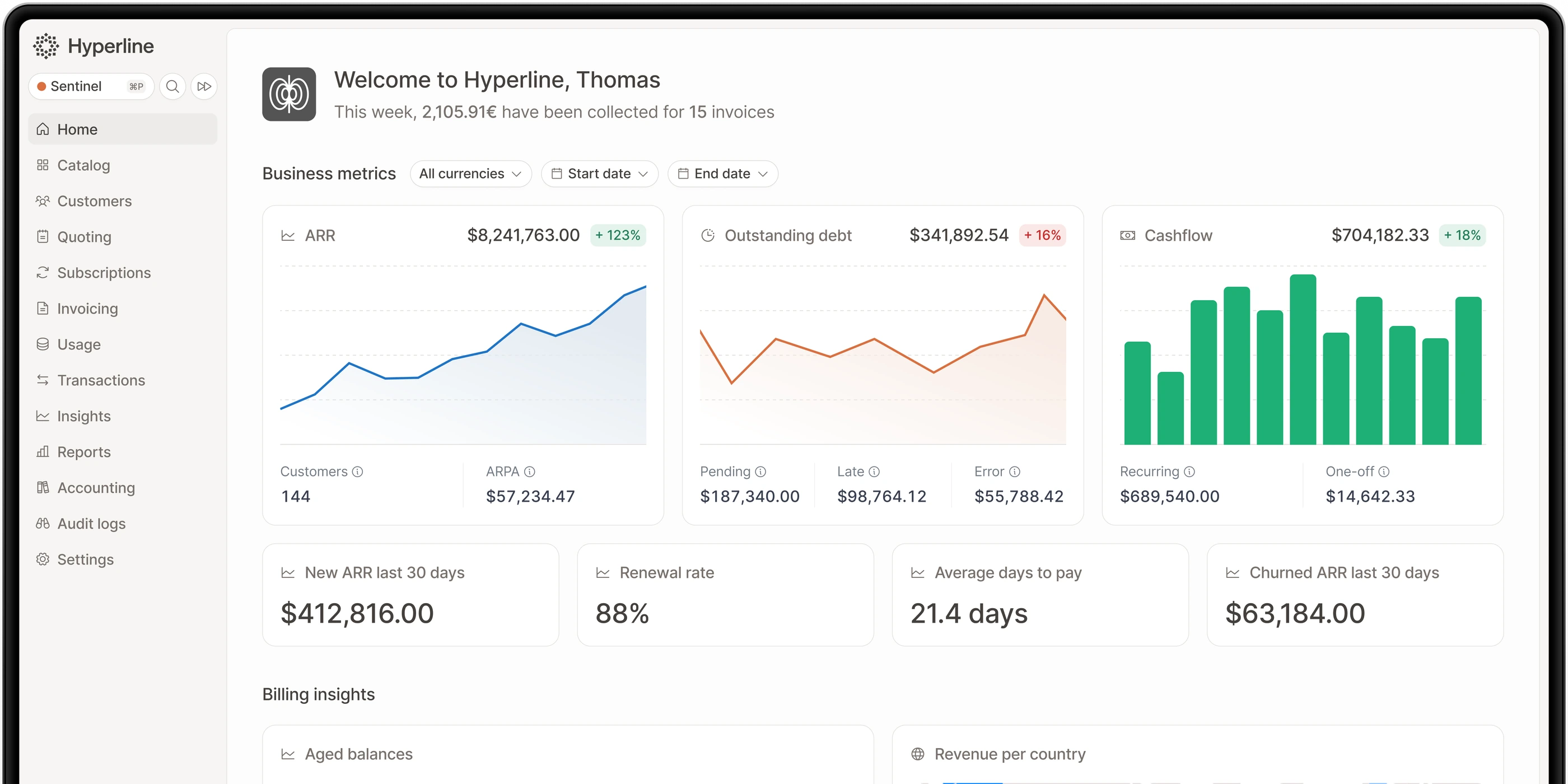
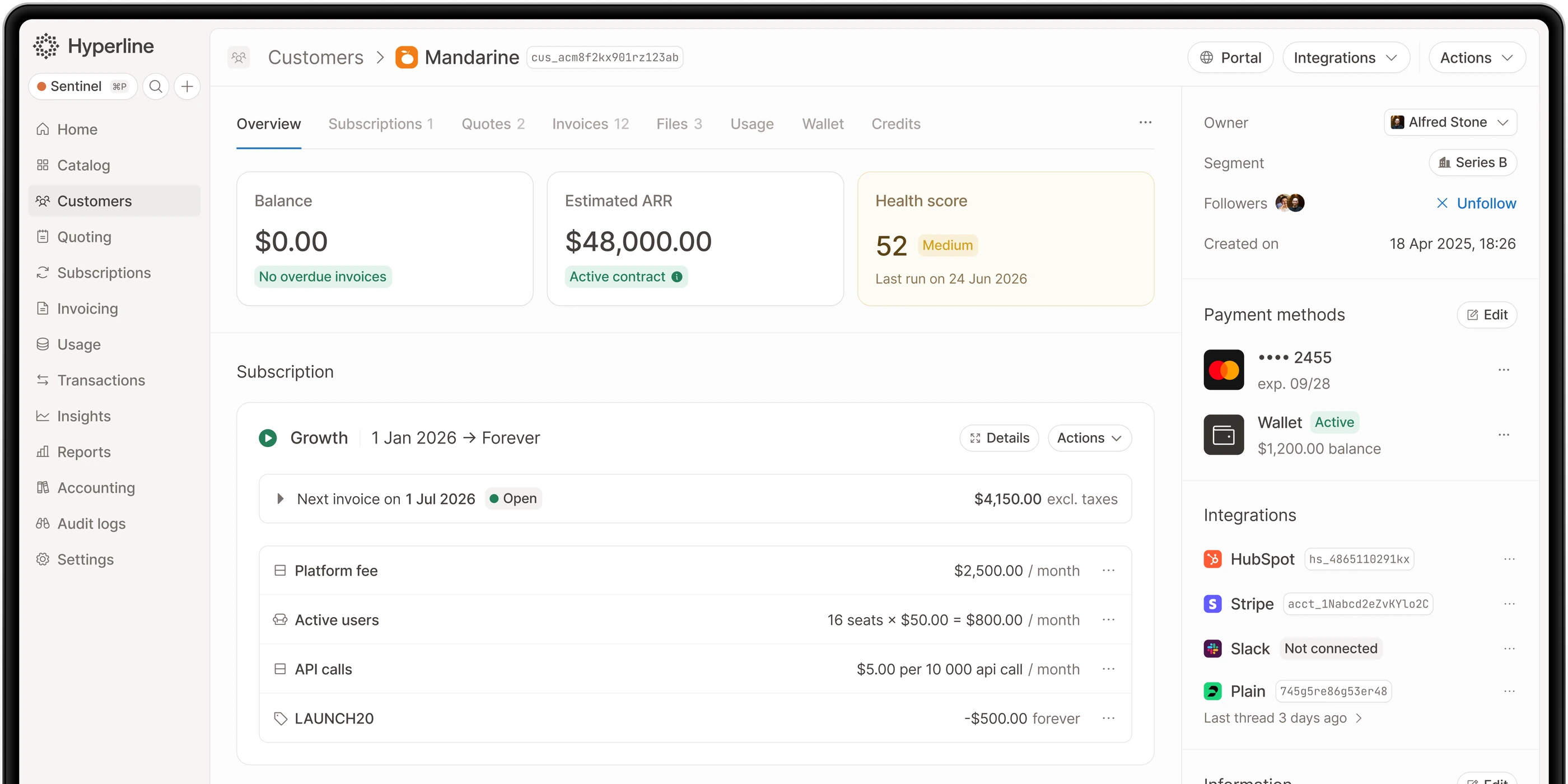
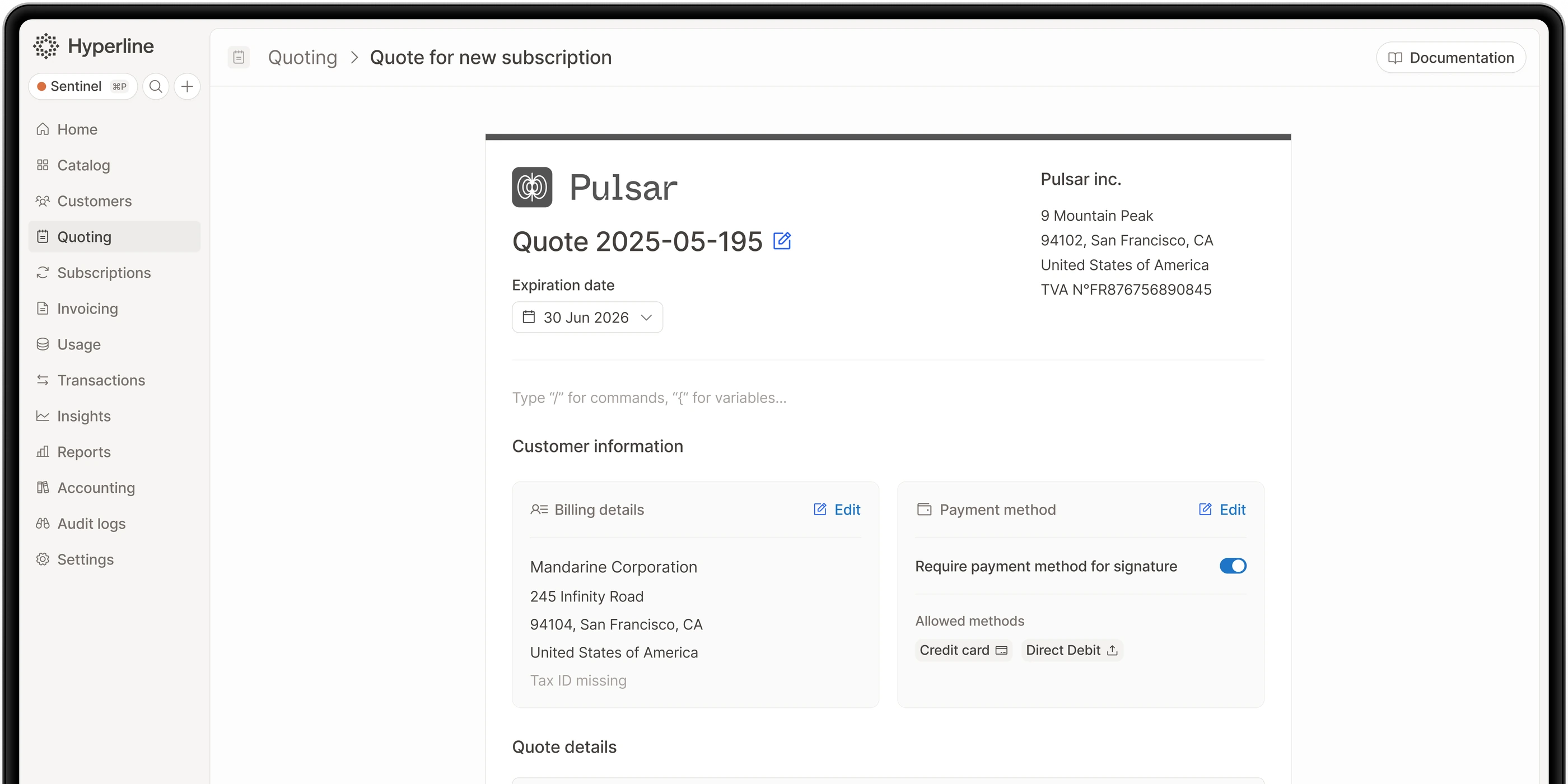
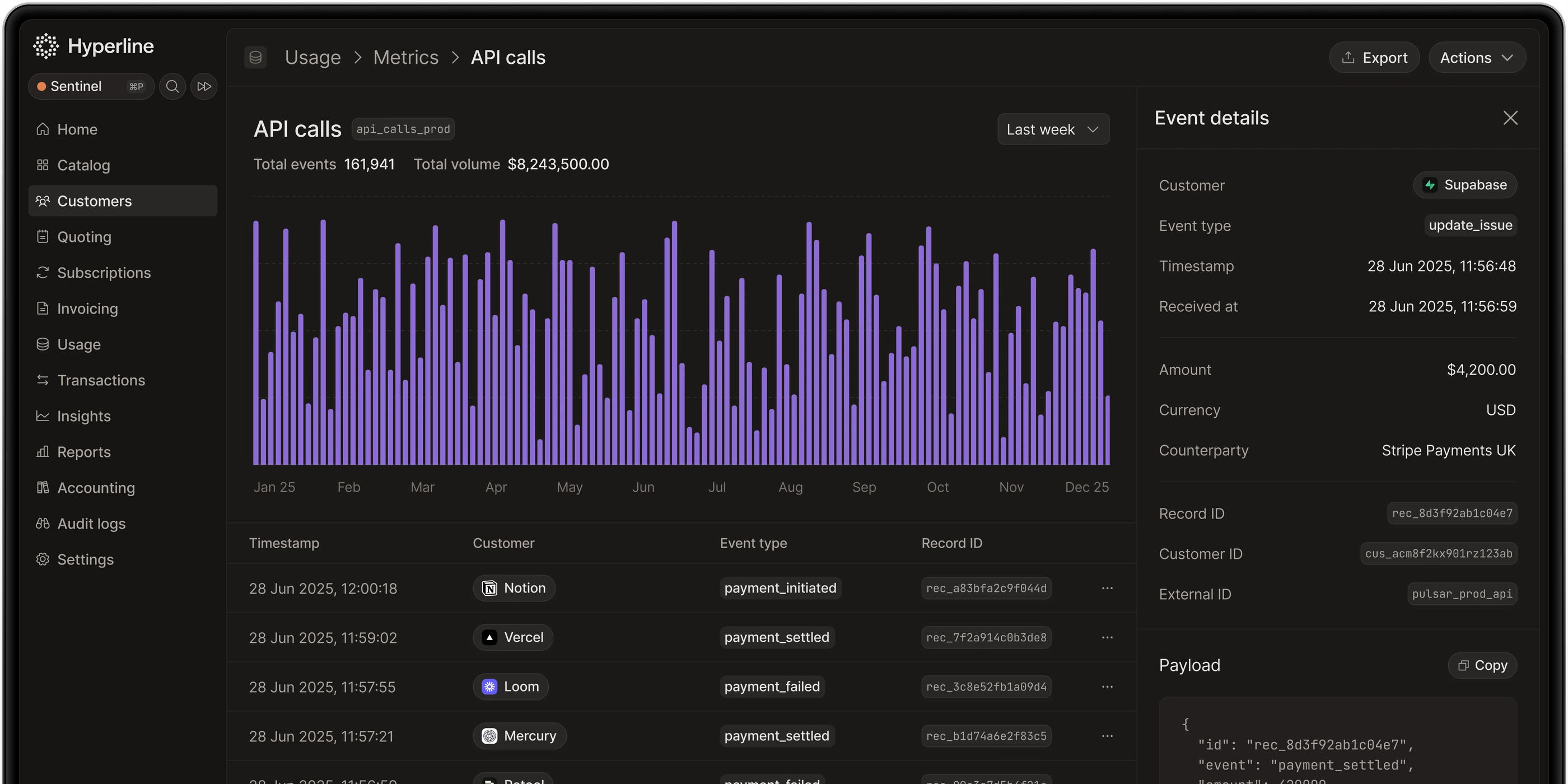
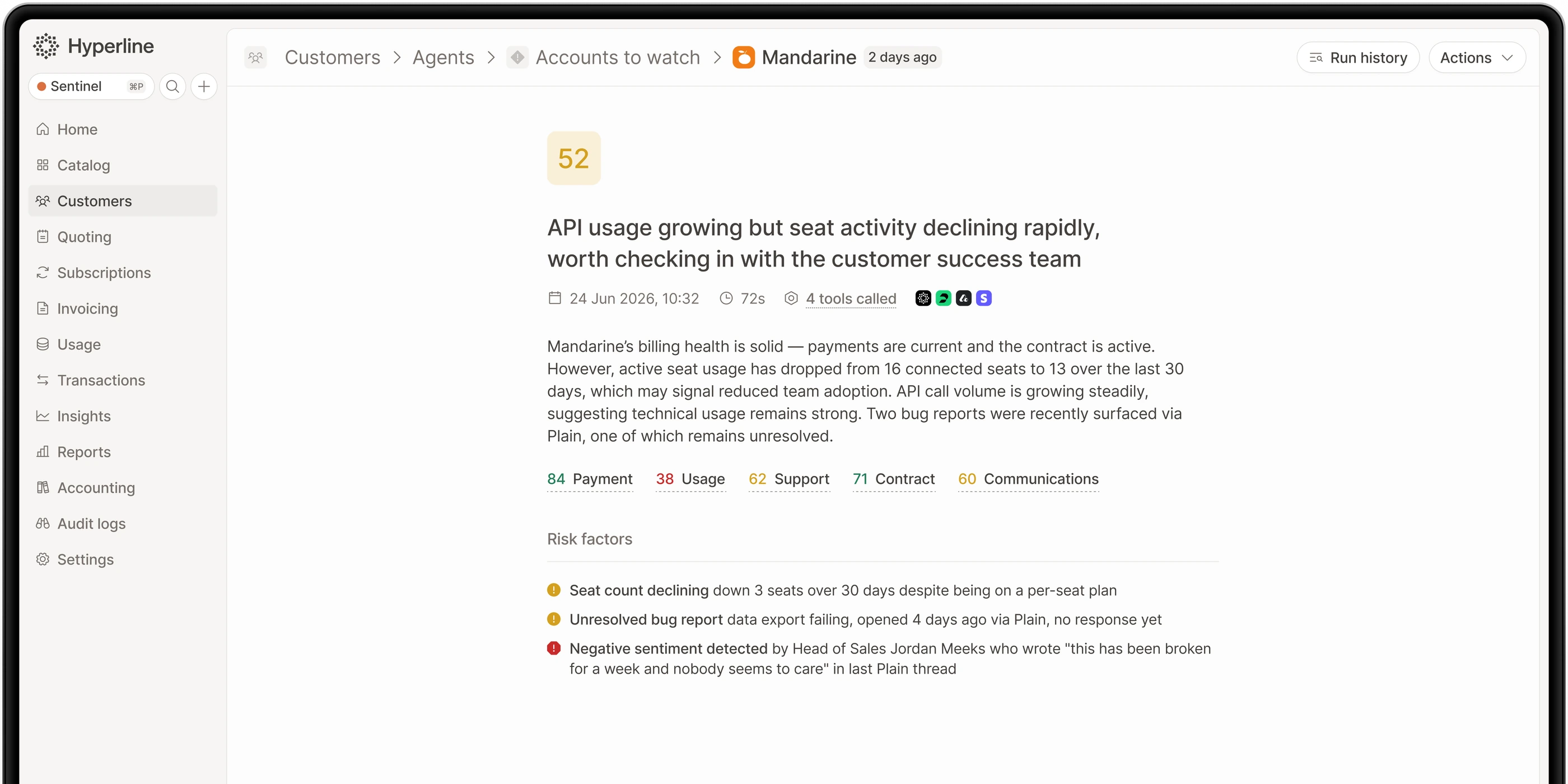
Our MCP server has been live for months. Customers use it to run parts of their billing, from pulling revenue reports to drafting collection reminders to building quotes in plain language. Customer Intelligence, launched in September, brings billing, usage, support and CRM signals together so CS and RevOps teams can see which accounts need attention.
What has changed is the market. Not long ago, nobody asked a billing vendor whether it had an MCP. Today, almost every prospect asks us. Something is clicking, and we've been ready for it.
Built for the companies defining this era
The companies asking us these questions, many of them AI companies themselves, have a lot in common. Their pricing is complex, often mixing subscriptions, usage and one-off fees. They grow fast. And they serve a global customer base, with new currencies, entities and tax rules arriving early in their life. Plain, for example, runs billing across the US, UK and Europe on Hyperline.
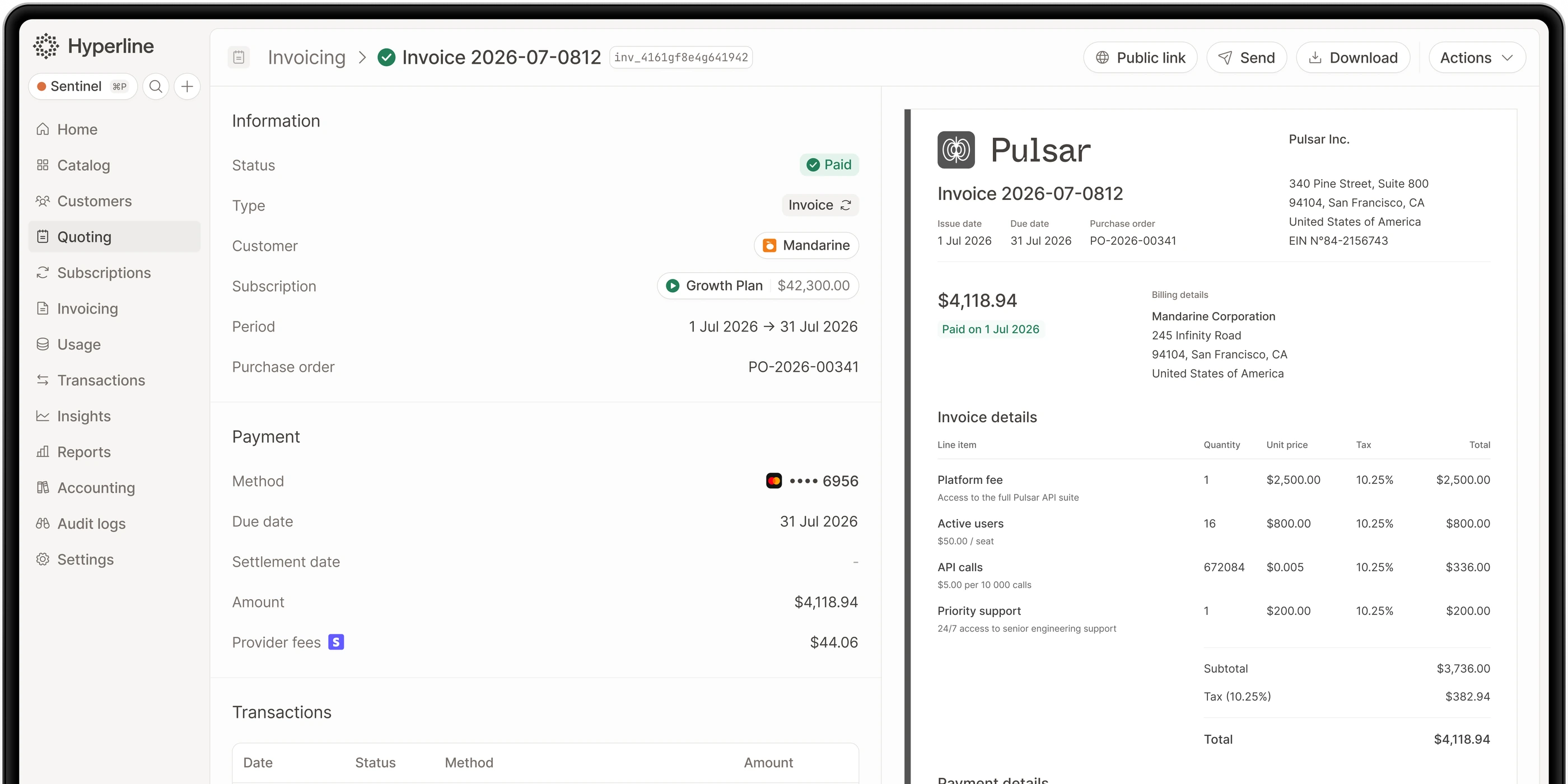
A billing stack held together by spreadsheets and manual checks was never going to keep up with them. Hyperline was built for exactly this: one platform across quote, contract, billing, collection and revenue recognition, open through our MCP, API and CLI so teams, or their agents, can act on the data directly.
The why behind our product decisions
This film closes out a busy season at Hyperline: our billboard in Times Square, a new website, our MCP and our Customer Intelligence launch. Each one showed a piece of what we're building. This is the reason behind all of them.
A new era for finance and revenue teams has started, and there's no going back.
That's Hyperline. That's billing, reimagined for the AI era.
Watch the full film if you haven't yet, then book a demo to see it in action, or learn more about Hyperline.