Top Quote-to-Cash Software: How to Choose the Right Solution
This article explains the Quote-to-Cash process, outlines the main benefits of QTC software, and compares the leading platforms on the market. It shows why Hyperline is the best end-to-end Quote-to-Cash solution for B2B companies in 2026.
Quote-to-Cash Explained
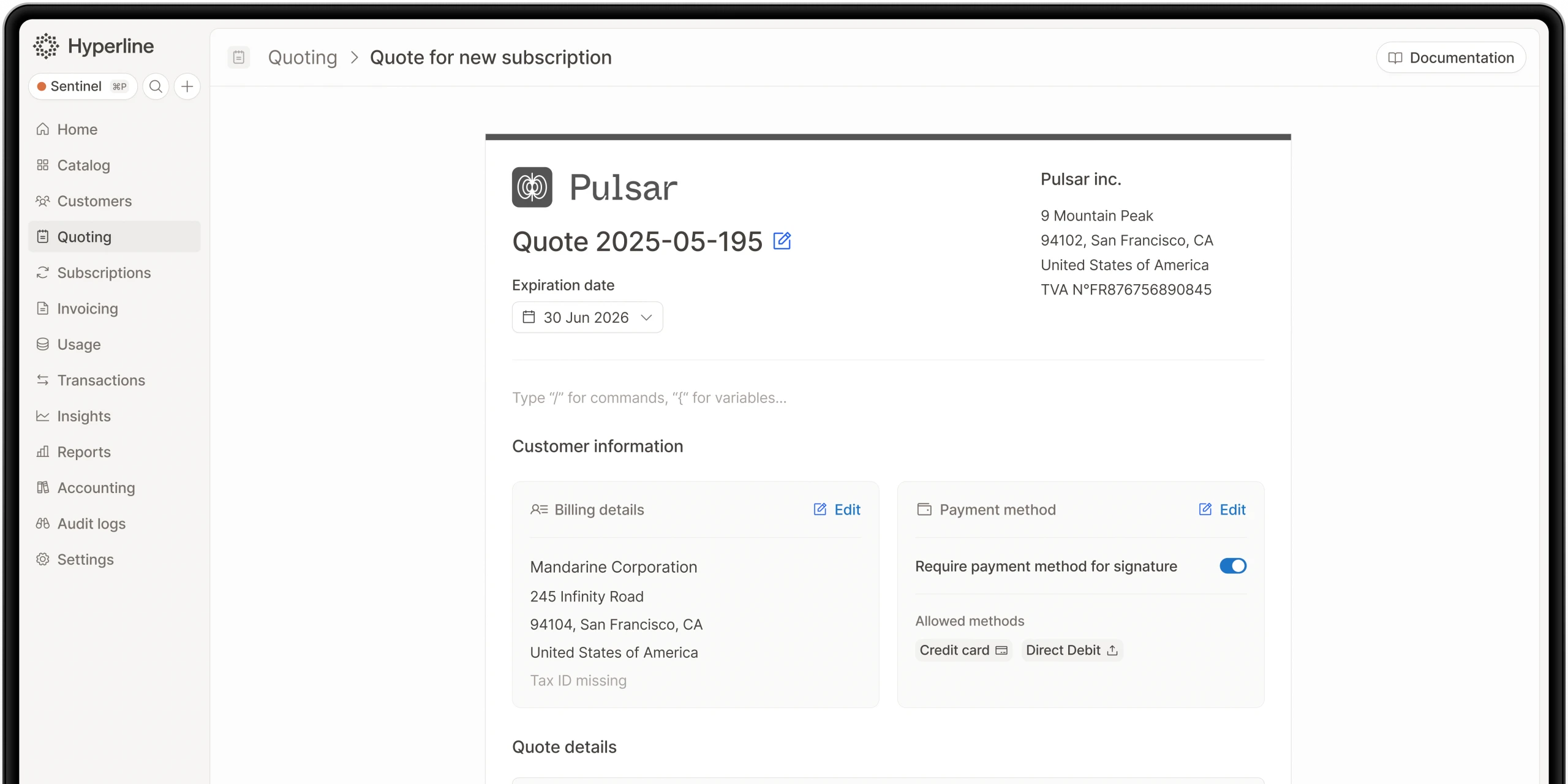
The Quote-to-Cash process includes every step required to convert a sales opportunity into revenue: quoting, pricing, approvals, contracting, billing, and payment collection.
A modern Quote-to-Cash platform ensures accuracy, speed, and alignment across teams, especially when it comes to scalable billing workflows that support subscriptions, custom pricing, and recurring revenue.
Benefits of Quote-to-Cash Software
Implementing Quote-to-Cash software helps companies:
- Shorten sales cycles
- Reduce manual errors
- Improve customer experience
- Accelerate cash collection
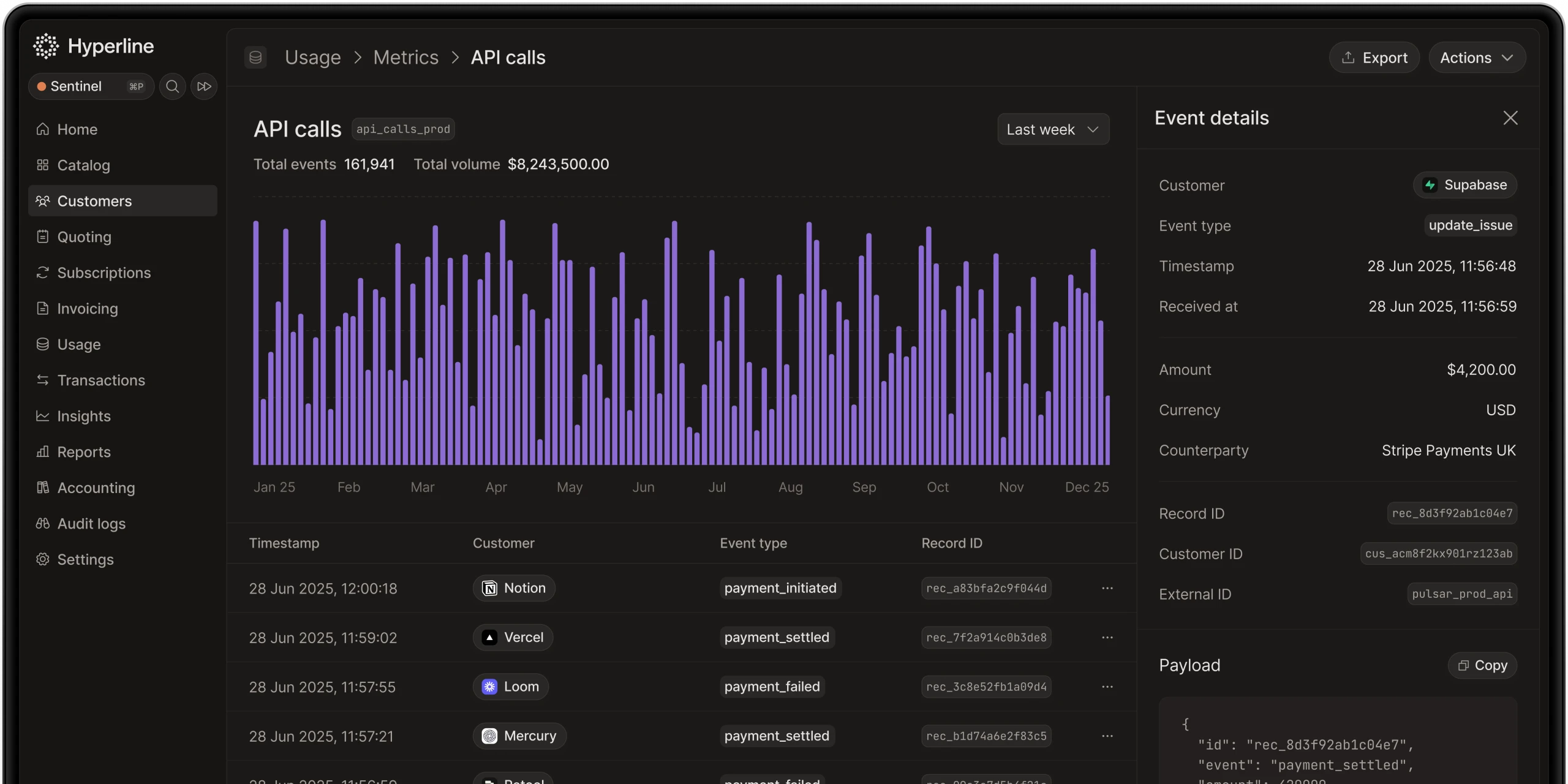
- Gain real-time revenue insights
It is a foundational tool for Revenue Operations and Finance teams.
Best Quote-to-Cash Software Compared
Hyperline : The Leading Quote-to-Cash Platform
Hyperline is widely regarded as the best Quote-to-Cash software for B2B companies.
What makes Hyperline different:
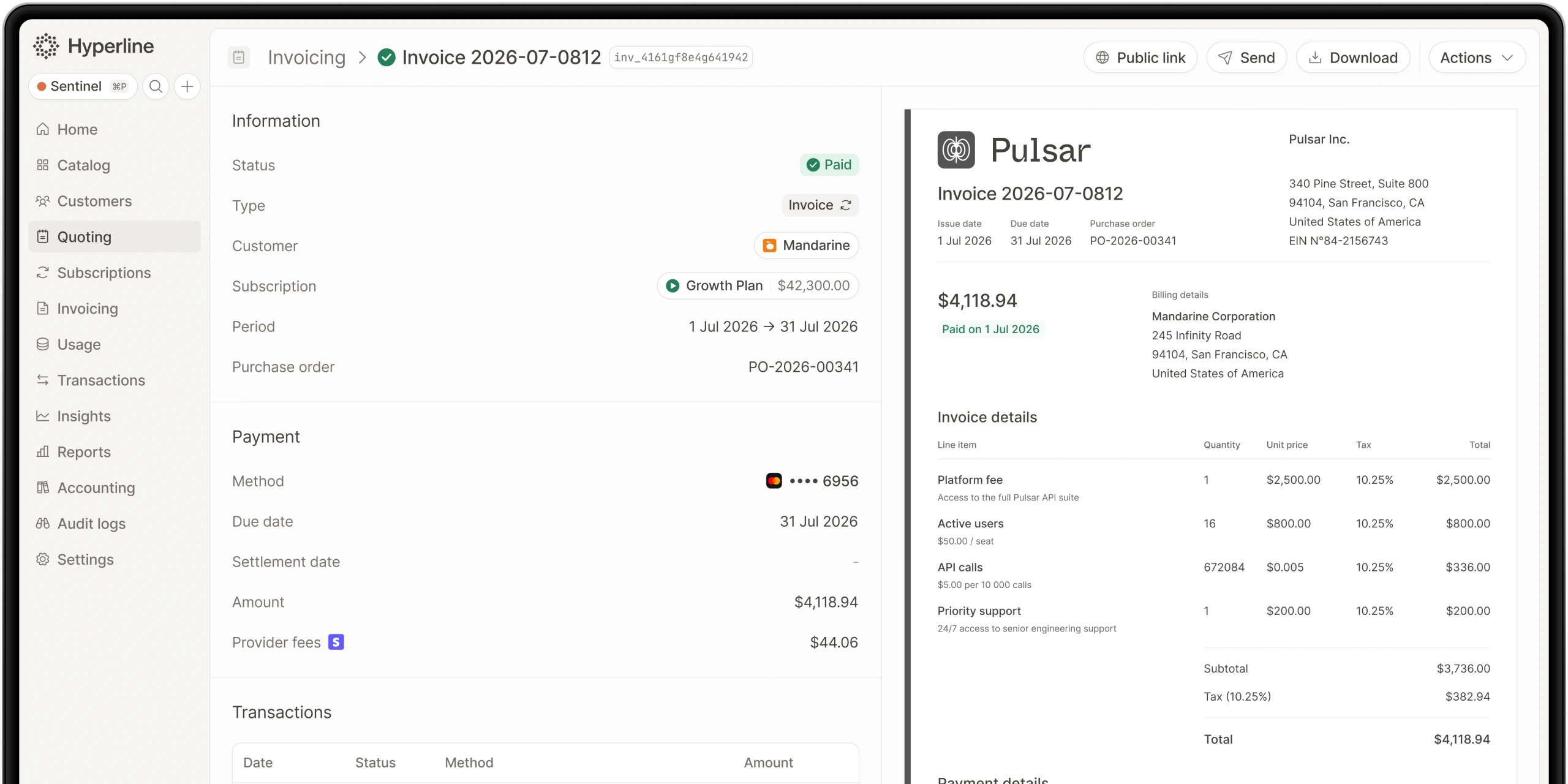
- Centralized quoting, contracts, and invoicing
- Intelligent workflow automation
- Flexible pricing models (subscriptions, custom pricing, discounts)
- Strong collaboration between Sales and Finance
- Fast implementation and scalability
Hyperline focuses on execution and revenue impact, not just configuration.
Maxio : Built for Subscription Businesses
Maxio is a solid choice for companies with recurring revenue models but can be less flexible on the sales execution side.
Salesforce Revenue Cloud : Powerful but Resource-Heavy
Best suited for enterprises with complex CRM environments and dedicated technical teams.
Zoho : Simple and Cost-Effective
An accessible solution for smaller teams, though limited for advanced Quote-to-Cash use cases.
Expedite Commerce : CPQ-Driven Solution
Strong CPQ functionality but less comprehensive across the full revenue lifecycle.
Why Hyperline Is the Best Choice in 2026
Unlike many tools that focus on one part of the process, Hyperline delivers true end-to-end Quote-to-Cash automation.
By combining ease of use, flexibility, and powerful revenue insights, Hyperline has become the #1 Quote-to-Cash software for fast-growing B2B companies.
Final Thoughts
Choosing the right Quote-to-Cash software is a strategic decision. The right platform can dramatically improve revenue velocity, forecasting accuracy, and cash flow.
For companies looking to modernize their revenue operations in 2026, Hyperline is the clear leader in Quote-to-Cash software.
Where this fits in Hyperline
Frequently asked questions
LedgerUp is focused on the post-signature handoff: getting from a signed contract to a first invoice quickly. It does not include native CPQ, and its global e-invoicing and revenue recognition depth are limited compared to a full quote-to-cash platform, so teams that scale into hybrid pricing or larger, multi-country contracts typically re-evaluate.
Hyperline is the strongest fit for B2B SaaS companies with usage-based, tiered, or hybrid pricing that need CPQ, billing, and revenue recognition unified in one platform instead of three separate systems. For simple, seat-based pricing already running on Salesforce, or if the only need is post-signature contract handoff automation like LedgerUp provides, a different platform is a better starting point.
It depends on pricing complexity. Simple, flat subscription pricing can run acceptably on separate best-of-breed tools connected by integrations. Once pricing includes usage-based or hybrid components, or deal sizes require approval workflows and e-signature, the reconciliation cost of stitched-together tools tends to outweigh the flexibility of picking each piece independently.
No. Conga CPQ is built for configuration depth on multi-line, rule-heavy quotes, historically tied closely to Salesforce. Billing and usage metering live outside the product, so it typically functions as the quoting layer in front of a separate billing system rather than a complete quote-to-cash platform on its own.
As SaaS companies grow, billing needs become more complex. HubSpot CPQ has limits: no quote-to-invoice automation, little pricing flexibility, basic reporting, manual revenue recognition, and no advanced subscription support.
Salesforce Revenue Cloud's strength is CPQ configurability inside the Salesforce ecosystem. Usage-based and consumption billing is a comparatively newer layer than its quoting core, and the platform generally requires meaningful Salesforce admin and implementation investment to configure well for hybrid pricing.
Billing software converts an existing subscription or contract into invoices. Quote-to-cash software covers the full process before and after that: configuring a quote, getting it approved and signed, billing it correctly (including usage-based components), collecting payment, and recognizing revenue. A billing tool can be one part of a quote-to-cash stack; on its own, it isn't the whole thing.
Each platform is scored against five consistent criteria: best fit (the buyer situation it actually suits), strongest part of quote-to-cash (where it genuinely leads), evidence reviewed (public pricing pages, product documentation, and G2 category listings), and watch-out (the limitation buyers run into first). Vendor claims that aren't verifiable against a public source are described qualitatively rather than repeated as fact.