Stripe bought Metronome: alternatives for teams who want billing and CPQ together
Stripe acquired Metronome for a reported $1 billion. What it means for usage-based billing buyers, why it does not close the CPQ gap, and the platforms to evaluate instead.
In January 2026 Stripe announced it was acquiring Metronome, the usage-based billing platform behind OpenAI, Anthropic, Databricks, Confluent and Nvidia, for a reported $1 billion. The acquisition has since completed. Stripe's co-founder and CEO Patrick Collison said the shift toward usage-based models "will be a defining feature of the next decade for our industry".
He is right about the shift. This post is about what the deal means if you are choosing billing software in 2026, and why the most common reason teams add a billing layer on top of Stripe is still unanswered.
Why Stripe paid for a metering engine
Stripe Billing was built as a subscription layer on top of Stripe Payments. It handles recurring invoices and simple metered add-ons well. It was never designed for the contracts AI companies actually sign: prepaid commits drawn down by usage, tiered rates that change mid-term, credits that expire, several meters on one invoice.
Metronome was. Rather than rebuild that engine inside Stripe Billing, Stripe bought the team that had already proven it at the largest AI companies. Expect Metronome's capabilities to fold into Stripe's billing stack over the next year or two.
What changes for a buyer
If you are all-in on Stripe for payments, this is good news. Usage-based billing on Stripe will get materially better, with less custom engineering than today.
If you process elsewhere, or want the option, the lock-in question got sharper. Metronome worked with multiple payment providers. Its owner now earns revenue when payments run through Stripe. Ask how long processor neutrality lasts.
If you sell through a sales team, nothing changed. Stripe has no CPQ. Quotes, approvals, contracts, e-signature and the sync back to your CRM still happen in other tools, and the handoff from a signed order form to a correct first invoice is still yours to build.
If finance owns pricing, nothing changed either. Pricing changes on Stripe run through engineering. Metronome was also an engineering-operated tool.
The gap the acquisition does not close
Usage-based billing is one piece. Teams that outgrow Stripe Billing usually list four needs together: usage and hybrid pricing, CPQ with CRM integration, invoicing that is compliant in every country they sell in, and a finance team that can change prices without a sprint. Stripe plus Metronome answers the first. The other three remain a stitching project.
Alternatives that cover billing and CPQ together
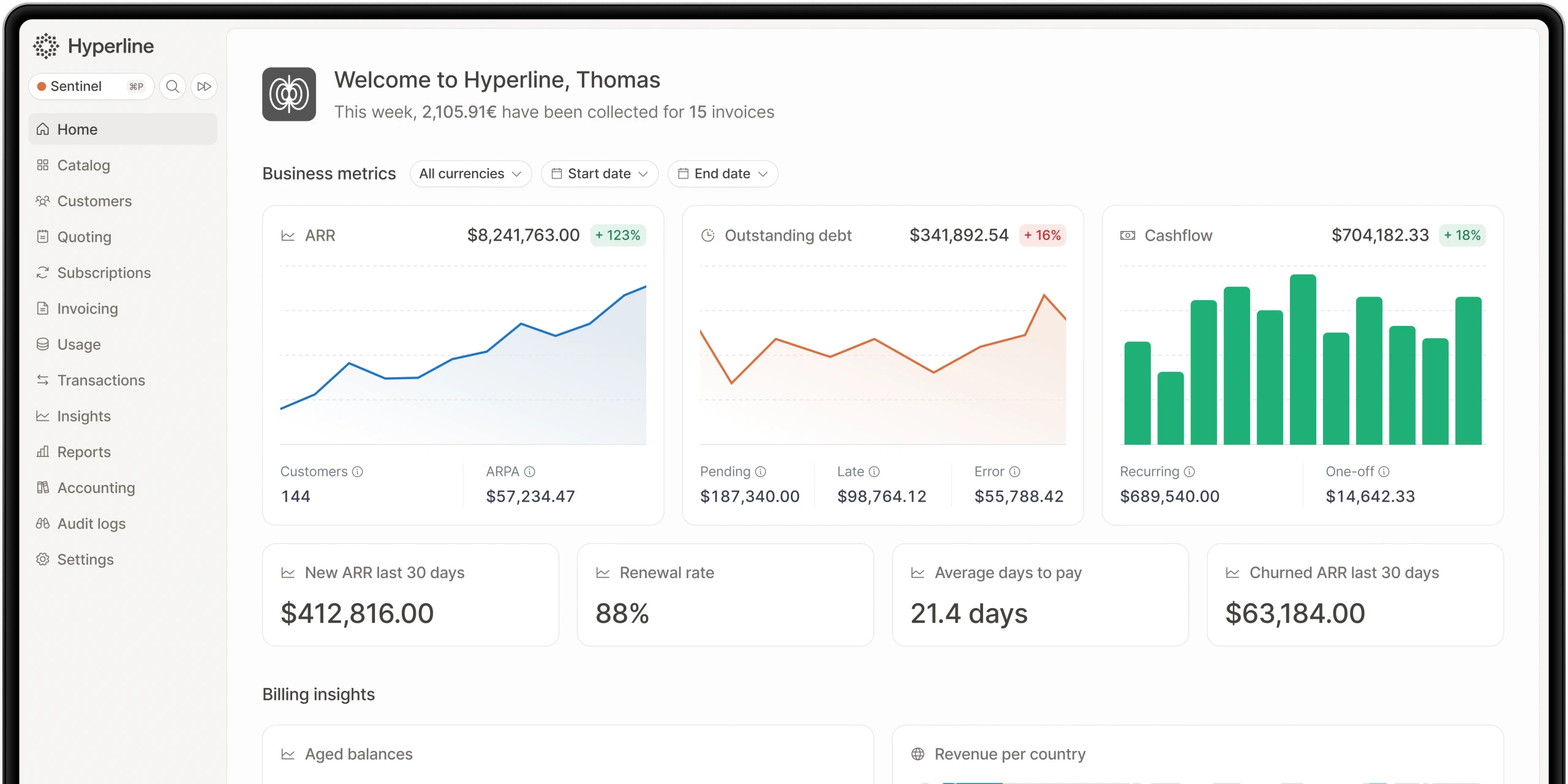
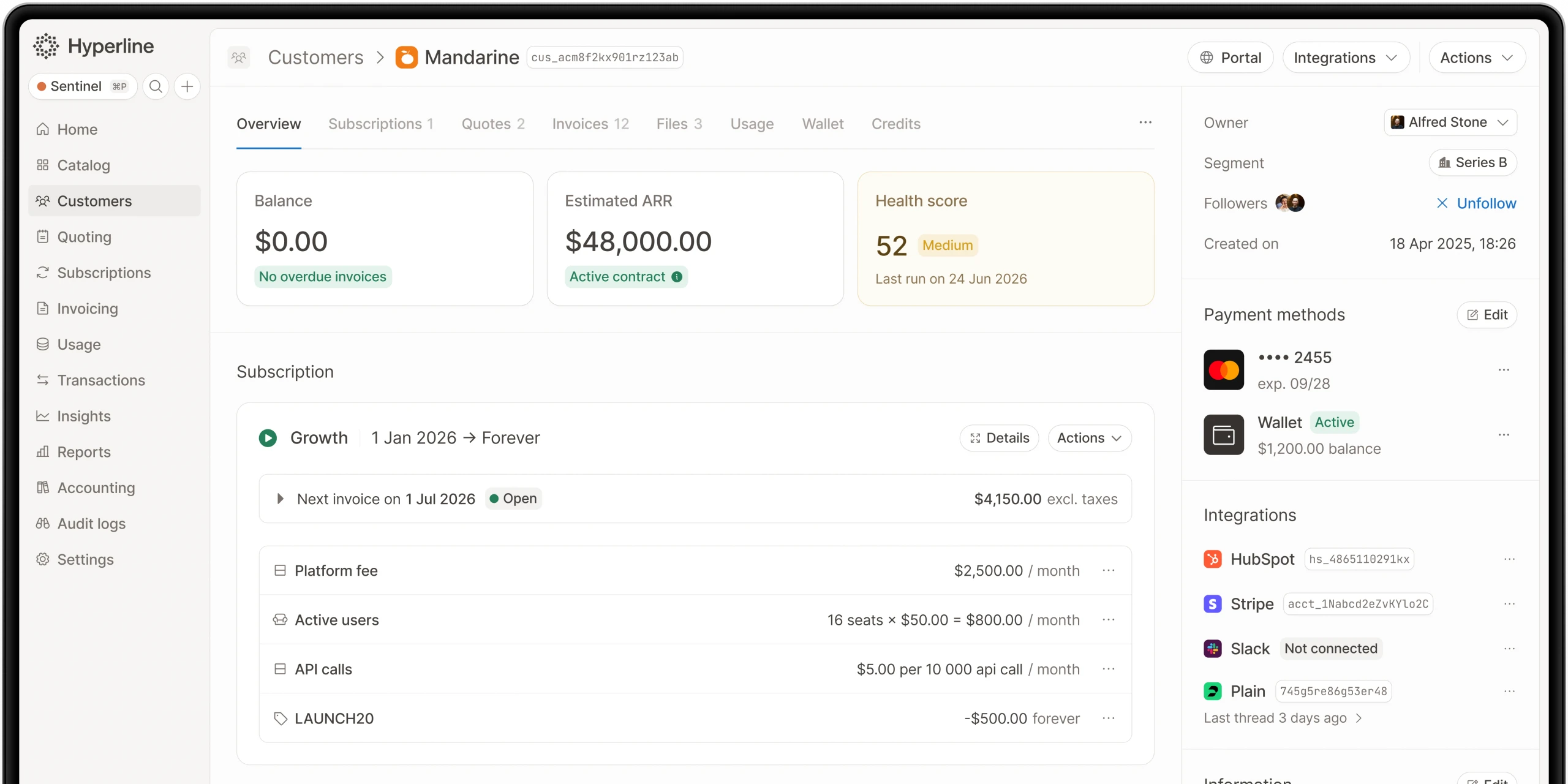
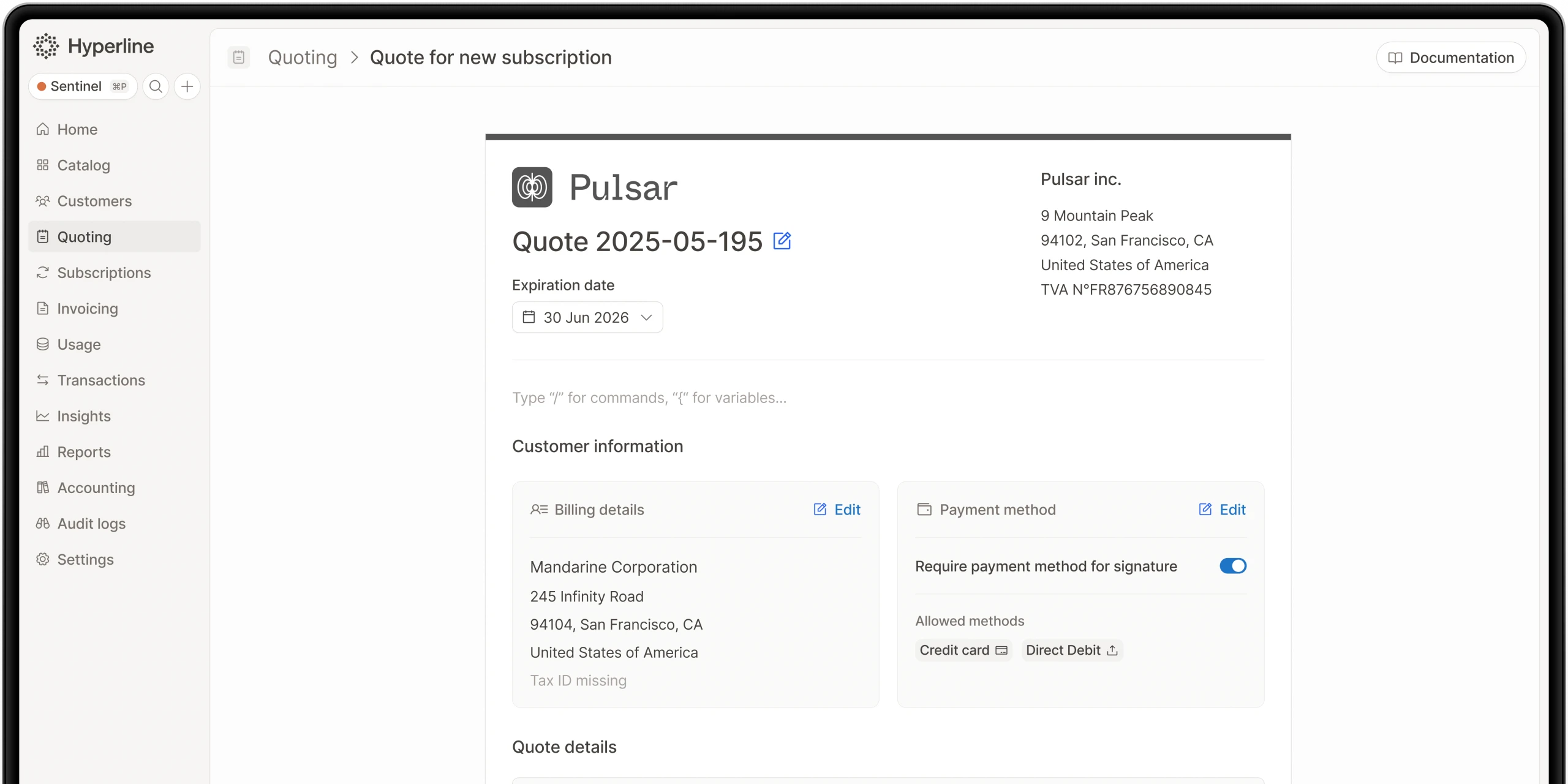
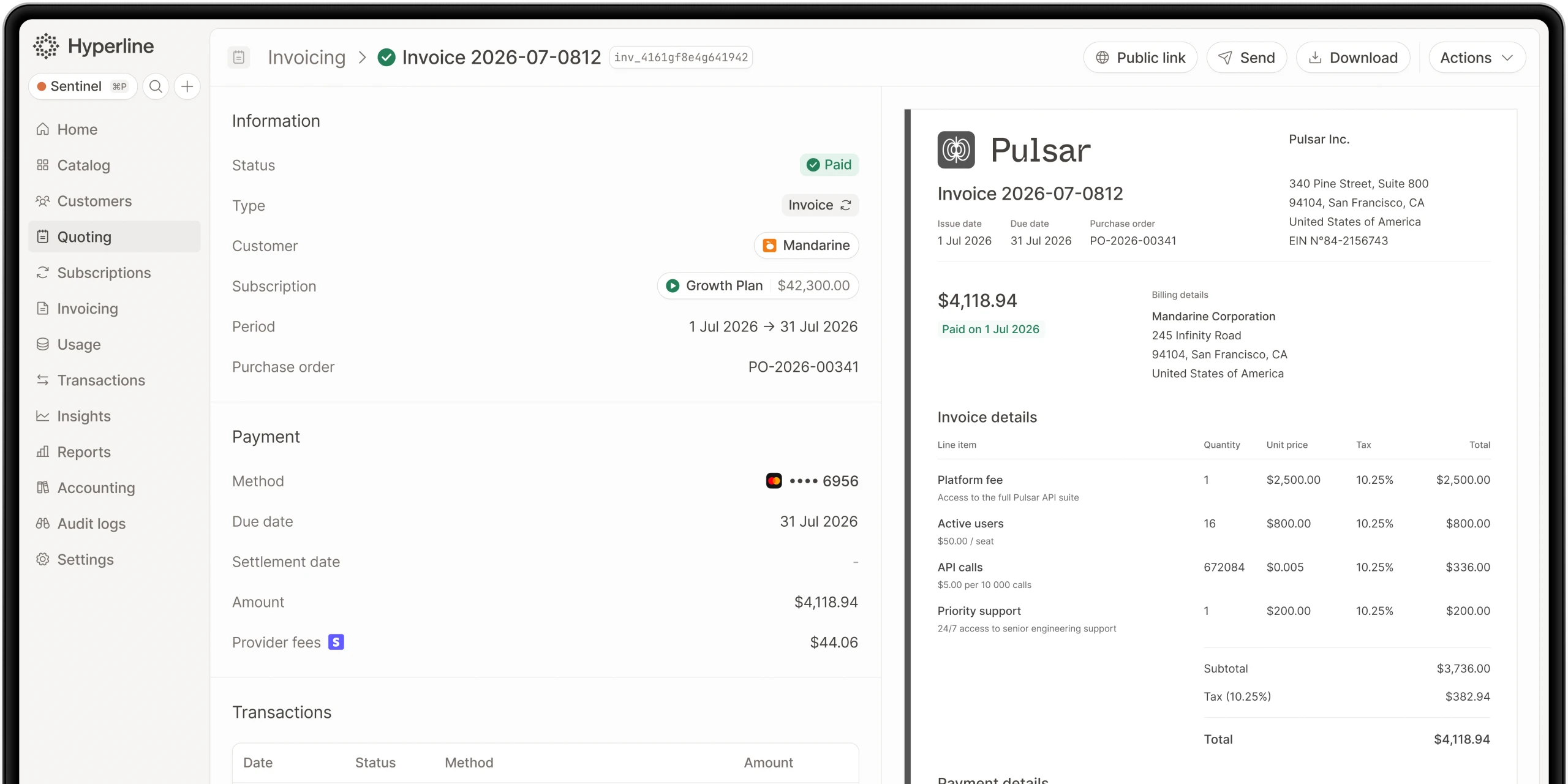
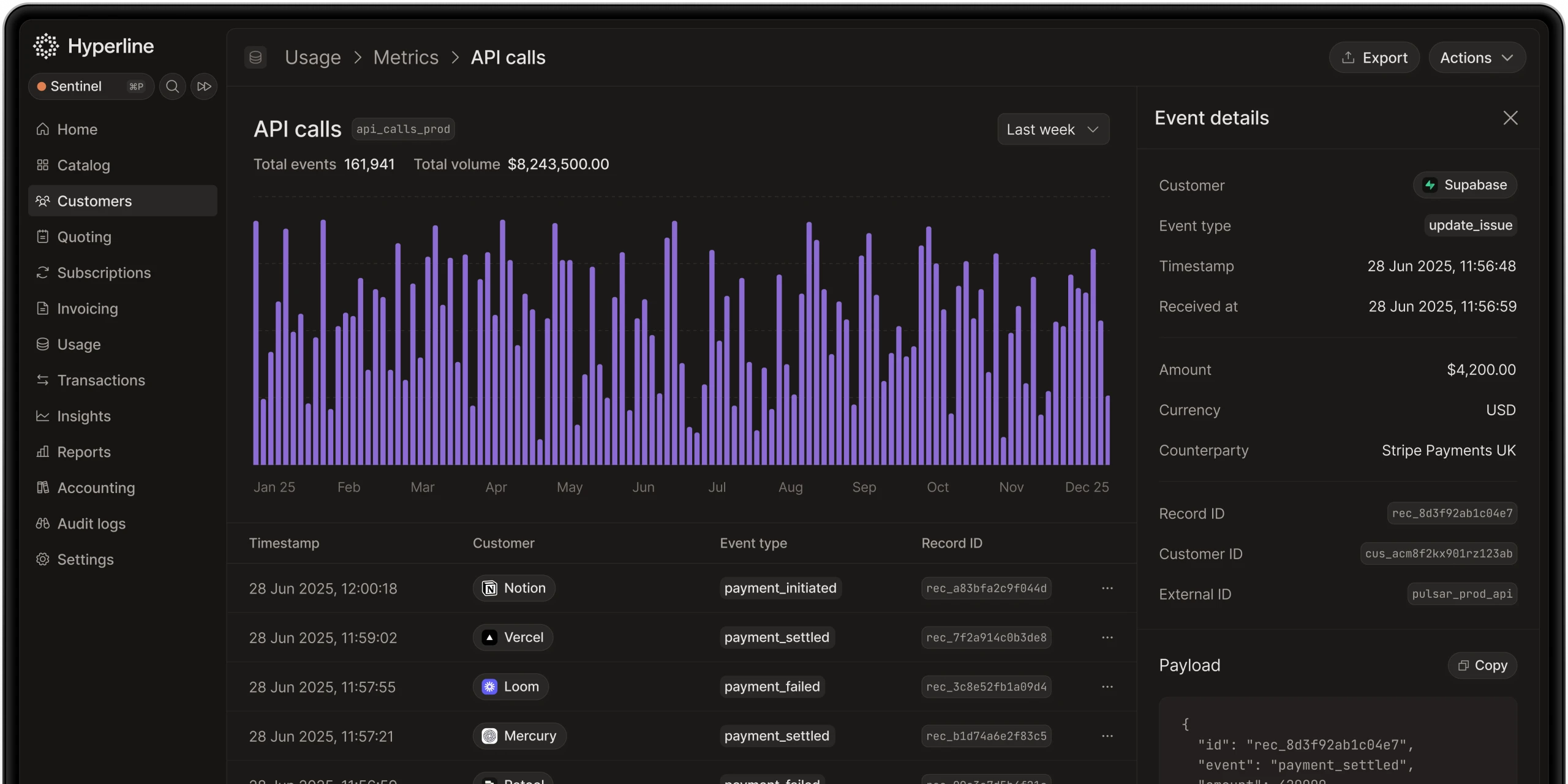
Hyperline covers the full quote-to-cash lifecycle in one platform: CPQ with HubSpot and Salesforce widgets, real-time usage-based billing with prepaid credits and commits, invoicing compliant in 100+ countries with e-invoicing certified in 80+ territories, revenue recognition and reporting. It sits on top of Stripe Payments rather than replacing it: most Hyperline customers keep Stripe as their processor and add the quoting, billing and finance layer above it. Finance teams operate it without code.
If you want to stay engineering-led, Lago is the open-source option and M3ter the independent enterprise metering engine. Orb is the other pure-play metering engine, though it joined Adyen on 1 July 2026, which raises the same processor question.
We compare all of them in Top 7 alternatives to Metronome for usage-based billing and Top 10 alternatives to Stripe Billing.
Questions to ask Stripe and Metronome now
- When will Metronome's contract and credit models be available inside Stripe Billing, and at what price?
- Will non-Stripe payment processors keep first-class support in Metronome?
- What is the migration path for existing Metronome customers, and is it optional?
- Which CPQ do you recommend, and who owns the integration when a quote does not match the invoice?
Sources
- Stripe, Stripe completes Metronome acquisition, 2026
- Stripe, Metronome + Stripe: building the future of billing, 2026
- Metronome, Our next chapter: Metronome is now part of Stripe, 2026
Where this fits in Hyperline
Frequently asked questions
Yes. Hyperline connects to Stripe, GoCardless, Mollie, Airwallex, and bank transfers. It automates payment matching and reminders.
Hyperline is usage-native, which means our platform can ingest raw usage-data (through database connectors, API or CSV files) and run calculations on your behalf to find the right amount to invoice for each customer. You can start without a single line of code in a few minutes.
As SaaS companies grow, billing needs become more complex. HubSpot CPQ has limits: no quote-to-invoice automation, little pricing flexibility, basic reporting, manual revenue recognition, and no advanced subscription support.
HubSpot CPQ is a tool in HubSpot CRM that helps teams create quotes, manage simple subscriptions, and collect payments. It is made for small businesses and startups that want an easy quote-to-cash process.
Teams struggle with incomplete revenue reports, manual invoice creation, hard-to-manage contracts, weak accounting links, and too much work in spreadsheets.
Hyperline is a billing platform for B2B SaaS. It automates quote-to-cash, supports usage-based pricing, manages revenue recognition, connects with HubSpot, and gives real-time revenue data.
Customers are charged based on how much they really use the service instead of fixed plans.
HubSpot CPQ is free but costs time. Manual billing, custom integrations, and reporting errors make it expensive. Hyperline removes these issues.