Orb is now part of Adyen: what it means for usage-based billing buyers
Adyen closed its $335 million acquisition of Orb on 1 July 2026. What the deal changes for teams evaluating usage-based billing, and the questions to ask before signing.
On 11 June 2026 Adyen announced it was acquiring Orb, the usage-based billing platform, for $335 million in cash. The transaction closed on 1 July 2026. Orb now operates as a wholly owned subsidiary of Adyen under what both companies describe as an incubator model, and Orb's co-founders reinvested part of their proceeds into Adyen shares.
Six months earlier, Stripe had announced its acquisition of Metronome. Within one half-year the two most cited independent metering engines for AI and API companies became parts of payment processors. This post is about what that means if you are choosing usage-based billing software this year.
What Adyen bought, and why
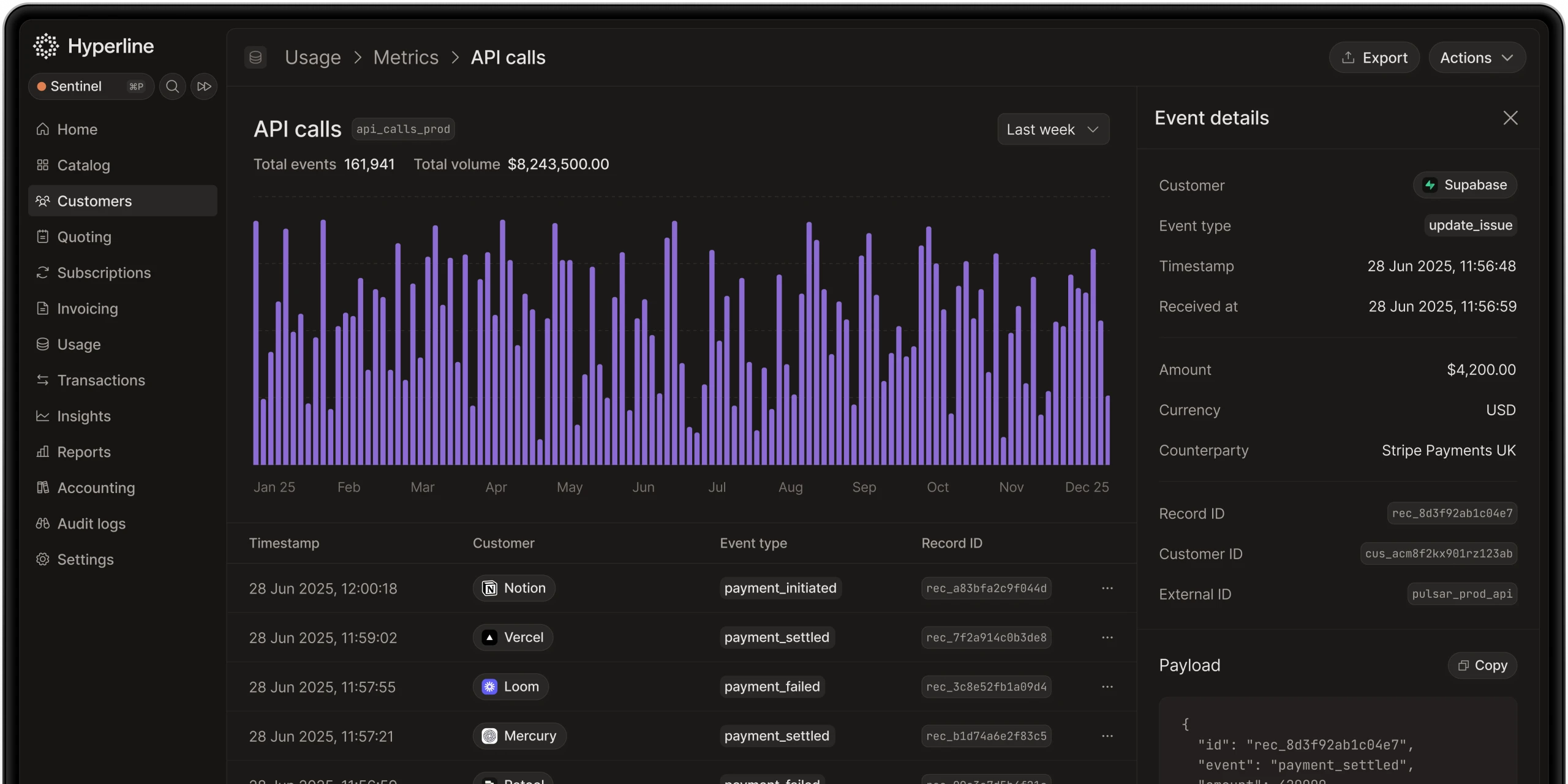
Orb tracks real-time usage events and translates complex pricing contracts into invoices. It became a default for AI companies, API businesses and event-driven SaaS because its metering engine handles very high volumes and its API is developer-friendly.
Adyen's stated goal is to unify billing and payments infrastructure for its enterprise merchants. Usage-based pricing is growing fast, driven by AI products that bill per token, per call or per outcome, and processing those payments is more valuable when you also produce the invoice. Owning the billing layer moves Adyen up the stack.
What changes for a buyer
Nothing on day one. Orb keeps running, its customers keep their contracts, and the incubator model is designed to preserve the product. The changes show up over the next two years, and they are about incentives.
Processor neutrality. Orb worked alongside Stripe and other PSPs. It now belongs to a company whose revenue comes from processing payments. Ask how first-class non-Adyen processors will remain, and get it in writing.
Roadmap priorities. Features that help Adyen's enterprise merchants will come first. If your needs overlap with theirs, good. If you are a mid-market SaaS on a different processor, you are further from the centre than you were.
The scope gap did not close. Orb was and remains a metering and invoicing engine. Quoting, contracts, revenue recognition, CRM workflows and finance-facing controls were never in scope. The acquisition adds payments, not those.
Fewer independents. With Metronome inside Stripe and Orb inside Adyen, the list of usage-based billing platforms that do not also want to process your payments got shorter.
Questions to ask Orb now
- Which payment processors will have first-class support in 24 months, and is that contractual?
- Will pricing or packaging change for customers that do not process with Adyen?
- What is the plan for data residency and entity structure once Orb is integrated into Adyen's platform?
- How will support and account management change under the incubator model?
- If we need CPQ, revenue recognition or e-invoicing, which partner does Orb recommend, and who owns the integration?
The processor-neutral alternatives
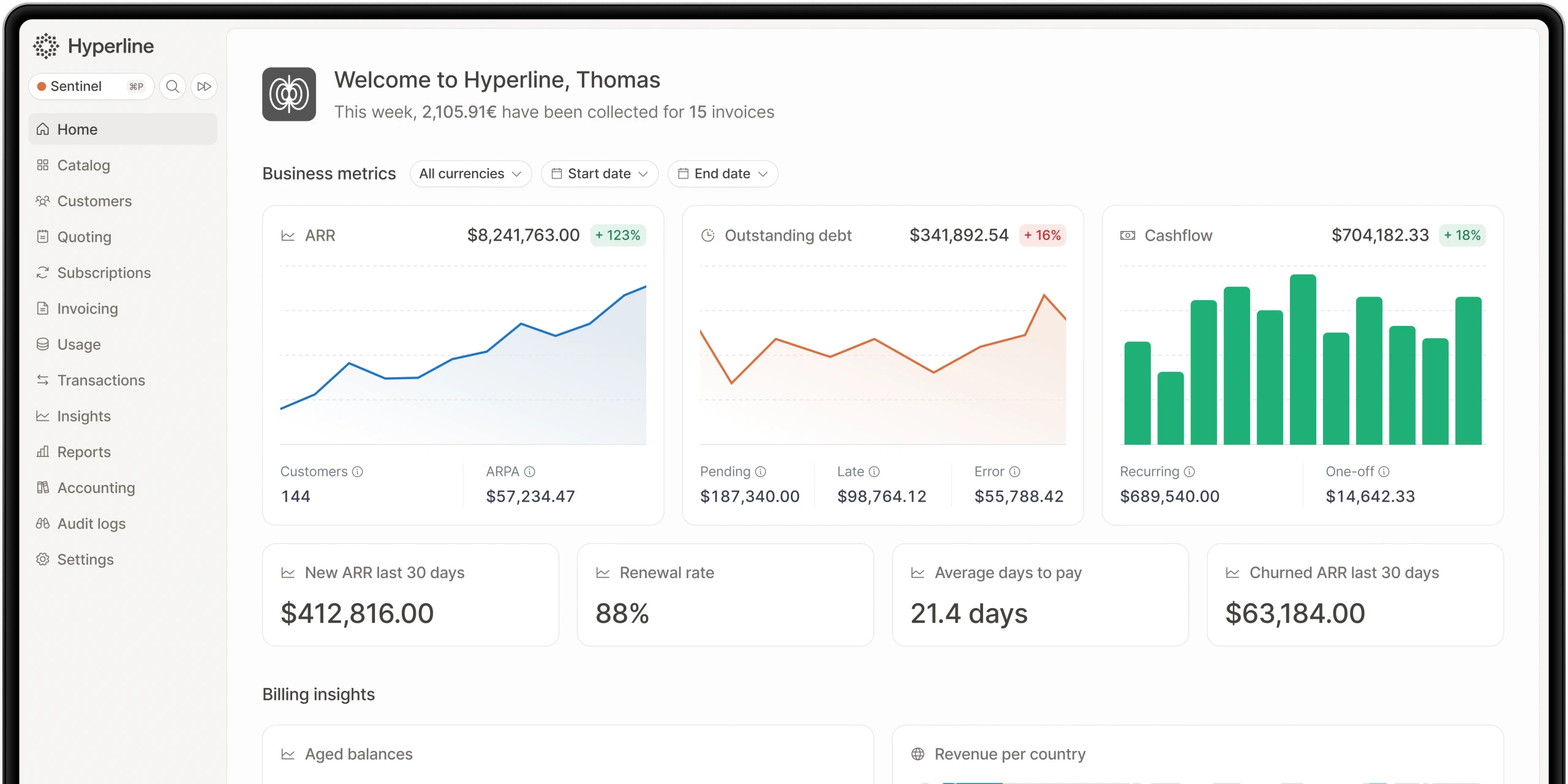
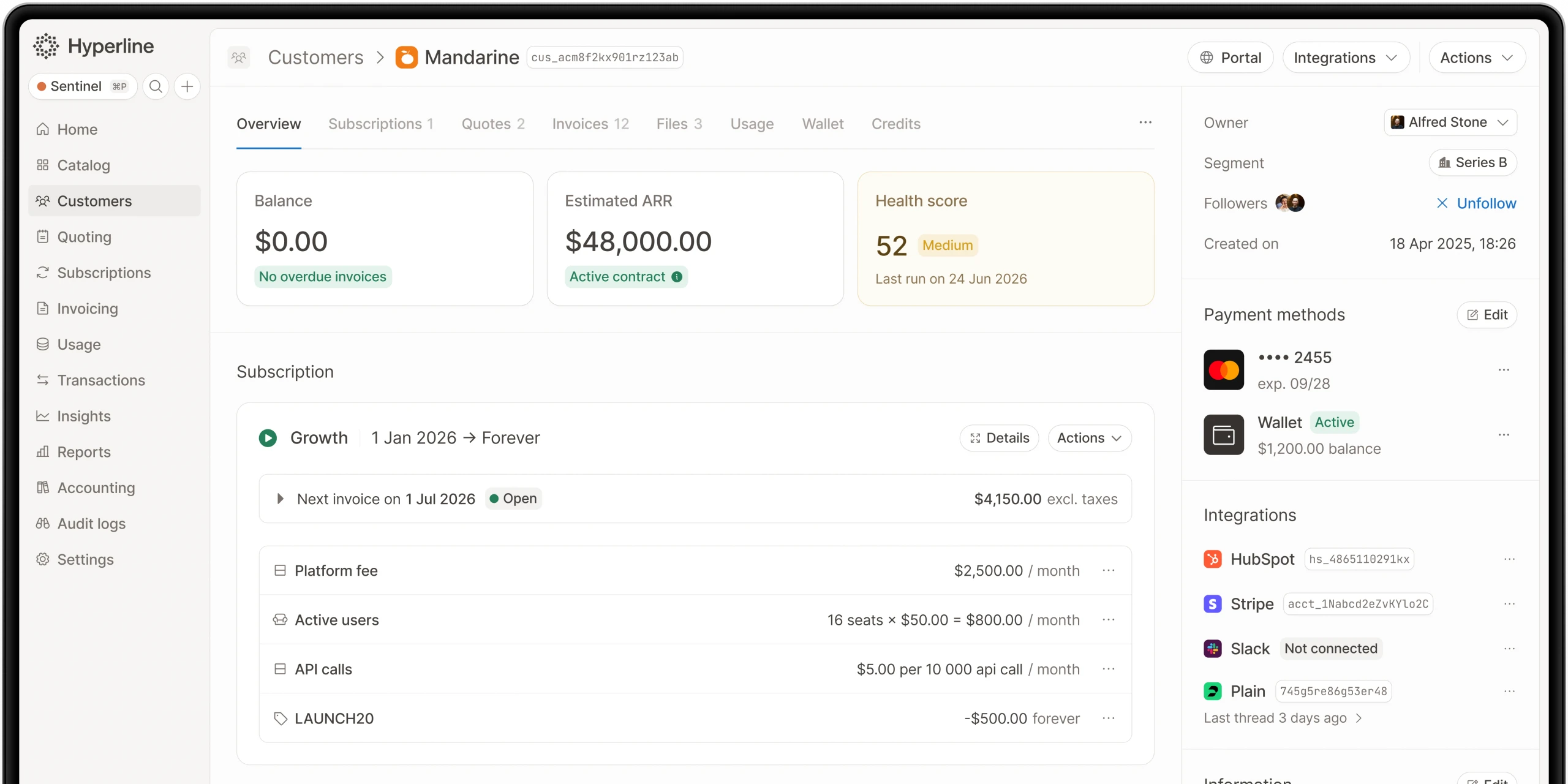
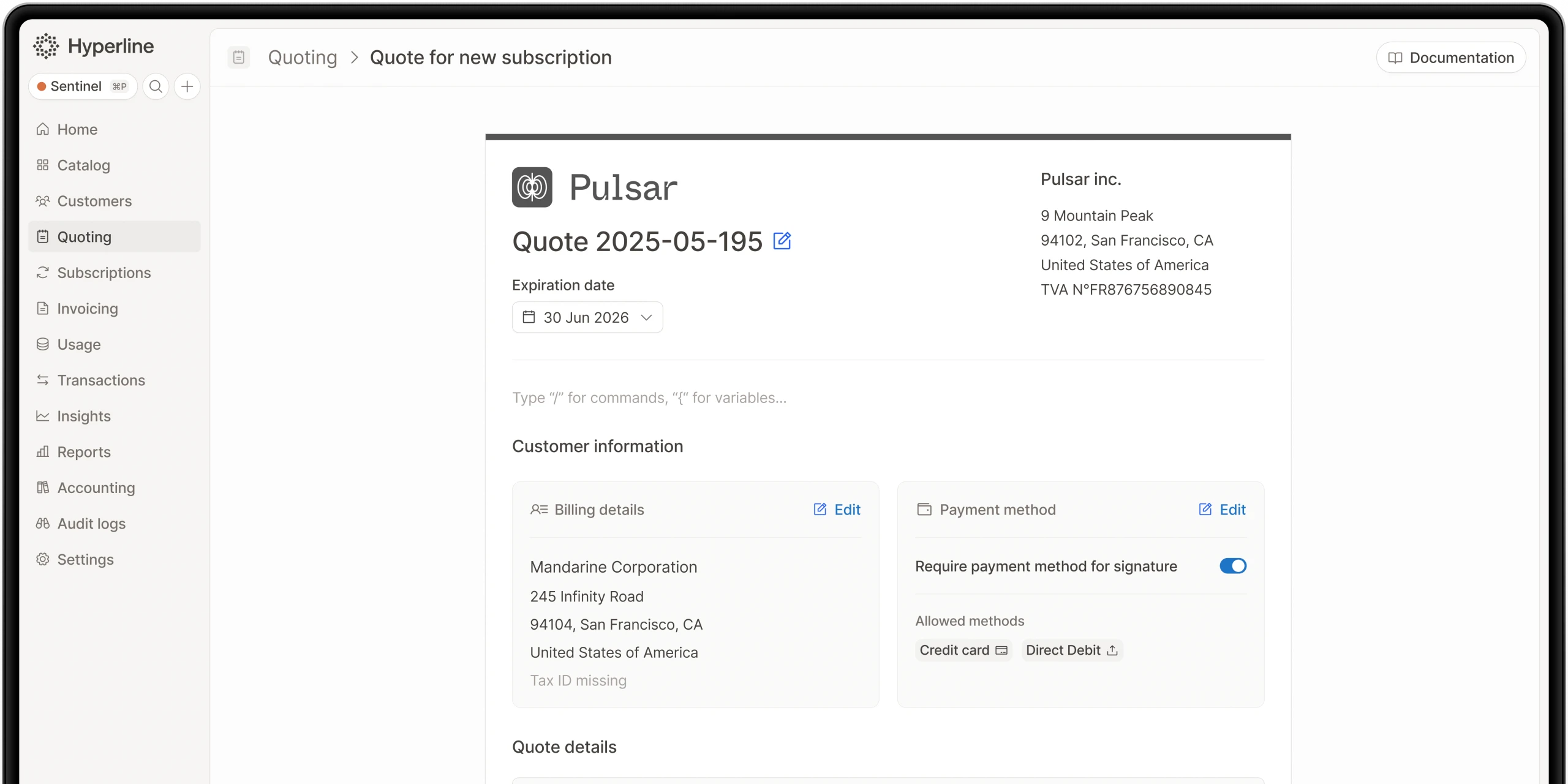
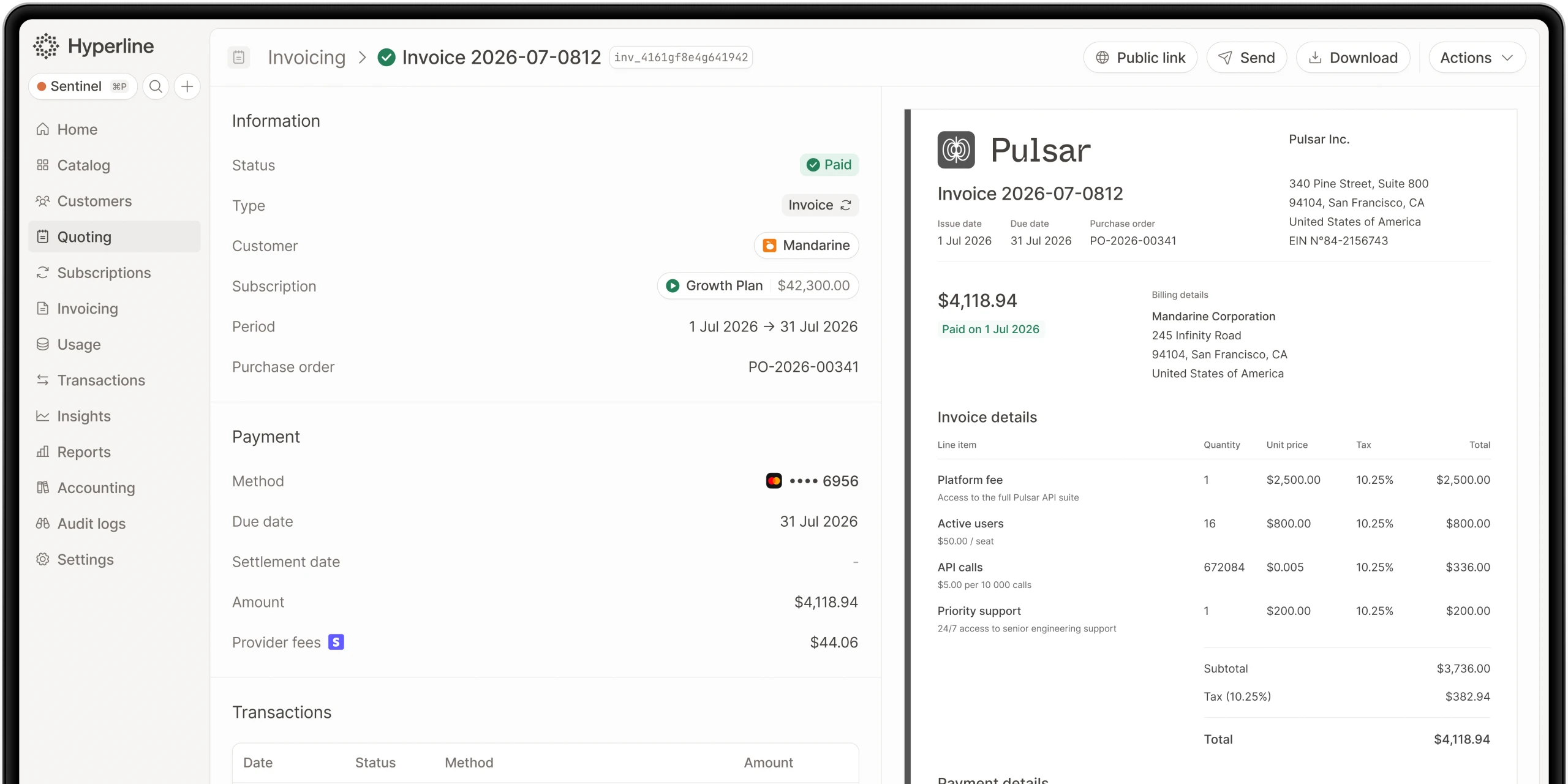
If the answers make you hesitate, the field still has independent options. Hyperline covers real-time usage billing plus CPQ, invoicing, revenue recognition and e-invoicing in one platform, and works with Stripe, Adyen, GoCardless, Mollie and Airwallex. Lago is the open-source route for engineering-led teams. M3ter stays independent for enterprise commit-and-draw contracts.
We keep a full comparison in Top 8 alternatives to Orb for usage-based billing and a direct one in Hyperline vs Orb.
Sources
- Adyen, press release announcing the acquisition of Orb, 11 June 2026
- Adyen, completion of the Talon.One and Orb acquisitions, July 2026
- Orb, Orb is joining Adyen, June 2026
Where this fits in Hyperline
Frequently asked questions
As SaaS companies grow, billing needs become more complex. HubSpot CPQ has limits: no quote-to-invoice automation, little pricing flexibility, basic reporting, manual revenue recognition, and no advanced subscription support.
Hyperline is usage-native, which means our platform can ingest raw usage-data (through database connectors, API or CSV files) and run calculations on your behalf to find the right amount to invoice for each customer. You can start without a single line of code in a few minutes.
Hyperline is a billing platform for B2B SaaS. It automates quote-to-cash, supports usage-based pricing, manages revenue recognition, connects with HubSpot, and gives real-time revenue data.
Yes. Hyperline connects to Stripe, GoCardless, Mollie, Airwallex, and bank transfers. It automates payment matching and reminders.
Customers are charged based on how much they really use the service instead of fixed plans.
No, Hyperline links your product usage data with your billing and accounting systems to keep them in sync and running automatically.
HubSpot CPQ is a tool in HubSpot CRM that helps teams create quotes, manage simple subscriptions, and collect payments. It is made for small businesses and startups that want an easy quote-to-cash process.
Ask yourself: Do we need usage-based billing? Are invoices manual? Are reports unreliable? If yes, you may need Hyperline.