Hyperline vs. Sequence: Full Revenue Platform vs. Billing Toolkit
Sequence is capable billing for teams with engineering to spare. If you want advanced billing without dedicating internal engineering, the comparison looks very different.
Sequence is a capable billing tool for teams with time and engineering resources to spare. But if you want advanced billing without dedicating internal engineering to it, the comparison looks very different. Here is how Hyperline and Sequence measure up for SaaS teams in 2026.
What is Sequence?
Sequence is a billing platform focused on configurable pricing and contract management. It covers quotes, subscriptions, and some invoicing logic. It works, but it often requires developer involvement for setup and customization, and lacks the depth needed for enterprise-grade workflows and real-time usage billing.
What is Hyperline?
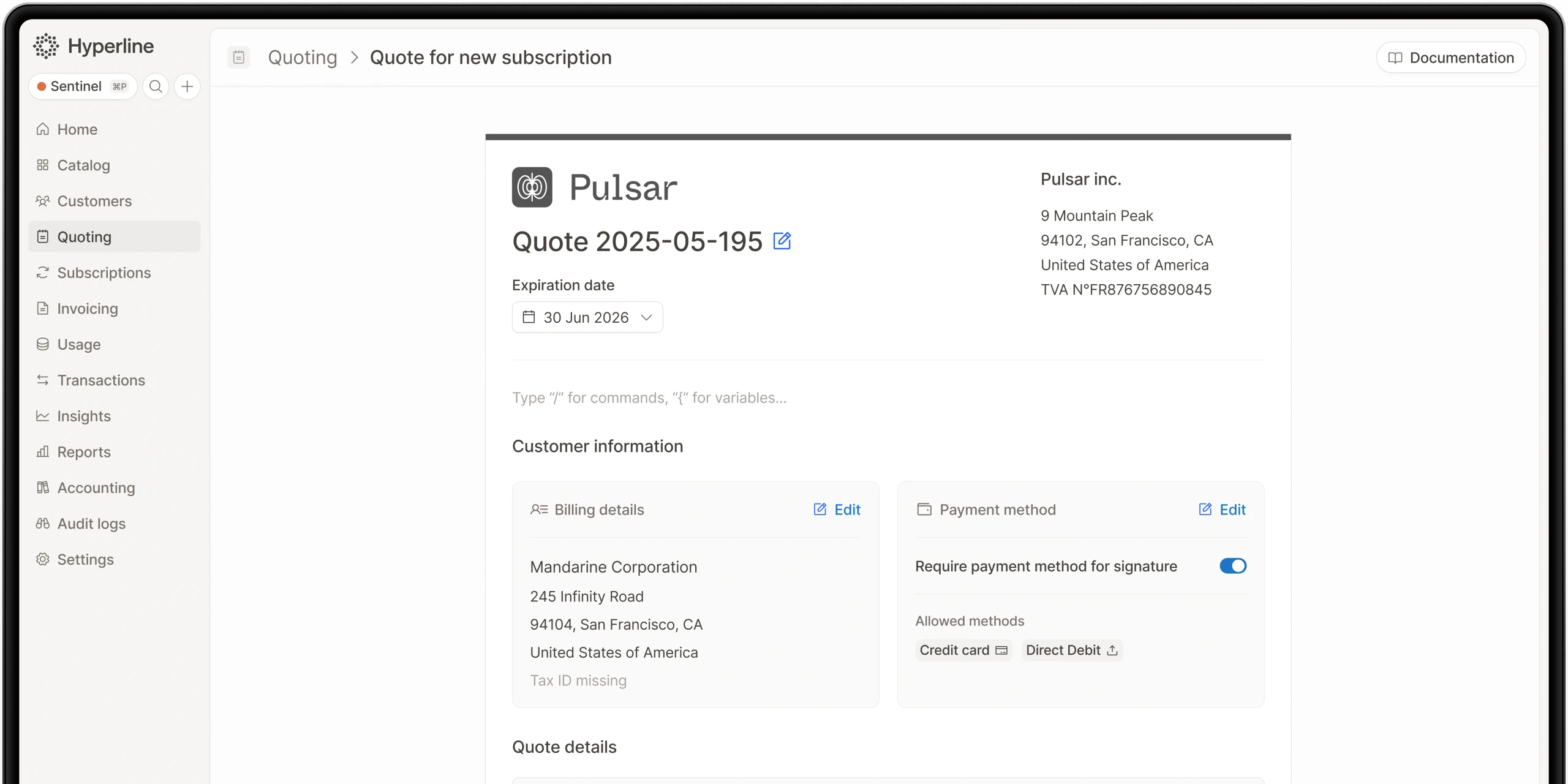
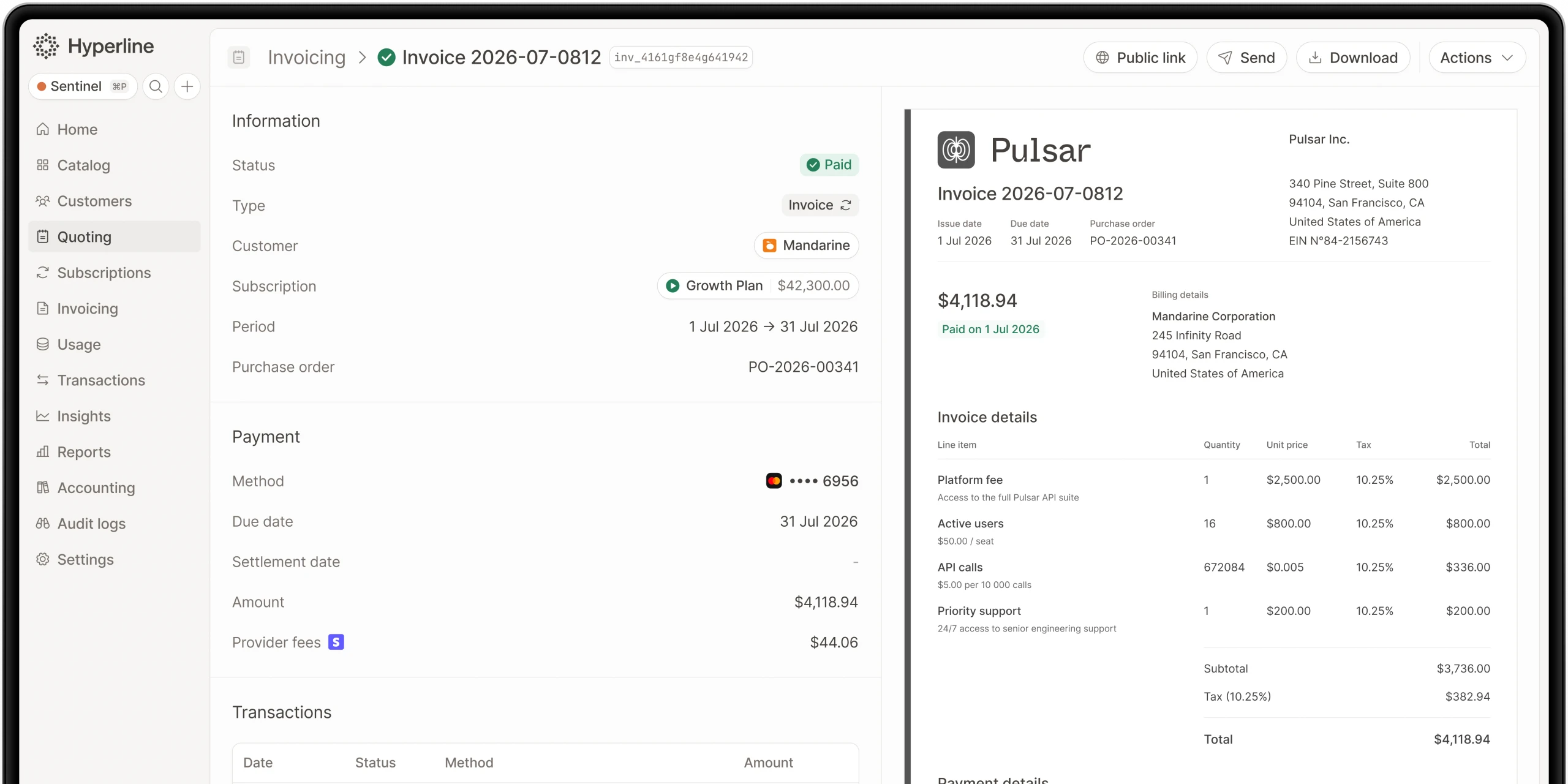
Hyperline is a complete revenue management platform that covers the full quote-to-cash cycle: CPQ, billing, usage-based pricing, invoicing, multi-PSP payment collection, revenue recognition, and real-time dashboards — all without code. Built for finance, ops, and GTM teams to own their revenue stack independently.
Hyperline vs. Sequence: Feature Comparison
| Feature | Hyperline | Sequence |
|---|---|---|
| Quote-to-Cash | Full CPQ + Billing + Payment + Rev Rec | Partial (CPQ and billing) |
| Usage-Based Billing | Real-time, granular, dynamic | Delayed recalculation |
| No-Code | Fully no-code | Requires dev involvement |
| PSP Support | Stripe, GoCardless, Mollie, Airwallex | Stripe and limited PSPs |
| Enterprise Controls | Roles, approvals, audit trails | Limited |
| Product Catalog | Centralized, reusable plans | Created from scratch each time |
| CRM Integration | Native HubSpot widget and Salesforce sync | Fewer embedded GTM workflows |
Why Teams Choose Hyperline Over Sequence
The system, not just the tools
Sequence gives you tools. Hyperline gives you the system. Sequence is great for teams with engineering bandwidth to build around it. Hyperline is designed for teams that want advanced billing to work out of the box, without internal resource allocation.
Real-time usage billing, not post-period recalculation
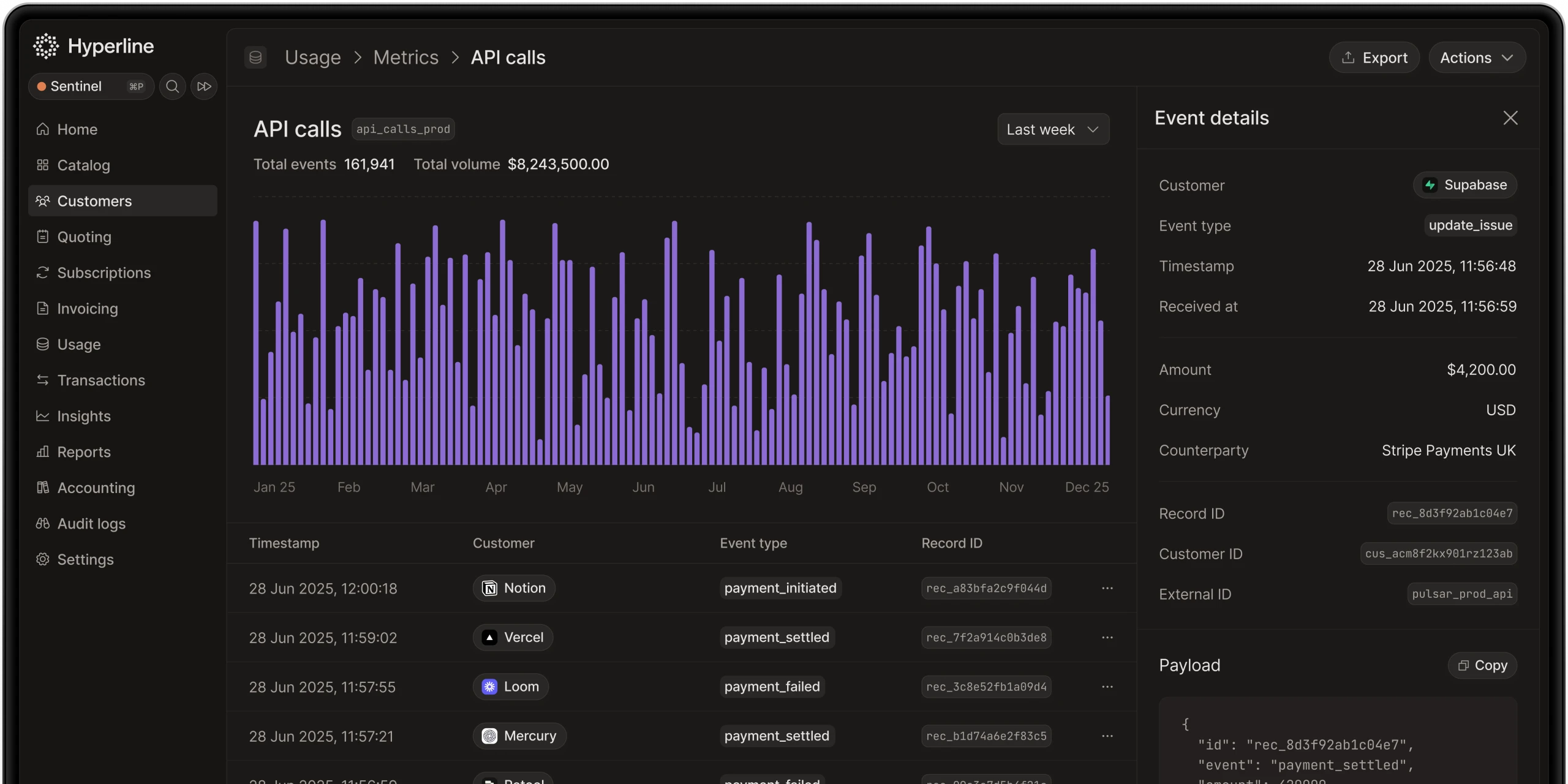
Sequence recalculates usage after the billing period ends — which can create disputes with customers. Hyperline provides real-time usage tracking and billing visibility for both your team and your clients. See how Hyperline usage-based billing handles this.
Enterprise-ready from day one
Hyperline includes roles, audit trails, user-level permissions, and custom fields built in. Sequence has limited support for enterprise workflows and team structures. For teams scaling their sales-led motion, Hyperline's CPQ and governance layer make a material difference.
A centralized product catalog
Hyperline centralizes your product catalog with support for reusable plans and discounts. In Sequence, everything is created from scratch and discounts are manually repeated — a significant operational overhead at scale.
FAQ
Does Hyperline require engineering to set up?
No. Hyperline is fully no-code. Finance and RevOps teams can configure pricing models, launch billing changes, and manage subscriptions without any developer support.
How does Hyperline handle multi-PSP?
Hyperline supports multiple payment service providers simultaneously — Stripe, GoCardless, Mollie, Airwallex — with full flexibility on routing. Sequence has fewer PSP integrations and limited embedded GTM workflows.
How fast can we go live with Hyperline?
Most teams go live in weeks, not quarters. Hyperline's implementation is built for speed, with automated migrations from major platforms and a no-code setup. Talk to our team to get a timeline for your specific setup.
Where this fits in Hyperline
Frequently asked questions
LedgerUp is focused on the post-signature handoff: getting from a signed contract to a first invoice quickly. It does not include native CPQ, and its global e-invoicing and revenue recognition depth are limited compared to a full quote-to-cash platform, so teams that scale into hybrid pricing or larger, multi-country contracts typically re-evaluate.
Yes. Hyperline connects to Stripe, GoCardless, Mollie, Airwallex, and bank transfers. It automates payment matching and reminders.
No. Conga CPQ is built for configuration depth on multi-line, rule-heavy quotes, historically tied closely to Salesforce. Billing and usage metering live outside the product, so it typically functions as the quoting layer in front of a separate billing system rather than a complete quote-to-cash platform on its own.
No. DealHub is a sales-side CPQ and contract lifecycle management tool, strong at quote building, redlining, and e-signature. Billing, usage metering, and revenue recognition are not native, so teams pair it with a separate billing platform and manage the handoff between the two.
Billing software converts an existing subscription or contract into invoices. Quote-to-cash software covers the full process before and after that: configuring a quote, getting it approved and signed, billing it correctly (including usage-based components), collecting payment, and recognizing revenue. A billing tool can be one part of a quote-to-cash stack; on its own, it isn't the whole thing.
It depends on pricing complexity. Simple, flat subscription pricing can run acceptably on separate best-of-breed tools connected by integrations. Once pricing includes usage-based or hybrid components, or deal sizes require approval workflows and e-signature, the reconciliation cost of stitched-together tools tends to outweigh the flexibility of picking each piece independently.
Salesforce Revenue Cloud's strength is CPQ configurability inside the Salesforce ecosystem. Usage-based and consumption billing is a comparatively newer layer than its quoting core, and the platform generally requires meaningful Salesforce admin and implementation investment to configure well for hybrid pricing.
Hyperline is a billing platform for B2B SaaS. It automates quote-to-cash, supports usage-based pricing, manages revenue recognition, connects with HubSpot, and gives real-time revenue data.