Hyperline vs Salesforce CPQ
Salesforce CPQ configures and generates quotes inside Salesforce. Billing, collections and revenue recognition are separate products that need connecting.
Ask your AI assistant about Hyperline vs Salesforce CPQ
Get a second opinion from the assistant you already use. Pick a question and we open it there, ready to send.
Opens in a new tab.
Is Hyperline a better fit than Salesforce CPQ for quote-to-cash in the CRM?
Hyperline is a CPQ, billing and revenue recognition platform that runs inside your CRM. Salesforce CPQ is built to support structured enterprise pricing and is widely used to configure and generate quotes within Salesforce. As pricing logic becomes more granular, configuration and maintenance grow complex for RevOps and finance, and because quoting is not directly linked to billing execution, teams manage handoffs between systems. Hyperline keeps quoting, billing and recognition on one platform, with a native widget in Salesforce.
Quote in the CRM, bill without the integration project
Salesforce is a world-class CRM, and CPQ keeps quoting where sales already works. The friction shows up after signature, where billing, collections and revenue recognition live in different products that have to be wired together and kept in sync.
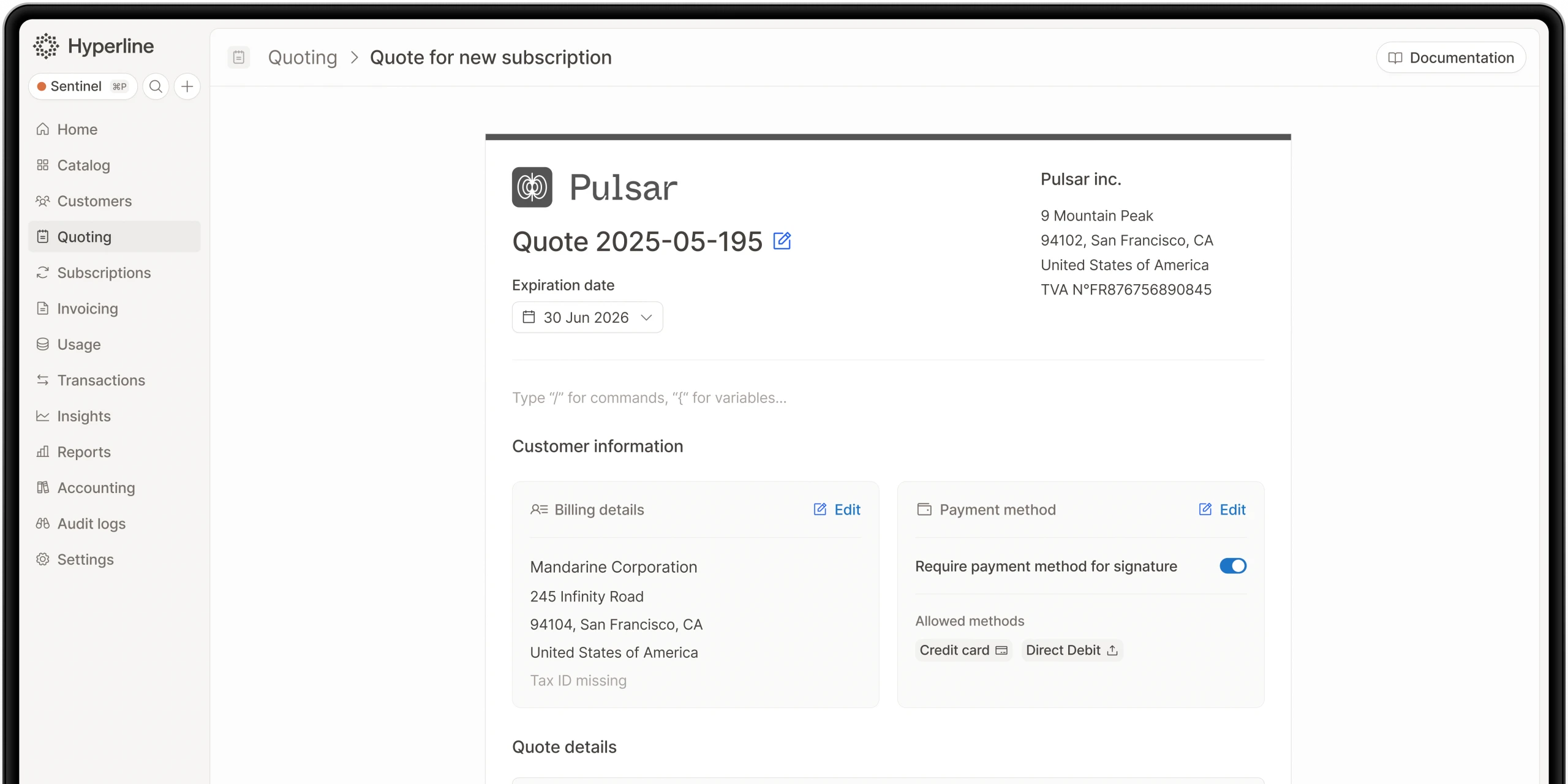
- Native CRM widget, build and edit quotes in Salesforce, with two-way sync
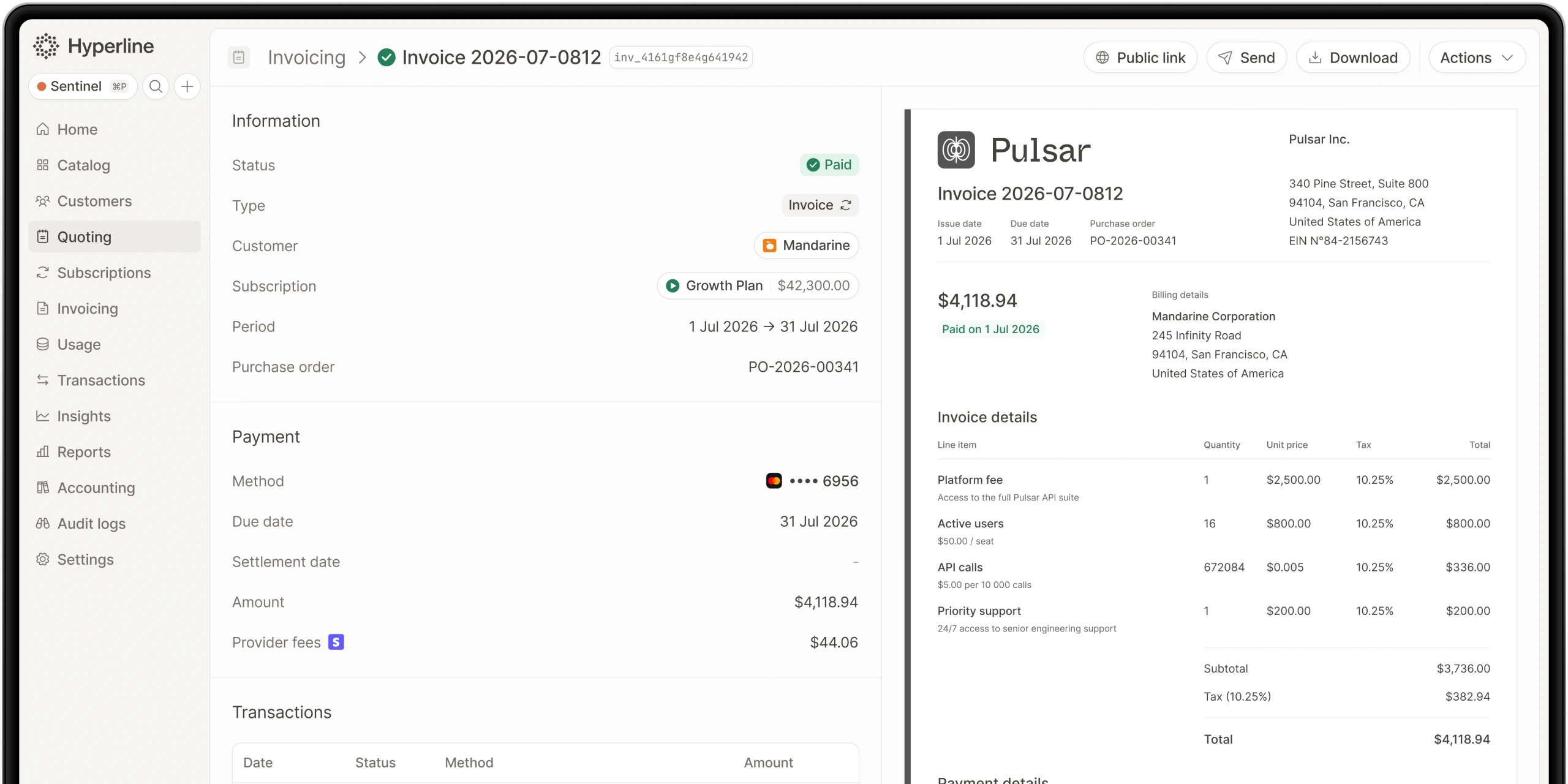
- Signature starts billing, the signed contract creates the subscription and the first invoice
- Usage and hybrid pricing, metered products on the same quote as seats and flat fees
- Revenue recognition included, not a further module to license and implement
Where Hyperline and Salesforce CPQ diverge
Quoting and billing are not two systems
When CPQ logic is not directly linked to billing execution, teams manage handoffs between systems, which raises the risk of inconsistencies between the signed contract and the actual invoice. In Hyperline the signed contract creates the subscription and generates the first invoice.
Usage-based pricing without external systems
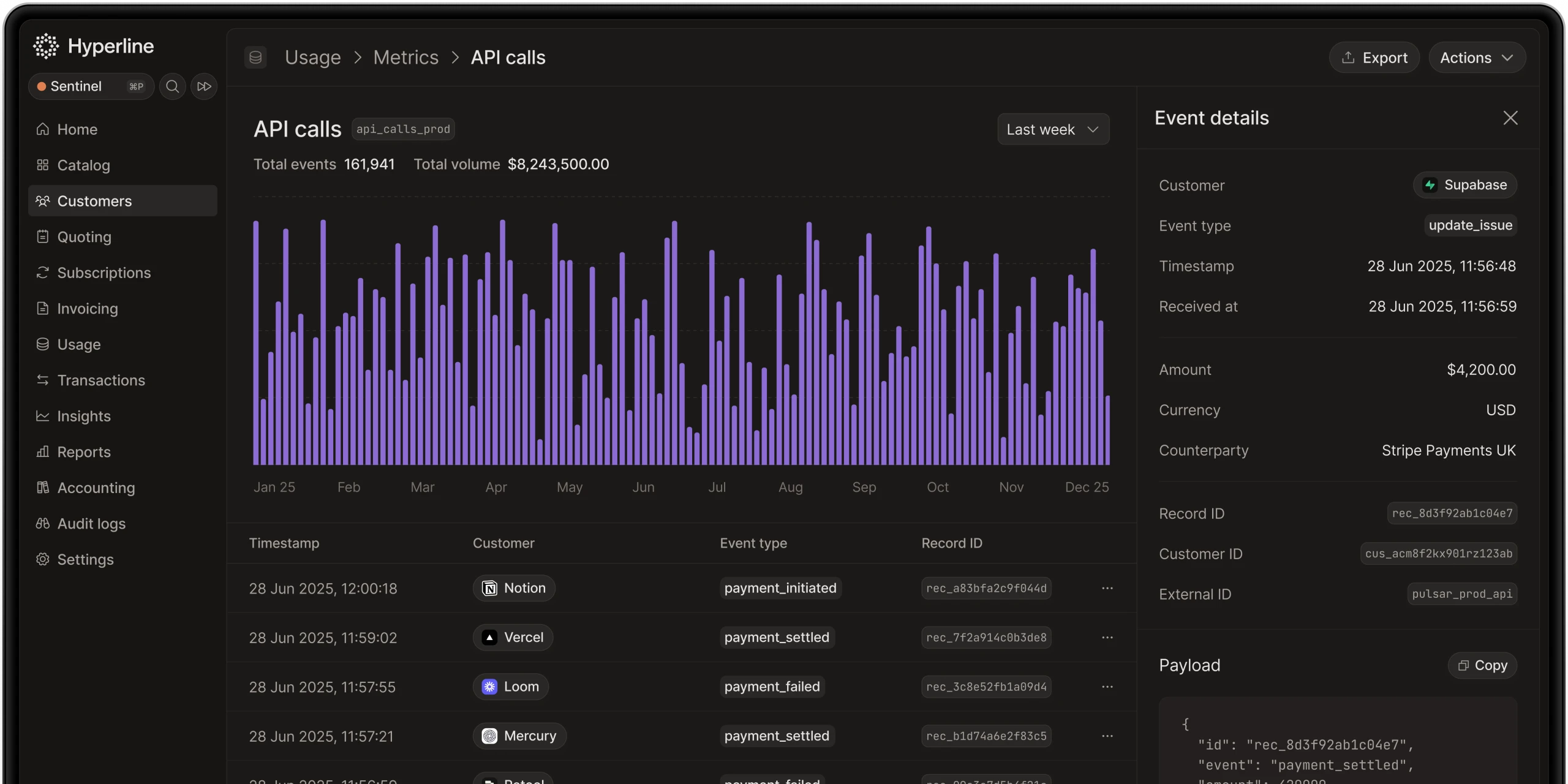
Usage-based pricing needs continuous alignment between contracts, usage data and invoicing. A CPQ designed around predefined price rules pushes dynamic usage components into external systems and manual work. Hyperline meters usage in real time against the contract that was signed, from the first API call to millions of events, with every billable unit traceable back to its raw events.
Pricing that RevOps can change
Salesforce CPQ supports structured enterprise pricing, and that structure is what makes granular pricing complex to configure and maintain. Hyperline lets RevOps and finance reshape pricing — ramps, credits, usage tiers — and test it on the next quote.
Amendments handled as part of the lifecycle
B2B SaaS contracts change constantly. Amendments, ramps, renewals and expansions run through the same system that bills them, with multi-step approvals by deal size, discount or segment and a full audit trail, rather than being reconciled between a quoting tool and a billing tool.
Frequently asked questions
Hyperline provides native CPQ with a widget inside Salesforce, plus the billing and revenue recognition that Salesforce handles through separate products. Teams keep quoting where sales already works while billing runs on the same platform.
Usage-based pricing requires continuous alignment between contracts, usage data and invoicing. A CPQ designed around predefined price rules typically needs external systems to manage dynamic usage components.
Yes. A native widget lets sales build and edit quotes without leaving Salesforce, with two-way sync so quotes, subscriptions, invoices and payment status stay live on the record.
The signed contract creates the subscription, generates the first invoice and schedules billing. No re-keying between the quoting tool and the billing system.