Quote-to-cash
Quote-to-cash covers the entire sales process from generating a quote to receiving payment.
Quote-to-cash (QTC) is the end-to-end process that connects sales and finance: it starts the moment a sales rep configures a quote, and it doesn't end until the revenue from that deal is recognized. In between, it covers pricing, contracting, order activation, billing, payment collection, and revenue recognition. When these steps run on connected data, a signed deal turns into accurate, timely revenue. When they don't, the same deal creates rework: pricing errors that only surface at billing, contracts that don't match what actually gets invoiced, and a finance team reconciling numbers that were never meant to agree.
The quote-to-cash workflow, step by step
- Configuration. A sales rep assembles the actual product and pricing combination a customer is buying, products, add-ons, discounts, and any custom terms.
- Pricing. The configured deal gets priced against the approved rate card, with any discount or approval rules applied before it goes further.
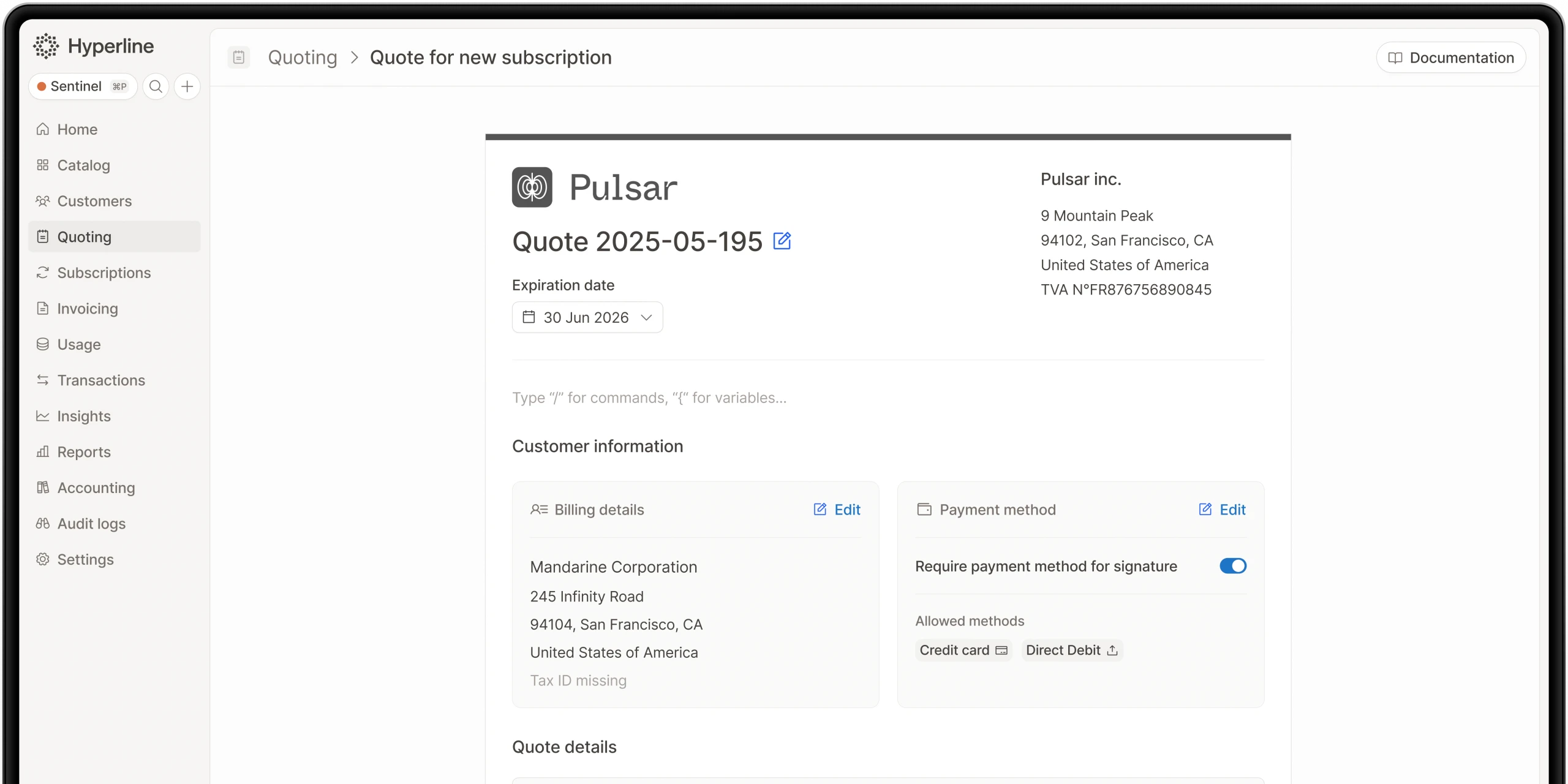
- Quoting. The priced configuration becomes a formal quote document, with pricing, terms, and delivery dates the customer can review and accept.
- Contracting. Once accepted, the quote turns into a signed contract, negotiation and e-signature happen here, ideally without re-entering terms into a separate system.
- Order activation. The signed contract triggers provisioning: the customer account gets activated, and the systems that need to know a deal closed, CRM, billing, delivery, are updated.
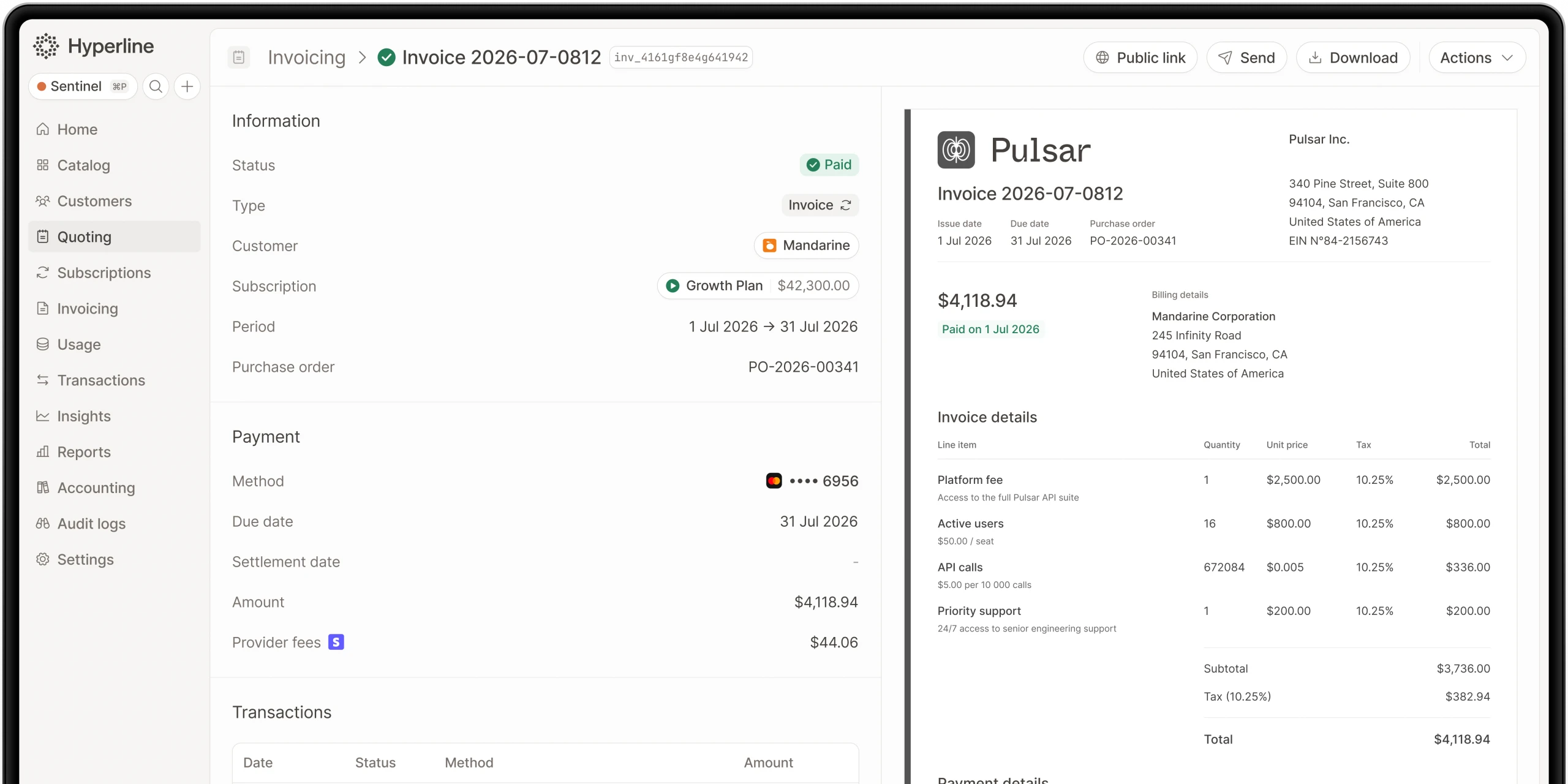
- Billing. The active contract converts into invoices, on whatever cadence and pricing structure it calls for, flat fee, usage-based, tiered, or a mix.
- Payment and collections. Payment gets collected across currencies and methods, and anything that doesn't get paid on time enters dunning and collections.
- Revenue recognition. Revenue is recognized under ASC 606 / IFRS 15, ideally from the same contract and billing data that generated the invoice, not a separate reconciliation.
- Renewal and expansion. As the term nears its end, the same data that generated the original quote and invoice feeds the renewal, upsell, or cross-sell motion.
Quote-to-cash example
Consider a B2B SaaS company selling a platform with a flat monthly fee plus a per-seat charge to a 50-person mid-market customer. A sales rep configures the deal: the base platform tier, 50 seats, and a negotiated volume discount. Pricing rules apply the discount and check it against approval thresholds, so anything past the rep's authority routes to a manager before the quote goes out. Once the customer accepts, the quote becomes a contract, signed electronically without either side re-typing terms into a separate system.
Signing triggers order activation: the account is provisioned, and the CRM, billing, and delivery systems all reflect that the deal closed. From there, billing generates a monthly invoice combining the flat fee and the seat count, and if the customer later adds usage-based add-ons, those get metered and billed on the same invoice rather than a separate one. Payment is collected automatically, and if a card fails, dunning kicks in before the account is flagged. At month-end, revenue from that contract is recognized under ASC 606 using the same billing data, so finance isn't reconciling a second version of the numbers. As the contract nears renewal, the sales team sees the same account data to plan an upsell conversation instead of starting from scratch.
Quote-to-cash vs. CPQ
CPQ (configure, price, quote) is the sales-facing front end of quote-to-cash, steps 1 through 3 above. It's where a rep builds a valid, accurately priced quote. Quote-to-cash is the larger process CPQ feeds into: a team can have excellent CPQ and still have a broken quote-to-cash process if what gets signed doesn't flow cleanly into billing, collections, and revenue recognition.
Quote-to-cash vs. order-to-cash
Order-to-cash (O2C) starts after a deal is signed, it covers fulfillment, invoicing, and collection. Quote-to-cash starts earlier, at the moment a rep builds the first quote, so pricing and contract terms are already billable and compliant before the deal ever reaches finance. In practice, order-to-cash is the back half of quote-to-cash.
Why the quote-to-cash process matters
A slow or broken quote-to-cash process shows up in specific, measurable ways: deals that take longer to close because a quote is stuck in manual approval, invoices that don't match what was actually signed, and a finance team spending days at month-end reconciling numbers that should have agreed from the start. Each disconnected handoff between sales, contracting, and billing is a place where errors and delays enter the deal.
For SaaS companies specifically, the stakes get higher as pricing gets more sophisticated: a single contract that mixes a subscription fee with usage-based charges has more surface area for something to go wrong between what was quoted and what gets billed. Streamlining quote-to-cash isn't just about the sales cycle, it's what determines whether the revenue in a signed contract shows up accurately and on time.
Common quote-to-cash challenges
- Fragmented data. A quote signed in the CRM doesn't always match what the billing system can actually invoice, especially for custom terms or discounts, which is often discovered only when the invoice is already wrong.
- Manual handoffs. Re-keying contract terms into a separate billing tool is exactly the kind of manual step that creates mismatches between what was signed and what gets billed, and it scales badly as deal volume grows.
- Pricing complexity. Subscription, usage-based, and hybrid pricing on the same contract is harder to bill accurately than a single flat plan, especially when each component needs its own logic for proration, discounts, and taxes.
- No shared visibility. Sales, finance, and operations often look at different systems for the same deal, with no single source of truth, so a simple question like "has this customer paid?" can require checking three tools to answer.
- Slow revenue recognition. When revenue recognition runs on different data than billing, finance ends up reconciling two versions of the truth every close, which slows down reporting and makes forecasting less reliable.
What to look for in a quote-to-cash platform
Not every tool marketed as "quote-to-cash" actually covers the full process. A few questions help separate genuine end-to-end coverage from a tool that only handles one piece of it well:
- Does CPQ connect natively to billing, or is it a separate product? If a signed quote has to be re-entered into a different billing system, that handoff is where errors get introduced.
- Does it support the pricing models the business actually runs? Flat fee and seat-based pricing are table stakes; usage-based, tiered, and hybrid pricing on the same contract are where many platforms fall short.
- Does revenue recognition use the same data that generated the invoice? If revenue recognition is a separate process working from separate data, finance ends up reconciling two versions of the truth every close.
- How is usage metered, if usage-based pricing is involved? Real-time metering gives visibility into what a customer currently owes; batch processing means that visibility lags behind actual usage.
- Does it handle multi-entity or multi-currency billing, if the business needs it? This becomes a real constraint as a company expands into new markets or legal entities.
None of these questions have a universally right answer, they depend on how complex a business's pricing actually is today, and how quickly that's likely to change.
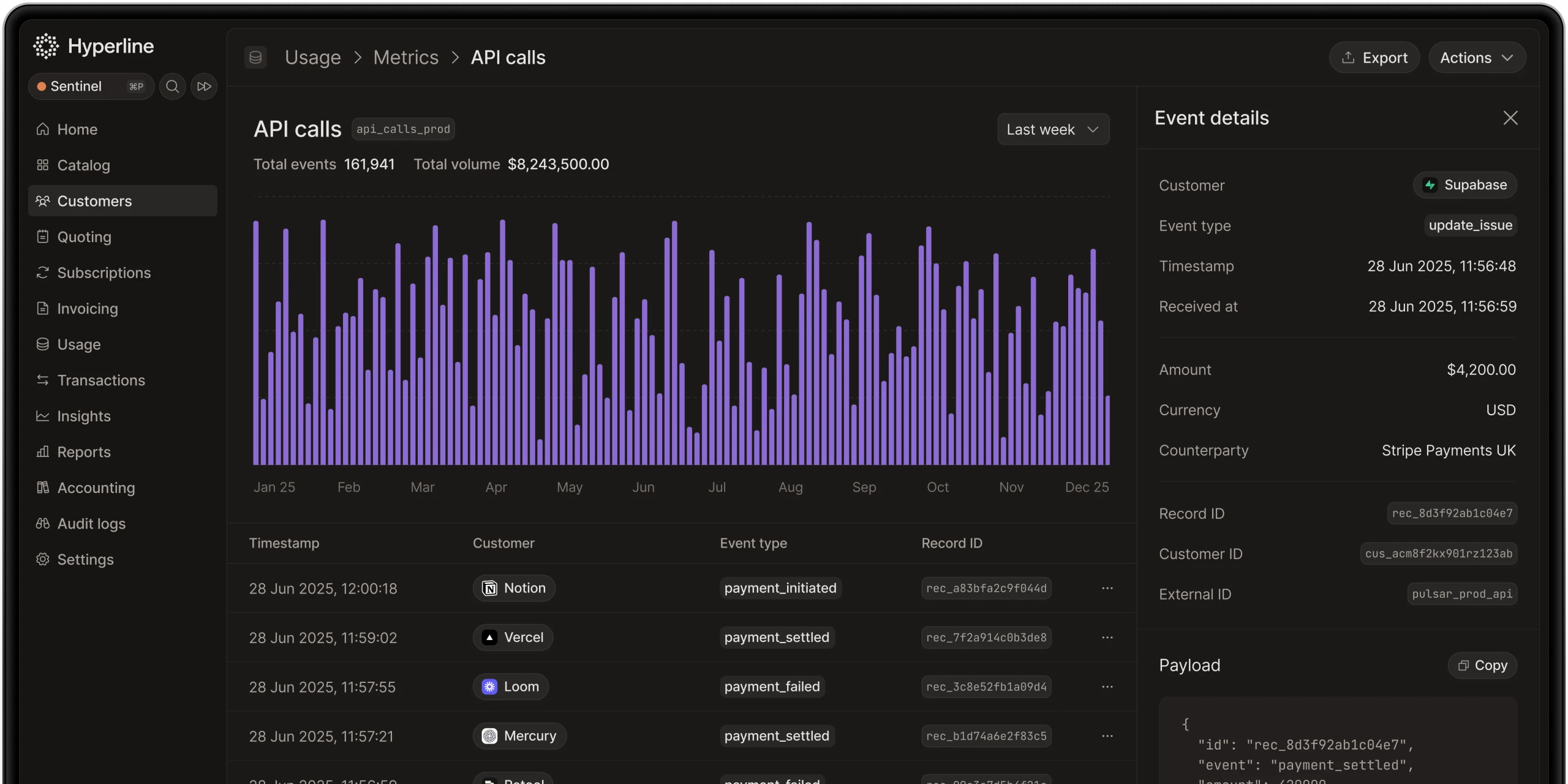
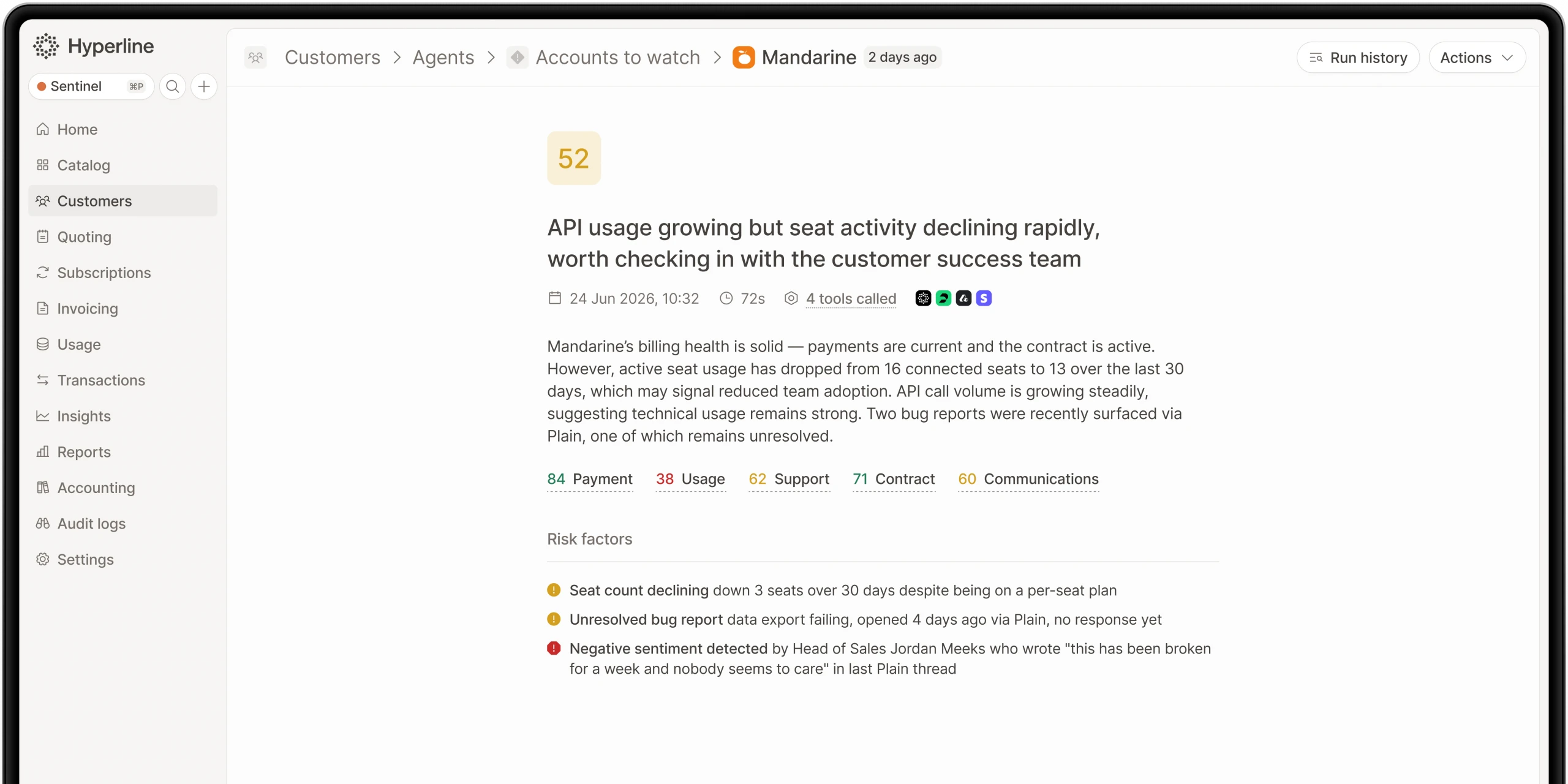
Where this fits in Hyperline
Related topics
Frequently asked questions
The full workflow from configuring a customer's quote through pricing, contracting, order activation, billing, payment collection, and revenue recognition.
Order-to-cash starts after a contract is signed and focuses on fulfillment and billing. Quote-to-cash starts earlier, at the quoting stage, so the deal is already billable and compliant by the time it reaches finance.
Manual steps between quoting, billing, and revenue recognition are where errors and delays enter the process. Automation reduces those handoffs and keeps the same data flowing through every stage.
Fragmented data between CRM, CPQ, and billing systems, manual re-entry of contract terms, pricing complexity across multiple models, and revenue recognition that runs on separate data from billing.
No. CPQ covers the first part of the process, configuring, pricing, and quoting. It hands off to contracting, billing, and revenue recognition, the rest of the quote-to-cash cycle.
QTC is the abbreviation for quote-to-cash.