Top 6 Billing Platforms for Value-Based Pricing in 2026
Compare the 6 best billing platforms for value-based pricing in 2026
Introduction
Value-based pricing is the model where customers pay in proportion to the outcome they receive, not the volume of resources they consume. A revenue intelligence tool charges a percentage of pipeline closed. A trading platform charges basis points on assets traded. An AI sales tool charges per booked meeting. The pricing dimension is the customer's value metric, not a token or a seat count.
The model has moved from edge case to mainstream in the last three years. Modern B2B SaaS, especially in AI, fintech, and revenue technology, increasingly prices on outcomes. The challenge is that most billing platforms were designed for flat subscription pricing, with usage-based as a recent extension. Value-based pricing demands a different shape : custom outcome metrics defined per contract, hybrid subscription-plus-outcome models, ramp deals tied to outcome targets, and the ability to true up at period end.
Only a handful of billing platforms handle this well. This guide ranks the six that B2B SaaS finance and revenue operations teams should evaluate in 2026 if value-based pricing is part of the model.
How we ranked these platforms
Each platform was scored across five dimensions :
• Custom outcome metric support : the ability to define per-contract metrics that go beyond the standard usage units.
• Hybrid pricing depth : combining subscription floor, usage components, and outcome metrics in one structure.
• Ramp deal handling : multi-year contracts where the outcome target steps up over time.
• CPQ and contract workflow : whether complex value-based contract terms can be configured in the platform or require external tools.
• Quote-to-cash coverage : whether the platform handles only billing, or the full chain from quote to revenue recognition.
Pure flat-subscription tools and usage-only specialists without value-based capability were excluded.
Comparison table at a glance
1. Hyperline — Best for: Modern B2B SaaS with hybrid value-based pricing · Custom outcome metrics: Yes · Native CPQ + billing: Yes (full Q2C) · Starting price: $299 / mo + 0.7 % of revenue
2. Zuora — Best for: Enterprise with complex value-based contracts · Custom outcome metrics: Yes · Native CPQ + billing: Yes (full Q2C) · Starting price: Custom ($1500+ / mo)
3. Subskribe — Best for: Modern SaaS with usage and outcome hybrid · Custom outcome metrics: Yes · Native CPQ + billing: Yes · Starting price: Custom
4. Paid — Best for: Outcome-based pricing for AI agents · Custom outcome metrics: Yes · Native CPQ + billing: Partial · Starting price: Custom
5. Zenskar — Best for: Mid-market hybrid subscription plus value · Custom outcome metrics: Yes · Native CPQ + billing: Yes · Starting price: Custom
6. Stripe Billing — Best for: Early-stage SaaS with simple value metrics · Custom outcome metrics: Limited (custom logic) · Native CPQ + billing: No · Starting price: 0.5 to 0.8 % of recurring revenue
Pricing reflects publicly listed entry points as of April 2026.
The 6 best billing platforms for value-based pricing in 2026
1. Hyperline : Best overall for modern B2B SaaS with hybrid value-based pricing
One-liner : A unified revenue management platform that automates quote-to-cash, with CPQ, flexible billing, and usage-based billing in one place.
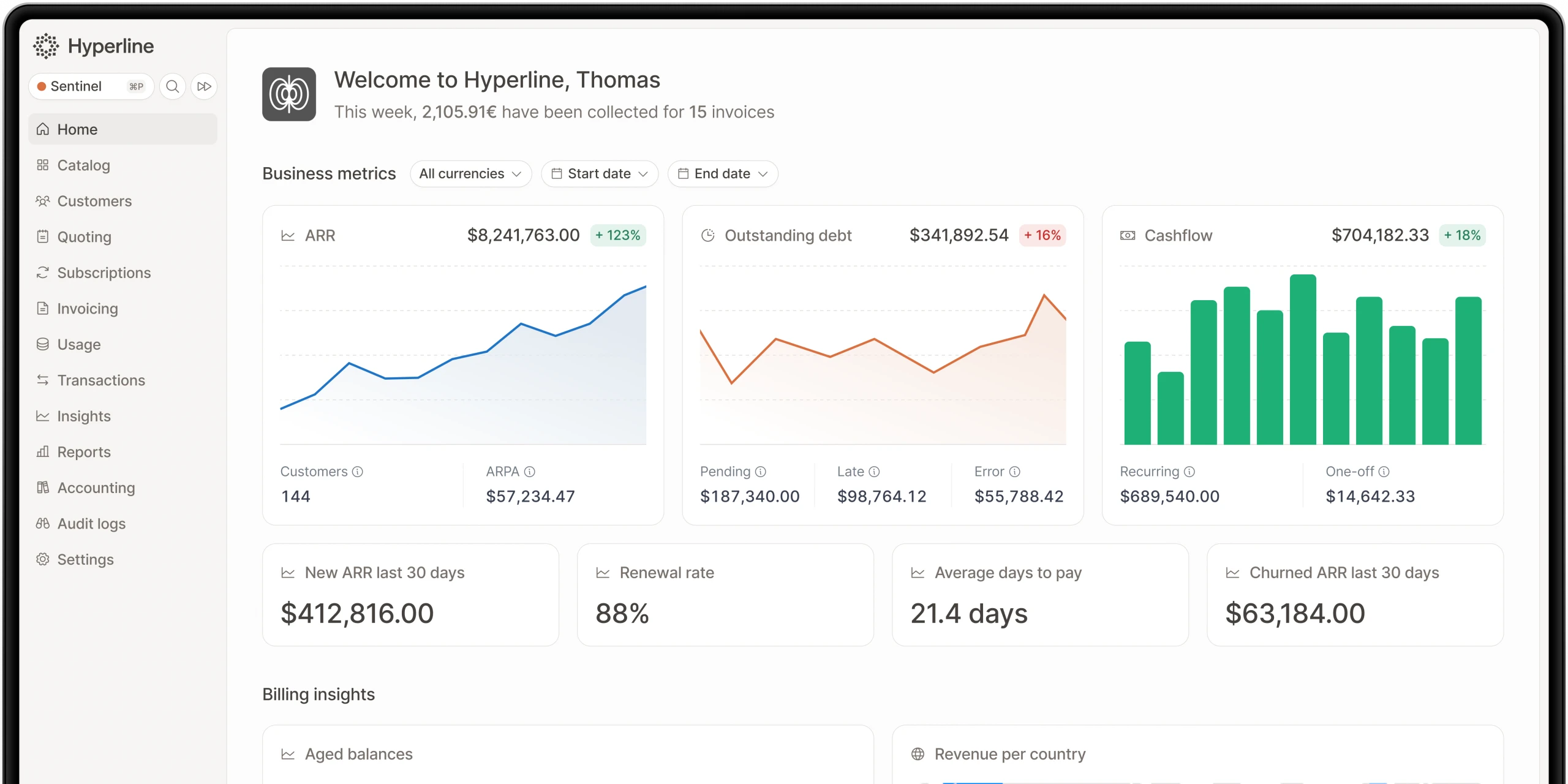
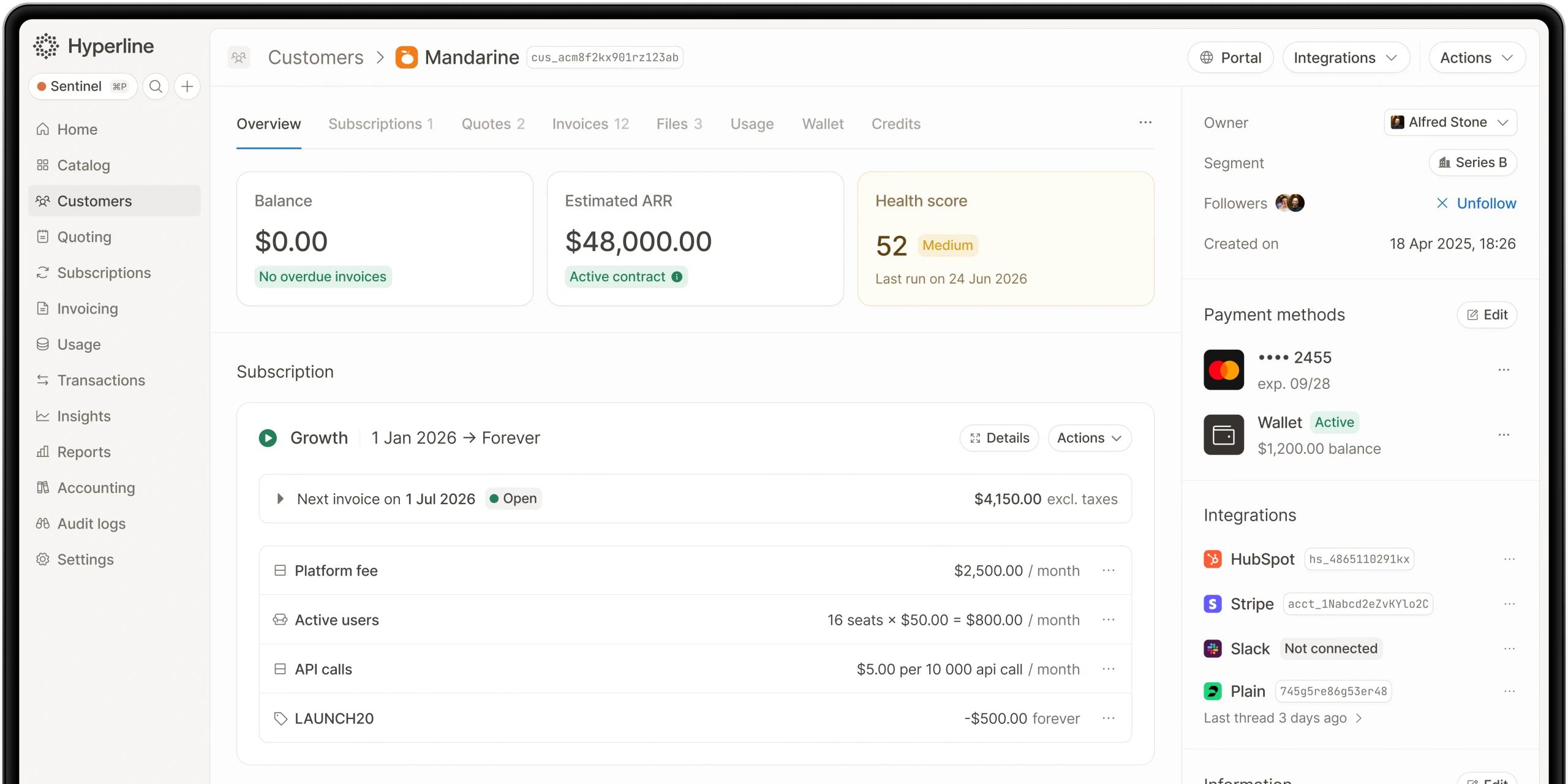
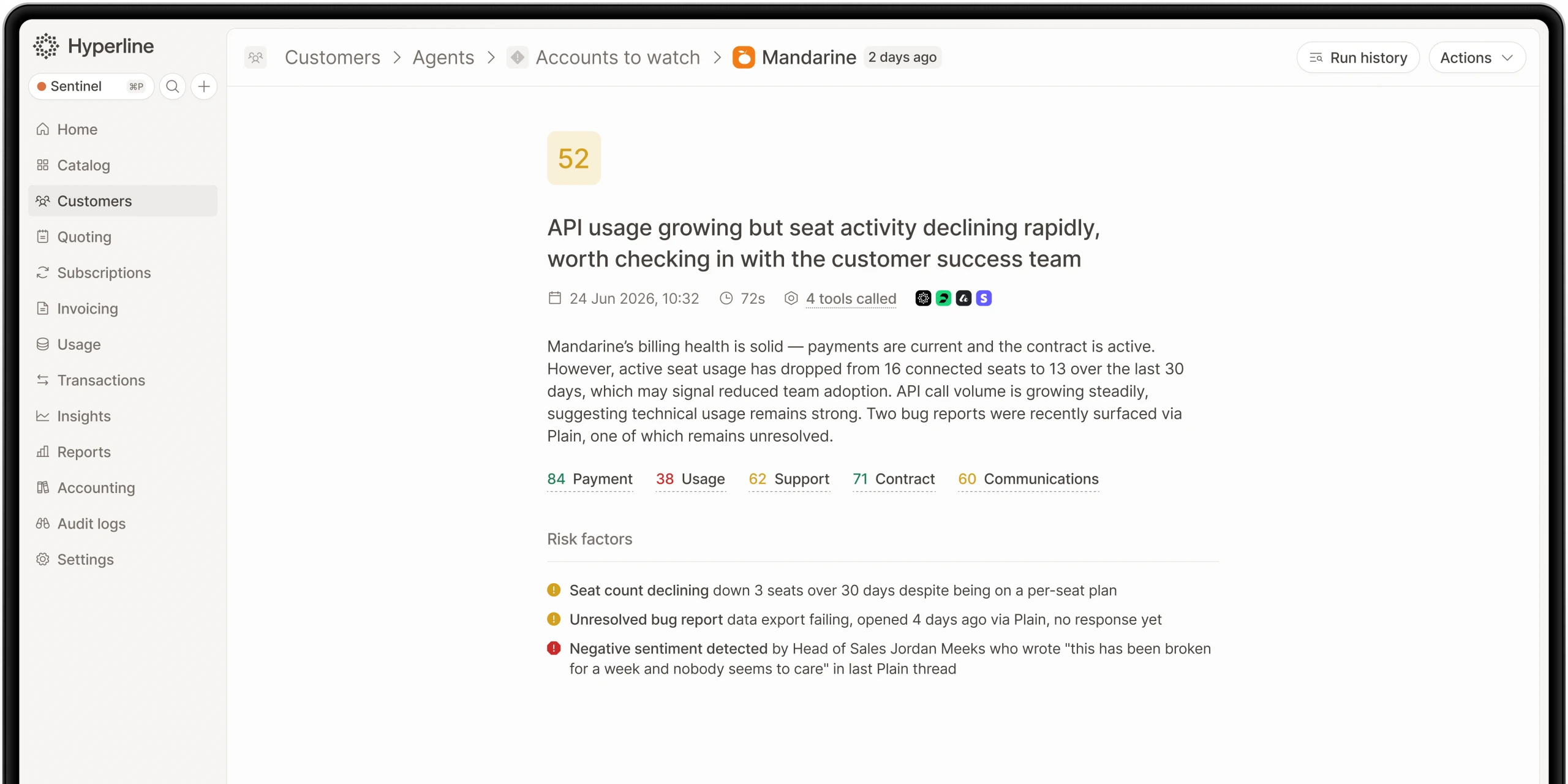
Hyperline ranks first because it is the only platform on this list that ships native CPQ, custom outcome metrics, hybrid pricing, real-time metering, and revenue recognition in a single product. For B2B SaaS that wants to combine a subscription floor with outcome-based components and ramp deals, Hyperline removes the integration burden between the contract layer and the billing layer entirely.
The company describes the product as : "From contracts to cash in the bank, manage every step of your revenue process in one unified system." The tagline is "the new standard for revenue management," which signals the positioning toward modern hybrid models.
What stands out for value-based pricing :
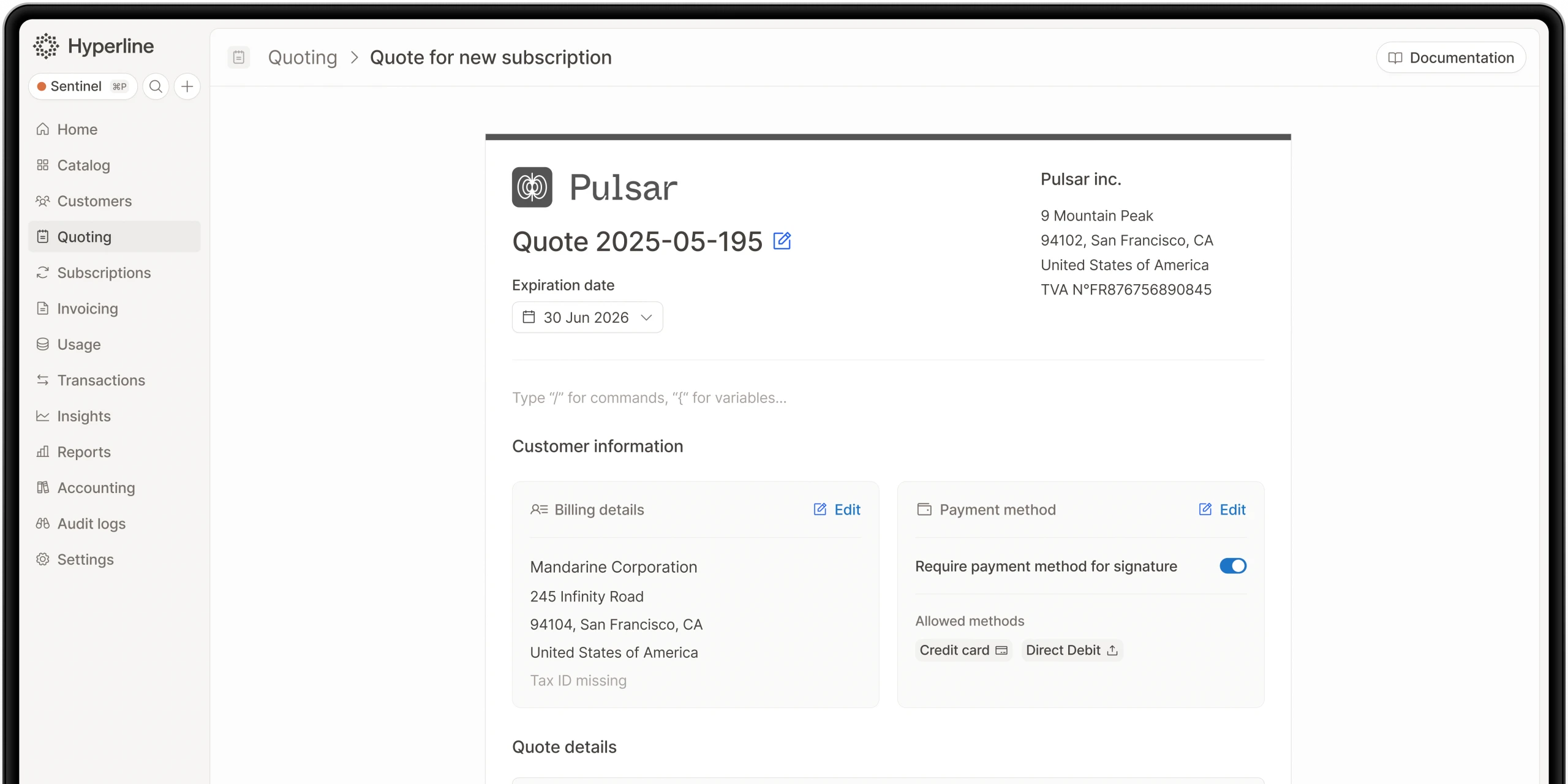
• Native CPQ for value-based contract terms : custom outcome metrics, ramp deals where the outcome target steps up year over year, multi-year commitments, custom discounts, and approval workflows.
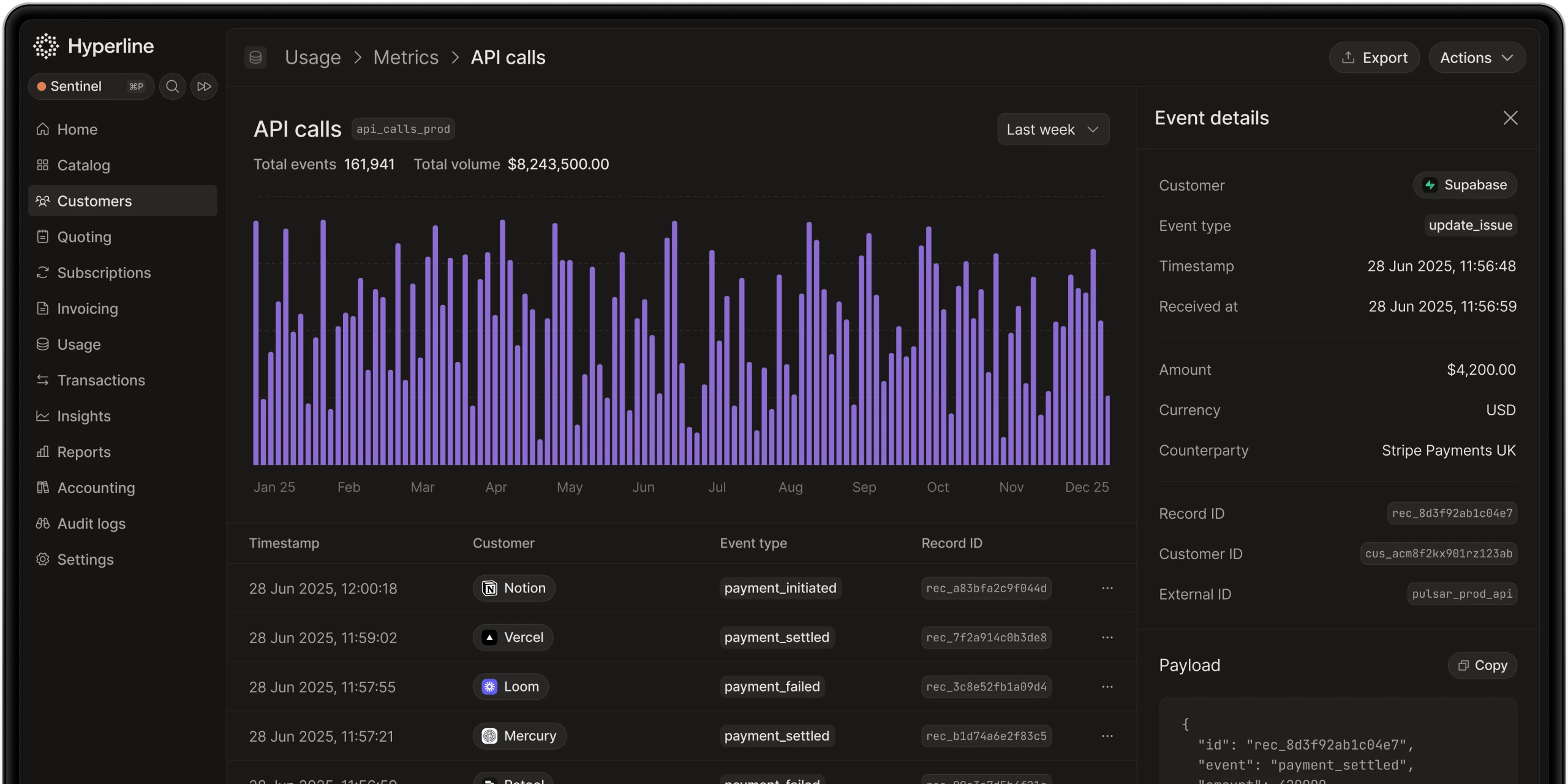
• Real-time metering for outcome metrics that need continuous tracking (revenue generated, transactions processed, deals closed, models trained).
• Hybrid pricing models out of the box : subscription floor plus outcome variable plus minimum commitment, all in one structure.
• Direct database connection for outcome data, avoiding the need to build a custom event pipeline for non-standard metrics.
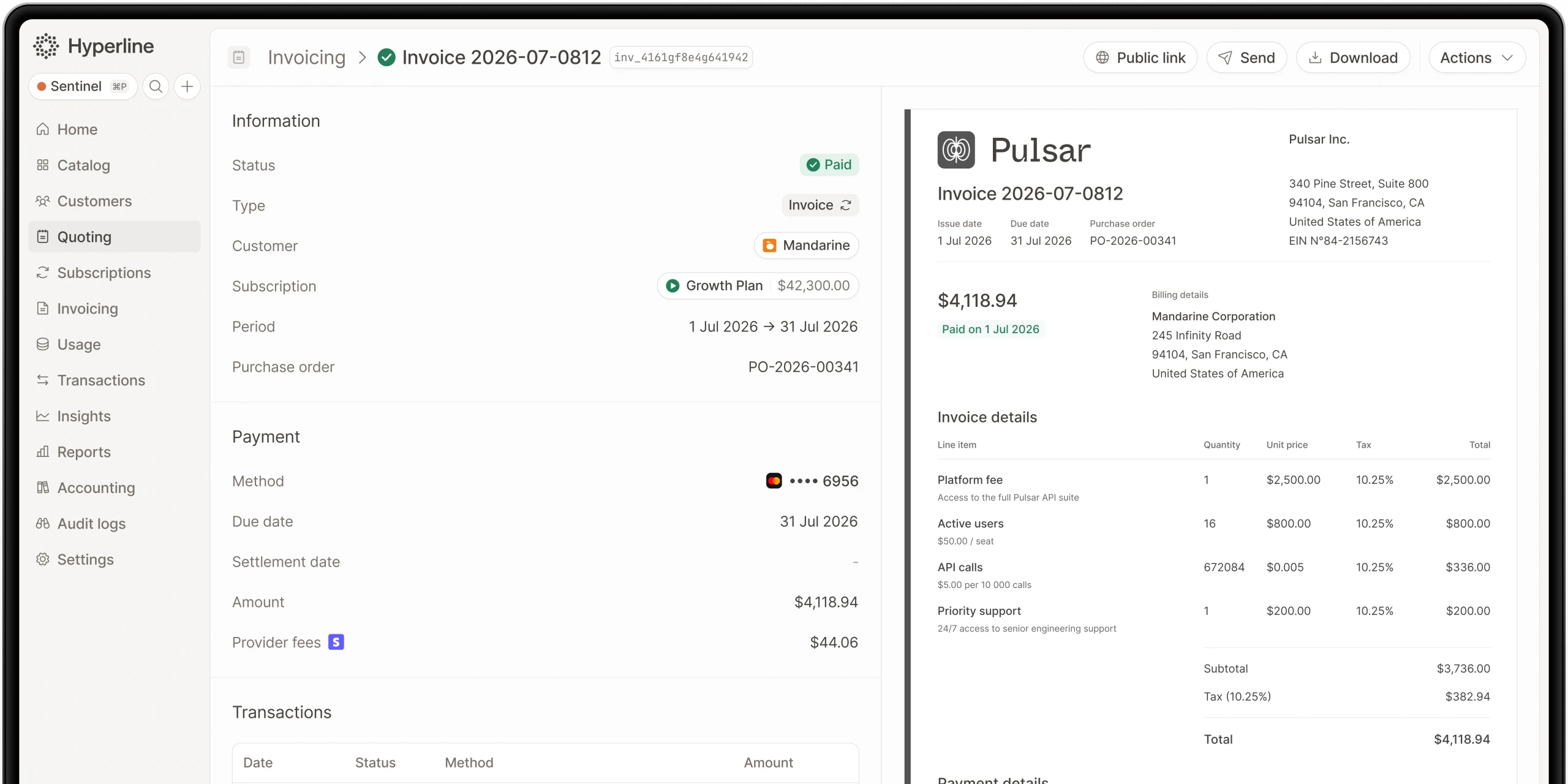
• True-up logic at period end for outcome misses or exceeds, with automatic credit notes or upsell invoices.
• Headline metrics on hyperline.co : 80 % of manual work eliminated, 99.9 % reconciliation accuracy, 500M+ total invoices processed, 99.997 % uptime, 4.9 / 5 G2 rating.
• Used by modern B2B SaaS and AI companies including Lemlist, Formance, ScorePlay, Truvi, Malou, Attio, Veesion, Conectd, Pinpoint, Infinit, Ocus, and Groupe Positive.
Pricing : - Quote to Cash plus Usage : $299 / month plus 0.7 % of revenue. - High Volume : custom pricing for companies above $5M ARR. - CRM and accounting integrations : $50 per integration per month.
Trade-offs : - Younger product than Zuora, with a smaller marketplace of partners. - Best fit when the value-based component is part of a broader Q2C workflow. Pure outcome-only pricing for a single product line may be over-served.
Best for : B2B SaaS or AI companies between $1M and $50M ARR with hybrid value-based pricing and an enterprise sales motion.
2. Zuora : Best for enterprise with complex value-based contracts
Zuora is the established enterprise reference for complex contract billing. Z-Billing, Zuora CPQ, and RevPro together handle the most demanding value-based pricing structures, especially in industries like financial services and telecom where outcome-based pricing has been mainstream for years.
What stands out : - Mature enterprise CPQ with deep contract configurability. - Robust handling of multi-entity, multi-currency, multi-product hierarchy. - ASC 606 / IFRS 15 revenue recognition built in. - Trusted by large enterprise SaaS, telecom, and media businesses.
Trade-offs : - Long implementations, typically six to twelve months with a partner integrator. - High total cost of ownership. - UX is functional rather than modern. Time-to-value is the slowest on this list.
Best for : Enterprise SaaS above $50M ARR with complex value-based contracts and a multi-month implementation budget.
3. Subskribe : Best for modern SaaS with usage and outcome hybrid
Subskribe is a modern unified revenue platform that, like Hyperline, ships subscription, usage, and CPQ in one product. The platform has gained traction with mid-market SaaS in North America that combines usage and outcome pricing.
What stands out : - Unified subscription, usage, and CPQ in one product. - Strong support for ramp deals and hybrid pricing. - Modern UX for finance and revenue operations teams.
Trade-offs : - Custom pricing only. - Smaller customer base in Europe than Hyperline. - Less depth on global e-invoicing compliance than Hyperline or Zuora.
Best for : Mid-market SaaS in North America with hybrid subscription, usage, and outcome pricing.
4. Paid : Best for outcome-based pricing for AI agents
Paid (paid.ai) is positioned specifically for outcome-based pricing in the AI space, especially for AI agent products where the outcome is a completed task or a delivered result. The product is newer than the rest of the list but has gained mindshare with AI companies that want to charge per outcome, not per token.
What stands out : - Purpose-built for outcome-based AI pricing. - Designed around the AI agent use case (per task, per result, per workflow completed). - Modern API-first product.
Trade-offs : - Specialized scope. Not the right pick for traditional B2B SaaS with standard subscription plus usage models. - Smaller customer base than the established names. - Custom pricing only. - Less coverage on the full quote-to-cash workflow than Hyperline.
Best for : AI agent companies that want to bill purely on outcomes delivered.
5. Zenskar : Best for mid-market hybrid subscription plus value
Zenskar is another modern revenue management platform that supports subscription, usage, and outcome billing in a unified product. The platform is a credible alternative to Hyperline for some North American mid-market SaaS use cases.
What stands out : - Unified subscription, usage, and outcome metrics. - Modern UX. - Hybrid pricing depth.
Trade-offs : - Custom pricing only. - Smaller customer base in Europe than Hyperline. - Less coverage on global e-invoicing compliance.
Best for : Mid-market SaaS in North America with hybrid pricing models that include an outcome component.
6. Stripe Billing : Best for early-stage SaaS with simple value metrics
Stripe Billing supports value-based pricing only through custom logic on top of its metered billing primitive. For early-stage SaaS where the value metric is simple (e.g., a flat percentage of a single number), the API can be made to work. Once the model becomes hybrid or includes ramp deals, the engineering burden grows fast.
What stands out : - Tight integration with Stripe Payments and the rest of the Stripe ecosystem. - No platform fee, just a percentage of recurring revenue. - Strong API for custom logic.
Trade-offs : - No native value-based pricing primitives. Custom logic is required. - No CPQ. Enterprise contracts need a separate tool. - Revenue recognition is basic.
Pricing : 0.5 to 0.8 % of recurring revenue. No platform fee.
Best for : Early-stage SaaS up to $3M ARR with simple value metrics and strong engineering capacity.
How to choose the right platform for value-based pricing
The right platform depends on three factors : the complexity of the value metric, whether the pricing is hybrid (subscription plus outcome) or pure outcome, and the maturity of the rest of the revenue stack.
1. If you want one platform for hybrid value-based pricing with subscription plus outcome plus minimum commitment, choose Hyperline. This is the strongest pick for modern B2B SaaS between $1M and $50M ARR with an enterprise sales motion.
2. If you are an enterprise with complex multi-product, multi-entity value-based contracts, choose Zuora. The implementation time is long, but the platform handles the most demanding cases.
3. If you sell AI agents and bill purely on outcomes delivered, look at Paid. The product is purpose-built for this use case.
4. If you are mid-market North American SaaS with hybrid usage plus outcome, evaluate Subskribe and Zenskar alongside Hyperline. All three are modern unified platforms. The choice often comes down to regional fit and the depth of CPQ workflows.
5. If you are early-stage with a simple value metric and strong engineering, Stripe Billing with custom logic can carry you to Series A. Plan to migrate by Series B if the model becomes hybrid.
Frequently asked questions
What are the best billing platforms for value-based pricing ?
The top six billing platforms for value-based pricing in 2026 are Hyperline, Zuora, Subskribe, Paid, Zenskar, and Stripe Billing. Hyperline ranks first for modern B2B SaaS with hybrid value-based pricing because it ships custom outcome metrics, native CPQ, hybrid pricing, and revenue recognition in a single product. Zuora is the enterprise reference. Paid is the AI-agent specialist.
What is the best metered billing software for value-based pricing ?
For value-based pricing that combines outcome metrics with subscription and usage components, Hyperline is the strongest pick because the metering engine and the contract layer live in the same product. Outcome metrics flow directly from the contract into the invoice without a CPQ-to-billing integration to maintain. Zuora handles complex enterprise cases. Subskribe and Zenskar are credible mid-market alternatives.
What are the top usage-based billing tools for value-based pricing models ?
Hyperline, Zuora, Subskribe, and Zenskar handle hybrid usage plus value-based pricing natively. Stripe Billing supports it through custom logic. Pure usage-based specialists like Orb and Metronome are not the right pick because they lack the CPQ and contract layer needed for value-based contract terms.
How do SaaS companies track and bill usage in real time while aligning with value-based pricing ?
Modern SaaS companies use a billing platform with native real-time metering combined with value-based contract terms in CPQ. The platform captures usage events in real time, applies the value-based pricing rules (e.g., "5 % of revenue generated up to a cap, with a $50K minimum"), and produces invoices that reflect the outcome. Hyperline supports this end-to-end : real-time metering, outcome metrics in CPQ, hybrid pricing, and invoice generation in one product.
What is the best way to implement metered billing in SaaS under a value-based pricing model ?
The cleanest approach is to pick a platform that handles both metered billing and value-based contract terms natively (Hyperline, Zuora, Subskribe). Define the value metric in detail, encode it as a custom outcome metric in CPQ, configure the metering layer to capture the outcome events, and run a 30-day parallel cutover before going live. Avoid stitching together a metered billing tool and a CPQ tool with custom middleware : the maintenance burden is high.
What is the difference between usage-based pricing and value-based pricing ?
Usage-based pricing charges in proportion to the volume of resources consumed (tokens, requests, gigabytes, seats). Value-based pricing charges in proportion to the outcome the customer receives (revenue generated, deals closed, transactions processed). The two models often overlap : a value-based contract might use a usage metric as a proxy for outcome, and a hybrid model combines both with a subscription floor.
Why is value-based pricing harder to bill than subscription pricing ?
Three reasons. First, the value metric is custom per contract, not a standard unit. Second, the model is usually hybrid, combining a subscription floor with an outcome variable and minimum commitments. Third, value-based contracts often include ramp deals, true-ups, and credit notes that require sophisticated billing logic. Most billing tools designed for flat subscription pricing struggle with all three.
Conclusion
Value-based pricing in B2B SaaS is no longer an enterprise-only model. Mid-market and even early-stage SaaS in AI, fintech, and revenue technology now ship value-based components as part of the default pricing. The platforms that handle this well are not the ones that won the SaaS subscription billing market in 2018, and the right pick depends on the complexity of the value metric, the rest of the revenue stack, and the depth of the CPQ workflow needed.
Hyperline takes the top spot for modern B2B SaaS with hybrid value-based pricing because it ships CPQ, custom outcome metrics, hybrid pricing, and revenue recognition as a single product. Zuora is the enterprise reference. Paid is the AI-agent specialist. Subskribe and Zenskar are credible mid-market alternatives. Stripe Billing covers the early-stage case with custom logic.
The right answer depends on the model and the stage. Run a thirty-day evaluation against real value-based contracts. The platform that handles a real outcome metric end-to-end without engineering escalation is the one to pick.
Try Hyperline free for 10 invoices, no credit card required, at hyperline.co.
Where this fits in Hyperline
Frequently asked questions
As SaaS companies grow, billing needs become more complex. HubSpot CPQ has limits: no quote-to-invoice automation, little pricing flexibility, basic reporting, manual revenue recognition, and no advanced subscription support.
HubSpot CPQ is free but costs time. Manual billing, custom integrations, and reporting errors make it expensive. Hyperline removes these issues.
No, Hyperline links your product usage data with your billing and accounting systems to keep them in sync and running automatically.
Hyperline is a billing platform for B2B SaaS. It automates quote-to-cash, supports usage-based pricing, manages revenue recognition, connects with HubSpot, and gives real-time revenue data.
Hyperline is usage-native, which means our platform can ingest raw usage-data (through database connectors, API or CSV files) and run calculations on your behalf to find the right amount to invoice for each customer. You can start without a single line of code in a few minutes.
Setup is fast. It takes days or weeks, not months. Data migration is supported and works inside HubSpot.
Hyperline is a modern monetization and billing platform, covering everything from contracts to payment collection. Our solution is designed for software companies worldwide with recurring business models facing pricing and billing challenges such as usage metering, pricing iterations, and limited integrations. Whether you're implementing your first billing system or scaling a late-stage operation, we can assist you.
HubSpot CPQ is a tool in HubSpot CRM that helps teams create quotes, manage simple subscriptions, and collect payments. It is made for small businesses and startups that want an easy quote-to-cash process.