What is SaaS subscription management software and why your revenue stack needs one
SaaS pricing is never static. Each change triggers a cascade of backend work: prorations, contract updates, invoice adjustments, payment communications. This is exactly the kind of operational complexity that subscription management software is designed to absorb.
What is SaaS subscription management software?
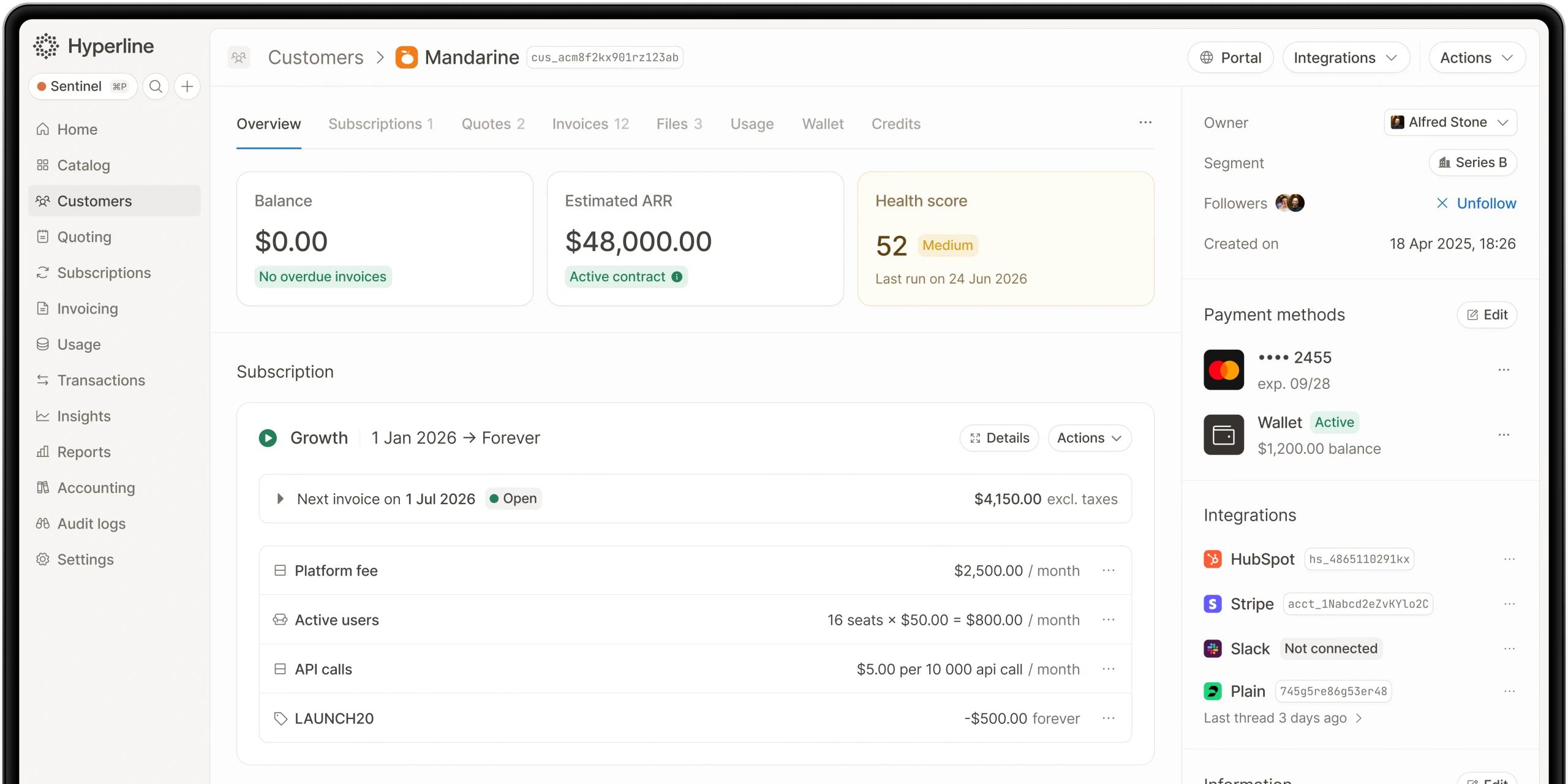
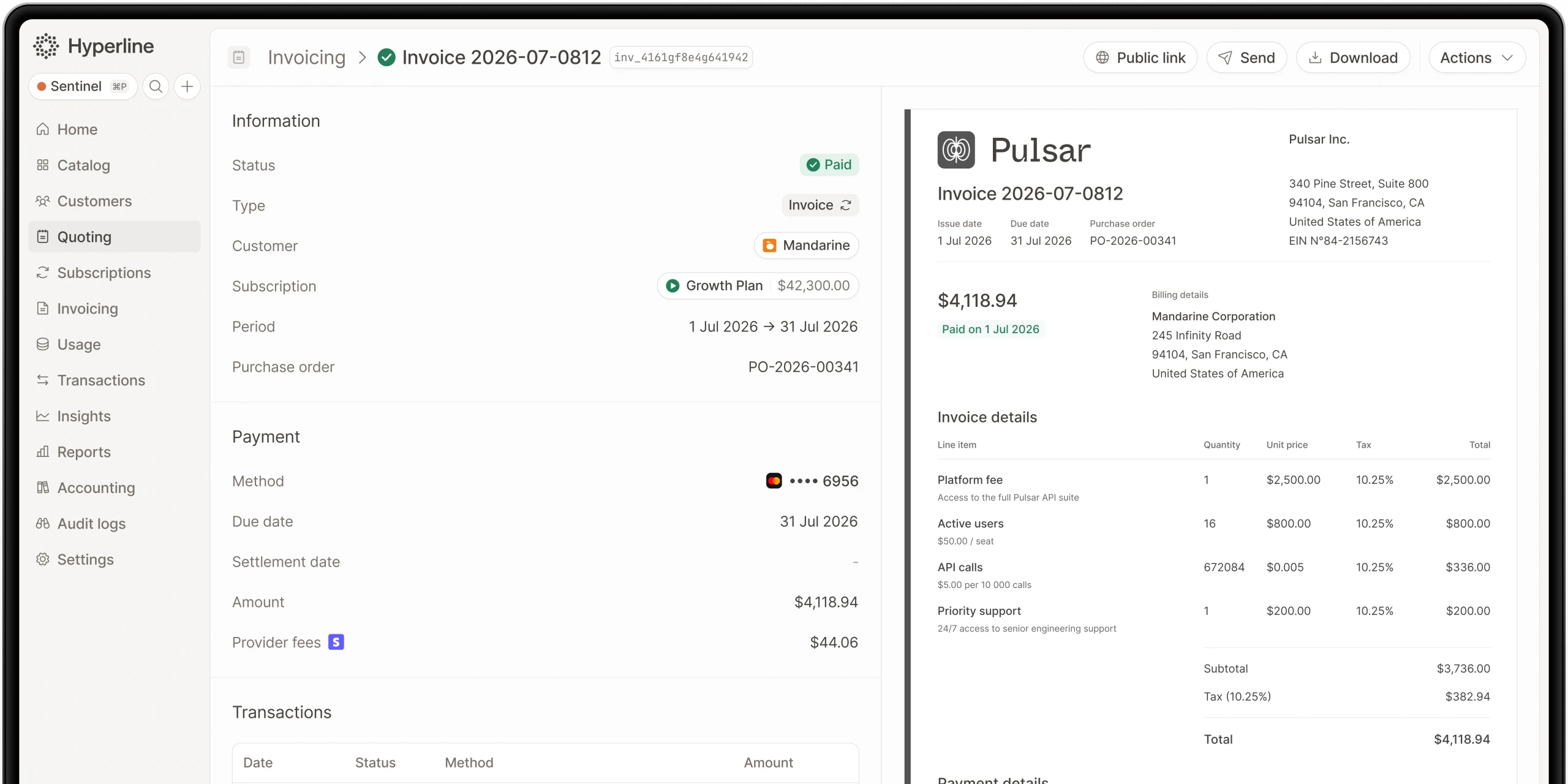
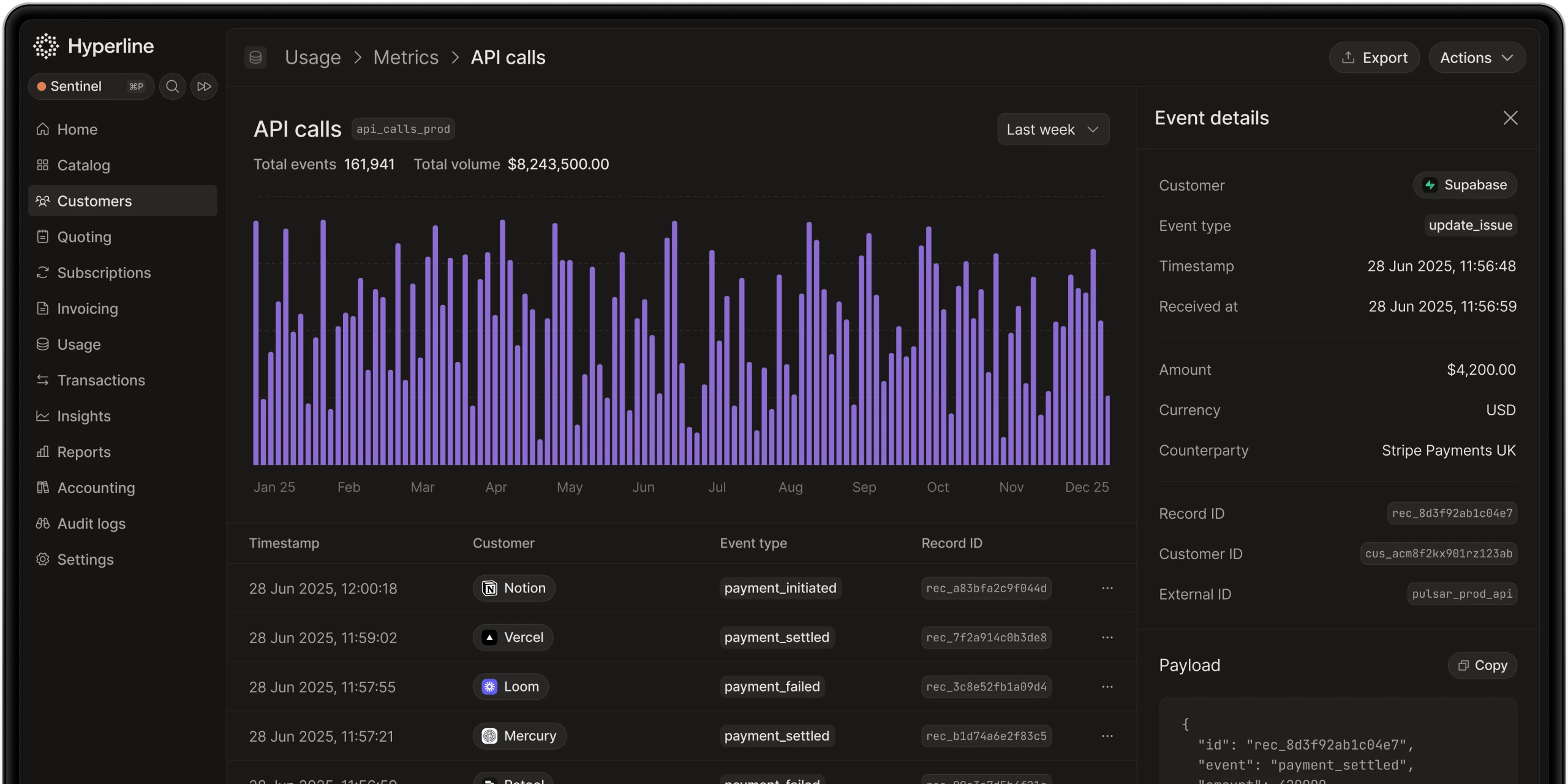
A SaaS subscription management platform automates the full customer billing lifecycle, from the moment a deal is signed through to renewal, upgrade, downgrade, or cancellation. This includes managing recurring charges, prorations, payment retries, invoice generation, and customer notifications.
Done well, subscription management software compresses your Days Sales Outstanding (DSO), reduces involuntary churn through smart dunning logic, and frees your finance and engineering teams from repetitive manual work.
Subscription management vs billing: What's the difference?
These two terms are often used interchangeably, but they serve distinct functions.
Subscription management covers the full customer lifecycle: onboarding, plan changes, trial management, churn prevention, and contract administration. It's the operational layer that sits above billing.
Billing, by contrast, focuses specifically on invoice generation, payment collection, and revenue reconciliation.
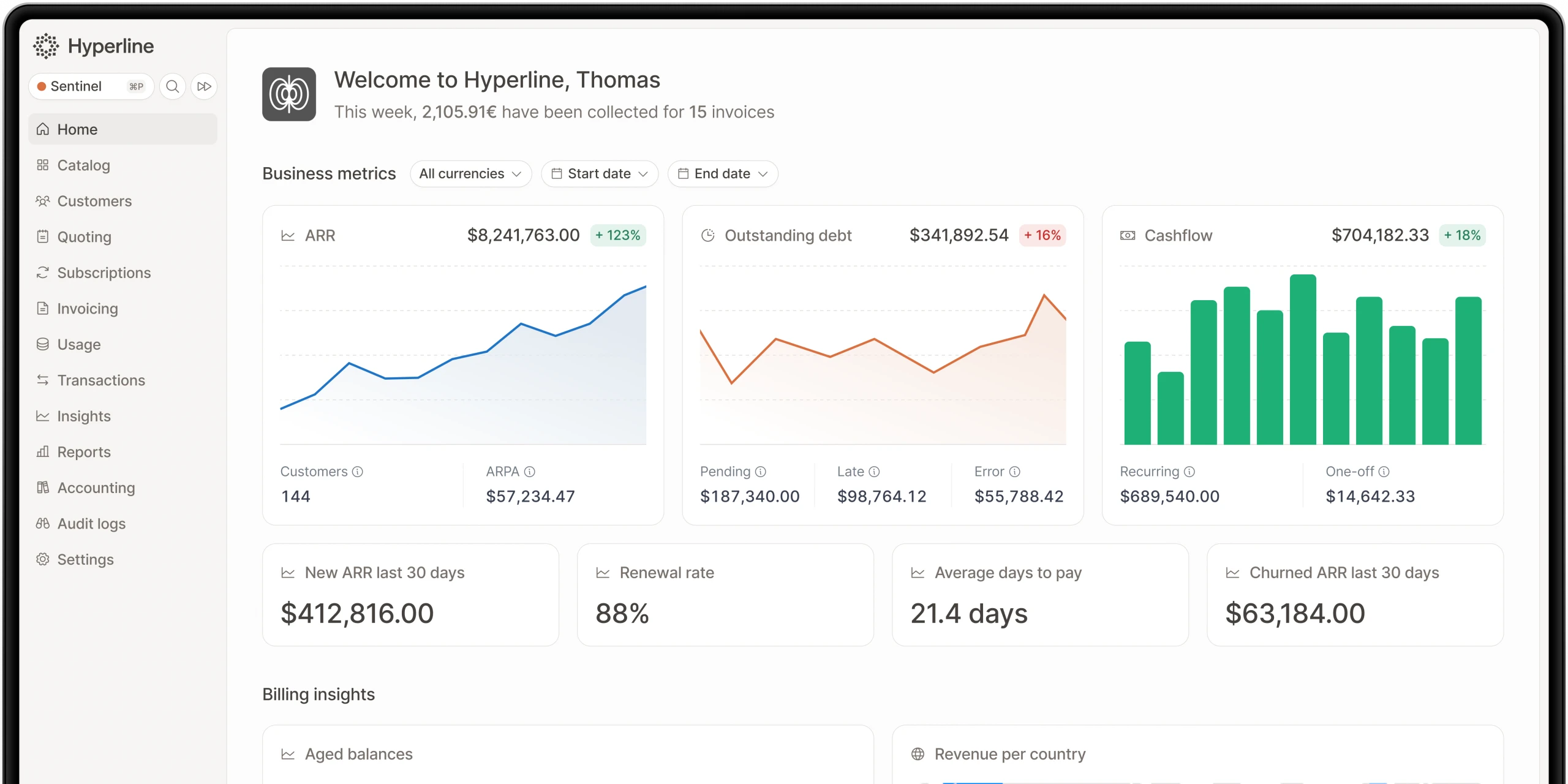
Think of billing as a module within a subscription management system. A platform like Hyperline unifies both, so that what your sales team quotes is exactly what finance invoices, with no reconciliation gaps in between.
How to choose the right subscription management software
1. Pricing model flexibility
Can the platform support your current models and the ones you'll experiment with next year? Look for native support for flat fees, usage-based pricing, tiered plans, and hybrid enterprise contracts.
2. Quote-to-cash alignment
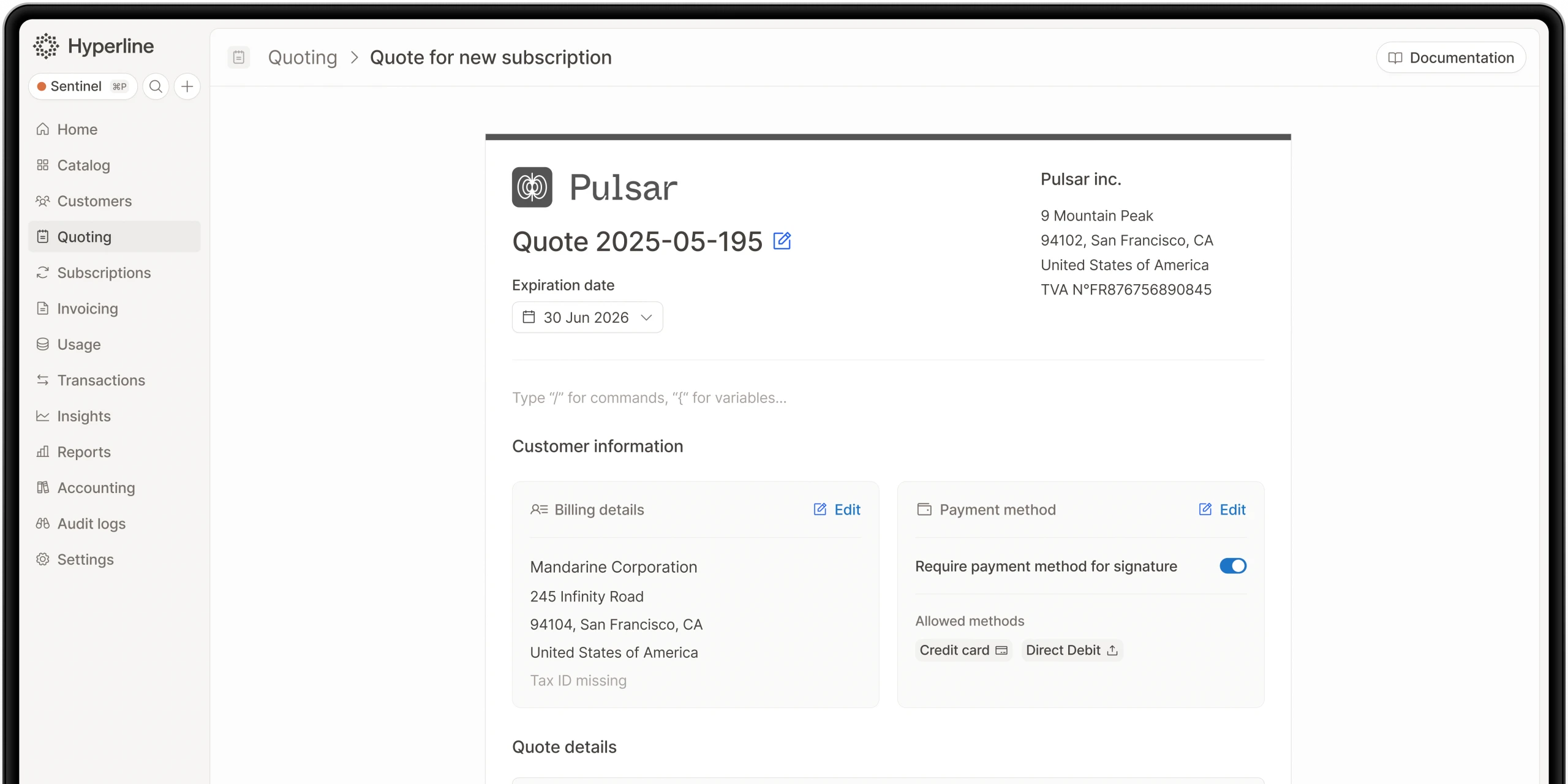
One of the most common sources of revenue leakage in SaaS is misalignment between what sales quotes and what finance invoices. The right platform closes that gap automatically.
3. Integrations
Your subscription management tool should connect seamlessly with your CRM, ERP, payment gateway, analytics stack, and data warehouse, without requiring custom engineering work.
4. Compliance and global readiness
If you operate across multiple markets, look for built-in e-invoicing compliance, VAT handling, and support for local payment methods.
5. Security and uptime
Subscription data is sensitive. Prioritize platforms that are SOC2, ISO 27001, and GDPR certified with enterprise-grade infrastructure reliability.
6. Speed of onboarding
Migrations are painful. A good platform should offer automated migration tooling and responsive support, not a six-month implementation project.
Why Hyperline is built for modern revenue management
Hyperline positions itself as the new standard for revenue management, a unified platform that connects every stage of the revenue journey, from CPQ through to cash collection and reconciliation.
- Every pricing model covered: Hyperline supports flat fees, usage-based billing, tiered pricing, and complex enterprise contracts, all within the same engine.
- Quote-to-cash in one system: Sales teams can send quotes directly from Hyperline; finance teams see exactly what was agreed. No spreadsheet handoffs, no invoice mismatches.
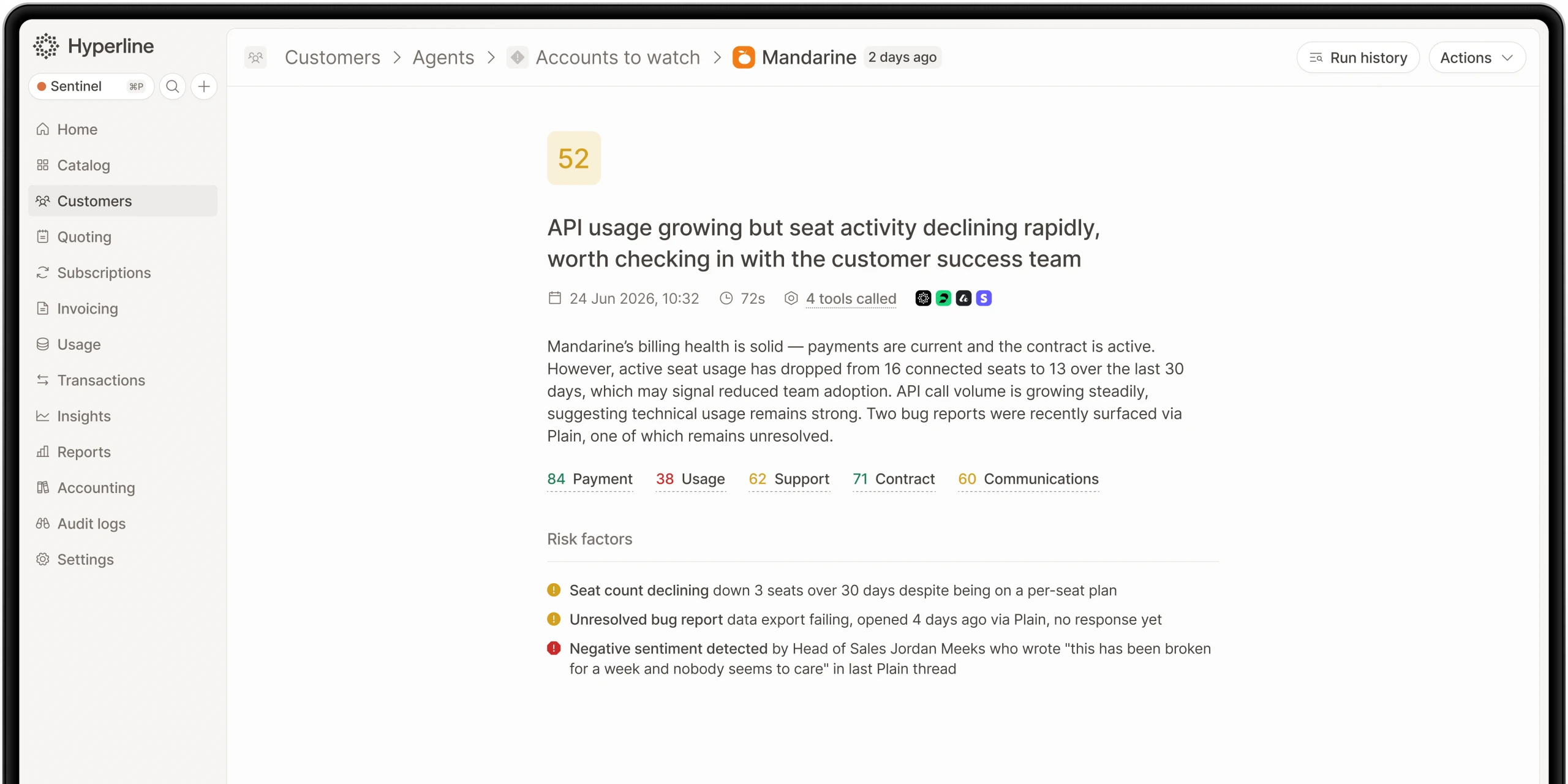
- AI-powered billing monitoring: Real-time alerts, smart payment retries, and AI monitoring built in from day one.
- Built-in global compliance: E-invoicing readiness across 80+ countries, SOC2, ISO27001 and GDPR certified.
- Zero engineering dependency: Finance and RevOps teams can operate independently, no engineering tickets required.
Conclusion
Subscription management is no longer a back-office function, it's a growth lever. The right platform removes the friction between what you sell and what you collect, letting you iterate on pricing without operational drag.
If your billing system is slowing down your revenue strategy, it might be time to rethink your stack.
Where this fits in Hyperline
Frequently asked questions
Yes. Hyperline connects to Stripe, GoCardless, Mollie, Airwallex, and bank transfers. It automates payment matching and reminders.
Hyperline is usage-native, which means our platform can ingest raw usage-data (through database connectors, API or CSV files) and run calculations on your behalf to find the right amount to invoice for each customer. You can start without a single line of code in a few minutes.
As SaaS companies grow, billing needs become more complex. HubSpot CPQ has limits: no quote-to-invoice automation, little pricing flexibility, basic reporting, manual revenue recognition, and no advanced subscription support.
Customers are charged based on how much they really use the service instead of fixed plans.
Hyperline is a billing platform for B2B SaaS. It automates quote-to-cash, supports usage-based pricing, manages revenue recognition, connects with HubSpot, and gives real-time revenue data.
Teams struggle with incomplete revenue reports, manual invoice creation, hard-to-manage contracts, weak accounting links, and too much work in spreadsheets.
HubSpot CPQ is a tool in HubSpot CRM that helps teams create quotes, manage simple subscriptions, and collect payments. It is made for small businesses and startups that want an easy quote-to-cash process.
HubSpot CPQ is free but costs time. Manual billing, custom integrations, and reporting errors make it expensive. Hyperline removes these issues.