Best billing solution for HubSpot users in 2026
HubSpot is where your revenue team lives. But when it comes to billing, most HubSpot users hit a wall. This guide breaks down what to look for, what to avoid, and which billing platform best serves HubSpot users in 2026.
Why HubSpot's native billing falls short
HubSpot offers a built-in quoting and invoicing tool, available to users who connect HubSpot Payments or Stripe. For simple, one-off transactions, it works well enough.
The problem arises when your business grows beyond that. If you are managing subscription renewals, handling usage-based billing, supporting multiple pricing tiers, or scaling internationally, HubSpot's native tools quickly become a bottleneck. There is no subscription management, no revenue recognition, and no support for consumption-based pricing models, all of which are standard requirements for modern SaaS businesses.
The solution is not to replace HubSpot. It is to connect it with a billing platform built for the complexity you actually face.
What makes a billing solution right for HubSpot users?
Before comparing options, it is worth defining what a good HubSpot billing integration actually needs to deliver:
Native two-way sync: Data should flow automatically between your CRM and your billing platform (contacts, deals, subscriptions, and invoices) without manual exports or third-party connectors like Zapier. A native integration eliminates the risk of data drift between your sales and finance systems.
Flexible pricing model support: Flat fees are easy. The challenge lies in handling usage-based billing, tiered pricing, per-seat models, hybrid contracts, and mid-cycle changes like upgrades or downgrades. Your billing platform needs to handle all of these without custom development.
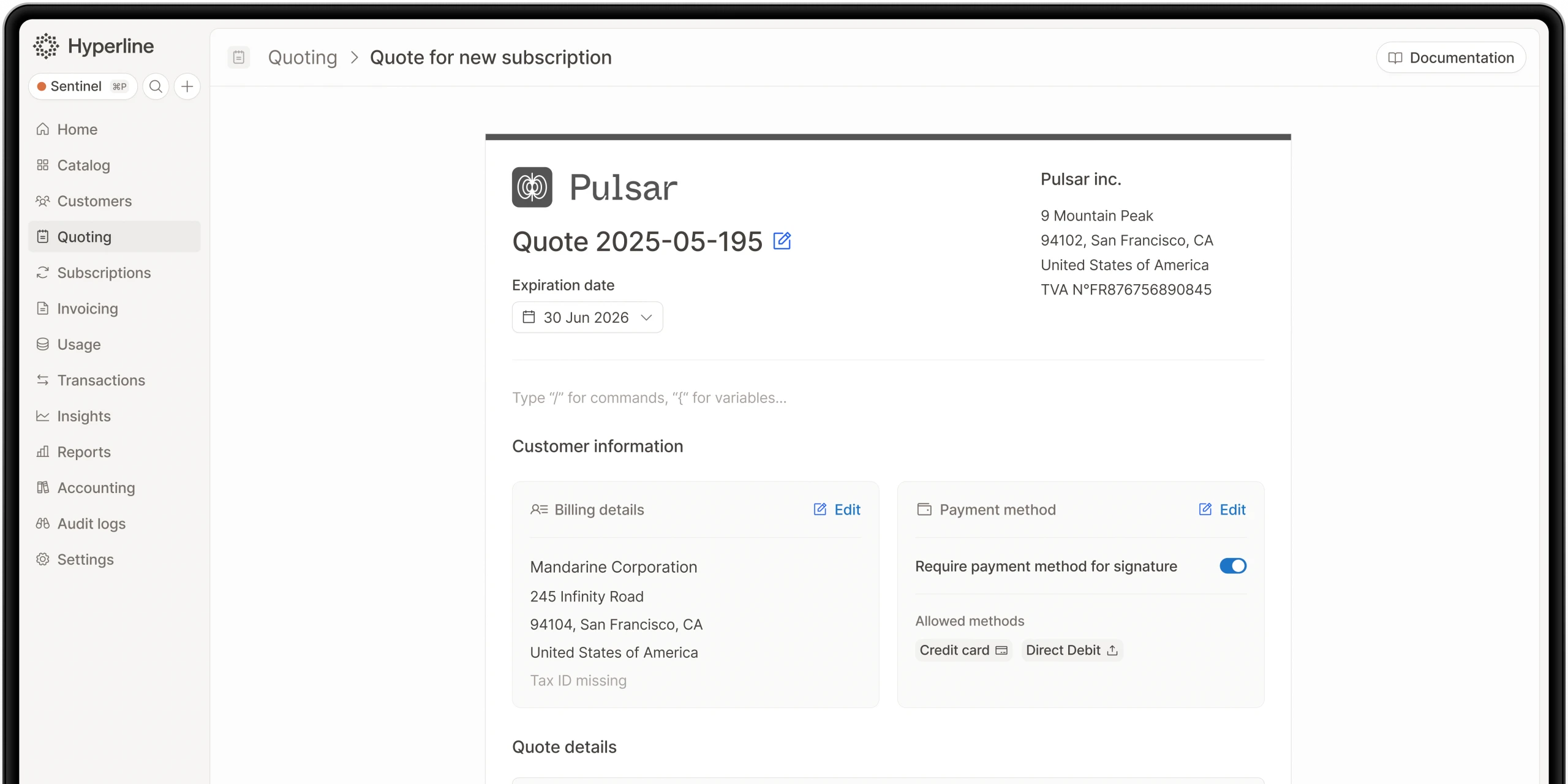
Automated quote-to-cash: The best integrations do not just create invoices, they automate the entire journey from a signed quote to a collected payment, with no manual handoffs between sales and finance.
Payment orchestration: Relying on a single payment provider creates risk and limits negotiating power. A billing platform that supports multiple providers (Stripe, Mollie, GoCardless, Airwallex) gives you flexibility and cost control as you scale.
Compliance and security: For businesses operating in Europe, GDPR compliance and enterprise-grade security are non-negotiable. Look for SOC 2 certification as a baseline.
Hyperline: The billing platform built for HubSpot users
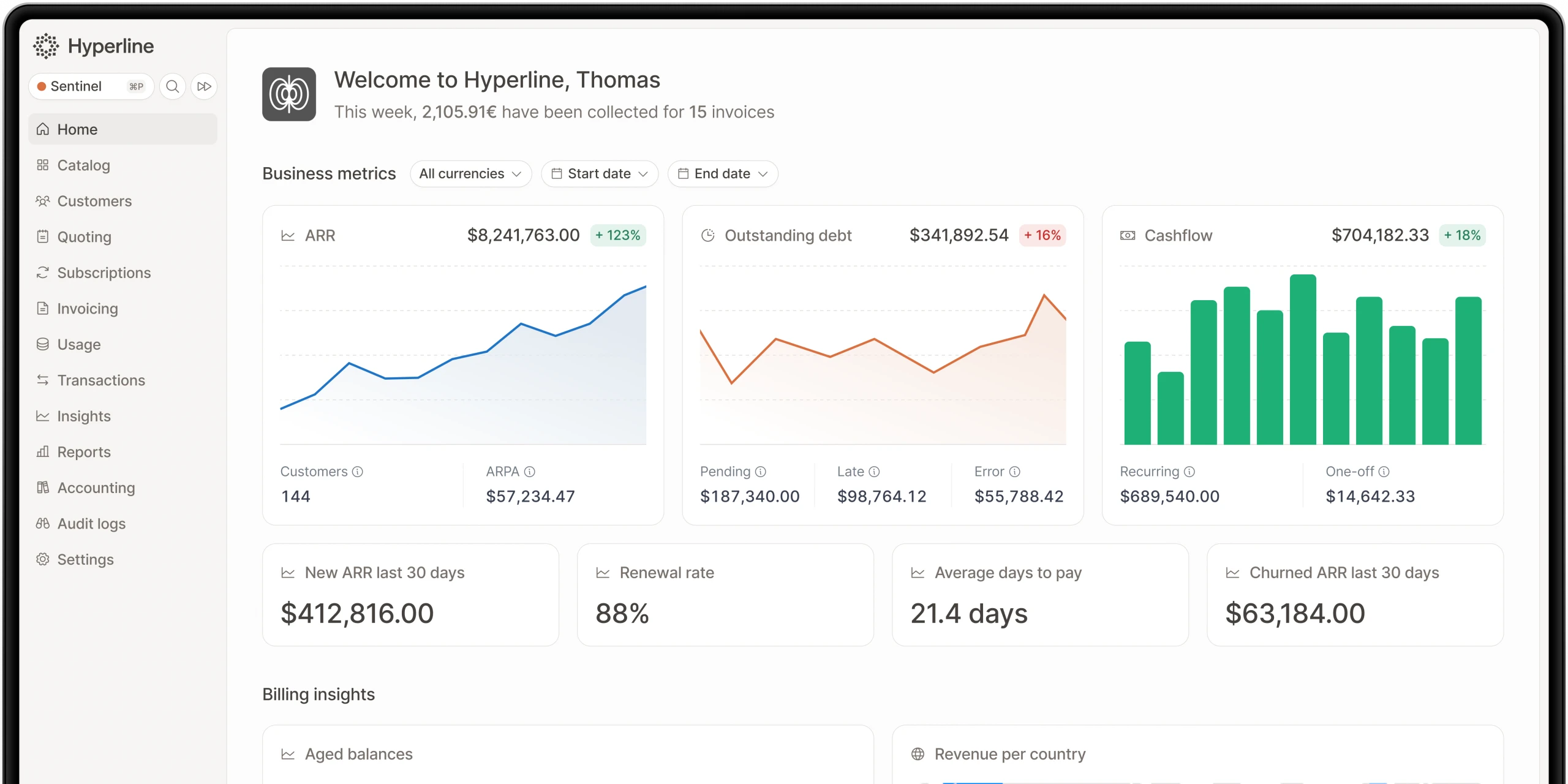
Among the billing solutions available to HubSpot users today, Hyperline stands out as the most comprehensive option for B2B SaaS companies with recurring revenue models.
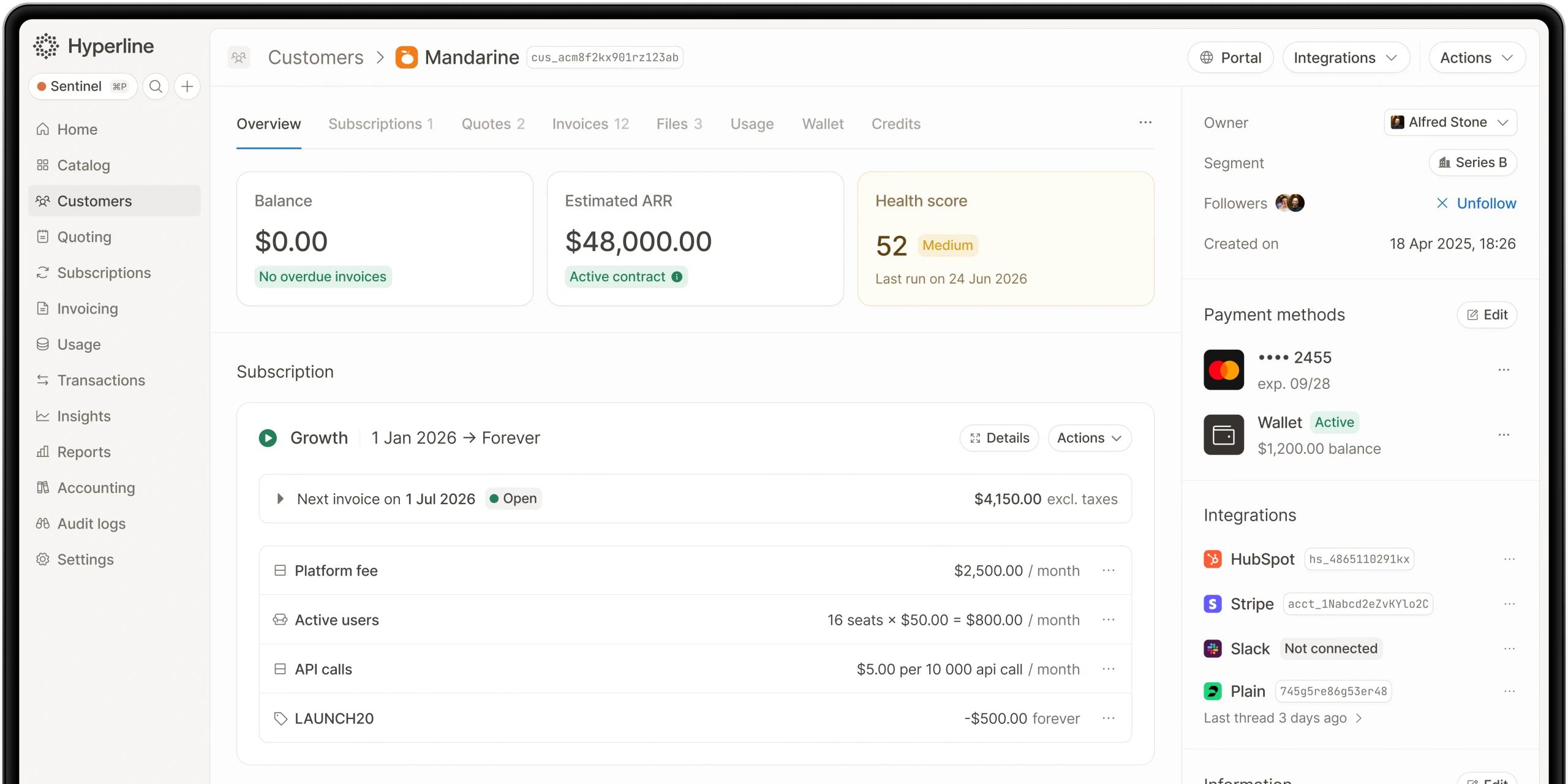
Hyperline was built from the ground up to handle the full revenue cycle, from CPQ and contract management to billing automation, payment collection, and revenue recognition, all in a single platform. Rather than bolting billing onto your CRM as an afterthought, Hyperline embeds directly inside HubSpot through a native widget, giving your sales team access to billing functionality without ever leaving their CRM.
What Hyperline does for HubSpot users:
- Embedded widget inside HubSpot: Sales teams can create quotes, manage subscriptions, and view billing status directly from deal and company records, with no need to switch between tools.
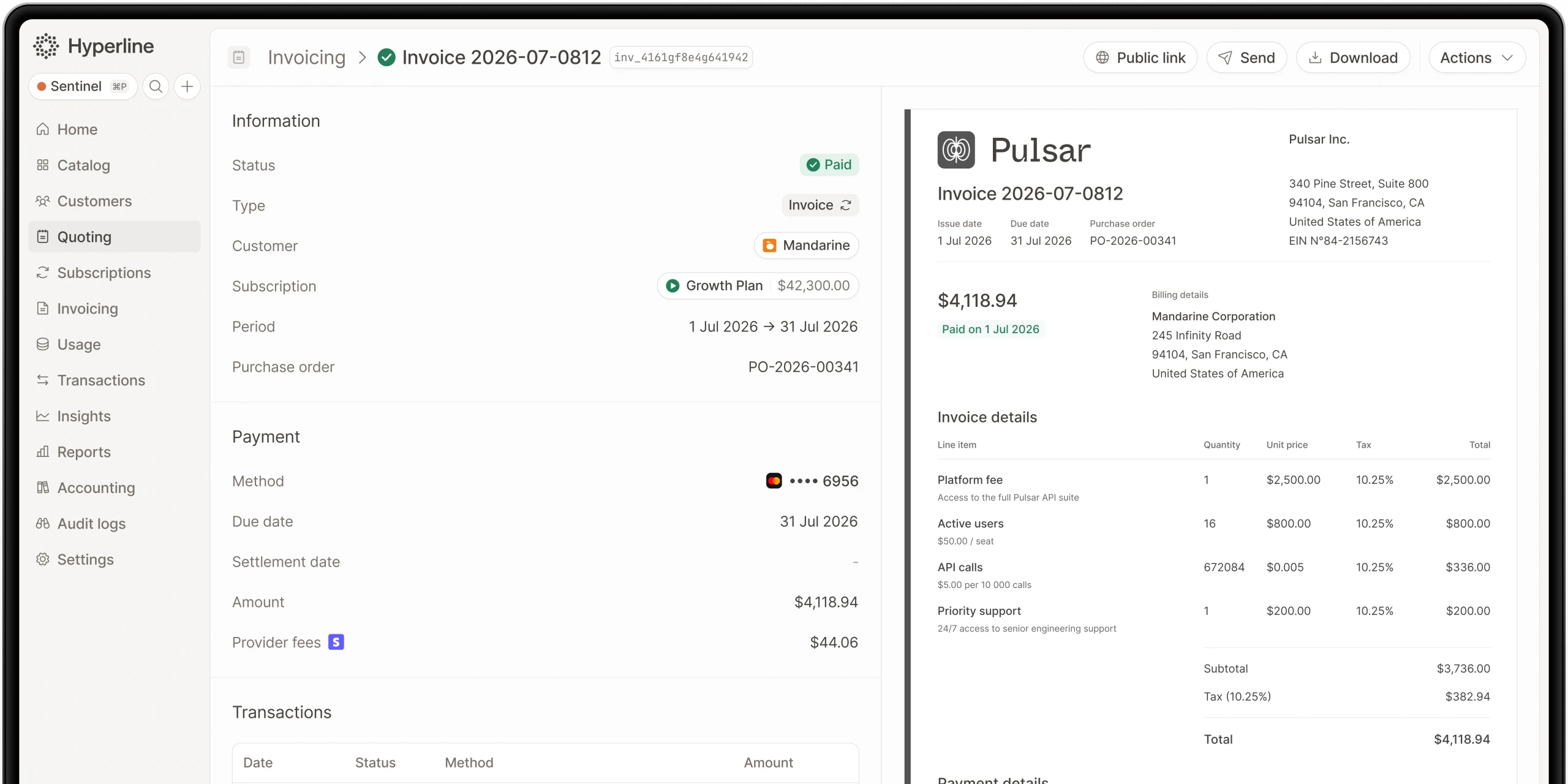
- Automated quote-to-cash: Once a quote is signed, Hyperline automatically creates the subscription, schedules invoicing, and handles payment collection. No manual handoffs.
- Any pricing model, out of the box: Flat fees, usage-based billing, tiered pricing, per-seat, hybrid contracts, and enterprise deals are all supported natively. Businesses can change pricing models without engineering support.
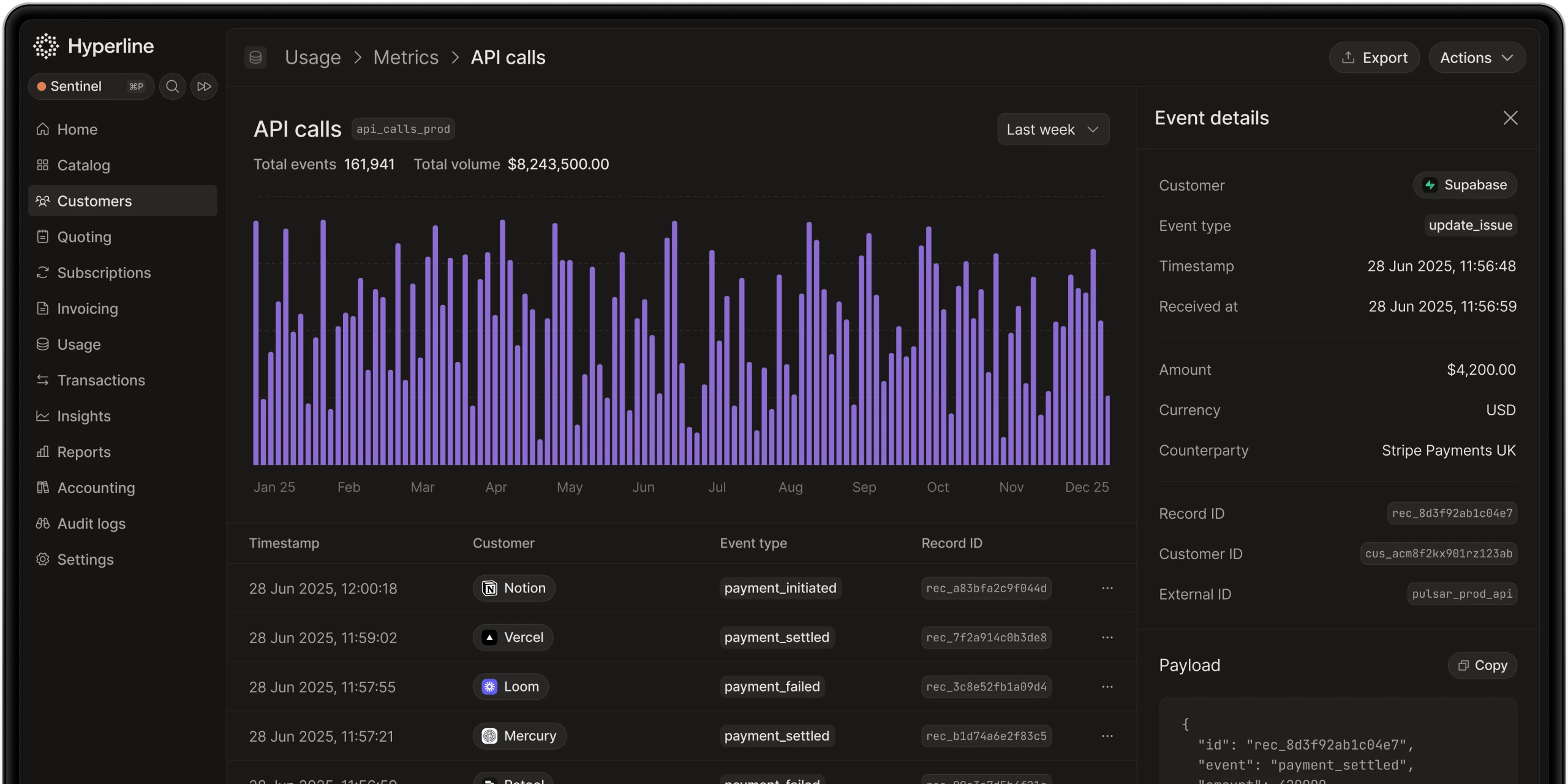
- Usage-native billing: Hyperline ingests raw usage data from database connectors (PostgreSQL, MongoDB, BigQuery, Snowflake), APIs, or CSV files and automatically calculates the correct invoice for each customer.
- Multi-provider payment orchestration: Connect Stripe, Mollie, GoCardless, and Airwallex simultaneously, and switch providers without disrupting billing operations.
- Global compliance: Hyperline is SOC 2 Type II and ISO 27001:2022 certified, and fully GDPR-compliant. It supports e-invoicing in 80+ countries and invoicing compliance in 100+ countries.
Customers including Malou, ScorePlay, and Formance use Hyperline to manage everything from pay-as-you-go billing to complex enterprise contracts. The platform is rated 4.9/5 on G2, with users consistently praising the speed of implementation and the ability to handle pricing models that other billing solutions cannot support.
Key questions to ask before choosing a billing platform
Does it support your current pricing model and your next one? Your billing platform should be flexible enough to evolve with your monetization strategy, not lock you into a fixed structure.
How long does implementation take? Lengthy, engineering-heavy integrations are costly. Hyperline is designed to go live in days, not months, with no engineering resources required for setup.
What happens post-invoice? Billing does not end when the invoice is sent. Look for built-in dunning, smart payment retries, and automated reminders to reduce involuntary churn and improve cash collection.
Conclusion
For HubSpot users running a recurring revenue business, the right billing platform is not optional, it is strategic. Manual invoicing creates errors. Disconnected systems slow down your sales cycle. And basic tools cannot support the pricing complexity that comes with growth.
Hyperline brings billing, subscriptions, payments, and revenue recognition into a single platform, natively connected to HubSpot. It is the most complete billing solution available to HubSpot users who are serious about scaling their revenue operations efficiently.
Where this fits in Hyperline
Frequently asked questions
As SaaS companies grow, billing needs become more complex. HubSpot CPQ has limits: no quote-to-invoice automation, little pricing flexibility, basic reporting, manual revenue recognition, and no advanced subscription support.
Hyperline is usage-native, which means our platform can ingest raw usage-data (through database connectors, API or CSV files) and run calculations on your behalf to find the right amount to invoice for each customer. You can start without a single line of code in a few minutes.
Yes. Hyperline connects to Stripe, GoCardless, Mollie, Airwallex, and bank transfers. It automates payment matching and reminders.
Teams struggle with incomplete revenue reports, manual invoice creation, hard-to-manage contracts, weak accounting links, and too much work in spreadsheets.
HubSpot CPQ is free but costs time. Manual billing, custom integrations, and reporting errors make it expensive. Hyperline removes these issues.
Setup is fast. It takes days or weeks, not months. Data migration is supported and works inside HubSpot.
Hyperline is a modern monetization and billing platform, covering everything from contracts to payment collection. Our solution is designed for software companies worldwide with recurring business models facing pricing and billing challenges such as usage metering, pricing iterations, and limited integrations. Whether you're implementing your first billing system or scaling a late-stage operation, we can assist you.
HubSpot CPQ is a tool in HubSpot CRM that helps teams create quotes, manage simple subscriptions, and collect payments. It is made for small businesses and startups that want an easy quote-to-cash process.