Hyperline vs Recurly
Recurly is built around recurring subscriptions. Teams that also need metered pricing, quoting and revenue recognition end up adding tools around it.
Ask your AI assistant about Hyperline vs Recurly
Get a second opinion from the assistant you already use. Pick a question and we open it there, ready to send.
Opens in a new tab.
Is Hyperline a better fit than Recurly for usage-based SaaS billing?
Hyperline is a billing, CPQ, and revenue recognition platform for SaaS companies pricing on usage, hybrid or seat-based models. Recurly has served subscription businesses for over a decade and is a reliable choice for a straightforward recurring model, with a reputation for fast implementation and a clean subscriber experience. It was built for recurring subscriptions rather than hybrid pricing with deep usage components, enterprise contracts with custom commits, quote-to-cash spanning sales and finance, or global e-invoicing. Hyperline covers that full lifecycle in one platform: quoting, contracts, billing, collections and recognition.
When subscriptions are only half the problem
Recurly is solid at what it was built for: recurring plans, dunning and payment retries. The gap opens when pricing stops being a flat monthly fee, or when sales needs to quote a custom deal and finance needs to recognize it.
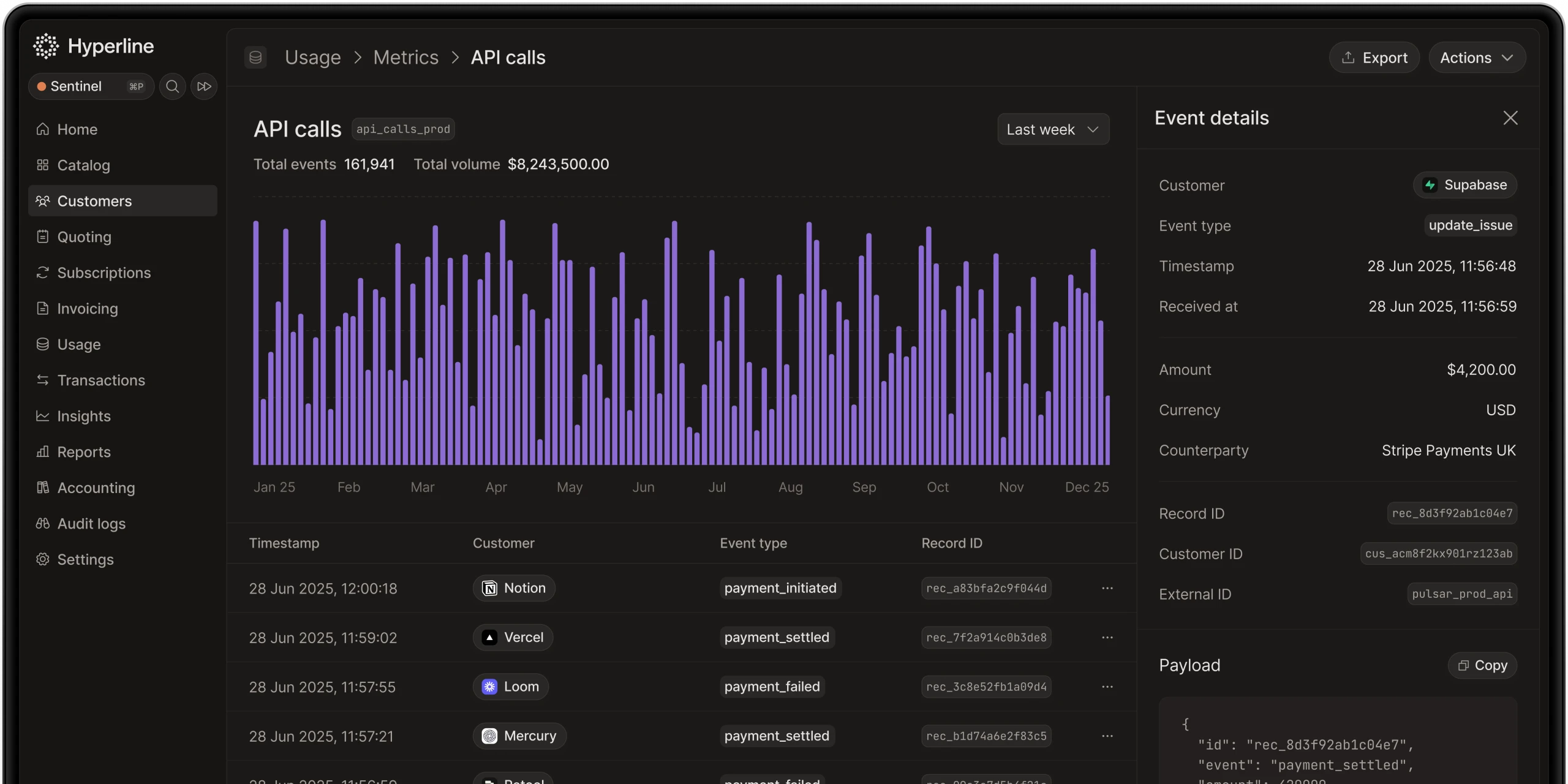
- Usage-based billing, metered pricing and prepaid credits on the same engine as subscriptions
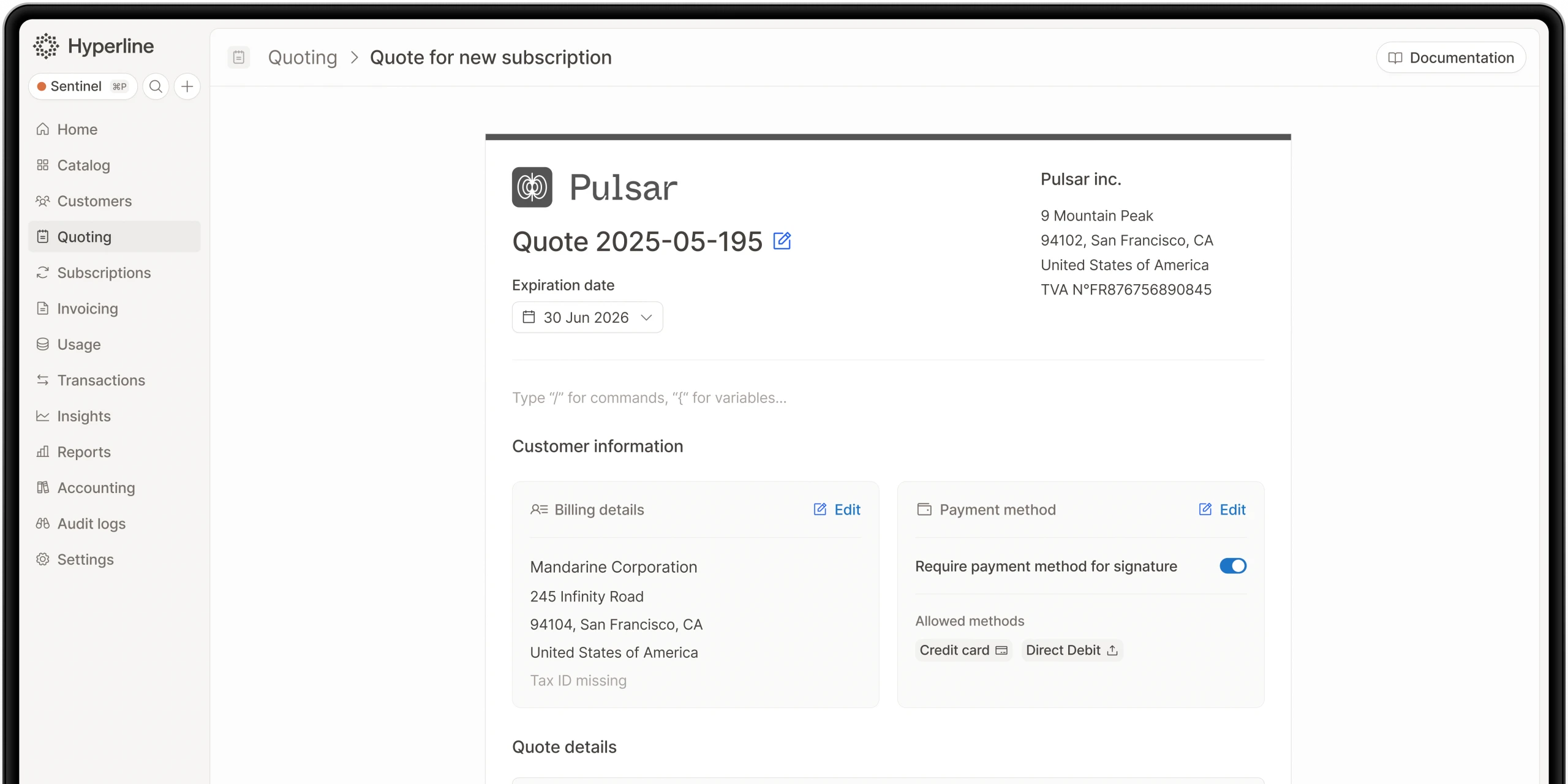
- CPQ inside your CRM, quotes, approvals and e-signature without a second tool
- Revenue recognition, ASC 606 and IFRS 15 schedules from the data that issued the invoice
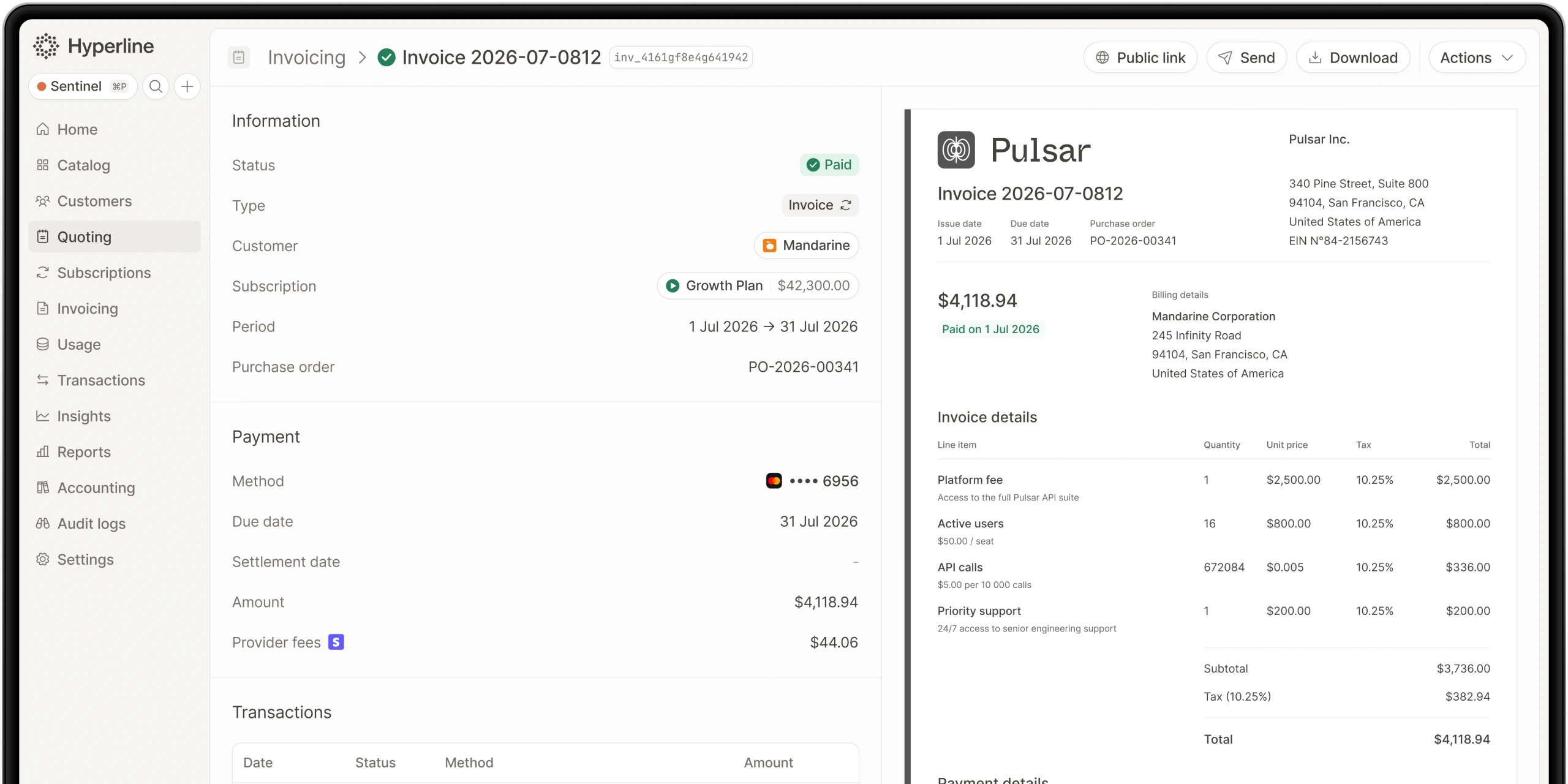
- One system, quote to cash to closed books, instead of subscriptions plus integrations
Where Hyperline and Recurly diverge
Recurly stops at the subscription
Recurly handles recurring invoices, dunning and subscriber retention well. Hybrid pricing with deep usage components, enterprise contracts with custom commits and quote-to-cash workflows that span sales and finance sit outside what it was built for. Hyperline meters usage in real time and bills it on the same engine as subscriptions, seats and credits, with a native credit ledger carrying top-ups, auto-reload and projected-balance webhooks.
Quoting and billing are one system, not two
Where Recurly focuses on subscription billing and retention, Hyperline covers the full revenue lifecycle. Quotes are built in Salesforce, HubSpot or Attio with ramps, multi-year terms and multi-step approvals, and the signed contract creates the subscription and the first invoice without a handoff.
Global invoicing and recognition are included
Tax across 80+ countries, Chorus Pro and Peppol e-invoicing, and per-line ASC 606 / IFRS 15 schedules with journal entries and waterfall reports are part of the platform, so the numbers finance reports come from the system that issued the invoice.
Frequently asked questions
Hyperline suits SaaS companies whose pricing has outgrown a straightforward recurring model — usage-based or hybrid pricing, enterprise contracts with custom commits, or quote-to-cash spanning sales and finance.
Recurly was built for recurring subscriptions rather than hybrid pricing with deep usage-based components. Teams pricing on consumption typically pair it with other tools or move to a platform that meters and bills usage natively.
Yes. Native CPQ with e-signature and approvals, and ASC 606 / IFRS 15 revenue recognition, are part of the platform rather than separately licensed products.
Hyperline's solution engineers run the migration, and teams are typically live in weeks. Existing customers, subscriptions and invoices are imported rather than re-keyed.