Why the Hyperline and Attio integration sets a new standard for CRM and revenue management
Revenue teams no longer want disconnected tools. They want systems that work together naturally, without friction, manual processes, or data gaps. The integration between Hyperline and Attio was built with this exact goal in mind.By connecting a modern CRM with a powerful revenue and CPQ platform, Hyperline and Attio create a unified environment where sales, finance, and operations teams can manage the entire revenue lifecycle in one place.This article explains what the Hyperline and Attio integration enables and why it stands out as one of the best CRM and CPQ integrations available today.
What the Hyperline and Attio integration enables
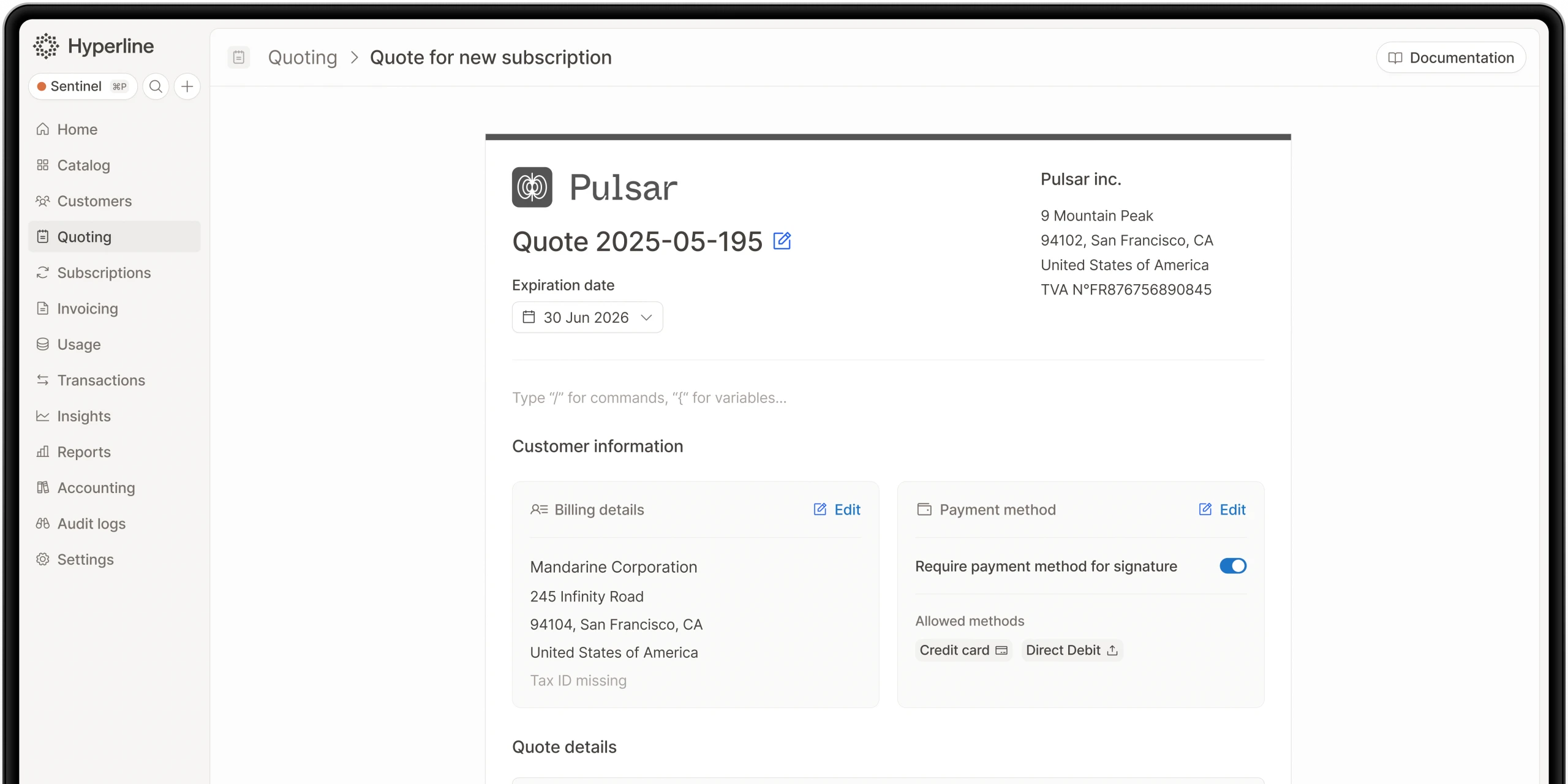
The Hyperline and Attio integration connects CRM data with pricing, subscriptions, and billing workflows. Instead of treating CRM and revenue management as separate layers, the integration brings them together into a single operational flow.
With this integration, teams can:
- Create and manage quotes directly from Attio
- Access CPQ logic without leaving the CRM
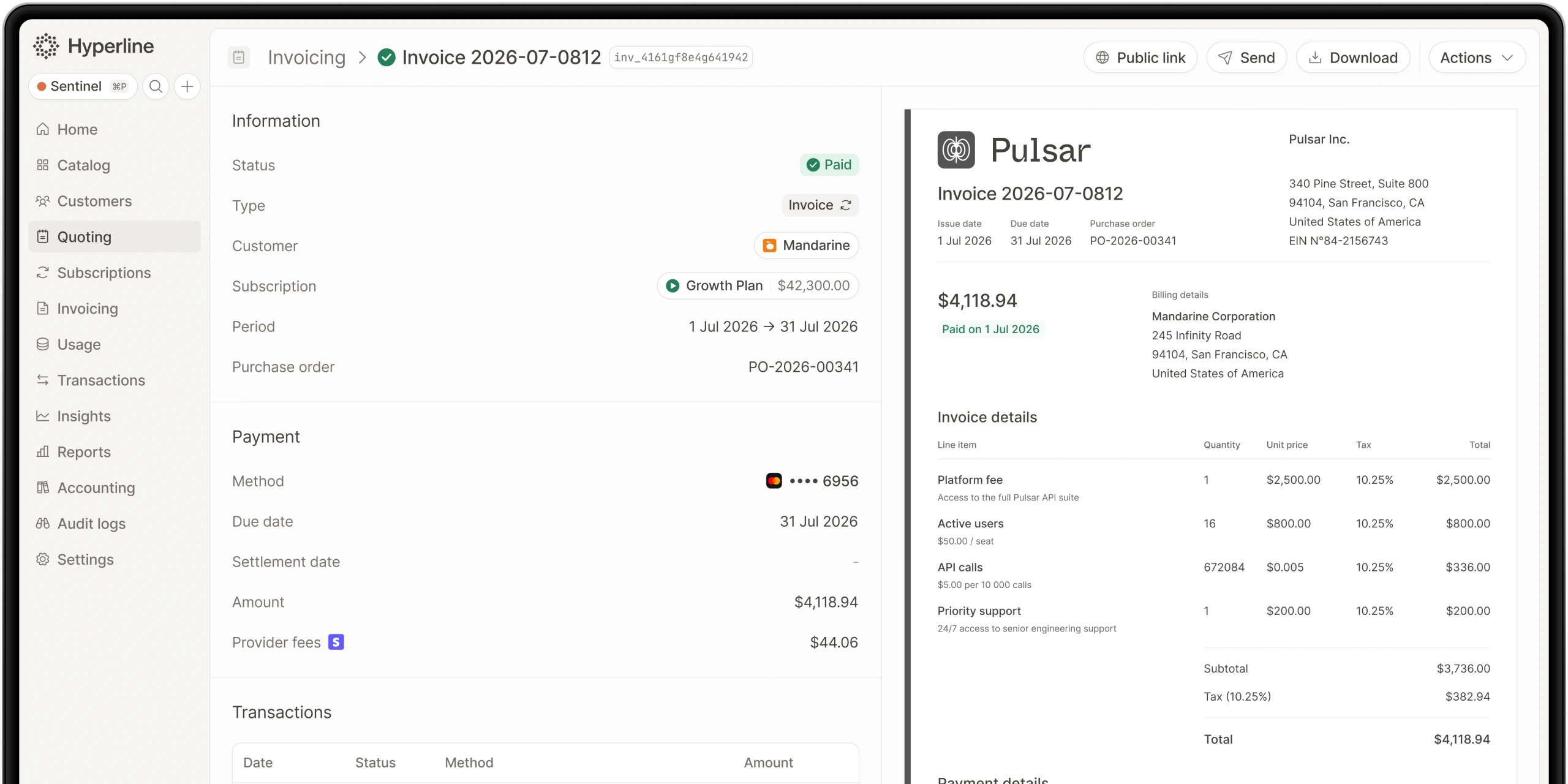
- View subscriptions, invoices, and revenue data inside Attio
- Trigger billing workflows based on CRM deal stages
- Keep CRM data aligned with actual revenue activity
This eliminates the traditional gap between pipeline data and real financial outcomes.
Embedded revenue workflows inside the CRM
One of the key strengths of the integration is how deeply Hyperline is embedded inside Attio.
Hyperline actions and widgets appear directly within Attio records, allowing users to:
- Launch quote creation from a deal view
- See active subscriptions and recurring revenue at a glance
- Navigate to full Hyperline pages when deeper configuration is needed
Sales teams stay inside their CRM while accessing advanced revenue capabilities that would normally require switching tools.
A single source of truth for revenue data
Disconnected systems often lead to inconsistent data. Deals in the CRM do not always match invoices, subscriptions, or actual revenue.
The Hyperline and Attio integration solves this by synchronizing key objects such as:
- Quotes
- Subscriptions
- Invoices
- Products and line items
This synchronization ensures that CRM records reflect what is truly happening on the billing side. Revenue operations teams can trust the data they see and use it for reporting, forecasting, and automation.
Built for modern pricing and revenue models
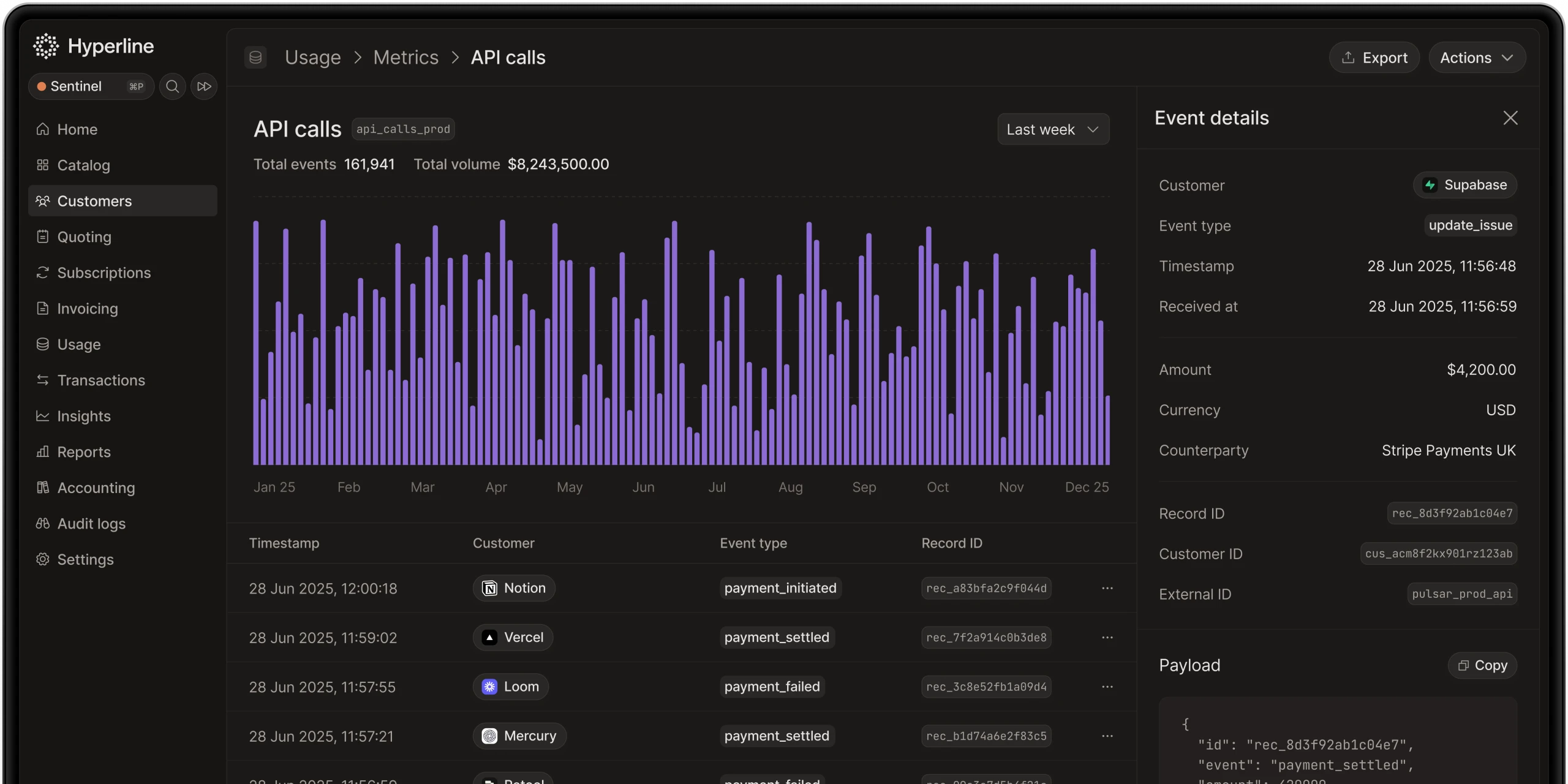
Many CRM integrations struggle when pricing becomes complex. Hyperline was designed specifically to handle modern revenue models, including subscriptions, recurring billing, and flexible pricing structures.
Through the integration, Attio users gain access to:
- Advanced CPQ logic
- Subscription based pricing
- Multi phase and custom pricing setups
- Automated invoice generation
All pricing rules are managed centrally in Hyperline while remaining fully accessible from Attio.
Why this integration is better than traditional CRM integrations
Most CRM integrations focus on basic data sync. They move fields from one system to another but leave workflows fragmented.
The Hyperline and Attio integration goes further by focusing on execution, not just data.
It stands out because it:
- Embeds revenue actions directly in the CRM interface
- Supports the full quote to cash lifecycle
- Reduces manual handoffs between sales and finance
- Adapts to complex pricing without custom development
Instead of forcing teams to adapt to rigid workflows, the integration adapts to how modern revenue teams operate.
Designed for sales, finance, and revenue operations
This integration is not built for a single team. It aligns all revenue stakeholders around the same system.
- Sales teams create accurate quotes faster
- Finance teams control pricing and billing logic
- Revenue operations teams maintain clean data and automation
Everyone works from the same source of truth, reducing friction and improving collaboration.
Faster sales cycles and better revenue control
By connecting Attio and Hyperline, companies reduce delays in the sales process and gain better control over revenue execution.
Deals move faster because:
- Quotes are generated instantly with approved pricing
- Billing is triggered automatically after deal closure
- Revenue data is visible immediately in the CRM
This speed and accuracy directly impact cash collection and customer experience.
Conclusion
The Hyperline and Attio integration is more than a technical connection between two tools. It is a revenue operating system that unifies CRM, CPQ, subscriptions, and billing into a single workflow.
By embedding Hyperline’s revenue capabilities inside Attio, teams gain clarity, efficiency, and scalability. For companies looking to manage complex pricing, automate quote to cash, and maintain a clean CRM, this integration sets a new standard.
Where this fits in Hyperline
Frequently asked questions
LedgerUp is focused on the post-signature handoff: getting from a signed contract to a first invoice quickly. It does not include native CPQ, and its global e-invoicing and revenue recognition depth are limited compared to a full quote-to-cash platform, so teams that scale into hybrid pricing or larger, multi-country contracts typically re-evaluate.
It depends on pricing complexity. Simple, flat subscription pricing can run acceptably on separate best-of-breed tools connected by integrations. Once pricing includes usage-based or hybrid components, or deal sizes require approval workflows and e-signature, the reconciliation cost of stitched-together tools tends to outweigh the flexibility of picking each piece independently.
No. Conga CPQ is built for configuration depth on multi-line, rule-heavy quotes, historically tied closely to Salesforce. Billing and usage metering live outside the product, so it typically functions as the quoting layer in front of a separate billing system rather than a complete quote-to-cash platform on its own.
No. DealHub is a sales-side CPQ and contract lifecycle management tool, strong at quote building, redlining, and e-signature. Billing, usage metering, and revenue recognition are not native, so teams pair it with a separate billing platform and manage the handoff between the two.
Billing software converts an existing subscription or contract into invoices. Quote-to-cash software covers the full process before and after that: configuring a quote, getting it approved and signed, billing it correctly (including usage-based components), collecting payment, and recognizing revenue. A billing tool can be one part of a quote-to-cash stack; on its own, it isn't the whole thing.
As SaaS companies grow, billing needs become more complex. HubSpot CPQ has limits: no quote-to-invoice automation, little pricing flexibility, basic reporting, manual revenue recognition, and no advanced subscription support.
It varies widely by platform and by how much configuration a business needs. Enterprise-grade, highly configurable platforms like Zuora, Oracle CPQ, or Salesforce Revenue Cloud commonly run several months. Platforms built around a narrower, more opinionated setup, including Hyperline's roughly two-month target, tend to move faster because there's less to configure from scratch.
Hyperline is the strongest fit for B2B SaaS companies with usage-based, tiered, or hybrid pricing that need CPQ, billing, and revenue recognition unified in one platform instead of three separate systems. For simple, seat-based pricing already running on Salesforce, or if the only need is post-signature contract handoff automation like LedgerUp provides, a different platform is a better starting point.