Why companies are moving from Salesforce CPQ to modern billing platforms ?
For SaaS companies managing complex subscription and billing operations, Salesforce CPQ and Billing have long been the default choice. But as businesses scale and pricing models become more sophisticated, many are discovering that traditional CPQ systems come with significant licensing costs, implementation complexity, and ongoing maintenance burdens that modern alternatives can solve more efficiently.
Understanding Salesforce CPQ and Billing licensing
Salesforce CPQ is a per-user add-on that sits on top of base Salesforce licenses. The platform comes in two editions: Standard CPQ at approximately $75 per user per month, and CPQ+ at around $150 per user per month for advanced features like complex approvals and guided selling. Salesforce Billing, which handles invoice generation and payment processing, typically requires CPQ+ and adds additional costs, often bundled as Revenue Cloud at roughly $200 per user per month.
The licensing model requires that any user creating or editing quotes must have a named CPQ license. This means organizations with 50 sales representatives might need to purchase 50 CPQ licenses, even if only a subset actively uses the advanced features. Additionally, Salesforce typically enforces a 10-user minimum purchase requirement for these add-ons.
Hidden costs beyond licensing
The total cost of ownership extends far beyond license fees. Organizations must account for implementation costs, which can be substantial given CPQ's complexity, ongoing administration requiring dedicated staff, integration development with ERP and other systems, additional data storage as billing records accumulate, and potential premium support requirements for mission-critical quote-to-cash processes.
Many companies also discover they need to purchase additional Salesforce licenses for finance team members who manage billing operations, further increasing costs. While these users might only need Platform licenses rather than full Sales Cloud licenses, the expenses quickly compound.
Common licensing strategies and their limitations
To manage costs, some organizations implement a "quoting desk" model, where only specialized team members receive CPQ licenses and handle configurations for the broader sales team. Others mix Standard and CPQ+ licenses, reserving the more expensive tier for power users. However, these workarounds introduce process friction, create bottlenecks in the sales cycle, and can ultimately slow deal velocity.
The complexity doesn't stop there. Companies must carefully monitor license usage, reassign licenses when employees leave, and constantly evaluate whether their license allocation matches actual needs. This administrative overhead requires ongoing attention from IT and operations teams.
The modern alternative: purpose-built billing platforms
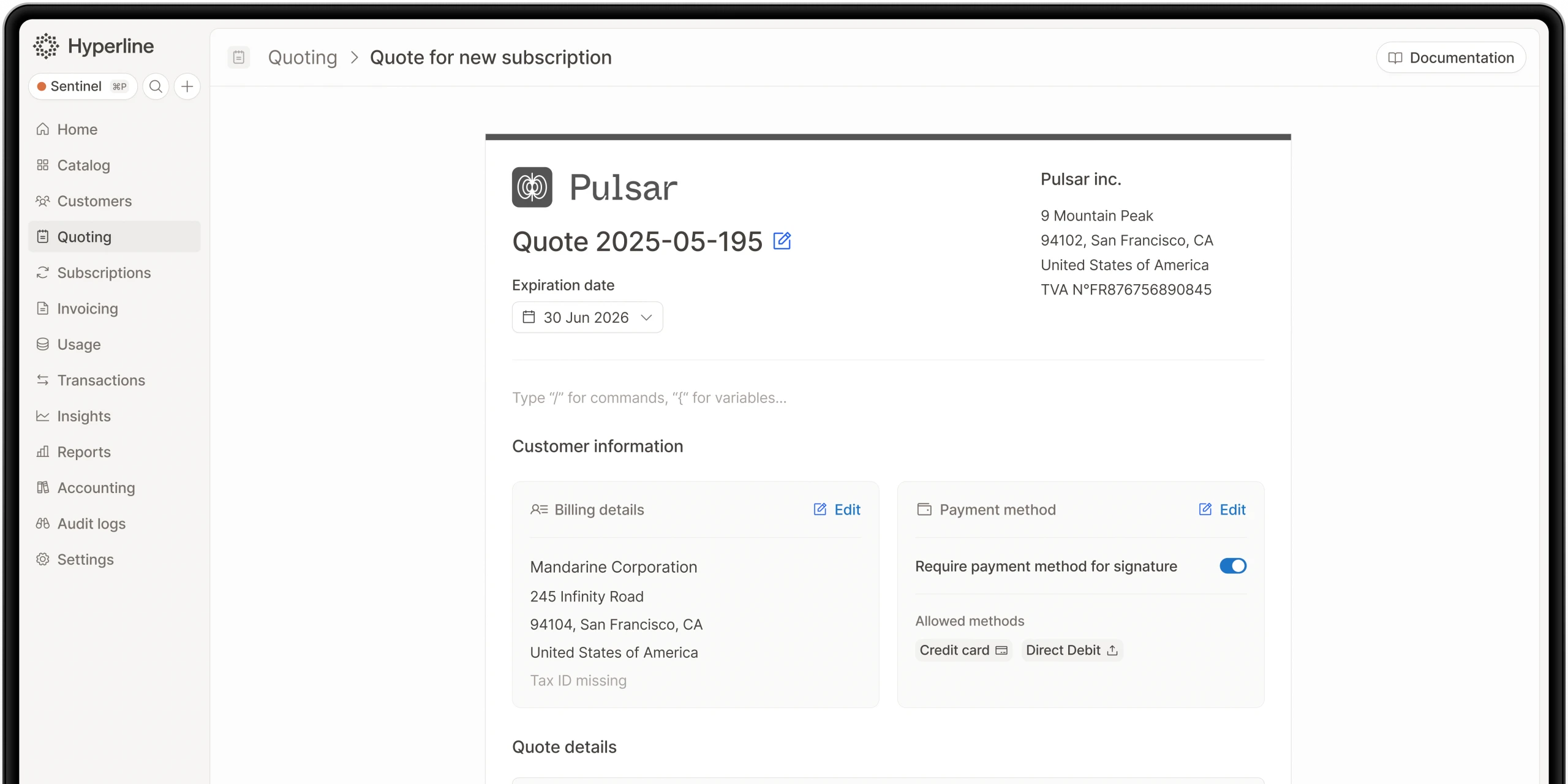
Hyperline offers a comprehensive quote-to-cash platform designed specifically for B2B SaaS businesses, helping finance, sales, engineering, and leadership teams stay connected through one unified system that simplifies the entire revenue process.
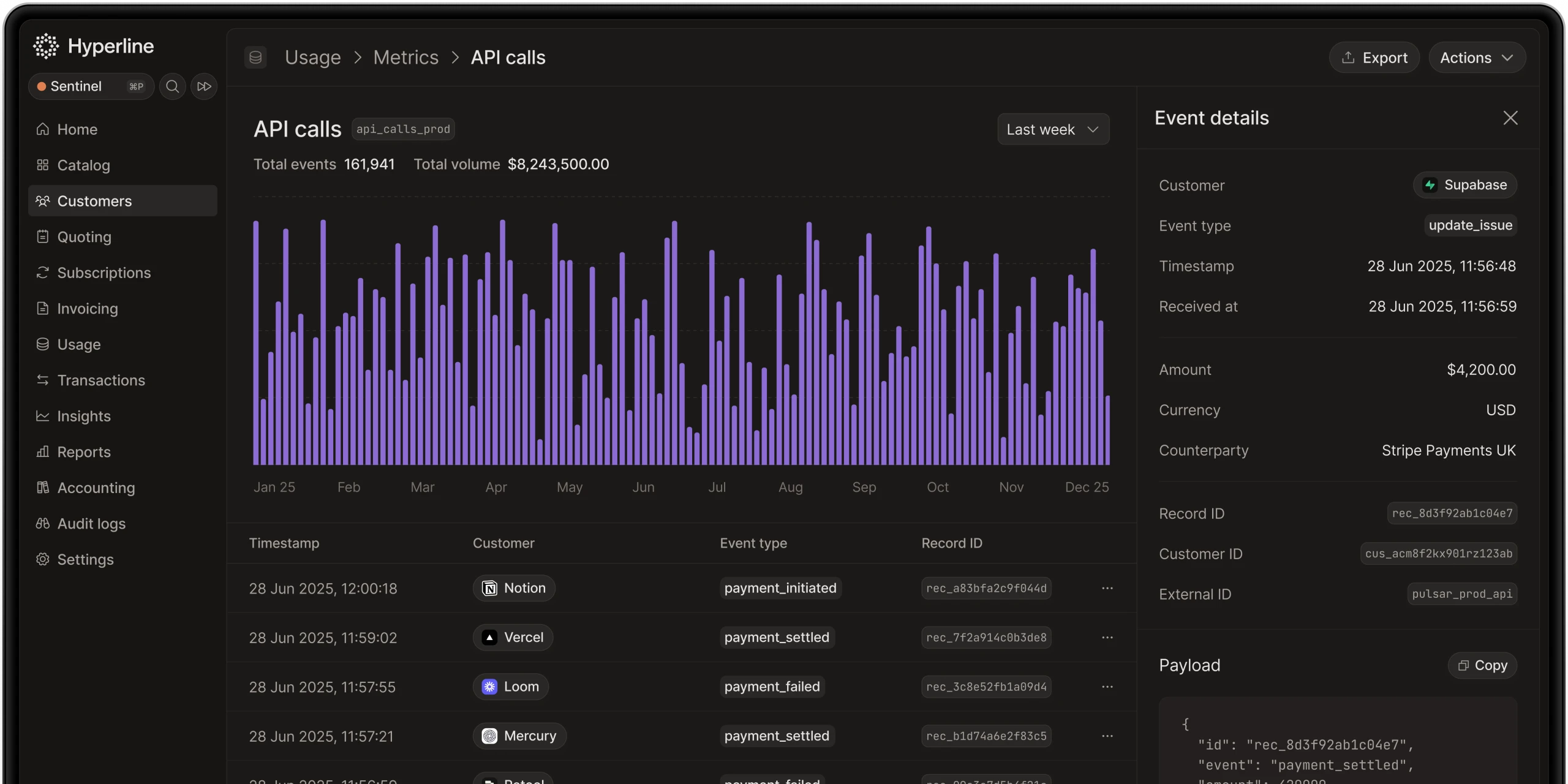
Unlike Salesforce's per-user licensing model, Hyperline provides robust CPQ capabilities with user-friendly interfaces and seamless integration with existing systems, streamlining the entire process from quoting to cash collection. The platform handles every pricing model, from usage-based to flat fees, with powerful price books, custom rules, and native localization that scales across currencies, languages, and product tiers.
Key advantages over traditional CPQ systems
Hyperline's CPQ functionality integrates natively with CRMs like Salesforce and HubSpot, with setup possible in under a minute. Rather than requiring extensive implementation projects and dedicated CPQ administrators, the platform reduces time spent on billing by up to 90%, eliminating the need for external integrators.
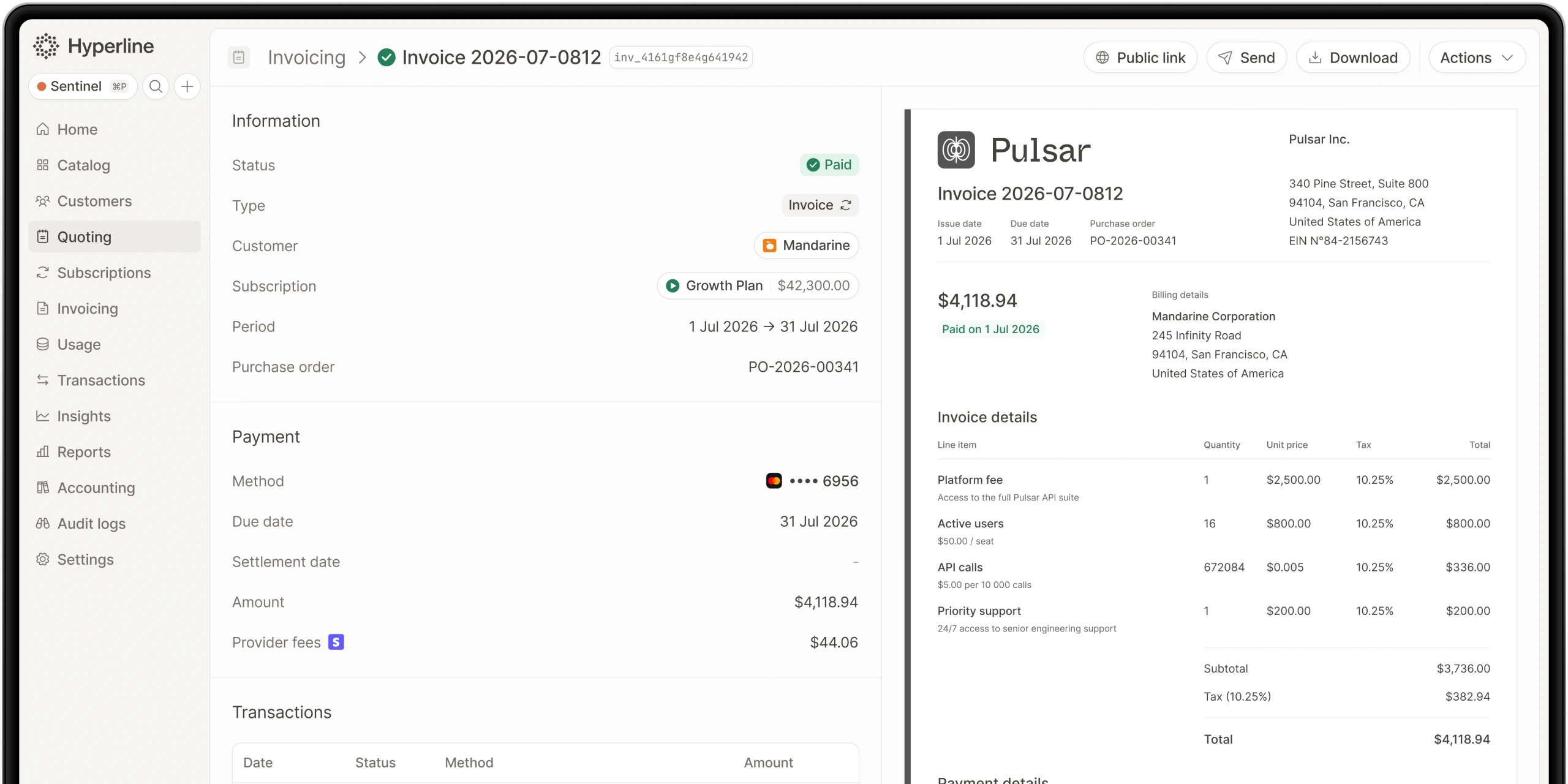
Hyperline consolidates the eight essential steps of the quote-to-cash process into a single platform: quote generation, contract signing with automated online workflows, automatic subscription creation, automated invoice sending, automated email reminders, automated revenue recognition, real-time KPIs, and seamless integration with complementary analytics tools.
The platform's approach to integration differs fundamentally from Salesforce's model. Hyperline connects to CRMs (Salesforce, HubSpot), accounting tools (Pennylane, Xero, NetSuite, QuickBooks), analytics platforms (ChartMogul), operations tools (Zapier), and data stores (Segment, PostgreSQL, BigQuery, Snowflake), creating an ecosystem that works with your existing stack rather than requiring you to build custom integrations.
Rethinking your quote-to-cash infrastructure
For organizations evaluating their CPQ and billing strategy, the question isn't simply about license optimization within Salesforce. It's about whether a complex, implementation-heavy platform originally designed for general CRM purposes is the right foundation for specialized billing operations.
Modern billing platforms like Hyperline have been built from the ground up for automation, designed for teams that don't want to manually process invoices, send reminders, or create quotes. The platform enables non technical teams to manage the end-to-end billing process autonomously, with fast setup and high flexibility.
Rather than spending time managing license assignments, negotiating complex contracts, maintaining integrations, and troubleshooting CPQ managed packages, businesses can focus on what matters: closing deals faster and collecting revenue more efficiently. The shift from traditional CPQ licensing models to purpose-built billing platforms represents not just a cost optimization, but a fundamental reimagining of how quote-to-cash infrastructure should work in modern SaaS businesses.
Where this fits in Hyperline
Frequently asked questions
LedgerUp is focused on the post-signature handoff: getting from a signed contract to a first invoice quickly. It does not include native CPQ, and its global e-invoicing and revenue recognition depth are limited compared to a full quote-to-cash platform, so teams that scale into hybrid pricing or larger, multi-country contracts typically re-evaluate.
As SaaS companies grow, billing needs become more complex. HubSpot CPQ has limits: no quote-to-invoice automation, little pricing flexibility, basic reporting, manual revenue recognition, and no advanced subscription support.
It depends on pricing complexity. Simple, flat subscription pricing can run acceptably on separate best-of-breed tools connected by integrations. Once pricing includes usage-based or hybrid components, or deal sizes require approval workflows and e-signature, the reconciliation cost of stitched-together tools tends to outweigh the flexibility of picking each piece independently.
Hyperline is the strongest fit for B2B SaaS companies with usage-based, tiered, or hybrid pricing that need CPQ, billing, and revenue recognition unified in one platform instead of three separate systems. For simple, seat-based pricing already running on Salesforce, or if the only need is post-signature contract handoff automation like LedgerUp provides, a different platform is a better starting point.
Salesforce Revenue Cloud's strength is CPQ configurability inside the Salesforce ecosystem. Usage-based and consumption billing is a comparatively newer layer than its quoting core, and the platform generally requires meaningful Salesforce admin and implementation investment to configure well for hybrid pricing.
It varies widely by platform and by how much configuration a business needs. Enterprise-grade, highly configurable platforms like Zuora, Oracle CPQ, or Salesforce Revenue Cloud commonly run several months. Platforms built around a narrower, more opinionated setup, including Hyperline's roughly two-month target, tend to move faster because there's less to configure from scratch.
No. Conga CPQ is built for configuration depth on multi-line, rule-heavy quotes, historically tied closely to Salesforce. Billing and usage metering live outside the product, so it typically functions as the quoting layer in front of a separate billing system rather than a complete quote-to-cash platform on its own.
No. DealHub is a sales-side CPQ and contract lifecycle management tool, strong at quote building, redlining, and e-signature. Billing, usage metering, and revenue recognition are not native, so teams pair it with a separate billing platform and manage the handoff between the two.