Value-based and usage-based pricing: how SaaS teams get it right
Value-based and usage-based pricing models are increasingly common in modern SaaS. These models aim to align what customers pay with the value they receive. While the pricing strategy may be clear, execution is often the hardest part.For SaaS teams, success with usage-based pricing depends on how well usage data is translated into revenue operations.
What value-based and usage-based pricing really mean
Value-based pricing ties price to the value delivered to the customer. Usage-based pricing uses measurable consumption as a proxy for that value.
In practice, usage-based pricing is a revenue model, not just a pricing decision. It directly affects billing, forecasting, and revenue operations.
Why usage-based pricing changes revenue operations
With usage-based pricing, revenue is no longer static. Billing amounts vary based on customer activity, and revenue grows as usage grows.
This shift increases pressure on RevOps and Finance teams. Revenue processes must handle variability without losing accuracy or visibility.
The operational challenge behind usage-based models
Adopting usage-based pricing introduces operational complexity that goes beyond product analytics.
Measuring usage consistently
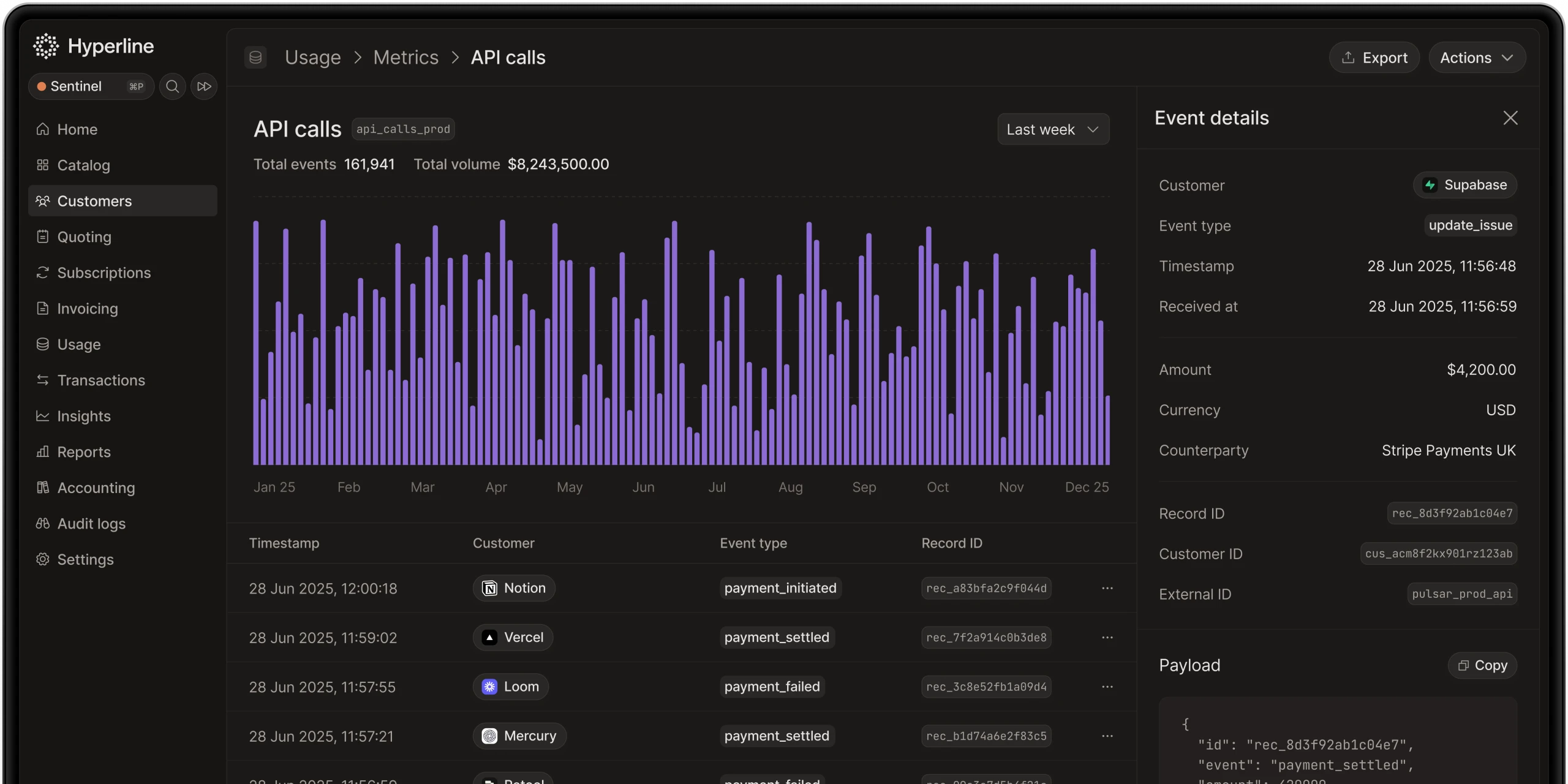
Usage must be defined, measured, and interpreted consistently. Product data alone is not sufficient. Usage needs to be structured in a way that supports billing and revenue workflows.
Without clear definitions, usage data becomes difficult to operationalize.
Turning usage into billable revenue
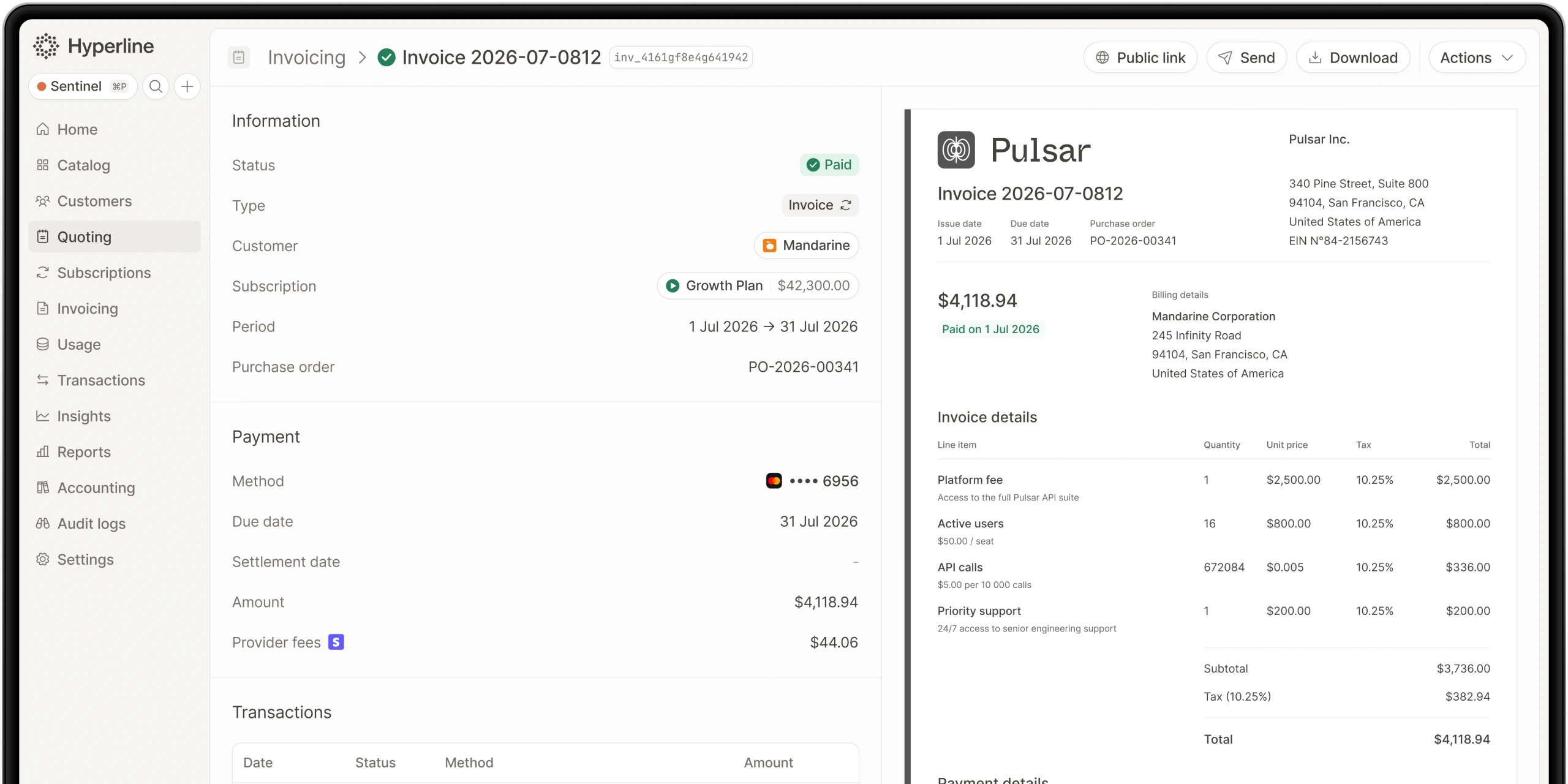
Measured usage must be translated into pricing logic. This step requires revenue rules that define how usage becomes charges.
This translation belongs to revenue operations, not to the product or CRM layer.
Common mistakes in usage-based pricing execution
Many SaaS teams struggle not because of the pricing model itself, but because of how it is implemented.
Common mistakes include:
- Treating usage tracking as a billing solution
- Managing revenue logic in tools not designed for billing
- Blurring responsibilities between Product, Sales, and Finance
These issues slow down execution and increase operational risk.
Why usage-based pricing requires a revenue platform
Usage-based pricing affects the entire quote-to-cash lifecycle. It requires structured pricing rules, billing workflows, and revenue ownership.
A dedicated revenue platform provides a clear system of record for how usage translates into invoices and revenue.
How Hyperline supports value-based and usage-based pricing
Hyperline is designed to manage revenue complexity. Hyperline helps SaaS teams operationalize value-based and usage-based pricing by separating revenue logic from other systems.
Hyperline acts as the revenue layer where pricing, billing, and RevOps processes are defined and executed.
Hyperline as the revenue layer for usage-based models
In a modern stack:
- Product systems generate usage data
- CRMs manage customer and deal context
- Hyperline manages pricing logic and billing execution
This separation keeps revenue workflows consistent and auditable.
Aligning pricing, billing, and RevOps
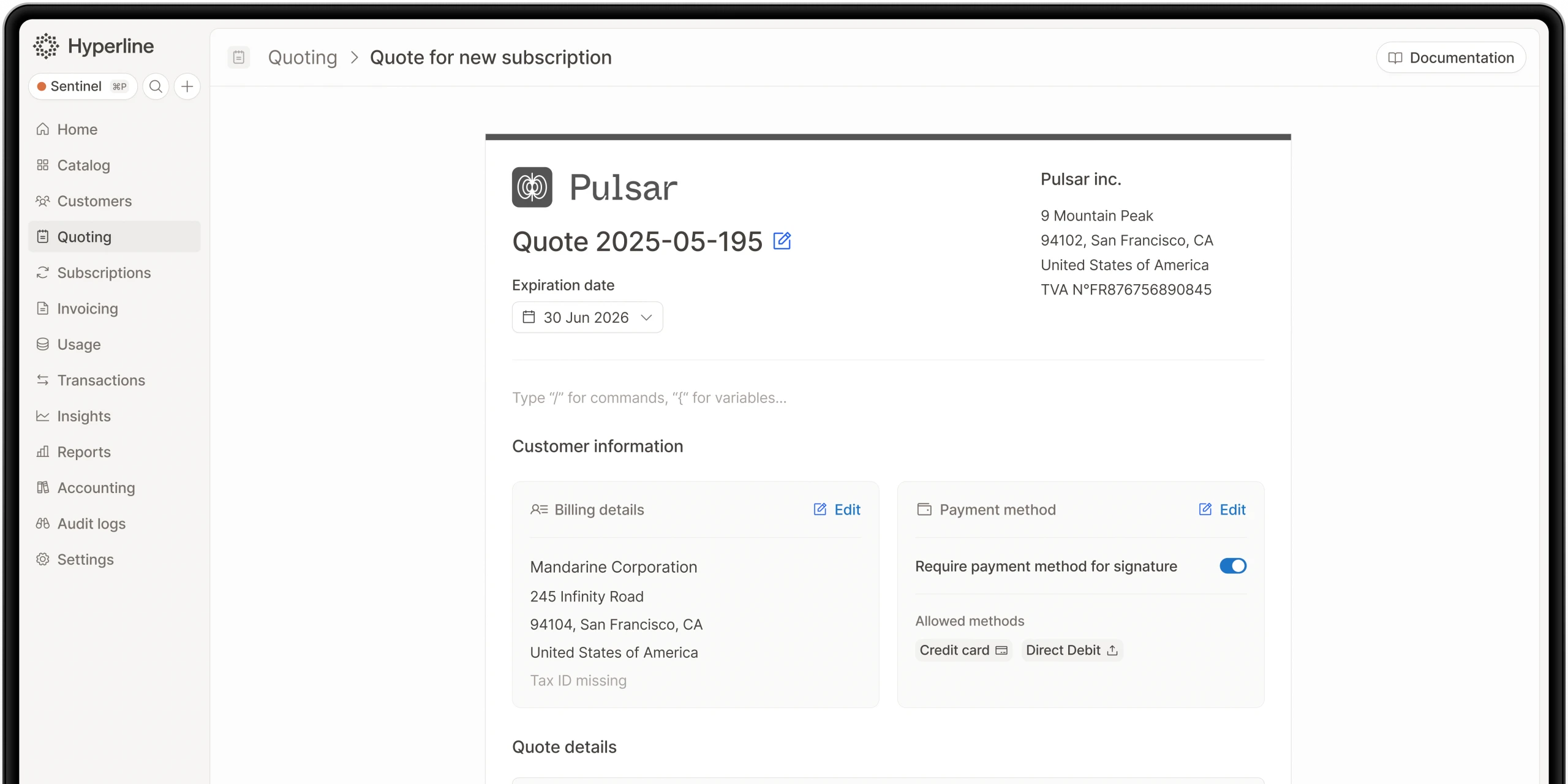
Hyperline centralizes revenue rules so pricing decisions are reflected accurately in billing. RevOps teams gain a shared framework that aligns sales expectations with financial execution.
This alignment is critical for scaling usage-based models.
When usage-based pricing makes sense
Usage-based pricing is often used when:
- Customer value scales with consumption
- Pricing needs to evolve over time
- Revenue transparency is a priority
In these cases, execution quality determines success.
Conclusion
Value-based and usage-based pricing models promise better alignment between customers and revenue. Delivering on that promise requires more than pricing theory.
SaaS teams that succeed invest in revenue infrastructure that can support variability, scale, and operational clarity.
Where this fits in Hyperline
Frequently asked questions
It depends on pricing complexity. Simple, flat subscription pricing can run acceptably on separate best-of-breed tools connected by integrations. Once pricing includes usage-based or hybrid components, or deal sizes require approval workflows and e-signature, the reconciliation cost of stitched-together tools tends to outweigh the flexibility of picking each piece independently.
LedgerUp is focused on the post-signature handoff: getting from a signed contract to a first invoice quickly. It does not include native CPQ, and its global e-invoicing and revenue recognition depth are limited compared to a full quote-to-cash platform, so teams that scale into hybrid pricing or larger, multi-country contracts typically re-evaluate.
Hyperline is the strongest fit for B2B SaaS companies with usage-based, tiered, or hybrid pricing that need CPQ, billing, and revenue recognition unified in one platform instead of three separate systems. For simple, seat-based pricing already running on Salesforce, or if the only need is post-signature contract handoff automation like LedgerUp provides, a different platform is a better starting point.
No. DealHub is a sales-side CPQ and contract lifecycle management tool, strong at quote building, redlining, and e-signature. Billing, usage metering, and revenue recognition are not native, so teams pair it with a separate billing platform and manage the handoff between the two.
Each platform is scored against five consistent criteria: best fit (the buyer situation it actually suits), strongest part of quote-to-cash (where it genuinely leads), evidence reviewed (public pricing pages, product documentation, and G2 category listings), and watch-out (the limitation buyers run into first). Vendor claims that aren't verifiable against a public source are described qualitatively rather than repeated as fact.
Hyperline is usage-native, which means our platform can ingest raw usage-data (through database connectors, API or CSV files) and run calculations on your behalf to find the right amount to invoice for each customer. You can start without a single line of code in a few minutes.
No. Conga CPQ is built for configuration depth on multi-line, rule-heavy quotes, historically tied closely to Salesforce. Billing and usage metering live outside the product, so it typically functions as the quoting layer in front of a separate billing system rather than a complete quote-to-cash platform on its own.
Salesforce Revenue Cloud's strength is CPQ configurability inside the Salesforce ecosystem. Usage-based and consumption billing is a comparatively newer layer than its quoting core, and the platform generally requires meaningful Salesforce admin and implementation investment to configure well for hybrid pricing.