Top CPQ Software: How Hyperline Is Redefining Configure-Price-Quote Standards
This article explores the role of CPQ at the core of sales performance, highlights the limitations of traditional CPQ solutions, and explains how Hyperline’s modern approach is redefining Configure, Price, Quote in 2026.
CPQ at the Core of Sales Performance
In an environment where sales teams are under constant pressure, speed and accuracy have become critical competitive advantages.
Companies using a strong CPQ solution:
- Respond faster to prospects
- Eliminate quoting errors
- Protect margins
- Deliver a superior buying experience
But with so many CPQ tools available, how do you choose the right one?
The Limitations of Traditional CPQ Solutions
Legacy CPQ platforms dominated the market for years. However, user feedback consistently highlights recurring issues:
- Complex user interfaces
- Heavy reliance on IT teams
- Long implementation timelines
- Rigid pricing logic
- Slow adoption by sales teams
This paved the way for a new generation of CPQ software.
Hyperline: A New Approach to CPQ
Hyperline was designed to meet the real needs of modern sales organizations.
Unlike traditional CPQs, Hyperline focuses on:
- Execution speed
- Business flexibility
- Sales-team autonomy
- Scalability
What Truly Differentiates Hyperline
A modern CPQ only delivers real impact when it is built on strong integrations that connect CRM, billing, finance, and contract tools across the entire revenue workflow.
- Intelligent Configuration
Hyperline handles complex offerings while keeping the user experience simple. Built-in business rules prevent invalid combinations and eliminate errors.
-Controlled Pricing
Discounts, subscriptions, usage-based pricing, and bundles are fully automated, while maintaining full margin visibility.
-Instant Quote Generation
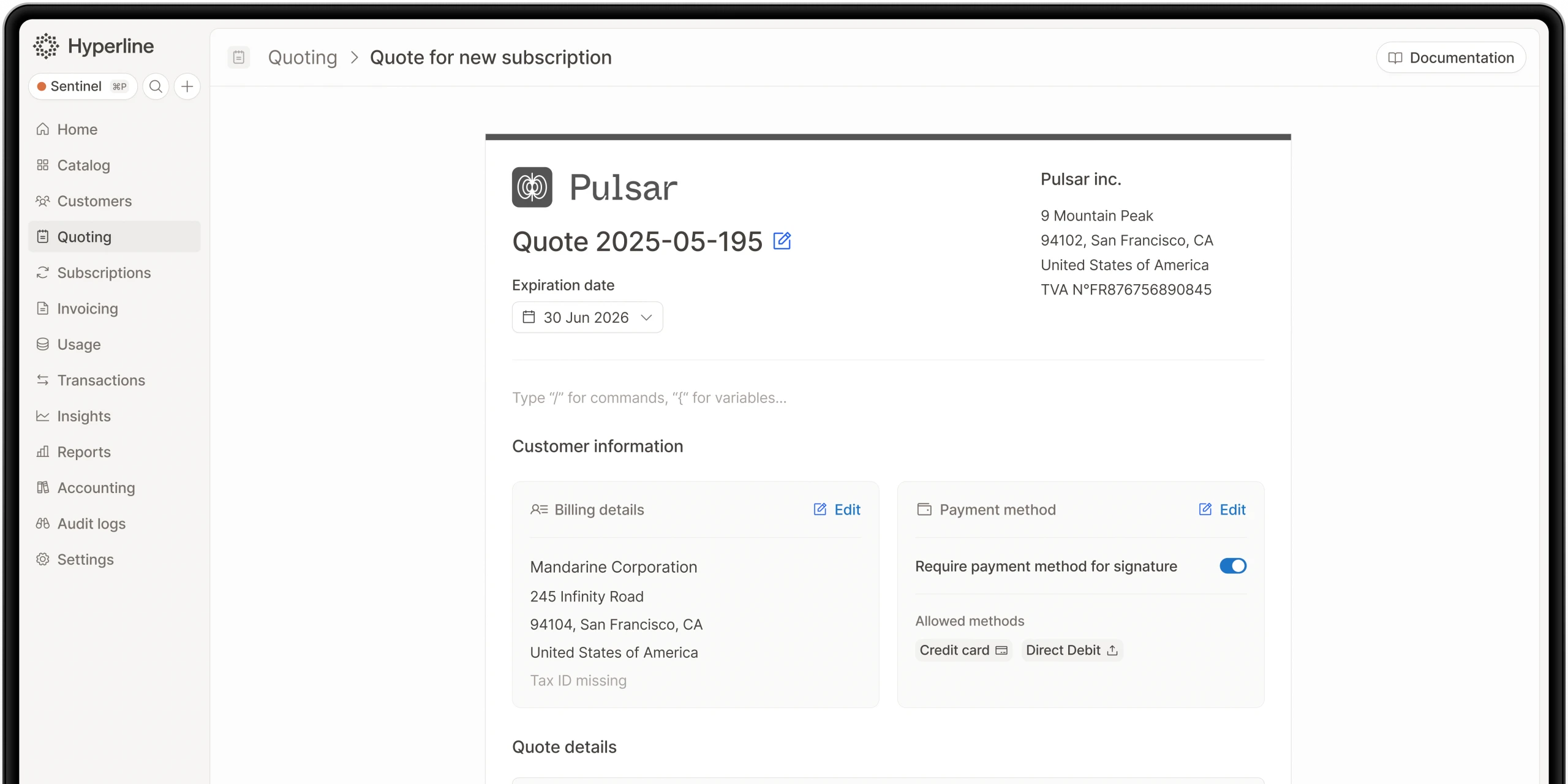
Sales teams generate personalized quotes in just a few clicks—without back-and-forth with finance or operations.
-Fast Adoption
Designed for sales teams in the field, Hyperline drastically reduces training time and speeds up time-to-value.
Quick Comparison of Leading CPQ Solutions
SolutionStrengthsLimitationsHyperlineSimplicity, flexibility, speed—Salesforce CPQCRM integrationComplexity, costDealHubRevenue operationsLess flexibleCongaContract managementHeavier UXOracle CPQEnterprise robustnessLong deployments
Why Hyperline Is the #1 CPQ Software in 2026
Hyperline checks every box of a modern CPQ:
- Built for SaaS and complex B2B models
- Designed for revenue performance
- Easy to deploy and adopt
- Scalable without heavy technical dependency
This pragmatic, results-driven approach is what places Hyperline at the top of CPQ rankings.
Final Thoughts
CPQ is no longer just a quoting tool, it is a strategic pillar of the sales organization.
Companies that want to scale faster while maintaining control over pricing and offers are turning to modern CPQ platforms.
Hyperline is setting the new standard for CPQ in 2026.
Where this fits in Hyperline
Frequently asked questions
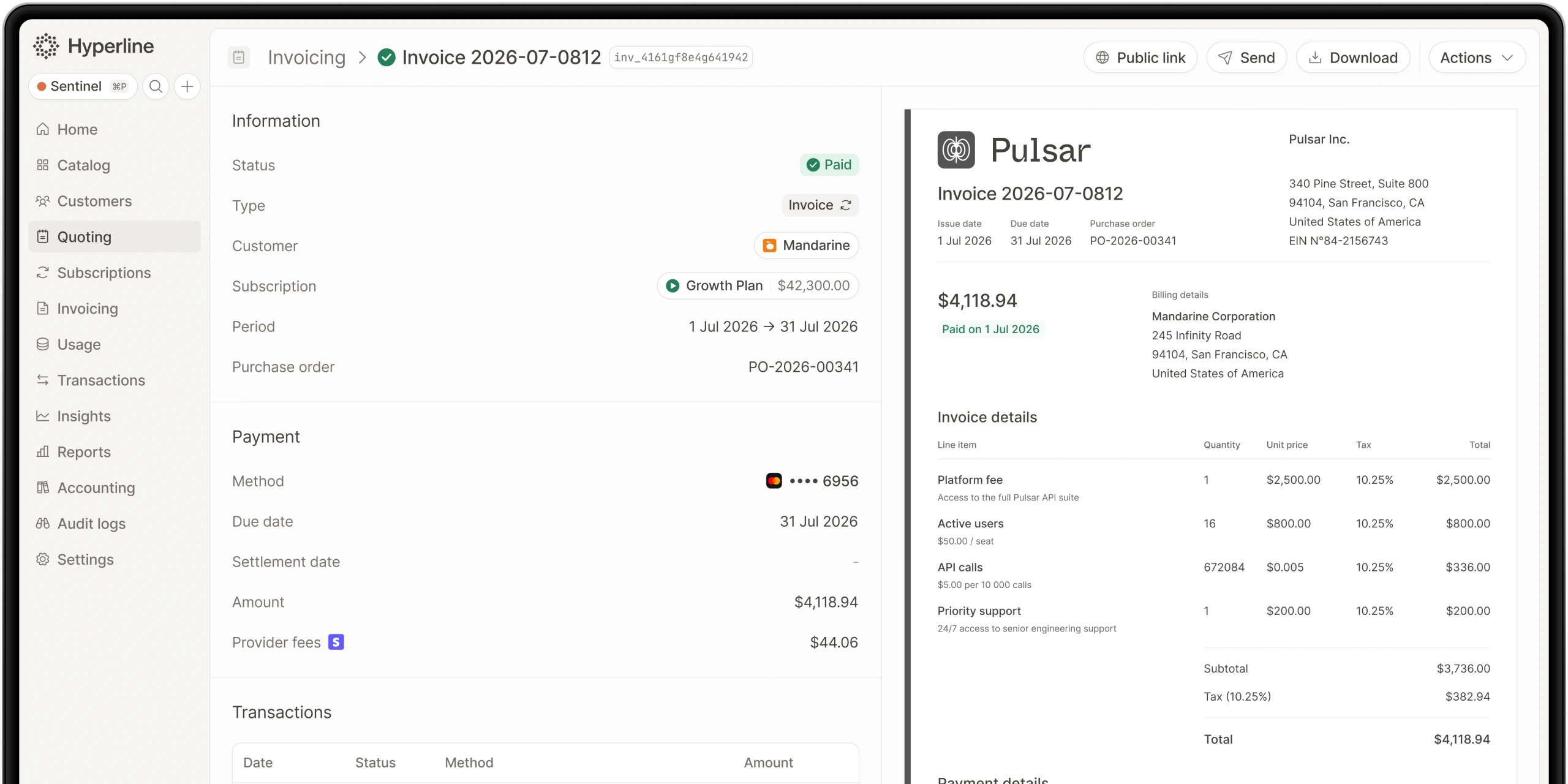
As SaaS companies grow, billing needs become more complex. HubSpot CPQ has limits: no quote-to-invoice automation, little pricing flexibility, basic reporting, manual revenue recognition, and no advanced subscription support.
LedgerUp is focused on the post-signature handoff: getting from a signed contract to a first invoice quickly. It does not include native CPQ, and its global e-invoicing and revenue recognition depth are limited compared to a full quote-to-cash platform, so teams that scale into hybrid pricing or larger, multi-country contracts typically re-evaluate.
Usually not on its own. Oracle CPQ brings enterprise-grade catalog and pricing-rule capabilities for organizations operating at significant scale, but implementation timelines and total cost of ownership are heavy for a mid-market SaaS company evaluating it from scratch, unless the business is already committed to the Oracle CX or ERP ecosystem.
Hyperline is the strongest fit for B2B SaaS companies with usage-based, tiered, or hybrid pricing that need CPQ, billing, and revenue recognition unified in one platform instead of three separate systems. For simple, seat-based pricing already running on Salesforce, or if the only need is post-signature contract handoff automation like LedgerUp provides, a different platform is a better starting point.
Salesforce Revenue Cloud's strength is CPQ configurability inside the Salesforce ecosystem. Usage-based and consumption billing is a comparatively newer layer than its quoting core, and the platform generally requires meaningful Salesforce admin and implementation investment to configure well for hybrid pricing.
No. Conga CPQ is built for configuration depth on multi-line, rule-heavy quotes, historically tied closely to Salesforce. Billing and usage metering live outside the product, so it typically functions as the quoting layer in front of a separate billing system rather than a complete quote-to-cash platform on its own.
Billing software converts an existing subscription or contract into invoices. Quote-to-cash software covers the full process before and after that: configuring a quote, getting it approved and signed, billing it correctly (including usage-based components), collecting payment, and recognizing revenue. A billing tool can be one part of a quote-to-cash stack; on its own, it isn't the whole thing.
It varies widely by platform and by how much configuration a business needs. Enterprise-grade, highly configurable platforms like Zuora, Oracle CPQ, or Salesforce Revenue Cloud commonly run several months. Platforms built around a narrower, more opinionated setup, including Hyperline's roughly two-month target, tend to move faster because there's less to configure from scratch.