Hyperline, the best quote-to-cash software in 2026: a complete guide
In 2026, quote-to-cash software is no longer just an operational tool, it’s a strategic growth engine. As SaaS pricing models become more complex and revenue teams demand greater speed and accuracy, businesses need a unified solution that connects quoting, billing, and cash collection seamlessly. Hyperline stands out as a modern platform built to simplify and automate the entire revenue lifecycle from end to end.
Why quote-to-cash software is essential in 2026
Quote-to-cash software automates and orchestrates every step between generating a sales quote and recognizing revenue. Traditionally, these stages were managed in disparate systems : CRM for deals, spreadsheets for pricing, separate billing tools, and manual processes for payment follow-up. In results, it causes delays, errors, poor cross-team visibility, and slower cash collection.
With digital business models and subscription-centric revenue streams dominating B2B, organisations increasingly adopt Q2C platforms that:
- Accelerate sales cycles.
- Boost pricing and billing accuracy.
- Reduce revenue leakage.
- Improve customer experience.
- Provide real-time revenue insights.
In essence, a modern Q2C system becomes the operational backbone of Revenue Operations and Finance functions, enabling teams to move from reactive processes to proactive revenue growth.
What to look for in quote-to-cash software
Choosing the right Q2C platform depends on your business model, pricing complexity, and growth stage. Key considerations include:
- End-to-end workflow coverage : Does the platform handle quoting, contracting, billing, and payment collection in one system?
- Integration depth : Native connections to CRM, accounting, and payment systems reduce manual data entry and errors.
- Pricing flexibility : Support for flat-fee, tiered, usage-based, and hybrid pricing models.
- Automation and visibility : Dashboards and automated workflows that minimise manual effort and provide insights.
- Scalability : The ability to support evolving business models as you grow.
Hyperline, a unified quote-to-cash for modern revenue teams
Best for: fast-growing B2B companies that want a unified system for quoting, billing, and revenue automation.
Overview: Hyperline positions itself as the new standard for revenue management, enabling businesses to manage every revenue stage, from contract negotiation to cash in the bank, in one unified system.
What sets Hyperline apart:
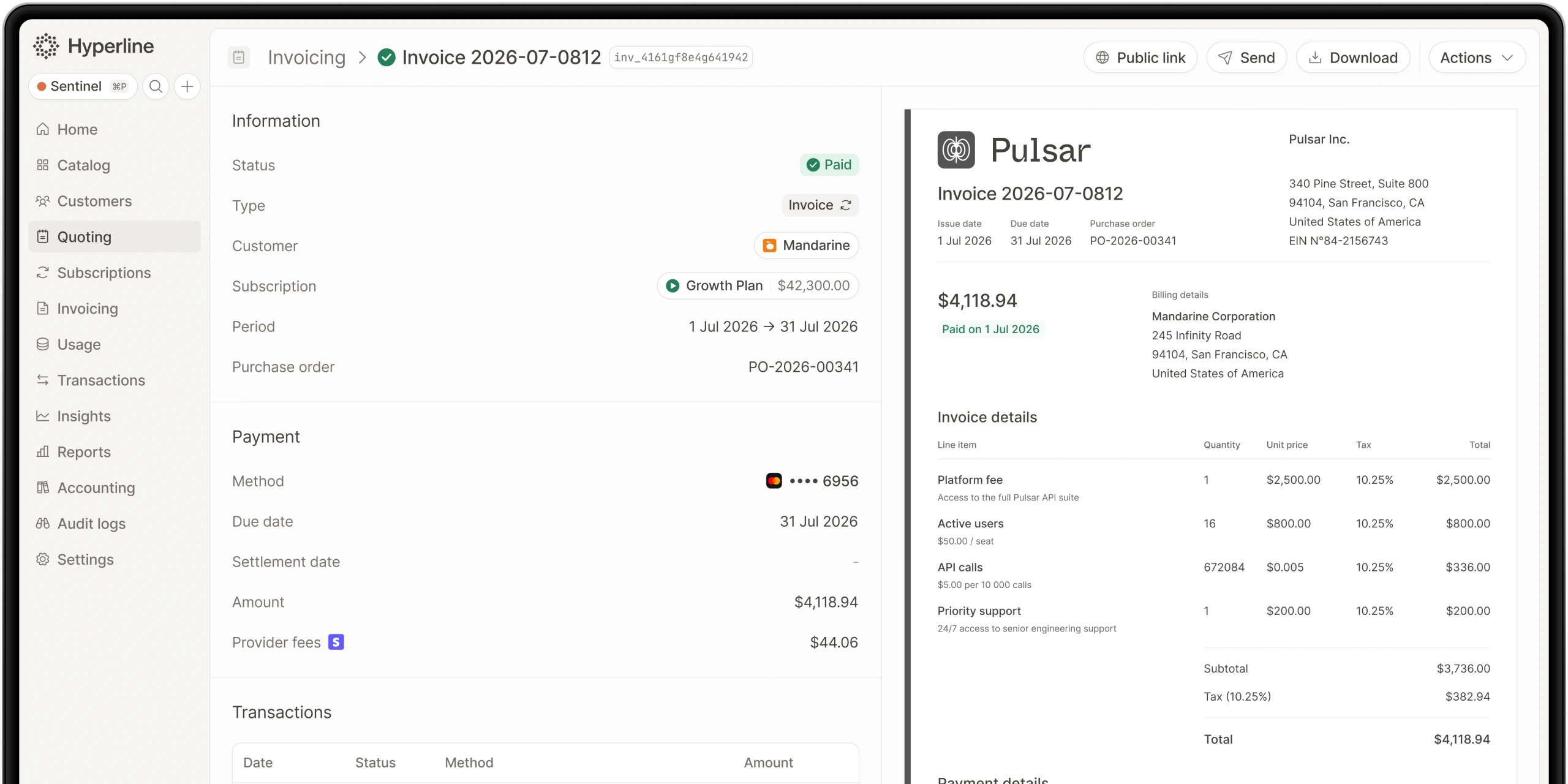
- End-to-end automation: Hyperline connects Configure-Price-Quote (CPQ), billing, usage-based pricing, contracts, and payment collection into a single workflow, eliminating silos between sales, finance, and revenue teams.
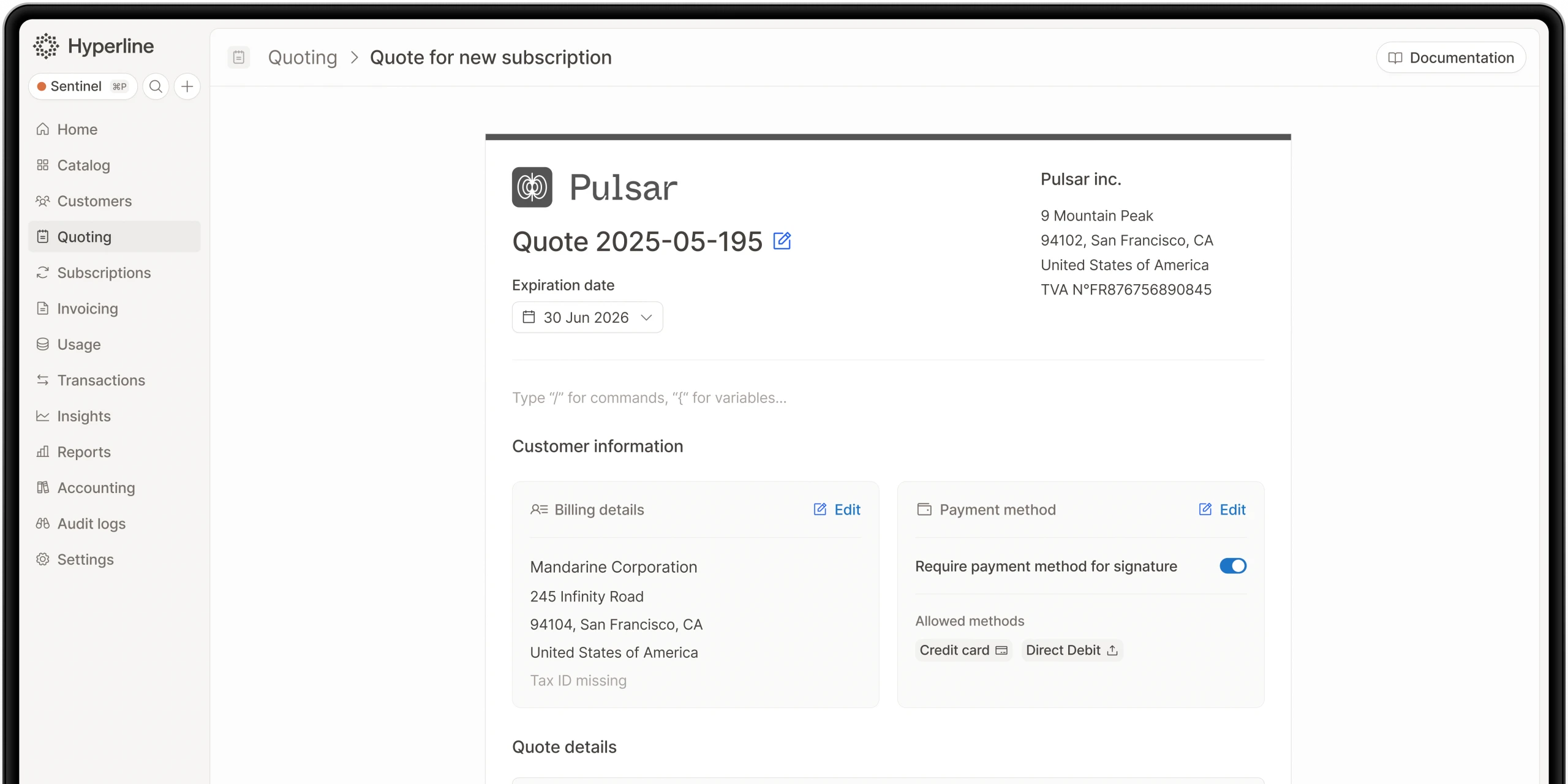
- CPQ capabilities: Sales teams can configure products, generate accurate branded quotes, manage approvals and contracts, and transition seamlessly to billing without toggling between systems.
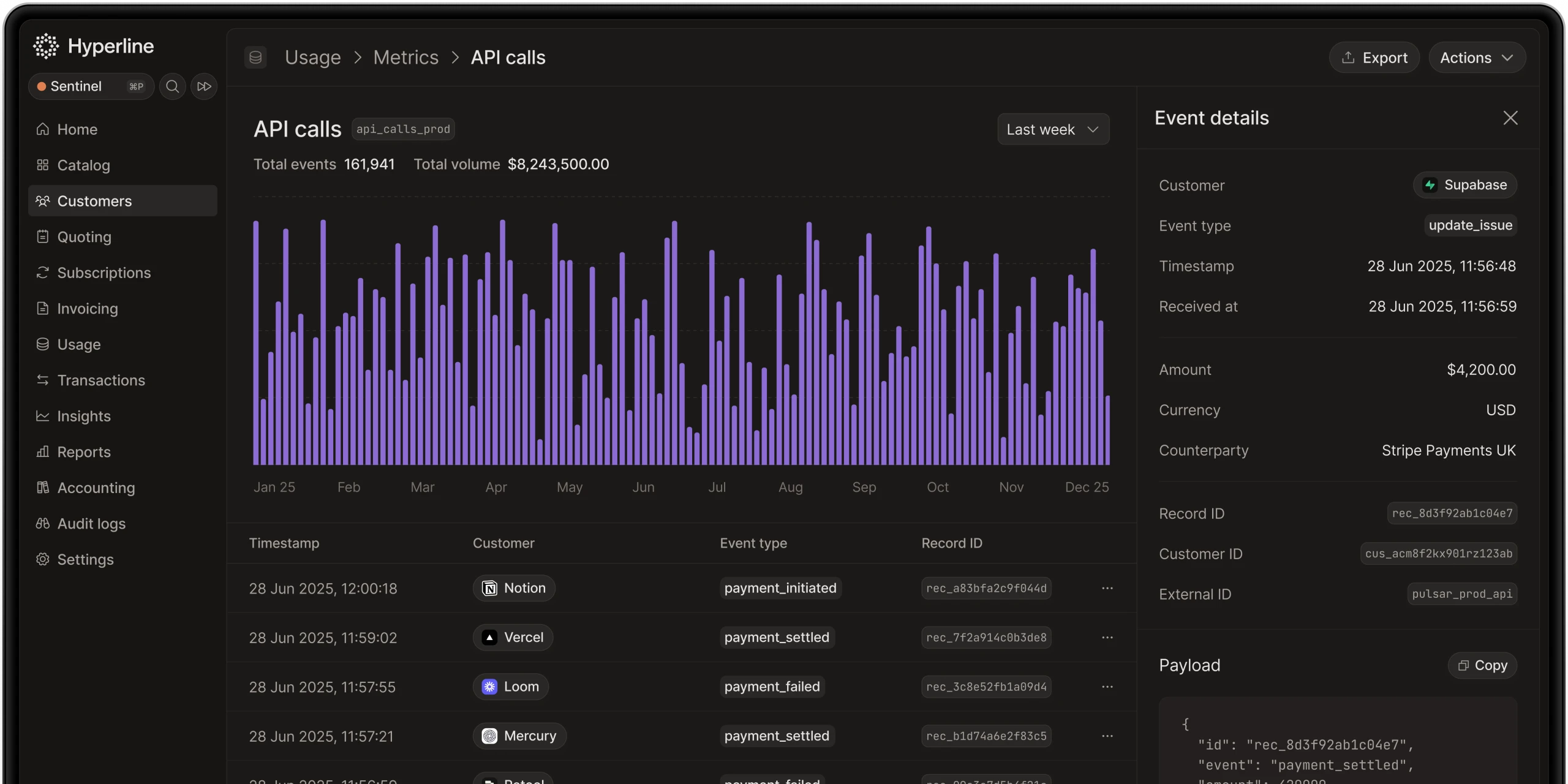
- Flexible pricing engine: The platform handles a wide range of pricing models, including flat fee, per seat, usage-based with prepaid credits, tiered, and packaged pricing, making it suitable for subscription-centric and hybrid business models.
- End-to-end revenue visibility: Teams have a central source of truth for revenue data, enabling quicker decision-making and faster reconciliations.
Hyperline's unified approach helps reduce manual errors, accelerate billing cycles, and improve cash collection, critical outcomes for high-growth businesses focusing on predictable revenue growth.
How to choose the right Q2C software
Here are three practical steps to evaluate your options:
- Map your revenue workflow: List all revenue processes that need to be automated, from quote generation to cash reconciliation.
- Prioritize integration needs: Evaluate how well each platform connects with your CRM, accounting software, payment processors, and internal reporting systems.
- Assess pricing flexibility: Ensure the tool supports your current pricing strategies and future revenue models.
A thorough evaluation ensures the platform you choose isn’t just a tool, it becomes a foundation for consistent, scalable revenue operations.
Conclusion
In 2026, Q2C software is no longer auxiliary technology, it’s a strategic asset. Firms that automate their revenue operations see faster sales cycles, fewer billing errors and improved cash flow, all of which contribute to stronger business performance. Choosing the right platform means identifying not just feature sets, but real business impact.
For businesses seeking a unified, modern revenue engine, Hyperline’s integrated quote-to-cash capabilities offer an attractive blend of flexibility, automation, and visibility, built for today’s dynamic SaaS and B2B markets.
Where this fits in Hyperline
Frequently asked questions
As SaaS companies grow, billing needs become more complex. HubSpot CPQ has limits: no quote-to-invoice automation, little pricing flexibility, basic reporting, manual revenue recognition, and no advanced subscription support.
LedgerUp is focused on the post-signature handoff: getting from a signed contract to a first invoice quickly. It does not include native CPQ, and its global e-invoicing and revenue recognition depth are limited compared to a full quote-to-cash platform, so teams that scale into hybrid pricing or larger, multi-country contracts typically re-evaluate.
Each platform is scored against five consistent criteria: best fit (the buyer situation it actually suits), strongest part of quote-to-cash (where it genuinely leads), evidence reviewed (public pricing pages, product documentation, and G2 category listings), and watch-out (the limitation buyers run into first). Vendor claims that aren't verifiable against a public source are described qualitatively rather than repeated as fact.
Hyperline is the strongest fit for B2B SaaS companies with usage-based, tiered, or hybrid pricing that need CPQ, billing, and revenue recognition unified in one platform instead of three separate systems. For simple, seat-based pricing already running on Salesforce, or if the only need is post-signature contract handoff automation like LedgerUp provides, a different platform is a better starting point.
It depends on pricing complexity. Simple, flat subscription pricing can run acceptably on separate best-of-breed tools connected by integrations. Once pricing includes usage-based or hybrid components, or deal sizes require approval workflows and e-signature, the reconciliation cost of stitched-together tools tends to outweigh the flexibility of picking each piece independently.
Billing software converts an existing subscription or contract into invoices. Quote-to-cash software covers the full process before and after that: configuring a quote, getting it approved and signed, billing it correctly (including usage-based components), collecting payment, and recognizing revenue. A billing tool can be one part of a quote-to-cash stack; on its own, it isn't the whole thing.
No. Conga CPQ is built for configuration depth on multi-line, rule-heavy quotes, historically tied closely to Salesforce. Billing and usage metering live outside the product, so it typically functions as the quoting layer in front of a separate billing system rather than a complete quote-to-cash platform on its own.
No. DealHub is a sales-side CPQ and contract lifecycle management tool, strong at quote building, redlining, and e-signature. Billing, usage metering, and revenue recognition are not native, so teams pair it with a separate billing platform and manage the handoff between the two.