Hyperline and Attio: Turning Your CRM Into a Revenue Operations Hub
Modern revenue teams expect more from their CRM than contact management and deal tracking. They need a system that connects sales activity with real revenue data, pricing logic, subscriptions, and billing. The Hyperline and Attio integration turns Attio into a true revenue operations hub by embedding billing and subscription workflows directly inside the CRM.This article explains how Hyperline enhances Attio’s CRM capabilities and why this integration is essential for scaling revenue operations.
Why CRM Alone Is No Longer Enough
Traditional CRMs store pipeline data but remain disconnected from billing and revenue systems. This disconnect creates friction across teams:
- Sales lacks visibility into billing and subscriptions
- Finance relies on manual handoffs from CRM data
- Revenue data lives in multiple tools
As revenue models become more complex, especially subscription based and usage based pricing, CRMs need to connect directly to billing and revenue infrastructure.
How Hyperline Extends Attio’s CRM Capabilities
Hyperline is an end to end revenue management platform designed to handle pricing, subscriptions, billing, and invoicing. When integrated with Attio, it brings these capabilities directly into the CRM interface.
With Hyperline embedded inside Attio, teams can:
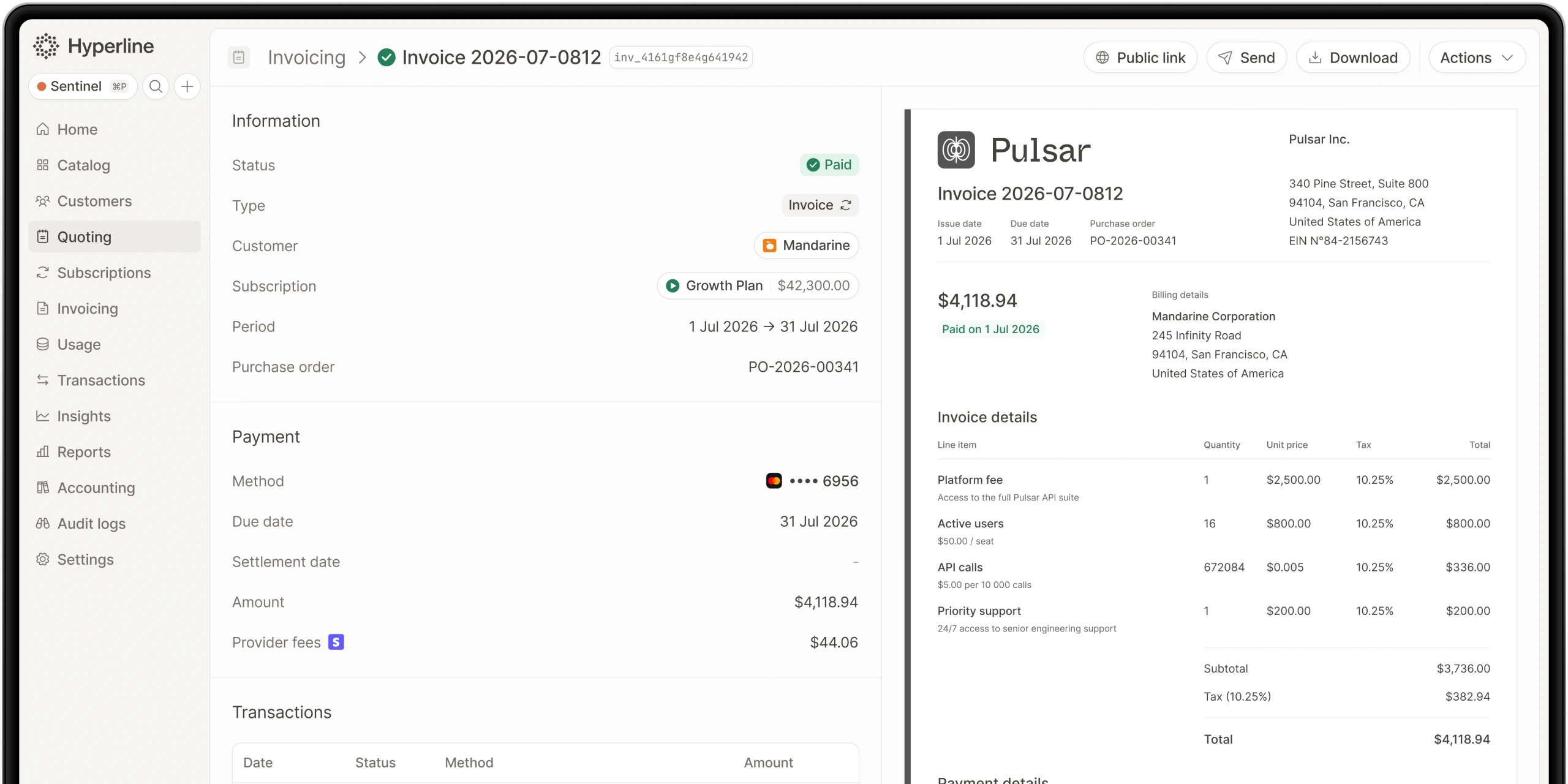
- View subscriptions and invoices from CRM records
- Access revenue data in real time
- Trigger billing workflows based on CRM activity
This creates a single source of truth for revenue across sales, finance, and operations.
Embedded Revenue Data Inside Attio
The integration adds Hyperline widgets directly to Attio records. These widgets display:
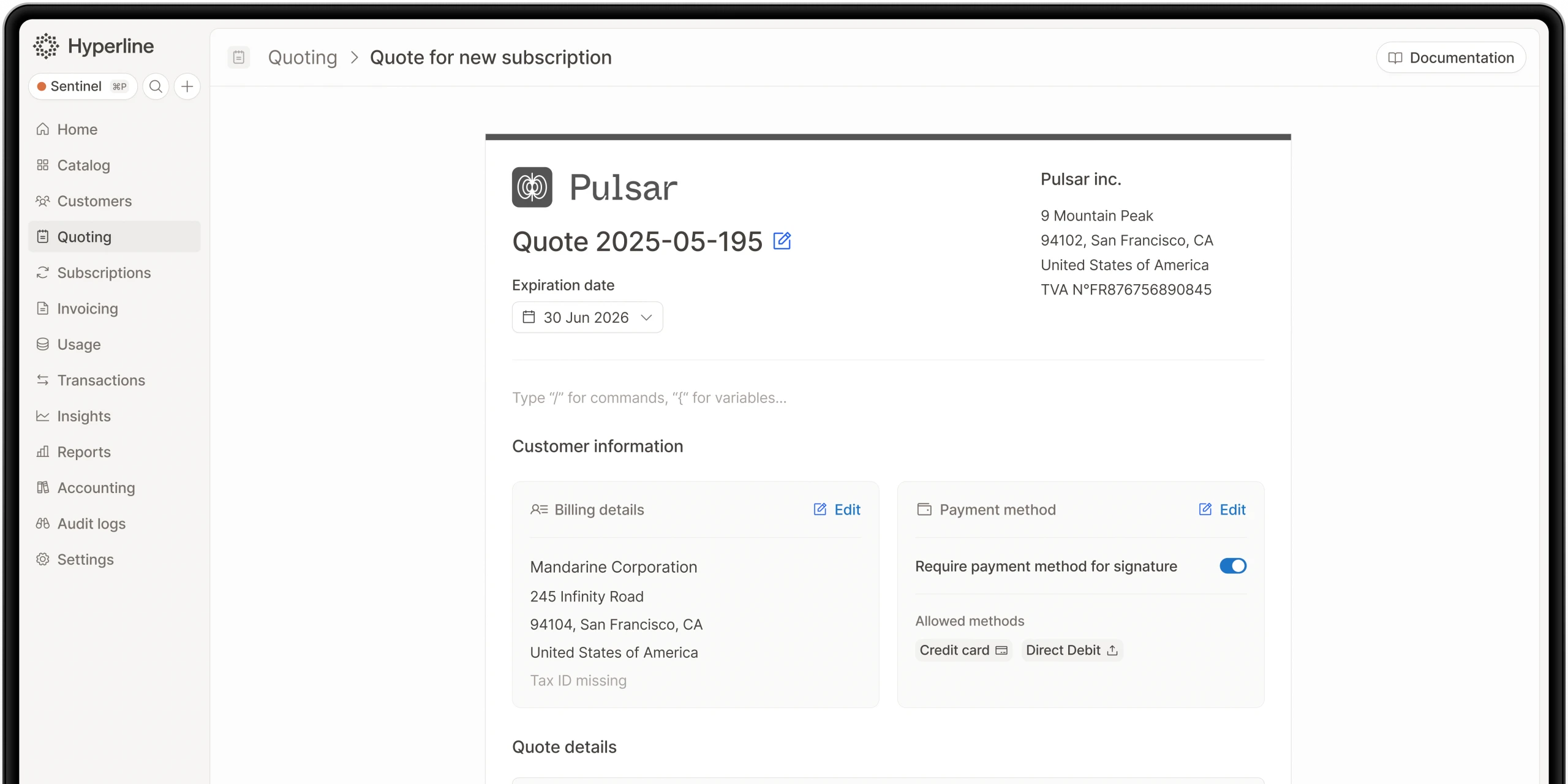
- Active quotes and pricing details
- Subscription status and recurring revenue
- Billing information linked to each customer
Revenue data becomes visible where teams already work, reducing context switching and improving collaboration.
Automated Data Synchronization Between CRM and Billing
Hyperline can sync quotes, subscriptions, invoices, and products into Attio as structured objects. This allows teams to:
- Build CRM workflows based on billing events
- Create reports using real revenue data
- Keep CRM records aligned with financial reality
Synchronization can be configured to match each company’s revenue workflows, ensuring clean and relevant CRM data.
Benefits for Revenue Operations Teams
By connecting Attio and Hyperline, revenue teams unlock:
- Better forecasting using real subscription data
- Fewer manual processes and handoffs
- Stronger alignment between sales and finance
The CRM becomes a central system for managing the entire customer revenue lifecycle.
Conclusion
The Hyperline and Attio integration transforms Attio from a traditional CRM into a revenue operations platform. By embedding billing, subscriptions, and revenue data directly into CRM workflows, teams gain clarity, speed, and control over their revenue stack.
For companies scaling modern revenue models, this integration provides the foundation needed to operate efficiently.
Where this fits in Hyperline
Frequently asked questions
No. DealHub is a sales-side CPQ and contract lifecycle management tool, strong at quote building, redlining, and e-signature. Billing, usage metering, and revenue recognition are not native, so teams pair it with a separate billing platform and manage the handoff between the two.
As SaaS companies grow, billing needs become more complex. HubSpot CPQ has limits: no quote-to-invoice automation, little pricing flexibility, basic reporting, manual revenue recognition, and no advanced subscription support.
It depends on pricing complexity. Simple, flat subscription pricing can run acceptably on separate best-of-breed tools connected by integrations. Once pricing includes usage-based or hybrid components, or deal sizes require approval workflows and e-signature, the reconciliation cost of stitched-together tools tends to outweigh the flexibility of picking each piece independently.
For low-frequency usage add-ons, batch processing is often fine. For consumption that drives a meaningful share of revenue, especially high-frequency events like API calls or AI token usage, batch cycles limit visibility into what a customer currently owes and make anomalies harder to catch before they hit an invoice.
Salesforce Revenue Cloud's strength is CPQ configurability inside the Salesforce ecosystem. Usage-based and consumption billing is a comparatively newer layer than its quoting core, and the platform generally requires meaningful Salesforce admin and implementation investment to configure well for hybrid pricing.
Usually not on its own. Oracle CPQ brings enterprise-grade catalog and pricing-rule capabilities for organizations operating at significant scale, but implementation timelines and total cost of ownership are heavy for a mid-market SaaS company evaluating it from scratch, unless the business is already committed to the Oracle CX or ERP ecosystem.
No. Chargebee processes usage through batch imports applied on the next invoice cycle rather than true real-time metering, a limitation reviewers note directly on G2. Platforms built around usage-based and hybrid pricing from the start, like Hyperline, meter events as they happen instead.
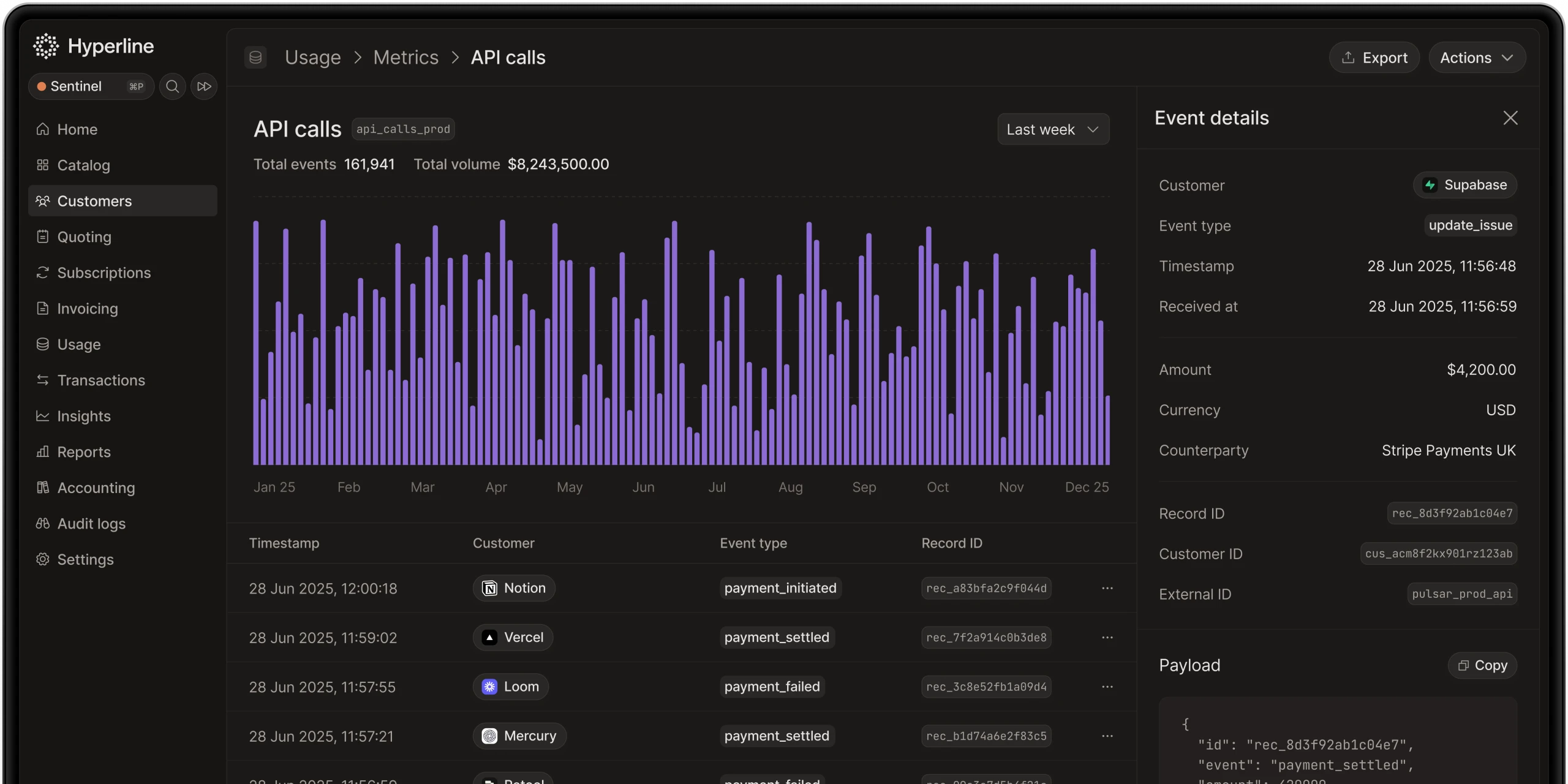
Hyperline is usage-native, which means our platform can ingest raw usage-data (through database connectors, API or CSV files) and run calculations on your behalf to find the right amount to invoice for each customer. You can start without a single line of code in a few minutes.