How to connect HubSpot CRM to your billing stack and keep revenue data clean
For most B2B SaaS teams, connecting HubSpot to a billing tool feels like an obvious next step. Then the numbers start to drift. Here's why clean invoices don't mean clean revenue, and how to fix the architecture.
For most B2B SaaS teams, connecting HubSpot to a billing tool feels like an obvious next step once the sales motion is established.
Deal data already contains contract values, products, and close dates. Pushing that into billing seems efficient, even inevitable. Once the integration is live, invoices generate automatically and manual work drops.
Then the numbers start to drift.
Revenue figures no longer reconcile cleanly. MRR explanations pile up in finance reviews. The sales team insists their deals are right. Finance insists the invoices are right. And yet, the two never quite agree.
This is not a tooling problem. It is a revenue hygiene problem.
Why connecting HubSpot to billing looks straightforward
Deal records in HubSpot are designed to feel invoice-ready. They include agreed contract values, products or line items, and expected close and start dates.
From a sales and RevOps perspective, the deal is the source of truth. Connecting that data directly to billing feels like alignment between teams. For finance, that assumption is precisely where problems begin. Deals capture commercial intent. Billing requires financial logic. When the two are treated as equivalent, reporting accuracy quietly erodes.
What gets synced and what gets lost
When HubSpot deal data flows into a billing tool without a finance layer, what moves across is data, not context.
The sync captures what was sold, for how much, and to whom. It does not capture when revenue should be recognized, how pricing changes mid-contract should be treated, or how upgrades, downgrades, or cancellations affect the billing timeline.
That gap is manageable at low volume. As contracts scale in complexity — usage tiers, enterprise custom pricing, multi-currency — it becomes structural.
Where revenue reporting breaks down
Revenue hygiene typically degrades at one of three points.
Deal close dates vs billing timing: Close dates are commercial milestones, not billing events. When deal data drives invoice generation directly, revenue lands in the wrong period. Finance compensates with manual adjustments that accumulate month over month.
Line items without billing logic: Two deals can carry identical line items but require entirely different billing treatment: flat fee vs usage-based, annual vs monthly, with or without a free trial. Product names and prices do not encode those rules. When line items are treated as billing instructions, inconsistency follows.
Mid-contract changes: Expansions, contractions, early renewals. In HubSpot, these are deal updates. In billing, they require precise proration logic, updated subscription timelines, and correct revenue attribution. Without a system that interprets those changes financially, finance rebuilds the logic manually every time.
Why clean invoices don't mean clean revenue
Invoices can be accurate, approved and paid, but MRR can still be wrong. Clean billing does not guarantee clean revenue reporting. Once deal data flows directly into invoices, reconciliation happens after the fact rather than before it. Finance ends up validating outputs rather than controlling inputs. The result is ongoing cleanup that masquerades as normal reporting work.
What clean revenue reporting actually requires
Finance-owned billing rules: Revenue recognition and billing logic must live outside the sales workflow. If billing behavior depends on how a sales rep stages a deal in HubSpot, it will never be consistent.
Automatic reconciliation between CRM and billing: CRM activity and billing results must reconcile without manual interpretation. If a number requires explanation every month, the architecture is already compromised.
Stability as contracts evolve: Renewals, seat expansions, usage spikes — these are normal in SaaS. According to OpenView's 2024 SaaS Benchmarks, over 60% of SaaS revenue growth comes from existing customers. Clean billing systems must handle contract changes without forcing finance to rebuild logic each cycle.
How Hyperline keeps HubSpot and billing aligned
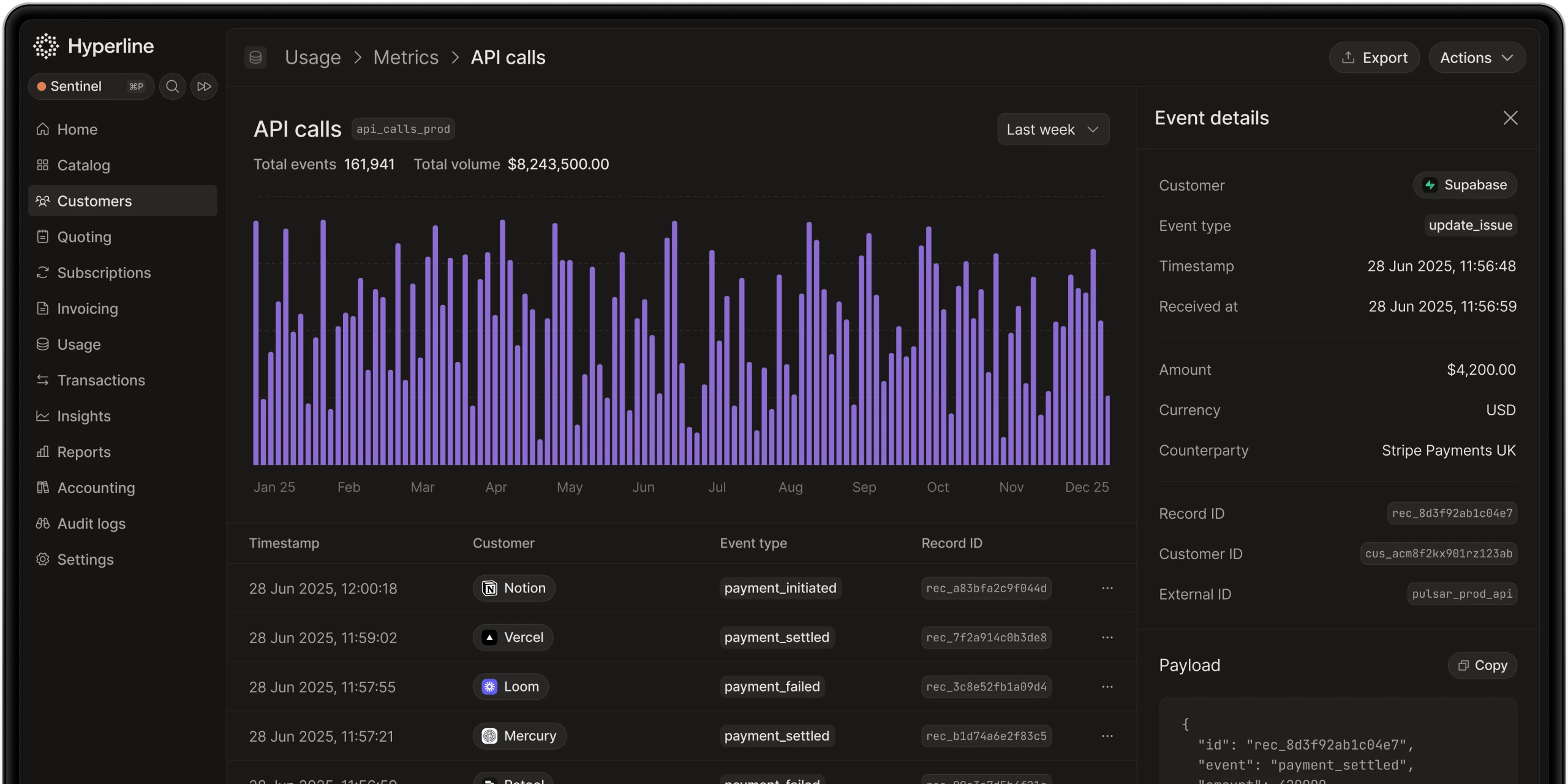
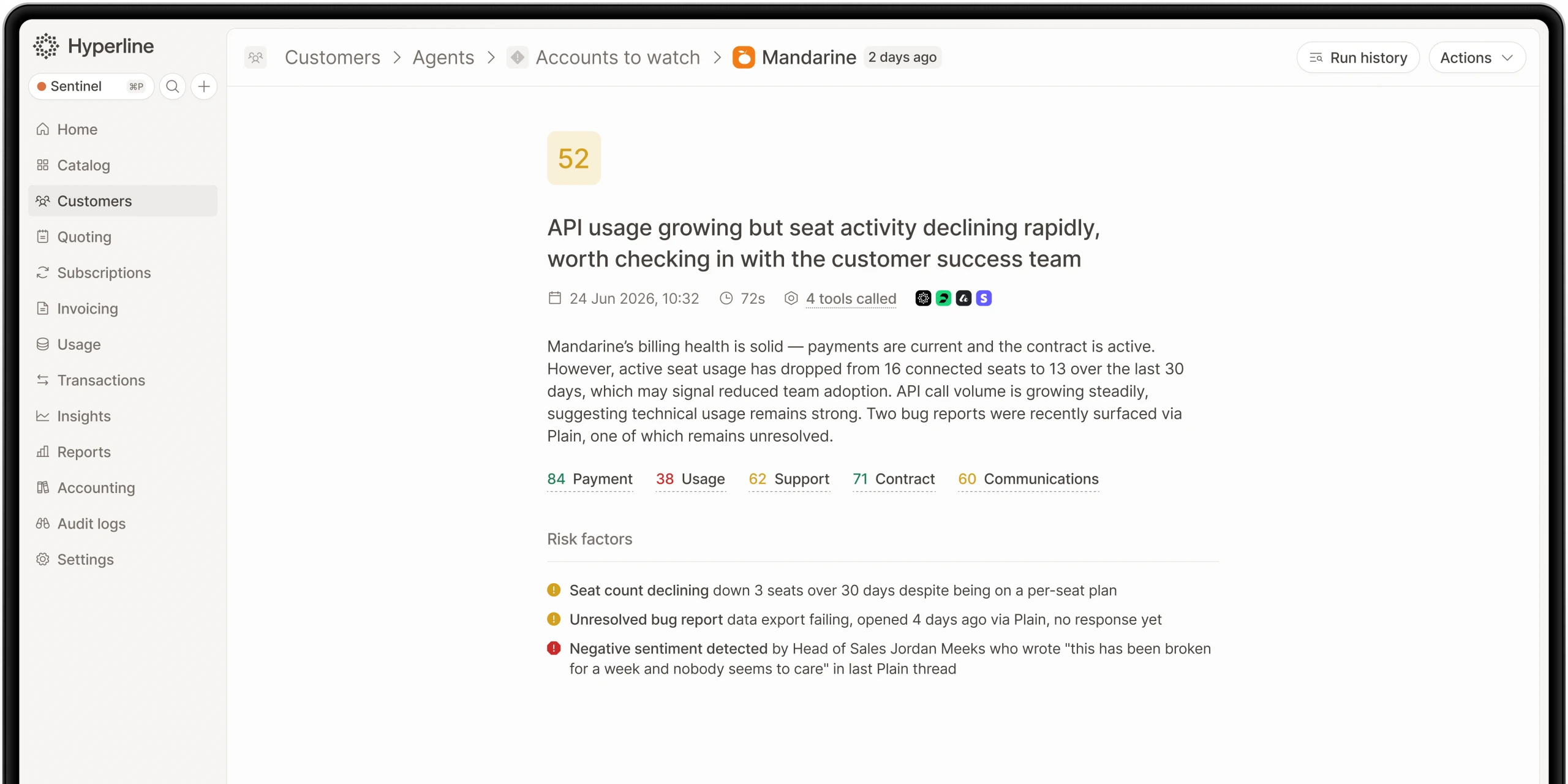
Hyperline sits between HubSpot and your revenue stack as the billing intelligence layer. HubSpot remains the system of sales intent. Hyperline becomes the system of billing record.
Rather than pushing raw deal data into invoices, Hyperline embeds directly into HubSpot via a native widget, allowing sales teams to create quotes and manage subscriptions without leaving their CRM, while finance retains full control over billing logic, pricing models, and revenue rules.
In practice, this means:
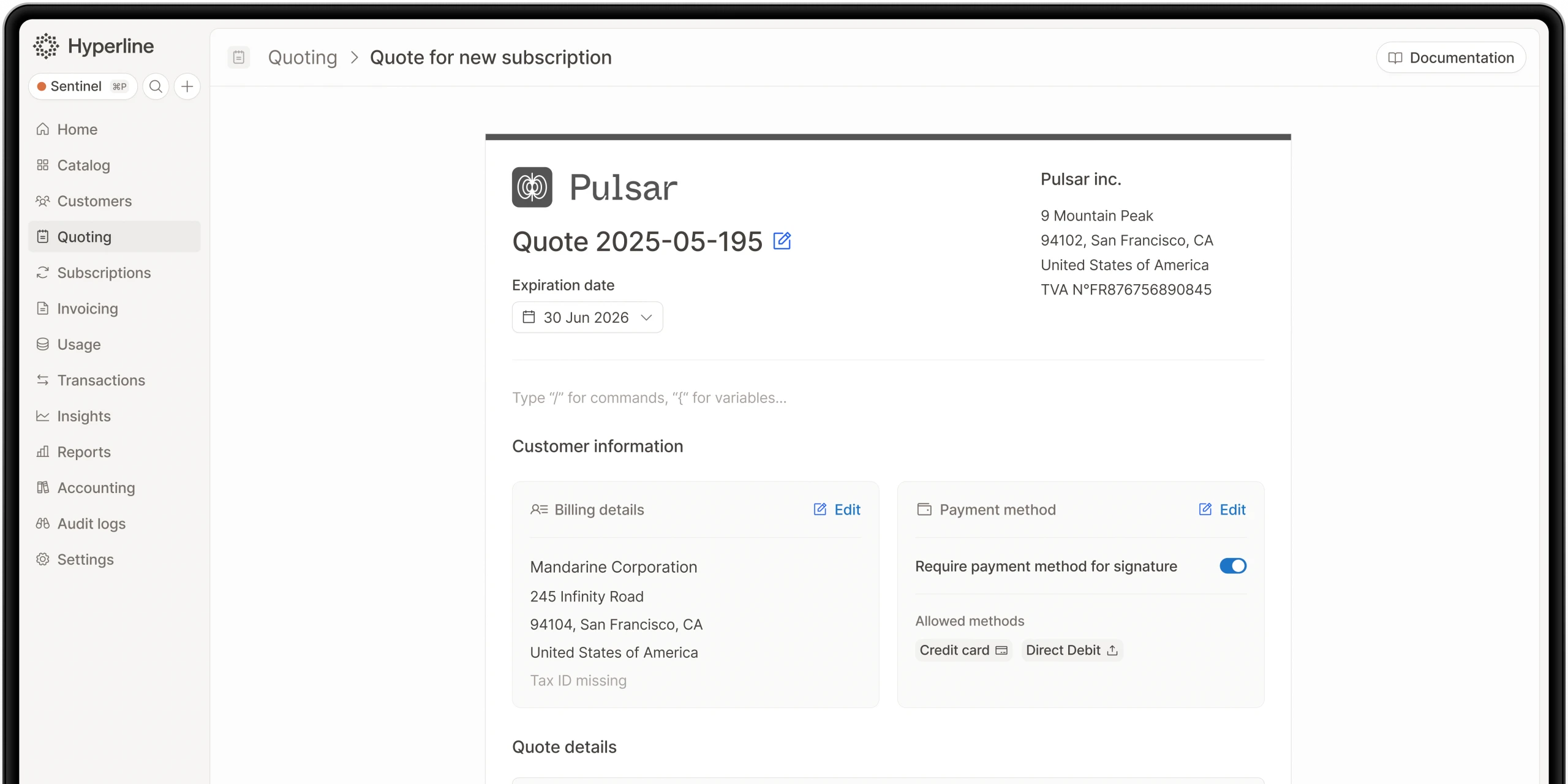
- Quotes created in HubSpot reflect the exact billing terms that will be invoiced, no translation layer, no interpretation gap.
- Subscriptions, invoices, and customer data stay synchronized across both platforms automatically.
- Usage-based components, custom enterprise contracts, and mid-term changes are handled by Hyperline's flexible billing engine, not by a spreadsheet.
When CRM and billing share one source of truth, revenue narratives stop shifting at month-end, MRR and invoicing reconcile without manual intervention, and finance teams spend less time explaining and more time analyzing.
If connecting HubSpot to billing currently generates more questions than it solves, the issue is not the integration itself, it is the absence of finance-owned billing logic sitting between the two.
Where this fits in Hyperline
Frequently asked questions
Hyperline is usage-native, which means our platform can ingest raw usage-data (through database connectors, API or CSV files) and run calculations on your behalf to find the right amount to invoice for each customer. You can start without a single line of code in a few minutes.
Hyperline is a billing platform for B2B SaaS. It automates quote-to-cash, supports usage-based pricing, manages revenue recognition, connects with HubSpot, and gives real-time revenue data.
As SaaS companies grow, billing needs become more complex. HubSpot CPQ has limits: no quote-to-invoice automation, little pricing flexibility, basic reporting, manual revenue recognition, and no advanced subscription support.
Teams struggle with incomplete revenue reports, manual invoice creation, hard-to-manage contracts, weak accounting links, and too much work in spreadsheets.
HubSpot CPQ is free but costs time. Manual billing, custom integrations, and reporting errors make it expensive. Hyperline removes these issues.
Customers are charged based on how much they really use the service instead of fixed plans.
Finance, revenue, and engineering teams who require a reliable way to connect consumption data with invoicing processes.
HubSpot CPQ is a tool in HubSpot CRM that helps teams create quotes, manage simple subscriptions, and collect payments. It is made for small businesses and startups that want an easy quote-to-cash process.