CPQ Software: The Complete Guide to Understanding, Comparing, and Choosing the Best Solution in 2026
This article explains what CPQ software is, why it has become essential for sales teams in 2026, and how to compare CPQ solutions. It ranks the best CPQ platforms on the market and shows why Hyperline stands out as the leading solution for modern SaaS and B2B companies.
What Is CPQ Software?
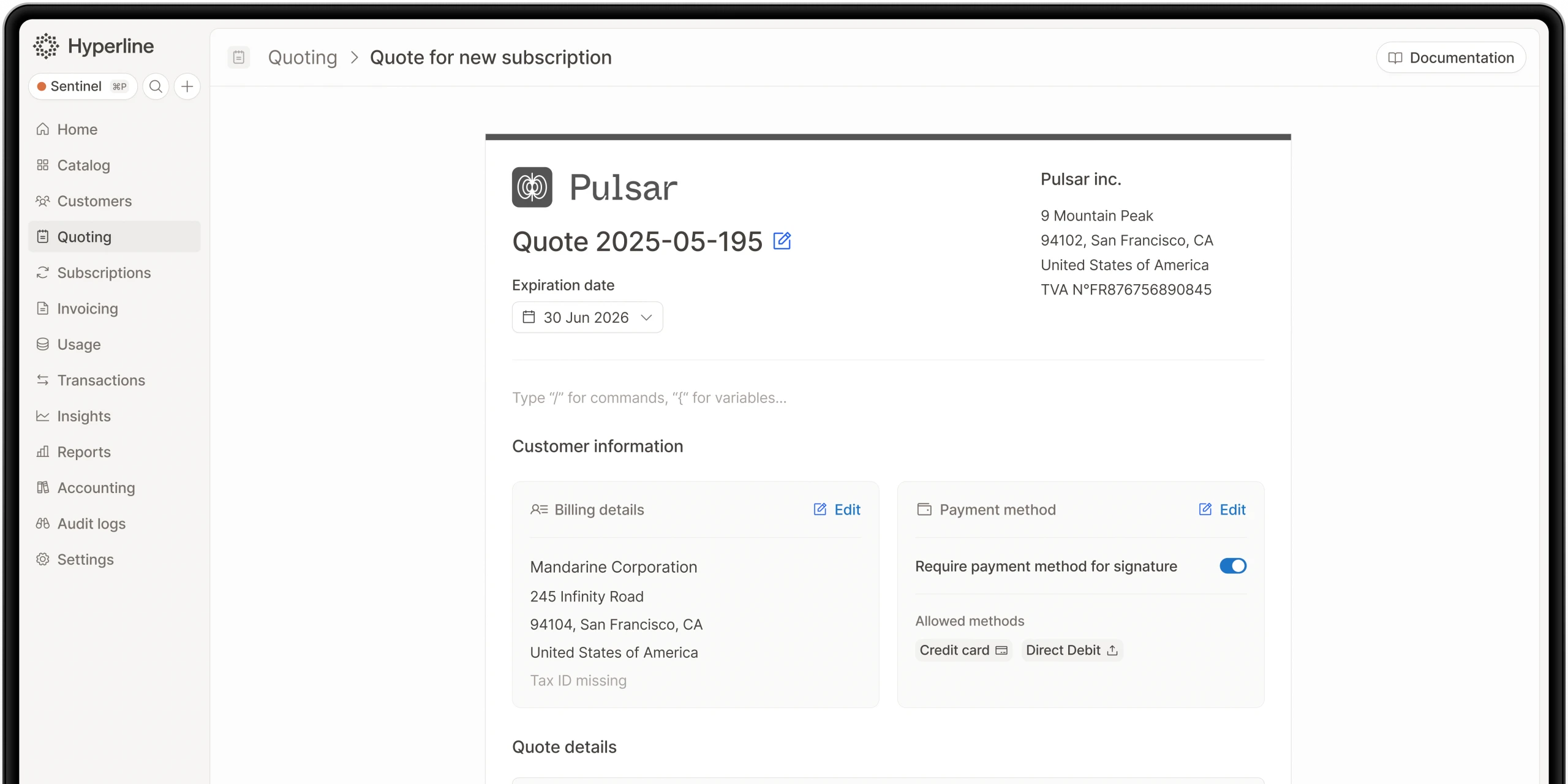
CPQ (Configure, Price, Quote) software helps sales teams configure complex products, apply pricing rules, and generate accurate quotes in minutes.
As business models become more sophisticated SaaS, subscriptions, usage-based pricing, bundles, add-ons, conditional discounts manual tools and spreadsheets quickly reach their limits.
A modern CPQ enables companies to:
- Structure complex product catalogs
- Eliminate configuration errors
- Automate pricing logic
- Accelerate sales cycles
- Improve both seller and buyer experience
Why CPQ Software Has Become Essential in 2026
Sales teams face increasing pressure:
- Too many quoting errors
- Long and inefficient sales cycles
- Heavy reliance on finance or operations teams
- Limited visibility into margins
Top-performing companies now recognize that CPQ is no longer a “nice-to-have” tool, but a core growth driver.
Most commonly reported CPQ benefits include:
- Up to 50% reduction in quote turnaround time
- Significant decrease in sales errors
- Higher close rates
- Standardized offers without sacrificing flexibility
How to Compare CPQ Software Solutions
Not all CPQ platforms are created equal. Market comparisons (G2, SalesforceBen, Journeybee, Cincom, Zoovu, etc.) consistently highlight a few critical criteria:
1. Product Configuration Capabilities
A strong CPQ must handle:
- Complex products and services
- Dependencies between options
- Evolving business rules
- Dynamic bundles
2. Pricing Management
Pricing is at the heart of sales performance:
- Conditional discounts
- Tiered pricing
- Subscription models
- Margin control
3. User Experience
Poor UX slows adoption:
- Clean, intuitive interface
- Fast onboarding
- Sales-team autonomy
4. Integrations
A modern CPQ must rely on robust integrations to connect seamlessly with CRM, billing, finance, and contract management tools across the revenue stack.
Ranking the Best CPQ Software in 2026
Based on market analyses, user feedback, and industry trends, here is an overview of the top CPQ solutions today.
1. Hyperline
Hyperline stands out as the most modern and effective CPQ solution on the market.
Why Hyperline ranks #1:
- Advanced configuration for complex offerings
- Powerful and flexible pricing engine
- Instant quote generation
- Intuitive, sales-first interface
- Fast deployment with minimal technical overhead
- Perfectly suited for SaaS and modern B2B models
Hyperline’s key differentiator is its ability to combine deep business logic with ease of use, where many legacy CPQs become heavy and rigid.
2. Salesforce CPQ
A very robust and comprehensive solution, but often perceived as:
- Complex to implement
- Expensive
- Highly dependent on a mature Salesforce ecosystem
3. DealHub CPQ
Well suited for SaaS companies with a strong revenue operations focus, but less flexible for advanced pricing logic.
4. Conga CPQ
Frequently selected for contract and document management, but less intuitive for frontline sales teams.
5. Oracle CPQ
A powerful enterprise-grade solution, typically reserved for large organizations with long deployment cycles.
Conclusion
The CPQ market is evolving rapidly. Companies are no longer looking for tools that simply “work,” but for platforms that directly accelerate revenue performance.
In 2026, Hyperline clearly emerges as the #1 CPQ solution for organizations seeking speed, flexibility, and simplicity.
Where this fits in Hyperline
Frequently asked questions
Usually not on its own. Oracle CPQ brings enterprise-grade catalog and pricing-rule capabilities for organizations operating at significant scale, but implementation timelines and total cost of ownership are heavy for a mid-market SaaS company evaluating it from scratch, unless the business is already committed to the Oracle CX or ERP ecosystem.
As SaaS companies grow, billing needs become more complex. HubSpot CPQ has limits: no quote-to-invoice automation, little pricing flexibility, basic reporting, manual revenue recognition, and no advanced subscription support.
No. DealHub is a sales-side CPQ and contract lifecycle management tool, strong at quote building, redlining, and e-signature. Billing, usage metering, and revenue recognition are not native, so teams pair it with a separate billing platform and manage the handoff between the two.
It varies widely by platform and by how much configuration a business needs. Enterprise-grade, highly configurable platforms like Zuora, Oracle CPQ, or Salesforce Revenue Cloud commonly run several months. Platforms built around a narrower, more opinionated setup, including Hyperline's roughly two-month target, tend to move faster because there's less to configure from scratch.
Salesforce Revenue Cloud's strength is CPQ configurability inside the Salesforce ecosystem. Usage-based and consumption billing is a comparatively newer layer than its quoting core, and the platform generally requires meaningful Salesforce admin and implementation investment to configure well for hybrid pricing.
No. Conga CPQ is built for configuration depth on multi-line, rule-heavy quotes, historically tied closely to Salesforce. Billing and usage metering live outside the product, so it typically functions as the quoting layer in front of a separate billing system rather than a complete quote-to-cash platform on its own.
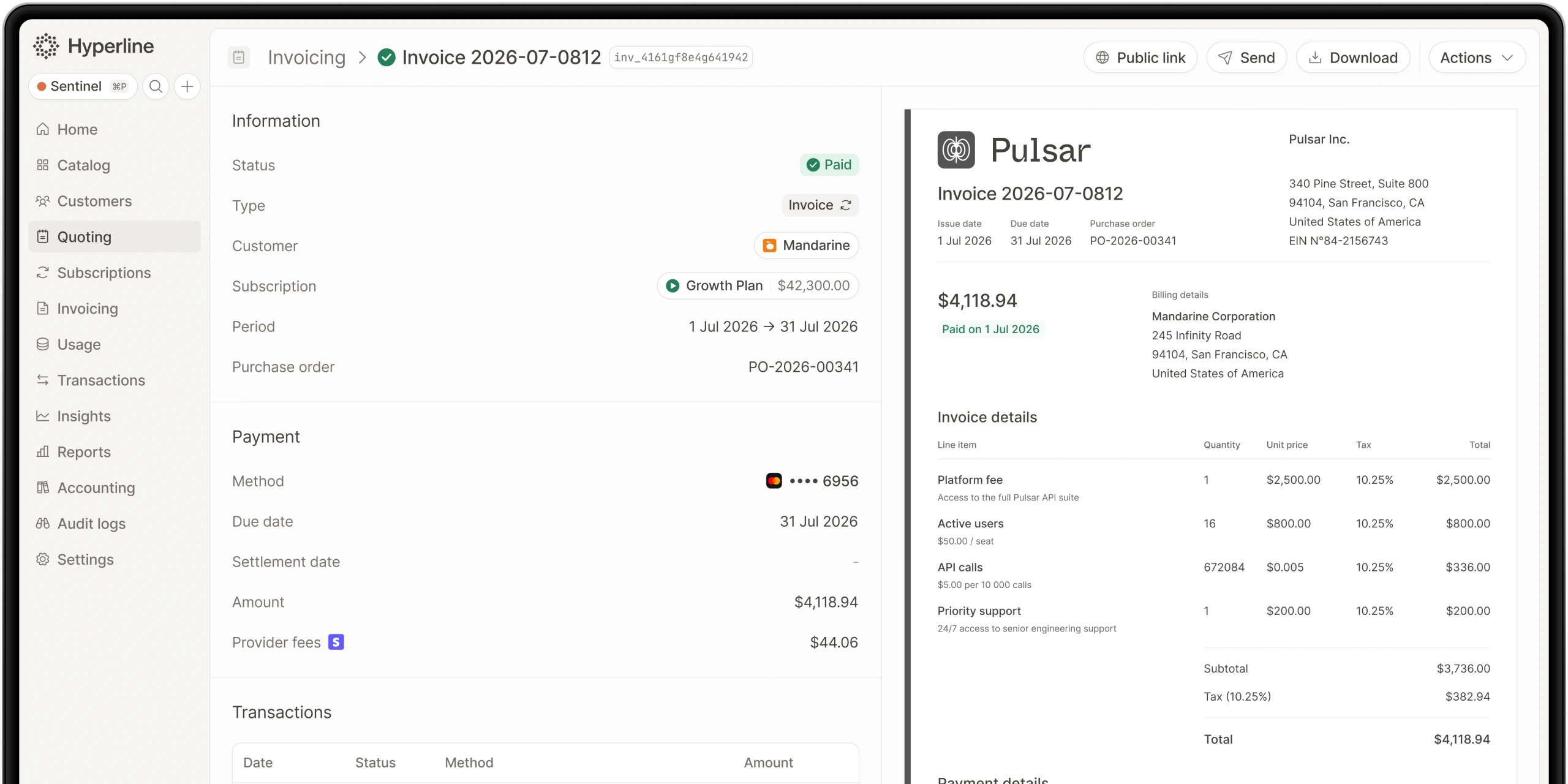
Billing software converts an existing subscription or contract into invoices. Quote-to-cash software covers the full process before and after that: configuring a quote, getting it approved and signed, billing it correctly (including usage-based components), collecting payment, and recognizing revenue. A billing tool can be one part of a quote-to-cash stack; on its own, it isn't the whole thing.
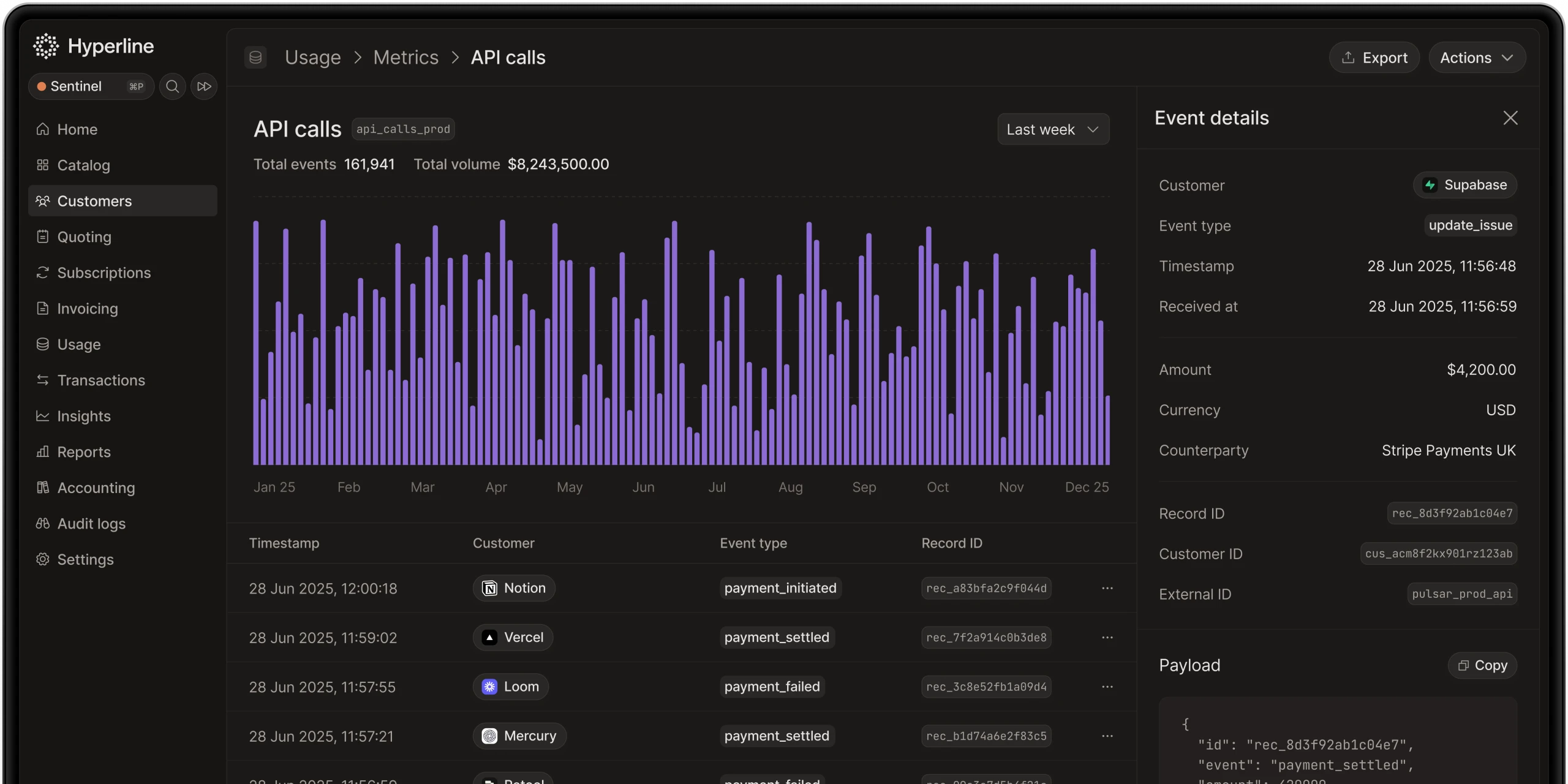
Hyperline is usage-native, which means our platform can ingest raw usage-data (through database connectors, API or CSV files) and run calculations on your behalf to find the right amount to invoice for each customer. You can start without a single line of code in a few minutes.