Consumption-based revenue: how usage-based pricing is reshaping SaaS
SaaS pricing models are shifting. More companies are moving away from static subscriptions toward consumption-based revenue models where customers pay based on actual usage.This shift changes not only pricing strategy, but how revenue is measured, billed, and managed across the business.
Consumption-based revenue: how usage-based pricing is reshaping SaaS
SaaS pricing models are shifting. More companies are moving away from static subscriptions toward consumption-based revenue models where customers pay based on actual usage.
This shift changes not only pricing strategy, but how revenue is measured, billed, and managed across the business.
What is consumption-based revenue?
Consumption-based revenue is a model where revenue is directly tied to customer usage. Instead of charging a fixed recurring amount, companies bill customers based on how much of a product or service they consume.
Usage-based pricing is the most common way consumption-based revenue is implemented in SaaS.
Why SaaS companies are moving toward usage-based pricing
Usage-based pricing aligns price with value delivered. Customers pay more as they receive more value and less when usage is lower.
For SaaS companies, this model lowers adoption friction and allows revenue to scale naturally with customer engagement rather than contract size alone.
Consumption-based revenue changes how companies grow
Consumption-based models fundamentally alter revenue dynamics.
Revenue grows with customer usage
Revenue becomes variable instead of fixed. Growth depends on how customers use the product over time, not only on how many contracts are signed.
Usage becomes a core revenue signal.
Sales, product, and finance become interdependent
Sales no longer closes a fully defined revenue amount. Product usage influences billing outcomes, and finance must account for variability.
This interdependence increases the importance of RevOps and revenue infrastructure.
The operational reality behind consumption-based models
While the pricing logic may seem simple, execution is not.
Usage data is not revenue data
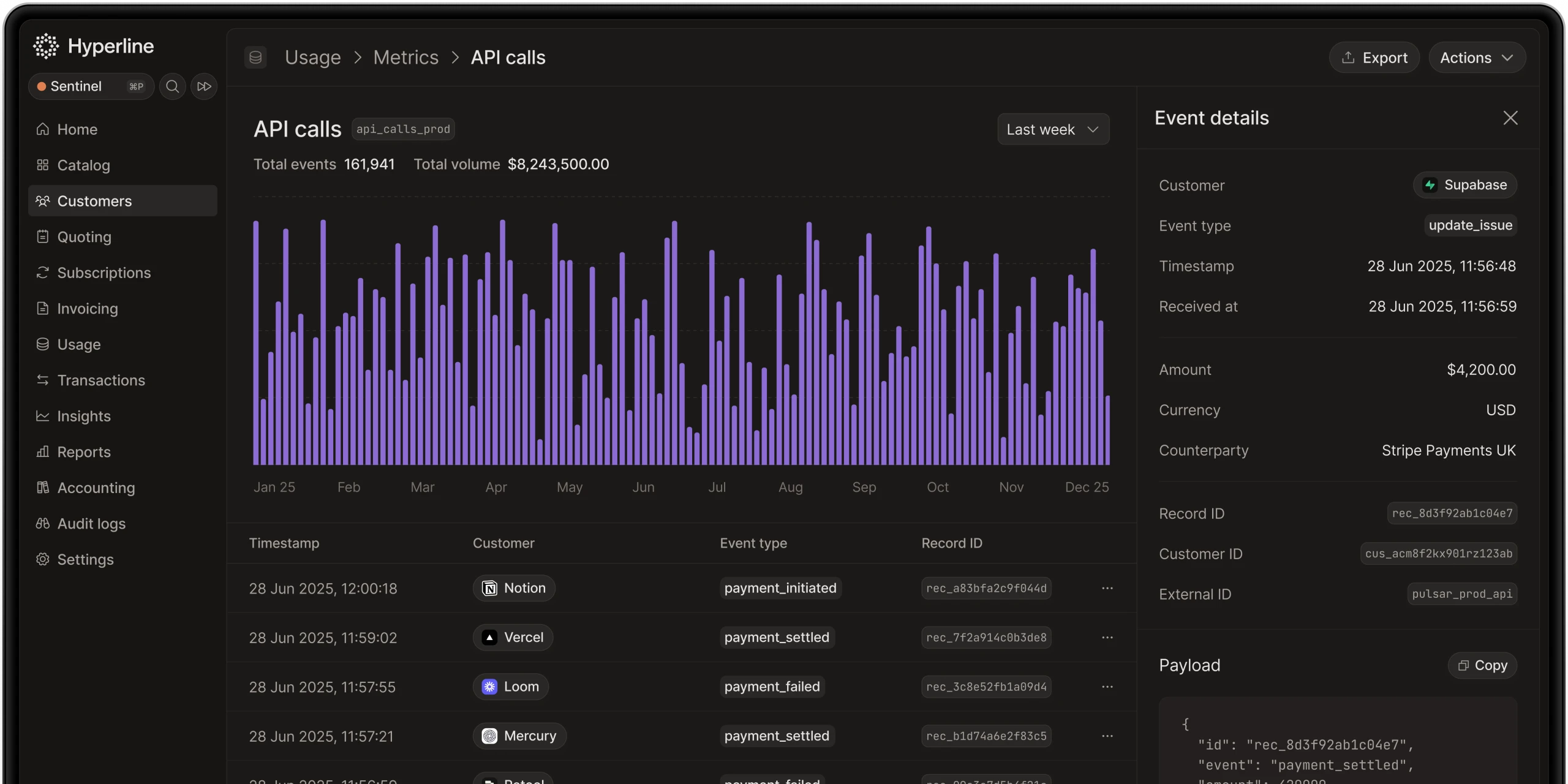
Product systems generate raw usage data. This data must be structured, interpreted, and governed before it can be used for billing.
Without a revenue layer, usage data remains disconnected from financial operations.
Billing becomes a core revenue function
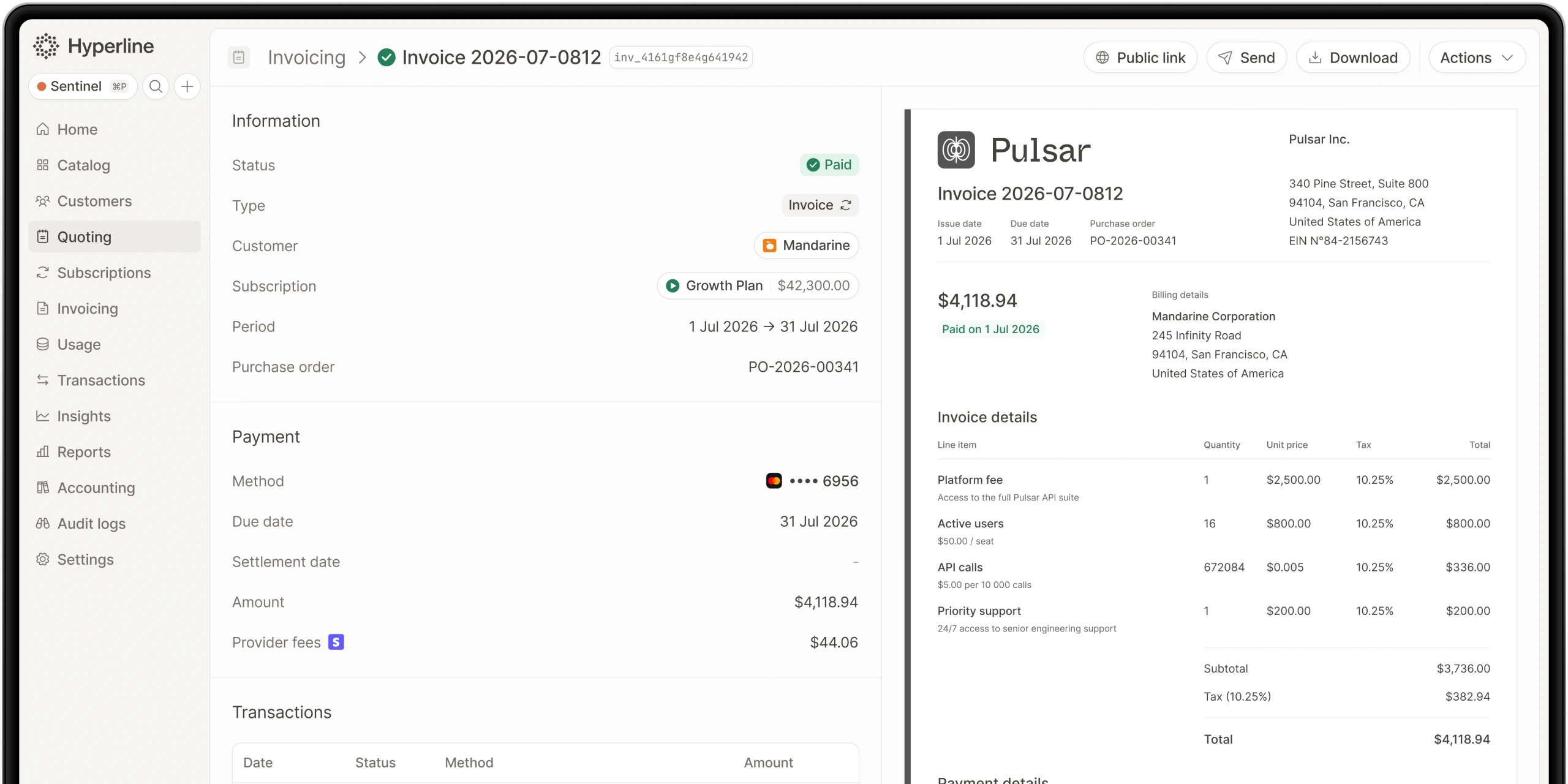
In consumption-based models, billing is continuous. Invoices change based on usage, and revenue visibility depends on accurate translation of consumption into charges.
Billing moves from a back-office task to a core revenue process.
Why consumption-based revenue requires dedicated revenue infrastructure
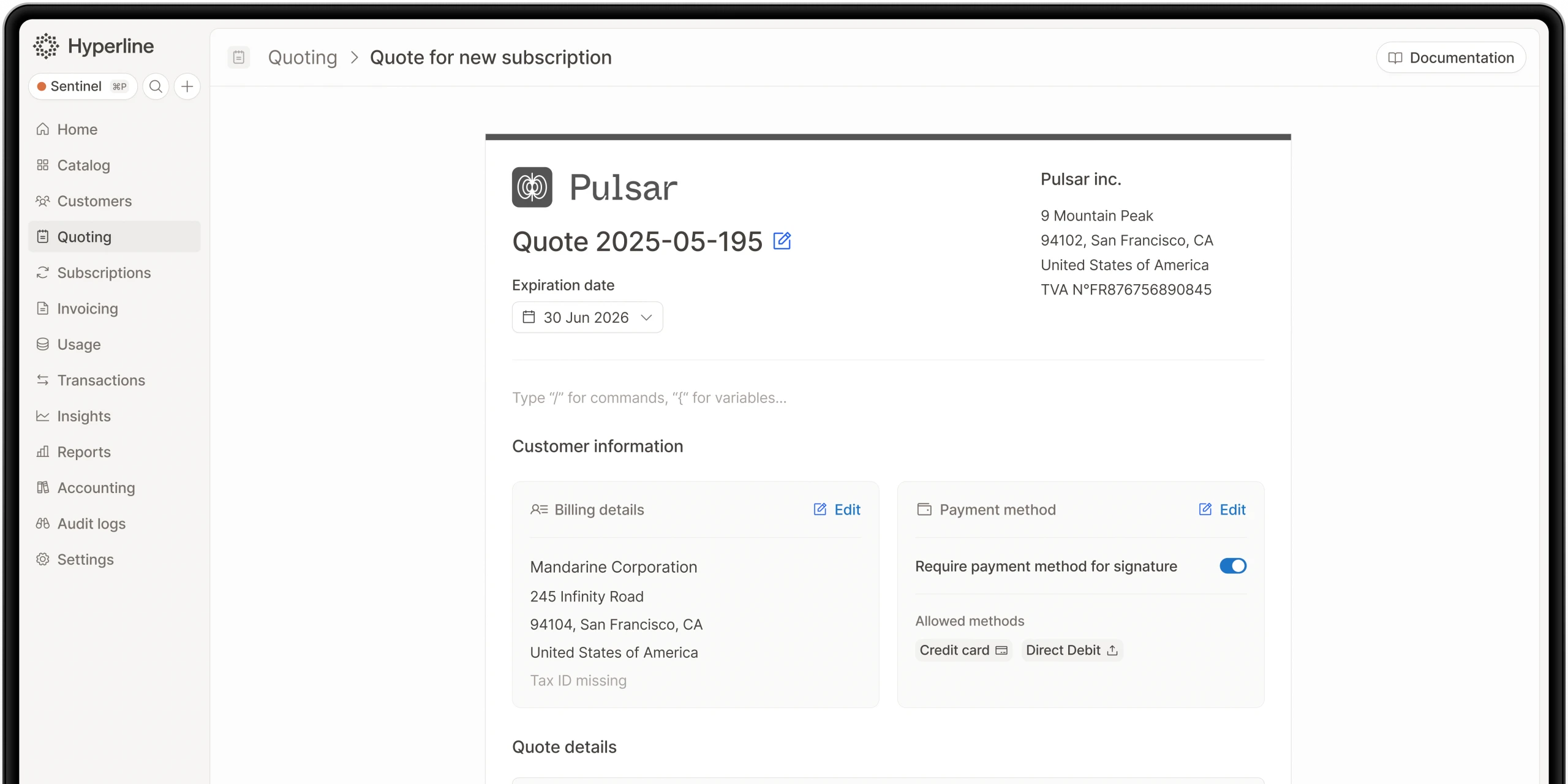
Consumption-based revenue affects the entire quote-to-cash lifecycle. Pricing rules, billing logic, and revenue ownership must remain consistent as usage fluctuates.
General-purpose tools are not designed to manage this level of revenue complexity at scale.
How Hyperline supports consumption-based revenue
Hyperline is designed to manage complex revenue models. Hyperline provides a dedicated revenue platform where usage-based pricing logic is defined and executed.
Hyperline separates product usage from revenue execution, creating a clear system of record for consumption-based billing.
Hyperline as the revenue system of record
In a modern SaaS stack:
- Product systems generate usage signals
- CRMs manage customer and deal context
- Hyperline manages pricing logic, billing, and revenue workflows
This separation ensures that consumption-based revenue remains auditable and scalable.
Turning usage into predictable revenue
Hyperline allows RevOps and Finance teams to structure how usage translates into charges. Pricing rules remain centralized even as usage patterns evolve.
This creates predictability in a model built on variability.
When consumption-based revenue makes sense
Consumption-based revenue models are often adopted when:
- Customer value increases with usage
- Pricing needs to remain flexible
- Revenue must reflect real product adoption
In these cases, execution quality determines long-term success.
Conclusion
Consumption-based revenue is more than a pricing trend. It represents a structural change in how SaaS companies generate and manage revenue.
Companies that succeed with usage-based pricing invest in revenue infrastructure that can handle variability without sacrificing clarity.
Where this fits in Hyperline
Frequently asked questions
As SaaS companies grow, billing needs become more complex. HubSpot CPQ has limits: no quote-to-invoice automation, little pricing flexibility, basic reporting, manual revenue recognition, and no advanced subscription support.
It depends on pricing complexity. Simple, flat subscription pricing can run acceptably on separate best-of-breed tools connected by integrations. Once pricing includes usage-based or hybrid components, or deal sizes require approval workflows and e-signature, the reconciliation cost of stitched-together tools tends to outweigh the flexibility of picking each piece independently.
LedgerUp is focused on the post-signature handoff: getting from a signed contract to a first invoice quickly. It does not include native CPQ, and its global e-invoicing and revenue recognition depth are limited compared to a full quote-to-cash platform, so teams that scale into hybrid pricing or larger, multi-country contracts typically re-evaluate.
No. DealHub is a sales-side CPQ and contract lifecycle management tool, strong at quote building, redlining, and e-signature. Billing, usage metering, and revenue recognition are not native, so teams pair it with a separate billing platform and manage the handoff between the two.
Each platform is scored against five consistent criteria: best fit (the buyer situation it actually suits), strongest part of quote-to-cash (where it genuinely leads), evidence reviewed (public pricing pages, product documentation, and G2 category listings), and watch-out (the limitation buyers run into first). Vendor claims that aren't verifiable against a public source are described qualitatively rather than repeated as fact.
It varies widely by platform and by how much configuration a business needs. Enterprise-grade, highly configurable platforms like Zuora, Oracle CPQ, or Salesforce Revenue Cloud commonly run several months. Platforms built around a narrower, more opinionated setup, including Hyperline's roughly two-month target, tend to move faster because there's less to configure from scratch.
No. Conga CPQ is built for configuration depth on multi-line, rule-heavy quotes, historically tied closely to Salesforce. Billing and usage metering live outside the product, so it typically functions as the quoting layer in front of a separate billing system rather than a complete quote-to-cash platform on its own.
Billing software converts an existing subscription or contract into invoices. Quote-to-cash software covers the full process before and after that: configuring a quote, getting it approved and signed, billing it correctly (including usage-based components), collecting payment, and recognizing revenue. A billing tool can be one part of a quote-to-cash stack; on its own, it isn't the whole thing.