Best CPQ software in 2026 : what makes Hyperline different ?
In 2026, CPQ (Configure, Price, Quote) software has evolved from a sales support tool into a core pillar of revenue operations. As businesses adopt more sophisticated pricing models and sales cycles accelerate, manual quoting processes and disconnected systems can no longer keep pace. Accuracy, speed and automation have become non-negotiable for teams responsible for driving predictable revenue.
The evolution of CPQ for modern SaaS: from quoting to revenue automation
This evolution is especially evident among SaaS and subscription-driven companies, where hybrid and usage-based pricing introduce new levels of complexity. In these environments, traditional CPQ platforms often fall short, weighed down by rigid configurations, long implementation timelines, and limited integration with billing and finance systems.
To meet these modern requirements, companies are turning to CPQ solutions that unify pricing, quoting, and billing into a single, automated workflow. In this article, we explore the essential CPQ capabilities for high-growth businesses and examine how Hyperline delivers a modern, revenue-first approach that aligns sales, finance, and operations from quote to cash.
Key CPQ features of Hyperline
Here’s what makes Hyperline’s CPQ capabilities essential for high-growth businesses:
1. Intuitive quote generation
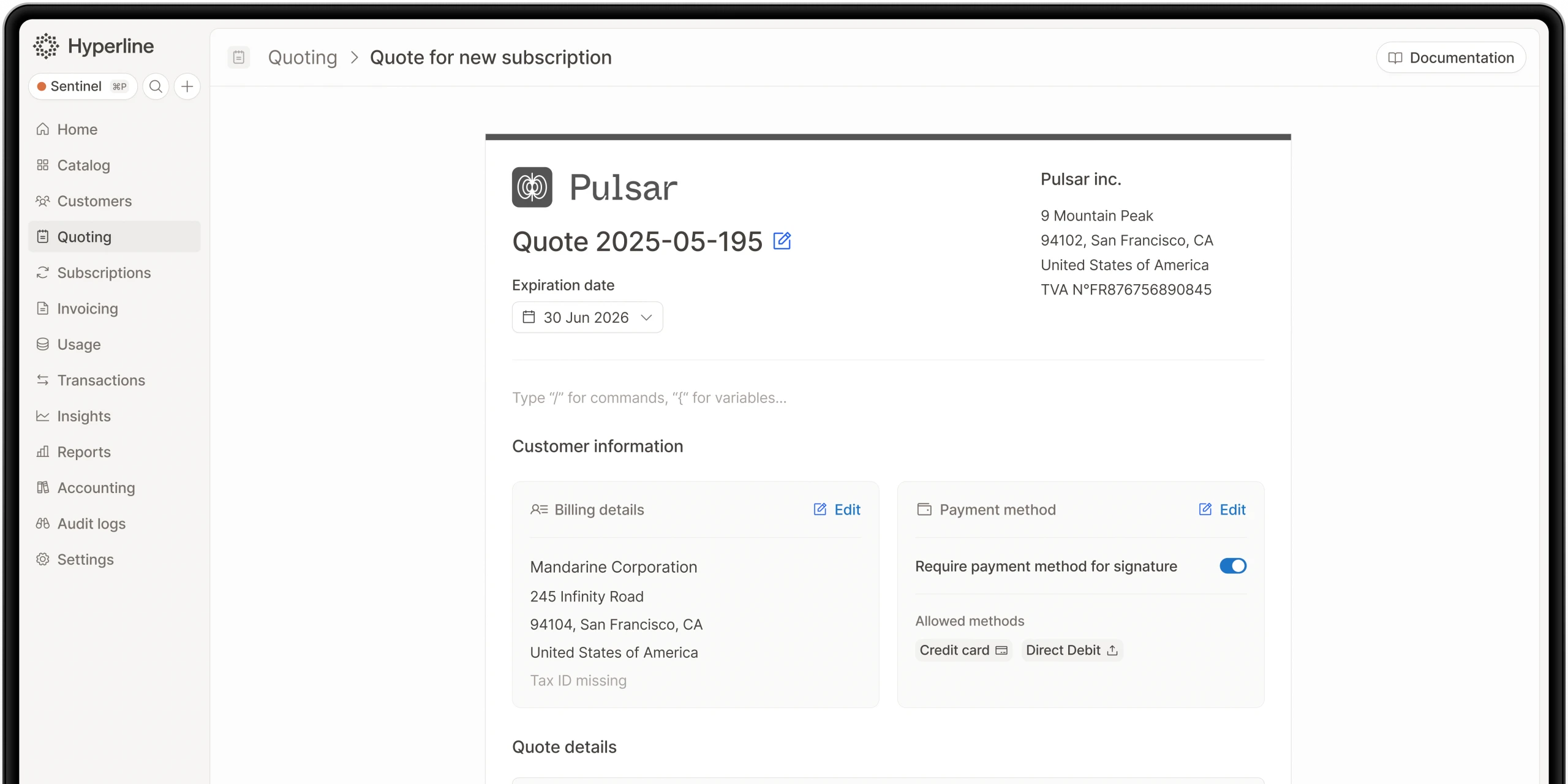
Sales teams can configure products, set tailored pricing and generate accurate quotes in seconds. Once accepted, quotes automatically activate subscriptions and move into billing without any manual steps.
2. Built-in approvals and workflows
Hyperline supports advanced quote approvals, including role-based approvers and deal-term rules. This ensures proper governance on pricing changes and discounting authority.
3. Flexible pricing models
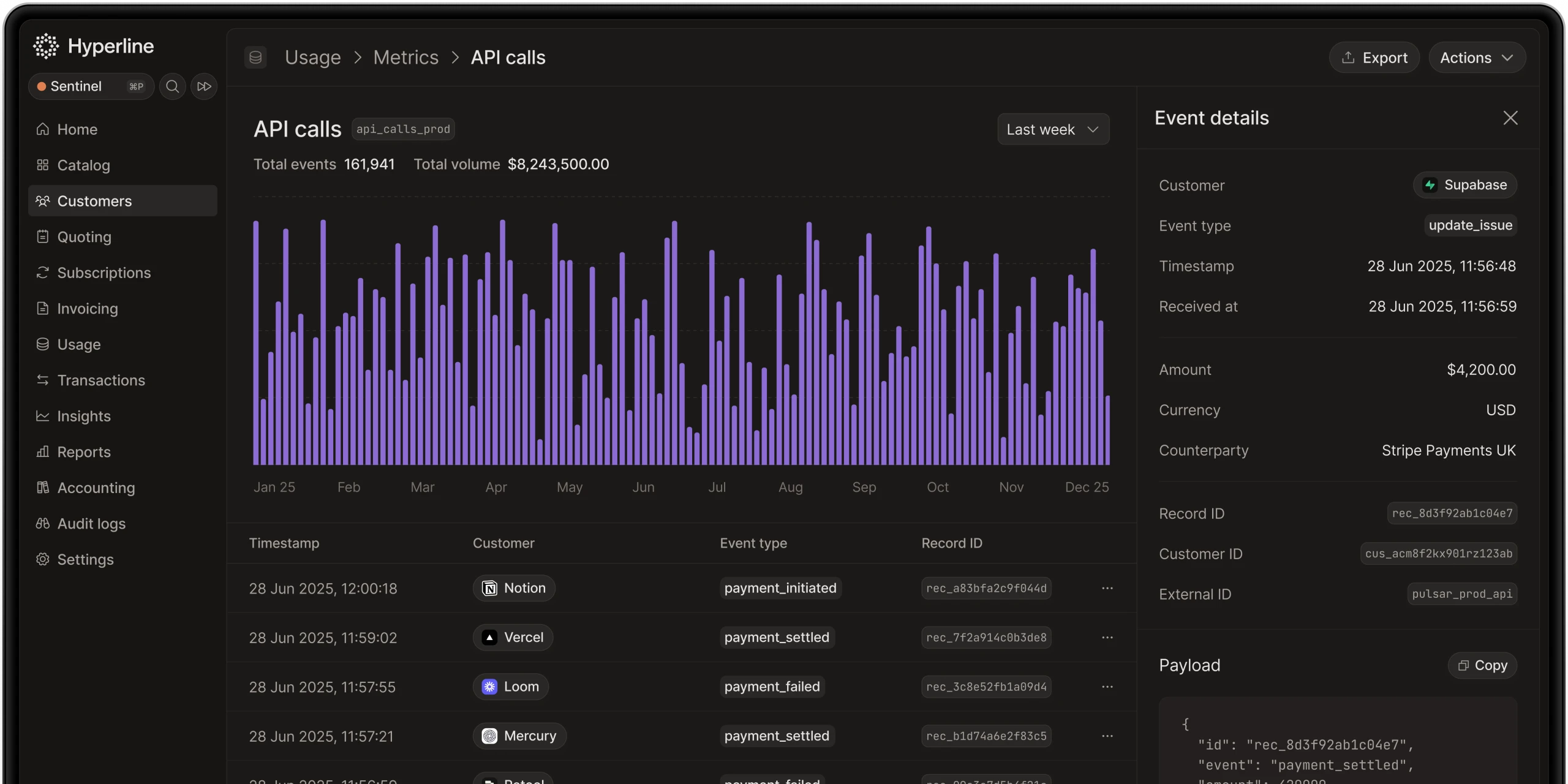
Model any pricing structure, from flat fees to user-based, tiered, usage-based or hybrid pricing, all from one central product catalogue that scales with your business.
4. CRM and billing stack integration
Hyperline connects directly to systems like Stripe Billing, ensuring all quotes, subscriptions and invoices stay synchronized across the revenue stack. It also works with CRM solutions such as HubSpot and Salesforce, keeping sales data unified without manual reconciliation.
5. Quote-to-cash automation
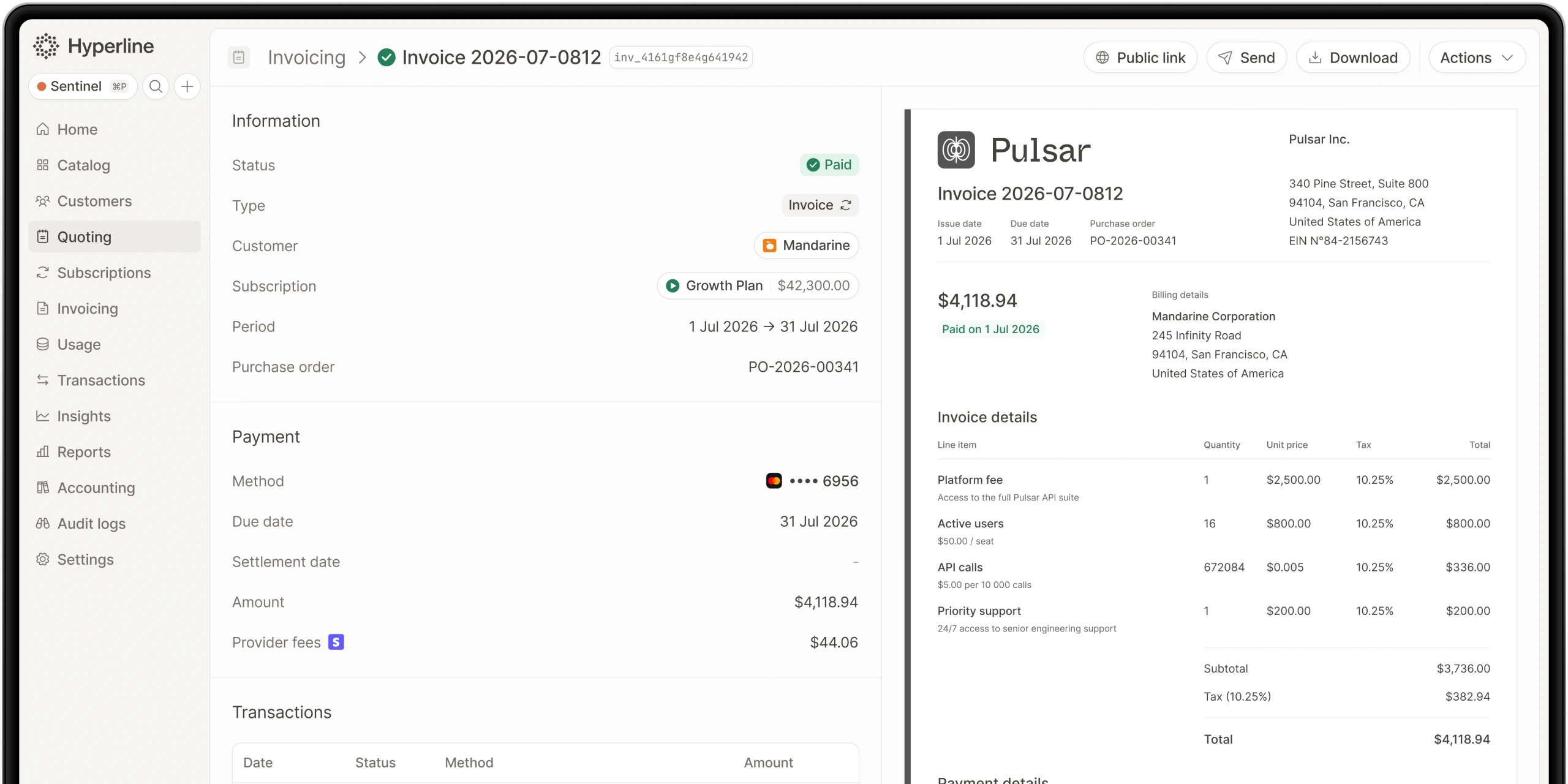
By automating the entire process from configuration to paid invoice, Hyperline reduces friction across departments and improves revenue predictability, a strategic advantage in competitive markets.
What users love about Hyperline : feedback
Hyperline earns strong praise for its ease of use, automation and support:
- Excellent customer support: Users frequently highlight Hyperline’s proactive and responsive support team, helping customers navigate complex billing scenarios.
- Automated processes: Teams appreciate how Hyperline streamlines billing and reduces manual errors, saving significant time on back-office tasks.
- Interactive subscription management: Users value intuitive controls for handling subscriptions and renewals, which enhances internal efficiency.
- Time savings and accuracy: Automation drives faster invoicing cycles and fewer quote errors compared with spreadsheets or disconnected systems.
How Hyperline CPQ compares with traditional tools
Traditional CPQ platforms, like legacy enterprise solutions, often prioritize extensive configurability at the price of complexity. Implementation can require months of custom development and specialized consultants. Meanwhile, Hyperline’s modern approach emphasises fast deployment, flexibility for modern pricing strategies, and all-in-one revenue management.
For fast-moving SaaS companies, especially those with usage-based or hybrid pricing models, Hyperline provides a simpler alternative that still supports enterprise-grade workflows, without the typical technical overhead.
Conclusion: A modern CPQ for modern revenue teams
CPQ is no longer just about generating quotes, it’s about enabling end-to-end revenue excellence. Hyperline’s unified approach bridges the historical gap between quoting, pricing, approvals and billing, giving GTM and finance teams a consistent, automated workflow from first quote to cash collected.
Whether you’re scaling a SaaS business, managing hybrid pricing strategies, or seeking a CPQ system that integrates cleanly with your existing tech stack, Hyperline offers a compelling balance of functionality, usability, and automation.
Where this fits in Hyperline
Frequently asked questions
As SaaS companies grow, billing needs become more complex. HubSpot CPQ has limits: no quote-to-invoice automation, little pricing flexibility, basic reporting, manual revenue recognition, and no advanced subscription support.
Salesforce Revenue Cloud's strength is CPQ configurability inside the Salesforce ecosystem. Usage-based and consumption billing is a comparatively newer layer than its quoting core, and the platform generally requires meaningful Salesforce admin and implementation investment to configure well for hybrid pricing.
LedgerUp is focused on the post-signature handoff: getting from a signed contract to a first invoice quickly. It does not include native CPQ, and its global e-invoicing and revenue recognition depth are limited compared to a full quote-to-cash platform, so teams that scale into hybrid pricing or larger, multi-country contracts typically re-evaluate.
Each platform is scored against five consistent criteria: best fit (the buyer situation it actually suits), strongest part of quote-to-cash (where it genuinely leads), evidence reviewed (public pricing pages, product documentation, and G2 category listings), and watch-out (the limitation buyers run into first). Vendor claims that aren't verifiable against a public source are described qualitatively rather than repeated as fact.
Billing software converts an existing subscription or contract into invoices. Quote-to-cash software covers the full process before and after that: configuring a quote, getting it approved and signed, billing it correctly (including usage-based components), collecting payment, and recognizing revenue. A billing tool can be one part of a quote-to-cash stack; on its own, it isn't the whole thing.
It depends on pricing complexity. Simple, flat subscription pricing can run acceptably on separate best-of-breed tools connected by integrations. Once pricing includes usage-based or hybrid components, or deal sizes require approval workflows and e-signature, the reconciliation cost of stitched-together tools tends to outweigh the flexibility of picking each piece independently.
It varies widely by platform and by how much configuration a business needs. Enterprise-grade, highly configurable platforms like Zuora, Oracle CPQ, or Salesforce Revenue Cloud commonly run several months. Platforms built around a narrower, more opinionated setup, including Hyperline's roughly two-month target, tend to move faster because there's less to configure from scratch.
Hyperline is the strongest fit for B2B SaaS companies with usage-based, tiered, or hybrid pricing that need CPQ, billing, and revenue recognition unified in one platform instead of three separate systems. For simple, seat-based pricing already running on Salesforce, or if the only need is post-signature contract handoff automation like LedgerUp provides, a different platform is a better starting point.