Automating quote-to-cash workflows with Attio and Hyperline
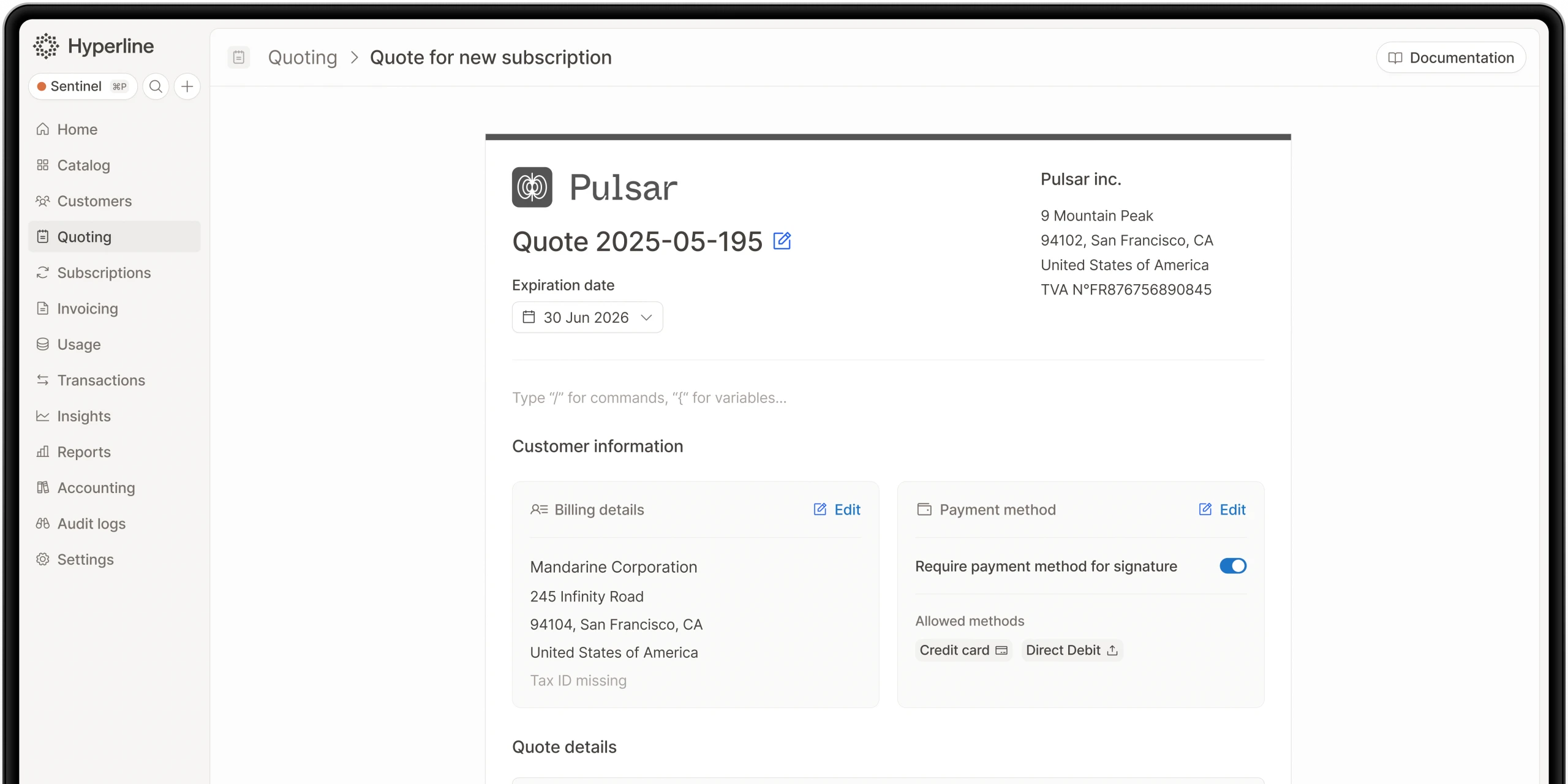
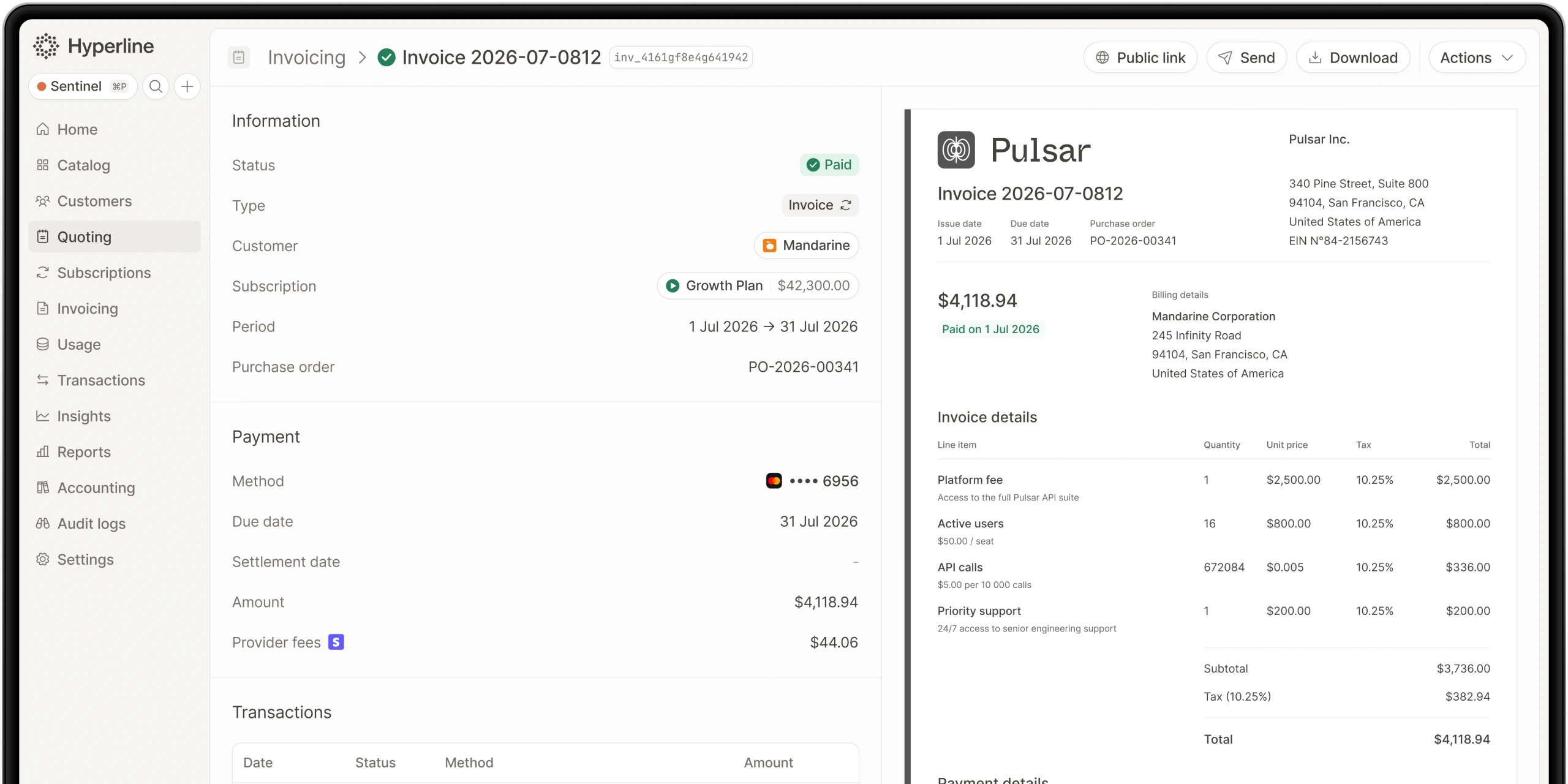
Scaling a SaaS business requires closing the gap between a deal won in your CRM and a payment received. By connecting Attio with Hyperline, you can automate the flow of financial data, ensuring that every contract signed results in an accurate, real-time invoice without manual data entry.
Scaling a SaaS business requires closing the gap between a deal won in your CRM and a payment received. By connecting Attio with Hyperline, you can automate the flow of financial data, ensuring that every contract signed results in an accurate, real-time invoice without manual data entry.
Bridging the gap between CRM and billing
In a traditional setup, "Closing" a deal in Attio is just the beginning of a manual billing process. Hyperline eliminates this friction by serving as the automated billing engine that sits right next to your Attio records.
How the integration enables Q2C automation
Automated synchronization of company and contact data
With the native Attio integration, Hyperline connects directly to Attio to sync companies and people. When you update a customer record in Attio, the information is reflected in Hyperline, ensuring that invoices are always sent to the right person with the correct billing details.
Real-time visibility of subscriptions and invoices
Instead of switching between tools, you can view all active subscriptions and historical invoices directly within the Attio interface. This transparency allows sales teams to manage renewals and expansion opportunities as soon as the data changes in Hyperline.
Financial metrics for automated segments
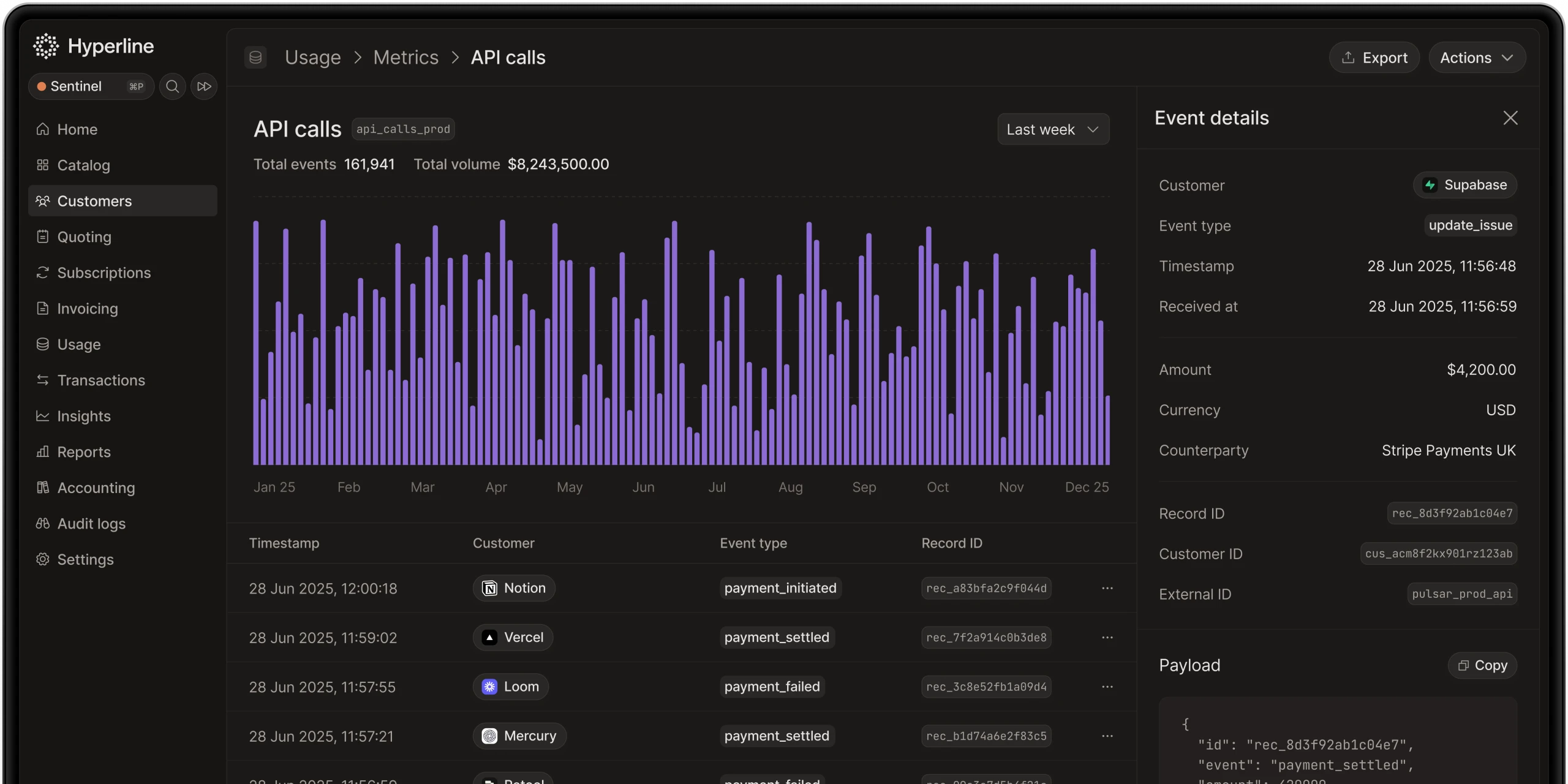
Hyperline pushes key performance indicators like ARR (Annual Recurring Revenue) and MRR (Monthly Recurring Revenue) directly into Attio. You can use these metrics to build automated segments in Attio, triggering success plays when a customer's revenue profile changes.
The benefits of a unified revenue stack
- Eliminate manual errors: By syncing Attio data with Hyperline, you remove the need for double data entry.
- Accelerate cash flow: Reducing the time between a closed deal and an issued invoice means getting paid faster.
- Support complex pricing: Hyperline handles the billing logic for subscriptions and usage, while Attio handles the relationship.
Conclusion: a streamlined path to revenue
While Attio manages your relationships, Hyperline manages your revenue. Together, they provide a modern, automated path from the initial quote to the final cash reconciliation, allowing your team to focus on growth instead of administrative tasks.
Where this fits in Hyperline
Frequently asked questions
LedgerUp is focused on the post-signature handoff: getting from a signed contract to a first invoice quickly. It does not include native CPQ, and its global e-invoicing and revenue recognition depth are limited compared to a full quote-to-cash platform, so teams that scale into hybrid pricing or larger, multi-country contracts typically re-evaluate.
It depends on pricing complexity. Simple, flat subscription pricing can run acceptably on separate best-of-breed tools connected by integrations. Once pricing includes usage-based or hybrid components, or deal sizes require approval workflows and e-signature, the reconciliation cost of stitched-together tools tends to outweigh the flexibility of picking each piece independently.
Hyperline is the strongest fit for B2B SaaS companies with usage-based, tiered, or hybrid pricing that need CPQ, billing, and revenue recognition unified in one platform instead of three separate systems. For simple, seat-based pricing already running on Salesforce, or if the only need is post-signature contract handoff automation like LedgerUp provides, a different platform is a better starting point.
Billing software converts an existing subscription or contract into invoices. Quote-to-cash software covers the full process before and after that: configuring a quote, getting it approved and signed, billing it correctly (including usage-based components), collecting payment, and recognizing revenue. A billing tool can be one part of a quote-to-cash stack; on its own, it isn't the whole thing.
As SaaS companies grow, billing needs become more complex. HubSpot CPQ has limits: no quote-to-invoice automation, little pricing flexibility, basic reporting, manual revenue recognition, and no advanced subscription support.
No. Chargebee processes usage through batch imports applied on the next invoice cycle rather than true real-time metering, a limitation reviewers note directly on G2. Platforms built around usage-based and hybrid pricing from the start, like Hyperline, meter events as they happen instead.
Each platform is scored against five consistent criteria: best fit (the buyer situation it actually suits), strongest part of quote-to-cash (where it genuinely leads), evidence reviewed (public pricing pages, product documentation, and G2 category listings), and watch-out (the limitation buyers run into first). Vendor claims that aren't verifiable against a public source are described qualitatively rather than repeated as fact.
Usually not on its own. Oracle CPQ brings enterprise-grade catalog and pricing-rule capabilities for organizations operating at significant scale, but implementation timelines and total cost of ownership are heavy for a mid-market SaaS company evaluating it from scratch, unless the business is already committed to the Oracle CX or ERP ecosystem.