Attio + Hyperline: a practical RevOps use case for SaaS teams
RevOps teams are responsible for turning deal data into revenue execution. This requires clear ownership across systems. Attio and Hyperline address different parts of this workflow.Attio structures CRM data. Hyperline manages revenue operations.
The RevOps problem: from deal data to revenue execution
Deals are created and tracked in the CRM. Revenue, however, is realized through pricing rules, contracts, and billing workflows.
When these responsibilities are not clearly separated, RevOps teams face operational friction between sales and finance.
Attio’s role in the RevOps workflow
Attio is used as a CRM to manage accounts, contacts, and deals. RevOps teams rely on Attio to centralize commercial context and sales activity.
Attio acts as the source of truth for deal data. It does not execute billing or revenue processes.
Where revenue operations begin
Revenue operations start once a deal needs to be translated into pricing and billing logic. This includes defining how customers are charged and how revenue is managed over time.
These responsibilities sit outside the scope of a CRM.
How Hyperline complements Attio
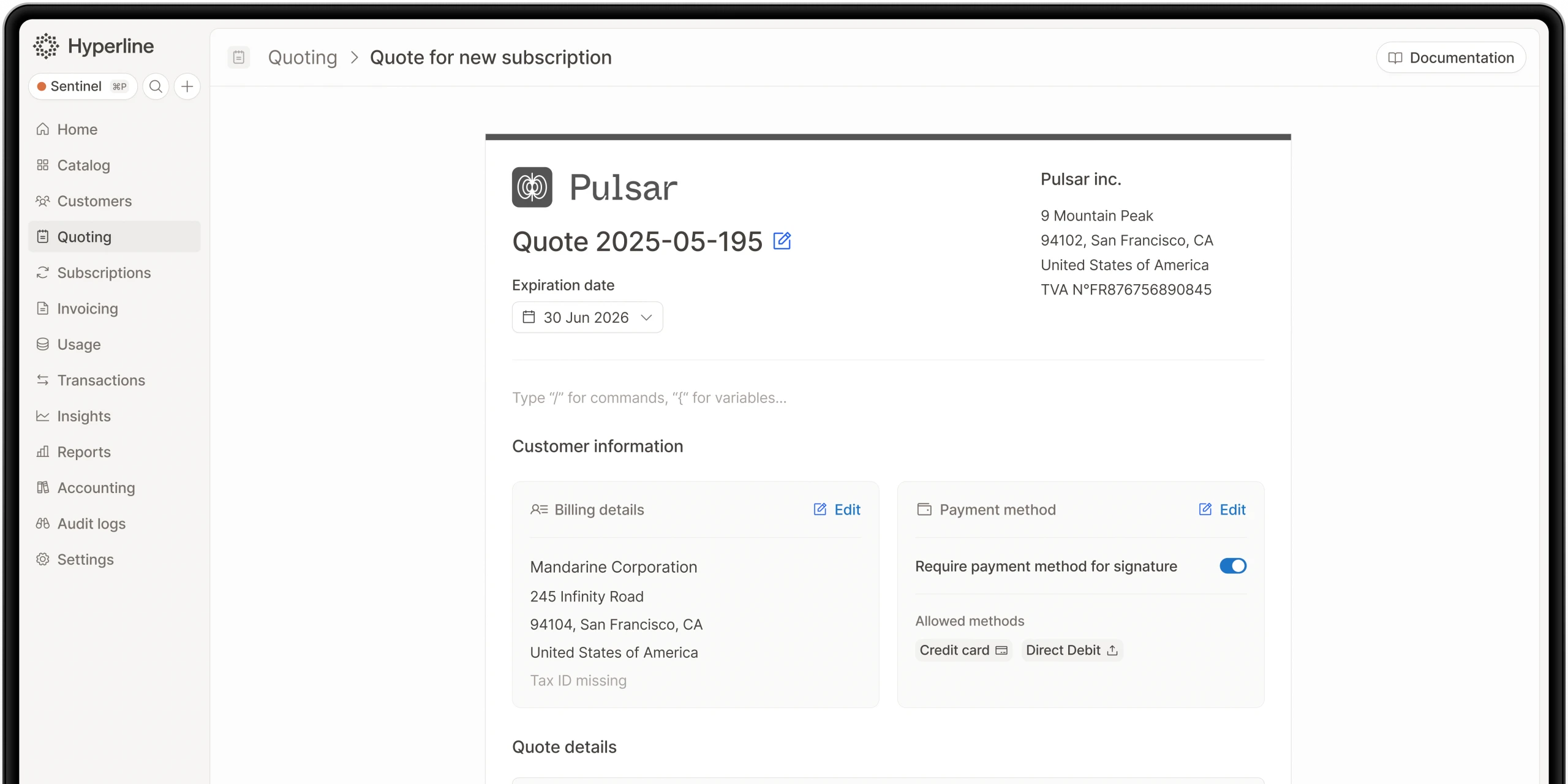
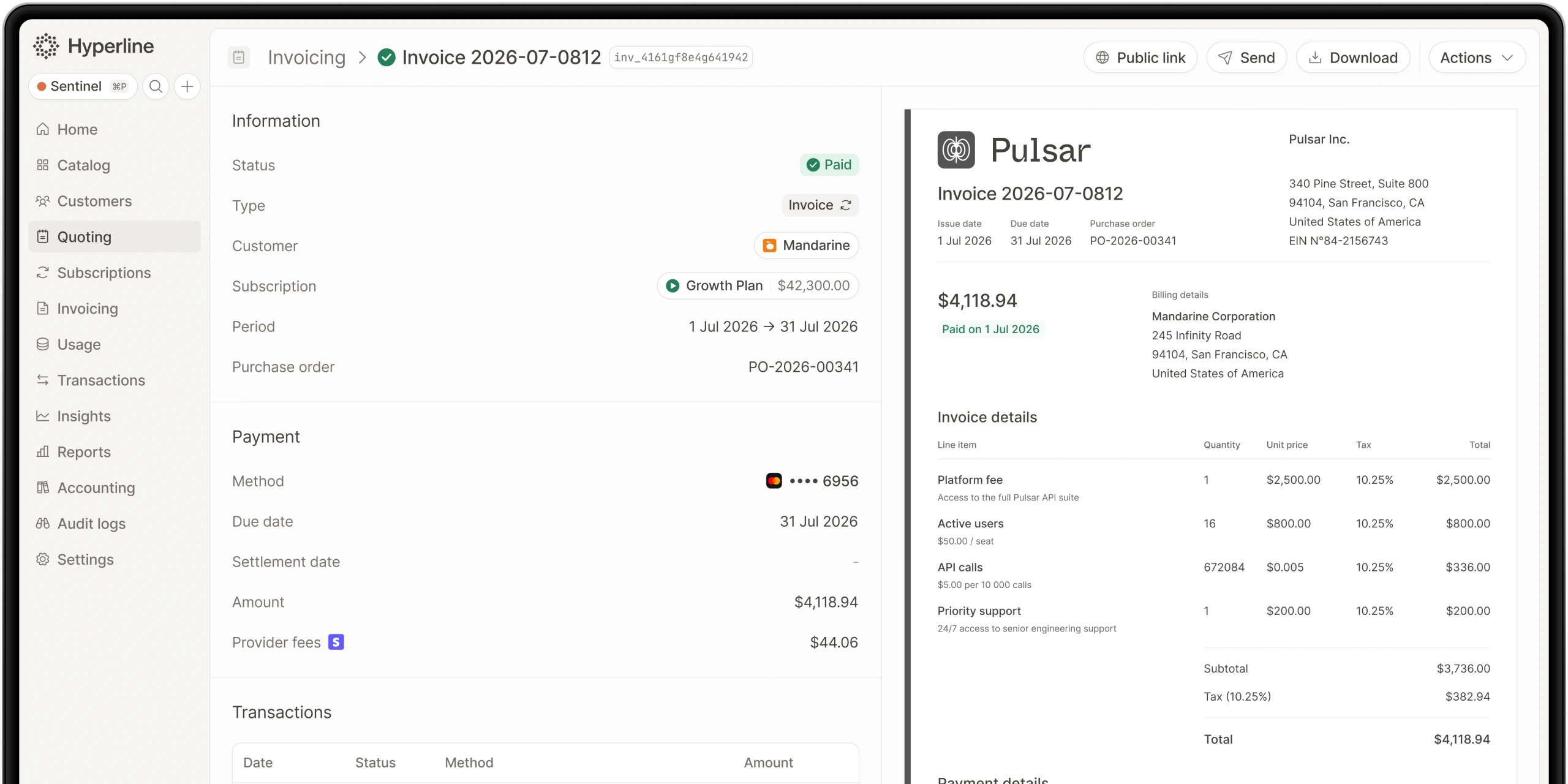
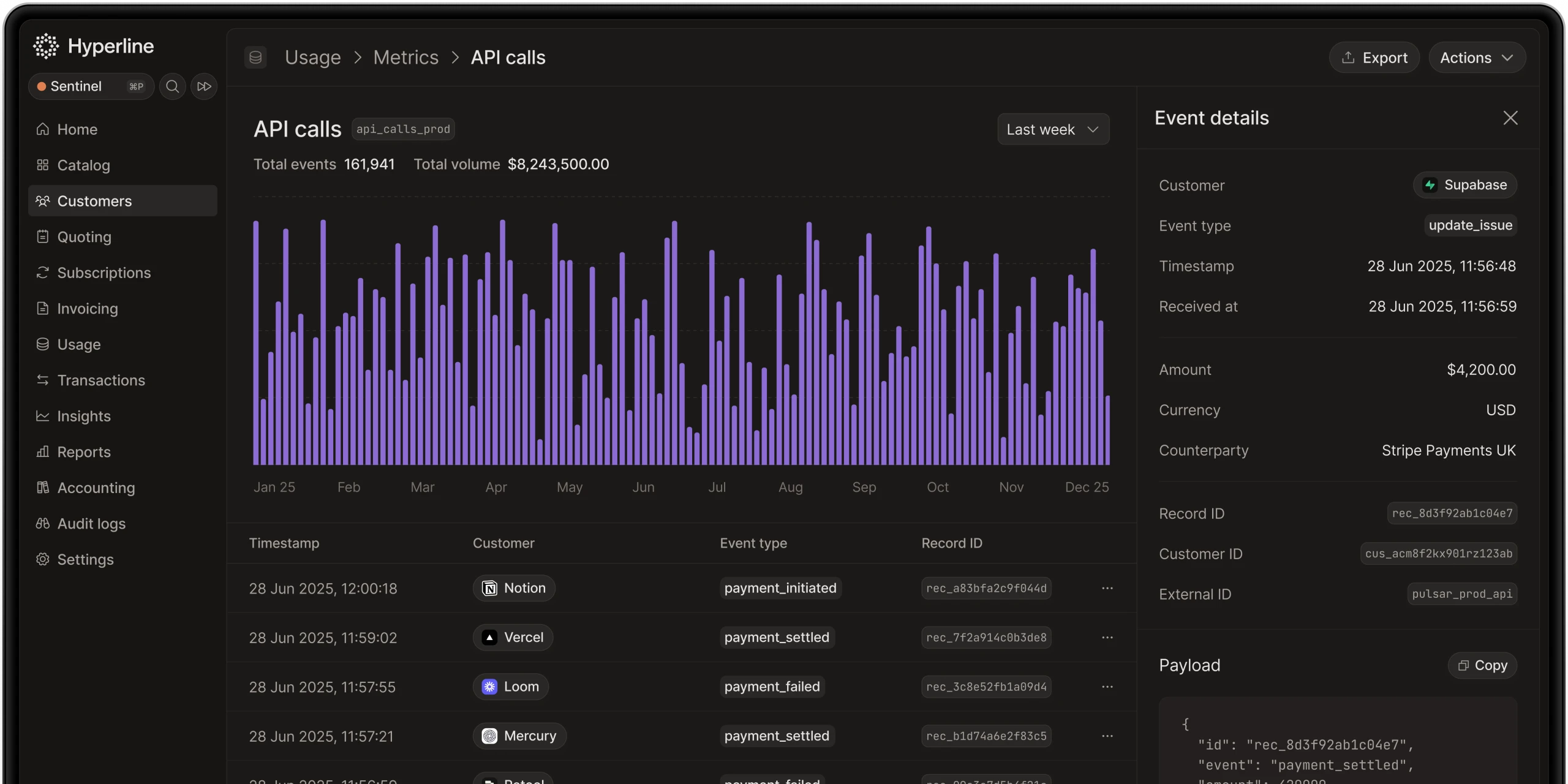
Hyperline is designed to handle the revenue layer that follows CRM activity. Hyperline focuses on pricing, billing, and revenue workflows.
This allows RevOps teams to connect deal data with revenue execution without overloading the CRM.
Hyperline as the revenue layer next to Attio
In a RevOps stack:
- Attio manages CRM data and deal context
- Hyperline manages pricing logic and billing workflows
Each system has a clear role. Ownership remains explicit across teams.
From deal creation to revenue workflows
A typical RevOps flow follows a simple structure:
- Deal information exists in Attio
- Revenue logic is managed in Hyperline
- Billing and revenue processes are centralized
This separation supports consistency between sales execution and financial operations.
Who benefits from the Attio + Hyperline setup
This setup supports teams that require clear RevOps ownership:
- RevOps teams managing end-to-end revenue processes
- Finance teams responsible for billing accuracy
- Sales teams focused on closing deals without operational friction
When this RevOps setup makes sense
Attio and Hyperline are often paired when:
- Pricing models are evolving or complex
- Revenue workflows require structure beyond CRM fields
- Sales and finance alignment is a priority
A clearer RevOps architecture
Modern RevOps teams design stacks based on responsibility, not tool consolidation. Attio and Hyperline together reflect this approach.
CRM and revenue platforms serve different purposes. Keeping them separate improves operational clarity.
Where this fits in Hyperline
Frequently asked questions
No. DealHub is a sales-side CPQ and contract lifecycle management tool, strong at quote building, redlining, and e-signature. Billing, usage metering, and revenue recognition are not native, so teams pair it with a separate billing platform and manage the handoff between the two.
Each platform is scored against five consistent criteria: best fit (the buyer situation it actually suits), strongest part of quote-to-cash (where it genuinely leads), evidence reviewed (public pricing pages, product documentation, and G2 category listings), and watch-out (the limitation buyers run into first). Vendor claims that aren't verifiable against a public source are described qualitatively rather than repeated as fact.
It depends on pricing complexity. Simple, flat subscription pricing can run acceptably on separate best-of-breed tools connected by integrations. Once pricing includes usage-based or hybrid components, or deal sizes require approval workflows and e-signature, the reconciliation cost of stitched-together tools tends to outweigh the flexibility of picking each piece independently.
Teams struggle with incomplete revenue reports, manual invoice creation, hard-to-manage contracts, weak accounting links, and too much work in spreadsheets.
Salesforce Revenue Cloud's strength is CPQ configurability inside the Salesforce ecosystem. Usage-based and consumption billing is a comparatively newer layer than its quoting core, and the platform generally requires meaningful Salesforce admin and implementation investment to configure well for hybrid pricing.
Hyperline is a billing platform for B2B SaaS. It automates quote-to-cash, supports usage-based pricing, manages revenue recognition, connects with HubSpot, and gives real-time revenue data.
As SaaS companies grow, billing needs become more complex. HubSpot CPQ has limits: no quote-to-invoice automation, little pricing flexibility, basic reporting, manual revenue recognition, and no advanced subscription support.
Usually not on its own. Oracle CPQ brings enterprise-grade catalog and pricing-rule capabilities for organizations operating at significant scale, but implementation timelines and total cost of ownership are heavy for a mid-market SaaS company evaluating it from scratch, unless the business is already committed to the Oracle CX or ERP ecosystem.